


Global Patwa: How a Viral Video of an Irish Politician’s Speech Unveiled Jamaica’s Creole History ‘tu di Worl’
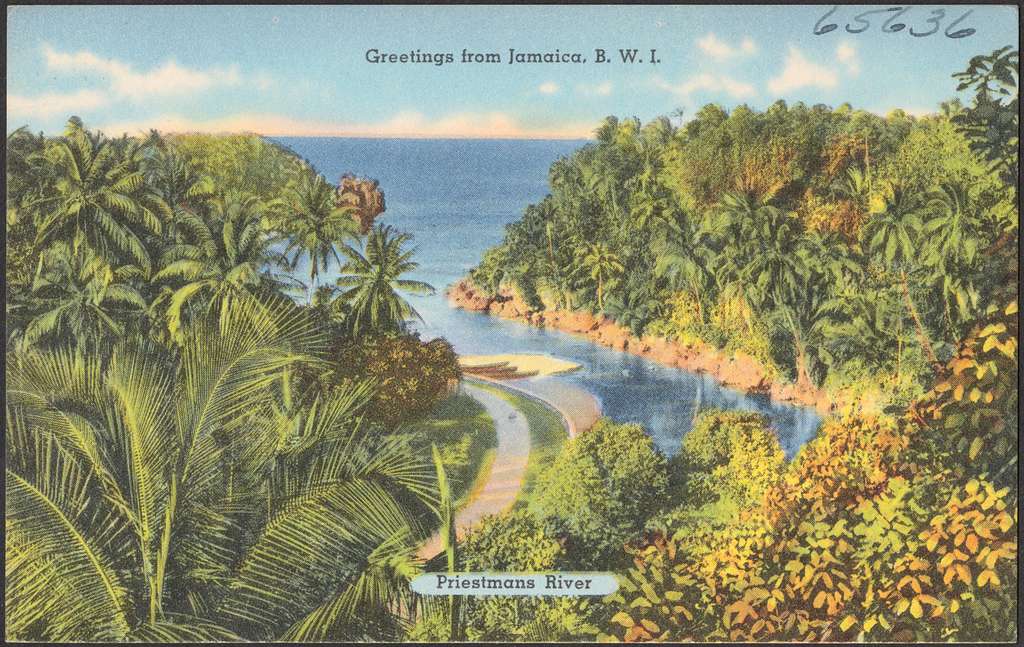
Agostinho discusses Jamaican Creole histories in the context of (post)-colonialism, examining the impacts of the indigenous people, trans-Atlantic slavery, emancipation and independence in shaping the evolution of Jamaican (Patwa).
Despite being increasingly globalised, Jamaican Creole, or Patwa[1] (Patois), is still unfamiliar to many. This is why when a recent video of Irish Member of Parliament (MP), Thomas Gould’s speech describing Ireland’s housing crisis went viral it triggered a wave of conflicting responses. The video ignited online debates about Jamaica’s historical connections to Europe, as Africans both on the continent and in the Diaspora noted the similarities between Mr. Gould’s accent and Jamaican Creole (hereafter Jamaican).[2] One social media reaction video demonstrating the fascinating connections between Jamaican and its West African roots, highlighted words like 'kaba-kaba' (uninspired; emaciated) and 'pikni' (child) that trace back to the Yoruba of Nigeria.[3]
This article explores the evolution of the Jamaican language, delving into its distinctive histories and some of the challenges it faces in gaining widespread acceptance, especially at home. While the historical connections to Europe and Africa are emphasised in the discussion, Jamaican stands out as a uniquely Caribbean language, emphasising its Creole identity. Michaeline Crichlow (2009)[4] sees ‘the Creole’ as a culture-creating process, often linked to plantation societies and the efforts of subordinated populations to reshape the cultural forms of dominant groups. This is an inherently creative process characterising the development of Jamaican as a Caribbean language.
Discussions about development of creole languages remain unsettled. According to Joseph Farquharson,[5] coordinator of the Jamaican Language Unit at the University of the West Indies (UWI), Mona, Jamaica, and a Senior Lecturer in Linguistics, creole languages typically evolve from interactions between different language systems. The origins of these languages can be traced back to the contact between colonised communities and colonial powers. Notably, children play a crucial role in the development of creole languages, particularly those that emerged from trans-Atlantic histories.[6]
This is because unlike their parents, children usually do not have a mediating language in which to communicate. They modify the linguistic elements present in their environment (pidgins),[7] helping to further systematise the vocabulary and inherited grammatical structures from the two groups. This process results in their adoption of the creole language as their first language, leading to greater systematisation. The transformation of creoles into 'native' languages, a process known as creolisation, in turn, reflects cultural indigenisation resulting from the initial colonial contact.[8] Systematising the irregularities found in pidgins makes creoles often more standardised and easier to learn.
Jamaican: A Brief History
Jamaican is spoken by approximately three million people at home, and another estimated six million worldwide, including Jamaicans living in the United States, Canada, Europe, and the Caribbean, along with their descendants and other non-native speakers. Though primarily an oral language, efforts are underway to formalise its orthography. The Dictionary of Jamaican English, which was published in 1967[9] and updated in 1980, was followed by the Jamaican Language Unit’s (JLU)[10] 2001 advocacy for the inclusion of a non-discrimination clause regarding Jamaica’s bilingual context in the draft Charter of Rights (Constitutional Amendment Bill). The 2012 publication of the Jamiekan Nyuu Testiment Biibl (Jamaican New Testament Bible) has also helped spread awareness of the spelling and writing system. Still, concerns remain regarding its accessibility, as it appears that it is mostly linguists and academics who are aware of it, leaving many Jamaican speakers oblivious to these developments. This situation raises critical questions about inclusivity and the overall implications for the language.
More recently, Nickeisha Burchell, opposition MP and spokesperson for culture, creative industries and information, butted heads with the House Speaker in Parliament when she attempted to deliver parts of her maiden sectoral presentation in Jamaican. The event which took place on May 13th, saw the Speaker, Juliette Holness, immediately cutting off Ms. Burchell for not adhering to the Standing Orders. The Speaker, who is also the wife of Prime Minister Andrew Holness, indicated that Ms. Burchell was in violation of protocol. Following Ms Burchell’s remarks that Mrs. Holness acted like ‘a controlling wife’,[11] Ms. Burchell was advised to apologise to the Speaker.
This incident highlights the complex attitudes underlying the evolution of Jamaican, suggesting a more pernicious situation. It demonstrates the enduring colonial ideas that still influence the nation today, and starkly reminds how Jamaica’s unresolved histories continue to shape its (post)-colonial present around issues of language and identity.
‘Hidden’ Histories: The Colonial Roots/Routes of Jamaican as a ‘Nation Language’
Jamaica’s linguistic history is entangled within a complex colonial past in which the Indigenous presence is routinely overlooked. When the Arawak-speaking Tainos first encountered Italian conquistador Christopher Columbus at Mammee Bay in St. Ann on May 3, 1494, they could not have predicted the long-term implications for the island's eventual language context. The Tainos, who had inhabited Jamaica for more than two millennia,[12] contributed the name ‘Jamaican’ through their original Xymaca, ‘land of wood and water’. Columbus later altered it to ‘Jamaiqa,’ reflecting his misguided claims of ‘discovery’ on behalf of the Spanish Crown. Columbus further extended this narrative to the wider Caribbean, which he called the ‘West Indies,’ based on the erroneous belief that he had reached India. After the expulsion of the Spanish in 1655, the English further modified the name to ‘Jamaiqua/Jamaica.’
Tragically, the Indigenous People faced genocide at the hands of the Spanish, resulting in minimal further influence on the language. Currently, only a few aboriginal words and influences remain, such as ‘jerk’ (the world-famous Jamaican style of cooking meats, often with a wet marinade (or dry rub) in an underground pit), ‘hurricane’ (from Huracan, the storm/wind god), ‘Pepper Pot,’ a traditional Jamaican soup and ‘Bammy’, a cassava bread, traditionally eaten with fried fish. Interestingly, ‘Fried Fish and Bammy’, which is a popular Jamaican street food, is perhaps the most colonial meal in the island’s cuisine. Combining the Taino bammy and the vinegary Spanish pickling method, ‘escoveitch’ (Spanish escabeche), it marks the unique intertwining of complex and sometimes violent histories. Spanish influences are also still observable in the names of rivers, towns and schools, including the old capital, Spanish Town (formerly, St. Jago de la Vega – ‘the town on the plain’), St. Jago High School, New Seville and Columbus Park, as well as rivers like the Rio Minho, Rio Bueno, Rio Nuevo, Ocho Rios and Rio Cobre.
The Spanish also imported several fruits, including sugar cane, which was essential to the slavery monoculture economy, banana, tamarind, sweet and sour oranges and coconuts. Local pastries like gizzada, grater cake and toto, as well as several savoury dishes, including ‘Ron Dong’ (Run-Down), ‘Stewed Peas’, ‘Rice and Peas’ and several porridges and puddings (sweet potato, corn meal and ‘Blue Draws’), all bear evidence of this influence.
Jamaicans’ love of banana chips, boiled green bananas, fried plantains (green and ripe), tamarind-based sauces and drinks, as well as roasting and frying cooking methods, all owe their roots to the Spanish and African heritage.[13]
These early colonial encounters not only gave Jamaican its name, but they also played a crucial role in establishing its identity as a ‘nation language’.[14] According to Kamau Brathwaite, national languages encompass the various Caribbean Englishes spoken by the descendants of enslaved Africans today. These languages reflect the dual speech systems that emerged under colonialism and their associated politics, where 'Creoles' have historically been regarded as second-class. Brathwaite, a Barbadian philosopher, academic, and scholar, advocated for recognising Caribbean Englishes as languages rather than dialects. His activism emphasised the significant impact of settler-colonial histories, trans-Atlantic slavery, abolition/emancipation, and independence on the development of Creole languages like Jamaican.
Creole Nationalism: Africa, Blackness and Multi-Racial Identity in Jamaica
This view sharply contradicts the ‘unification’ myth promoted under ‘Creole, multi-racial nationalism’[15] which Jamaica adopted at independence in 1962. Creole Nationalism’s selective[16] recall of African and Black histories downplays narratives that conflicted with its vision of ‘multi-racial’ nationhood, encapsulated in the motto ‘[o]ut of many, one people’. This was key to the vision of statehood adopted by the Independence Parliament.[17] Blackness/Africanness could not be celebrated because of the shame they attached to slavery. The parliamentarians were mostly white and mixed, what Jamaicans call ‘browns’.
Notably, over 92% of Jamaicans are of African ancestry[18], with many being descendants of enslaved Africans. Additional Africans, Indians and Chinese also emigrated to Jamaica during the mid-nineteenth century, serving as indentured labourers and small-shop operators during the establishment of the peasantry. This followed the passage of the Emancipation Act in 1833,[19] which took effect in 1834. The initial period of Apprenticeship, designed to prepare Jamaica for freedom, was abandoned in 1838 after the people revolted, demonstrating their impatience with the delays in achieving full freedom. Crown Colony Government, a form of British colonial administration, was subsequently adopted, lasting for just over a century.
While many enslaved Jamaicans were of Yoruba and Igbo descent – two of the main groups comprising modern-day Nigeria[20] – local historians argue that the majority of those alive at Emancipation were from the Gold Coast[21] (Ghana), specifically the Ashanti, Fante, and other Akan peoples. Not only does this development conflict with popular beliefs about a central Jamaica-Nigeria link,[22] but it also has two other important implications. First, the enslaved people arrived in waves over a period of three hundred years under Spanish and British rule, respectively, intensifying under the English.
Second, the brutality of the system meant enslaved people’s lifespan was noticeably short. Many died before age 30.[23] This state of affairs resulted in a constant need to replenish the population. Coupled with the flatlining of birth-rates on the plantations as well as in West Africa due to the inhumane labour conditions and the routine terror of kidnapping and deportation to the Americas,[24] respectively, there was an extremely high turnover rate of Africans in Jamaica. Rebellions were actively discouraged through the deliberate breaking up of families, where they existed. Children were routinely sold to other plantations; sometimes to overseas colonies.
These forms of punishment which were, primarily, aimed at deterring social cohesion and overall stability out of fear that they could topple the system. These strategies impacted how language and community were formed in pre-emancipation Jamaica, and may also explain some of the lingering prejudices in fully acknowledging Jamaican as a language. Indeed, at the height of the trade, European vessels were lined off the coasts of what are today Benin, Ghana, Cameroon, and Nigeria. Enslavers indiscriminately captured people, regardless of whether they were from the same groups. Enslaved populations were remarkably diverse as a result, often speaking different languages and practising a mix of customs. The eventual creation of a common language was mostly encouraged by the planters out of desperation, rather than concern for enslaved peoples’ welfare.
This does not mean enslaved people did not have their own communication systems or language. The drum[25] which was eventually outlawed[26] by the colonial authorities, was often used to convey private messages, including meeting reminders, information about religious rituals, and, importantly, as a symbol of abolitionism. Other strategies included the wearing of hairstyles like canerows,[27] which sometimes held escape map clues, as well as clothing.[28]
Despite the planters' anxieties about enslaved people communicating with each other, it was easier to facilitate a commonly spoken language,[29] rather than allowing confusion to reign, which slowed down sugar production. Still, the pressure to ensure communication, while keeping the people divided resulted in the creation of Jamaican as a tool of instruction but with the clear purpose of discouraging unity out of worry about its long-term effects as a basis for revolution. This complex history explains why despite retaining vocabulary and other linguistic structures from West Africa, Jamaican is neither uniquely African nor European.[30] The implications are that notwithstanding the high incidence of enslaved people’s contributions to the language’s development, specifically those of Igbo and Yoruba origins, they were neither the majority groups from which contemporary Jamaicans descended, nor do their influences necessarily outweigh other enslaved groups in the creation of Jamaican.
A more accurate view regarding understanding Jamaica’s complete national and linguistic histories is to regard them as a composite narrative comprising unique periods of movements in the society. Rather than denying West Africa’s outsized impact on the creation of Jamaican, such an understanding shows that the full story of its emergence as key to Jamaica’s identity automatically challenges Creole Nationalism’s deliberate omissions. By purposefully excluding much of the Black/African portions of Jamaica’s history they could not reconcile in creating a national fiction, Creole Nationalists emphasised the multi-ethnicity of the other settlers in the society as the recipe for ‘true’ sovereignty, actively disregarding ‘race’ in the process.
Postcolonial v Decolonial: Language, Geography and Identity in Modern Jamaica
Interestingly, the complexities of Jamaica's postcolonial histories are sometimes downplayed in favour of normalising focus on specific historical periods. Postcolonialism, which refers to the time after colonial rule, sometimes touches on decolonisation without fully emphasising its importance. A good example is during the 1970s when democratic socialist Prime Minister Michael Manley repealed colonial-era laws that classified children born out of wedlock as 'bastards,' thereby promoting their inclusion in the education system.[31] This type of action, which is not always acknowledged in broader postcolonial discourses in and about Jamaica, may also have contributed to ongoing conflicts surrounding fully acknowledging the legitimacy of Jamaican as a language. The general lack of appetite for decolonisation—the active challenging of colonial structures to create a more equitable society—often leads to simplistic, linear narratives that prioritise sovereignty over a comprehensive exploration of historical injustices. Also, this situation highlights the necessity for a more nuanced and robust understanding of Jamaica's postcolonial journey, especially when it comes to its language and culture.
Analyses of Jamaican history scarcely discuss the switch from Spanish to English rule. However, this part of the island’s past is essential to understanding why Mr. Gould’s viral video created such a stir regarding the phonological similarities to Jamaican. Shortly after Britain took control of the island, a small cohort of Irish convicts,[32] mostly men, were deported to the new colony to help settle it and establish the-still-emerging monoculture economy. Varying reports give different numbers, with claims that at least 25% of Jamaicans are of Irish ancestry.[33] Those early settlers were part of the initial experiment with tobacco. However, neighbouring Cuba held greater possibilities for success in that area; hence, sugar cane production was seized upon as the ultimate cash crop.
Irish presence has shaped several aspects of Jamaican culture and language. Ireland’s historical footprint is evident throughout Jamaica, particularly in central and western parishes like Manchester, Trelawney, and Clarendon, where the phonological influences of the early convict settlers can still be heard. Notable similarities in pronunciation include: 'three' pronounced as 'tree' (chrii in Jamaican) and 'them' pronounced as 'dem'. Additionally, rhythmic speech patterns and potential similarities in tense and aspect structures between Hiberno-English and Jamaican further highlight these connections. Hiberno-English, a unique form of English spoken in Ireland, is influenced by the Irish language, regional accents, and distinct grammar and vocabulary.
The initial Irish presence also had other significant unintended consequences, which helped to establish Britain's lasting presence in the Caribbean up to the independence period in the early 1960s.. The names of places (Dublin Castle, Sligoville, Clonmel, Belfast, Athenry, Kildare and Irish Town) and people (Maloney, Morrison, Harris, O’Brien, O’Hara and O’Connor,[34] Sean, Patrick, Schavaughn/Shiovonne and Ian) also bear witness to this history; with the former being more widely dispersed.
This period was also instrumental in shaping modern Jamaican.[35] According to Hubert Devonish, retired linguistics professor at the University of the West Indies (UWI), not only did Jamaican begin moving towards a more defined structure at this time, but certain features of the language also emerged as well, including its grammar and syntax. Joseph Farquharson,[36] contends that this development was due to the massive influence of the African presence in Jamaica from that period onwards. Not only did the English begin importing enslaved people from West Africa to grow the sugar economy, but the presence of the Maroons, the formerly enslaved people who were either freed by the Spanish or who had fled for their own survival ahead of the English arriving, meant that West Africa’s influence on Jamaican became more noticeable.
Jamaican v. English: The Language Continuum
Still, these developments alone do not sufficiently explain the originality of the ‘sounds’ and ‘vocabulary’ associated with Jamaican – two of its more distinguishable features - especially to outsiders. Using what he calls a ‘post-Creole continuum,’[37] Otelemate Harry argues that Jamaican operates along a sliding linguistic index common to Creole languages. The post-Creole continuum moves between ‘standardised’ colonial variants like English, Spanish, French and Dutch at one end and the Creole language at the other. Three main points occur along the continuum,[38] notably the acrolectal, mesolectal and basilectal[39] varieties.
Newcomers routinely incorporated their own inflexions, using features drawn from all the languages spoken in the colony relative to their proximities to English or Jamaican. Words, sounds, grammar and even syntax were adopted and later innovated to suit the needs of this emerging Creole ‘stew.’ The acrolectal, which is usually closest to the colonial language, meant that phonological structures often sounded different from the basilectal which is furthest away.
Jamaican oscillates between two primary phonological points: Eastern and Western Jamaican Creole. This variation results in distinct speech patterns across different locations. For instance, the use of the letter ‘h’ varies significantly among speakers. In the Eastern variety, one might hear ‘shi av biebi’ (she has (a) baby/she gave birth), while in the Western variety, ‘shi ha biebi’ is more common. The movement of the 'h' sound indicates that different Jamaican speakers emphasise specific linguistic features compared to others.
This complexity underscores the rich diversity in sounds and emphases among Jamaican speakers and may also explain the similarities observed between certain Irish accents and what is often regarded as ‘authentic’ Jamaican speech. Professor Emerita (UWI), Barbara Lalla[40] notes that while there is no definitive record of the language's early form, English planters found it 'easier' to encourage enslaved Africans to communicate in Jamaican rather than English. Lalla's observations suggest there was an underlying bias regarding the planters' beliefs about enslaved Africans learning English, reflecting the emerging racial caste system that justified plantation slavery during that period.[41]
While Irish settlers played an initial role in Britain’s settler-colonial project in the Caribbean, they were not the main carriers of the language that ultimately formed Jamaican. According to Devonish,[42] at the time, Ireland was also undergoing colonisation and had not yet learned English. The Irish spoke a combination of Gaelic[43] and other dialects, which did not significantly influence the development of the English-based Creoles spoken across the Anglophone Caribbean, including Jamaican.
Devonish argues that enslaved peoples from St. Kitts and Barbados were likely more instrumental in planting the seeds of what is known today as Jamaican. This situation, influenced by various plantation mobilities, raises intriguing questions about the logic of ‘creation’ attributed to language development. Is it enough to claim that because the roots of a language may be found elsewhere that the place can be considered its ‘creator’? Or does the greater responsibility reside at the site that innovated and further developed it – in this case, Jamaica? Is this a simple ‘zero-sum’ option?
As noted, outside of the Tainos, the European presence marked one of the longest unbroken features of Jamaica's history, particularly before and after the slavery period. However, the European impact was complex. Absentee landlordism and the arrival of Christian missionaries from the Church of England contributed to their fragmented presence, which, despite being a mainstay, was minimal compared to the enslaved population. Europeans lived under constant fear due to the revolts and uprisings of enslaved peoples. This was further compounded by external influences like the Haitian Revolution (1798-1804).
The shifting dynamics of plantation populations led to an evolution in Jamaican society, culture, and language. As such, it may be argued that Jamaican developed in relation to other Creoles in the region, including Kreyol/Kweyol, primarily spoken in Ayiti/Haiti, with variants found in St. Lucia and other French-speaking territories. Jamaican has historically drawn from multiple cultural roots, highlighting a strong relationality between it and other Creoles in the region. In the discipline of geography, relationality refers to the various ways in which places and people connect and differ over time.
While some may argue that emphasising Jamaica’s European heritage overlooks its African roots, this binary perspective fails to acknowledge the diverse influences that have shaped Jamaican as a language. It also overlooks the reasons behind the distinct sounds of modern Jamaicans, who do not all sound Irish, as well as downplays the domestic and other influences currently informing the Jamaican language context. The limiting nature of such views often reduces the complex history of Jamaican, as a language and the creativity of creole societies in remaking themselves from the embers of destructive impact of colonisation. In this sense, Jamaican is a distinctly Caribbean product, shaped by a blend of influences that are neither exclusively European nor African.
Agostinho Pinnock (PhD) is a cultural geographer whose work focuses on the GeoHumanities. His research is located at the intersection between Black and Caribbean Studies, art-making and postcolonial histories. Agostinho earned a PhD at Loughborough University in which he explored how postcolonial artforms (visual culture, street dance) and the built environment recovered suppressed and redacted histories of ‘race’ in post-independence Jamaica.
Endnotes
[1] Harry, O. & Devonish, H. (2020). ‘Jamaican Creole and Jamaican English: phonology’ (pp.450-480). In (eds) Bernd Kortmann and Edgar W. Schneider A Handbook of Varieties of English. De Gruyter Brill: Berlin. DOI:10.1515/9783110197181-032
[2] Thomas Gould: Housing crisis - black mould, cold flats ignored. Gould presented results from a state-wide housing survey and confronted the Minister over chronic living conditions, detailing widespread black mould, damp and year-round cold in flats and calling for government accountability. VideoParliament Ireland. May 6, 2026 https://www.youtube.com/watch?v=y5STUbzEFKc
[4] Crichlow, M. (2009). Globalization and the Post-Creole Imagination: Notes on Fleeing the Plantation. Durham, NC: Duke University Press.
[5]Personal Interview – Monday, 8 June 2026
[6] den Besten, H., Muysken, P. & Smith, N. (1994). ’Theories Focusing on European Input’. In Jacques Arends, Pieter Muysjen and Norval Smith (eds.), Creoles and Pidgins: An Introduction. Amsterdam: John Benjamin Publishing Company.
[7] ibid
[8] ibid
[9]There are two editions of The Dictionary of Jamaican English. The first was published in 1967, with an updated edition published, which was subsequently reprinted by the University of the West Indies Press (UWI Press) in 2002 (See: ht https://www.uwipress.com/9789766401276/dictionary-of-jamaican-english/
[13]Plantains are known to have originated in Southeast Asia and spread through trade and migration routes to Southwest Asia and Africa. It subsequently reached the Americas. The related cooking and frying methods followed in each of the regions where it became a stable food. See https://www.britannica.com/plant/banana-plant
[14] Brathwaite, E. K. (1984). History of the Voice: The Development of Nation Language in Anglophone Caribbean Poetry, New Beacon Books: London
[15]D. Thomas (2004). Modern Blackness: Nationalism, Globalization and the Politics of Culture. Duke University Press: Durham, NC
[16] Some netizens seem to insist that Jamaicans are Nigerians by default. This is entirely incorrect. If Jamaicans are anything, they are Ghanaians. But they are not really that either. So it is best to say they are of West African descent. Different words from across West Africa may be found in varied forms in Jamaican.
[17]See Thame, M. (2017). ’Racial hierarchy and the elevation of brownness in Creole Nationalism’. In Small Axe (2017) 21 (3 (54)): 111–123. https://doi.org/10.1215/07990537-4272031
[18]M. Thame (2021). ‘Jamaica, Covid-19 and Black freedom’. In Cultural Dynamics, Volume 33, Issue 3, https://doi.org/10.1177/09213740211014331
[19] Hinks, P. P., John, R. M., Williams R. O. (2007). Encyclopedia of antislavery and abolition, p. 643. Greenwood Publishing Group: London
[20] Nigeria is a colonial creation. It did not exist until about the mid-nineteenth century. Groups like the Yoruba and Igbo likely also existed in what is today modern-day Ghana.
[21] Palner, C. A. (ed) (2006). Encyclopedia Of African American Culture And History: The Black Experience In The Americas Encyclopedia of African American Culture and History) (Volumes 1-6). MacMillan Publishers: London & Hochschild, A. (2005). Bury the Chains: Prophets and Rebels in the Fight to Free an Empire's Slaves. Houghton Miflin Company: New York
[22] Though mostly anecdotal, my experiences of living in the UK and Jamaica suggest that many people of Jamaican and African descent share this view
[23] Beckles, H. (2002). “Perfect property: Enslaved Black women in the Caribbean”, pp. 142-159. In Eudine Barriteau, (ed) Confronting Power: Theorising Gender: interdisciplinary Perspectives in the Caribbean. UWI Press: Mona
[24] See W. Rodney (1988). How Europe Underdeveloped Africa. Bogle L'Ouverture Publications Ltd: London
[25]See: https://caricom.org/drumming-a-symbol-of-our-shared-resilence-against-division-and-inequality-caricom-sg/
[28]See: Buckeridge, S. O. (2004). Language of Dress: Resistance and Accommodation in Jamaica 1750-1890. Kingston: UWI Press
[29] O. Harry & Devonish, H. (2020). ‘Jamaican Creole and Jamaican English: phonology’. In (eds) Bernd Kortmann and Edgar W. Schneider, A Handbook of Varieties of English (pp.450-480), De Gruyter Brill: Berlin. DOI:10.1515/9783110197181-032
[30]Visibly, Jamaicans are very West African-presenting (phenotype, even some attitudes, cultural elements, etc). The real issue here is the under-explored meanings of what it means to be Caribbean. I say this not to deny any group's influence; rather, to say the more I interact with Africans, Europeans and Asians, the less I become convinced that Jamaicans as a group are 'more' one than the other. There are a surprising number of parallels between Jamaican culture and British culture, for example. Plus, there are also very strong Chinese and Indian influences in some parts of the culture. But these are all moving towards the creation of something new. So, there are lots of African influences, but the degree to which I would argue more is increasingly becoming moot to me. But that doesn't mean that that view is 'right' either.
[32] Beckles, H. (2002). “Perfect property: Enslaved Black women in the Caribbean”, pp. 142-159. In Eudine Barriteau, (ed) Confronting Power: Theorising Gender: interdisciplinary Perspectives in the Caribbean. UWI Press: Mona
[35] Devonish in White (Guardian 2026). ‘What a viral speech in Ireland reveals about colonial history and Caribbean English’. In The Guardian Newspaper: https://www.theguardian.com/news/2026/mar/04/viral-speech-ireland-thoma…
[36] J. Farquharson (2012). The African lexis in Jamaican: Its linguistic and sociohistorical significance. Unpublished Ph. D. Dissertation. The University of the West Indies, Mona
[37] Harry, O. & Devonish, H. (2020). ‘Jamaican Creole and Jamaican English: phonology’.
A Handbook of Varieties of English (pp.450-480), (eds) Bernd Kortmann and Edgar W. Schneider. De Gruyter Brill: Berlin. DOI:10.1515/9783110197181-032
[38]These points on the continuum indicate a speaker's bilingual facility. They determine how close or distant a speaker is from the creole or colonial language. The acrolectal, for instance, is closest to the colonial language, while the basilectal is furthest away. The mesolectal falls in the middle. Jamaican speakers.
[39] See Irvine (1994), Beckford-Wassink (1999), Patrick (1999), Meade (2001) (cited in Harry & Devonish, 2020).
[40] Lalla, B., & D’Costa, J. (1990). Language in exile: Three hundred years of Jamaican Creole. University of Alabama Press: Tuscaloosa
[41]Just a point of reference, 'creation' and promotion are different things. The planters encouraged the speaking, and ultimately, the learning of the language that eventually became Jamaican. They neither created it, nor had much else to do with it, than to apply the strictest functions of a language - communication. Their great worry was that if people spoke a common language they could use that to revolt like they did in Haiti. That fear alone placed sanctions on the extent to which enslaved people could use language. Much of those attitudes have carried over to the present, regarding prohibitions on Jamaican usage in certain spaces or whether it is recognised as a language; hence, my discussion of Braithwaite at the start and the explanation of how Creole languages are formed. Importantly, however, the issue of communication in the Jamaican colonial context is far more diverse than simple speech. There is the music, which also forms the foundations of popular culture today. There is the dress and the hairstyles and the performance gestures which people display in certain contexts. So that even if the planters had a gag order on the enslaved people, they were still going to find ways to survive and overcome the conditions of their lives.
[43] Ibid.