


Borders, Labour and the African Migrant: Reclaiming Human Mobility in a Violently Unequal World
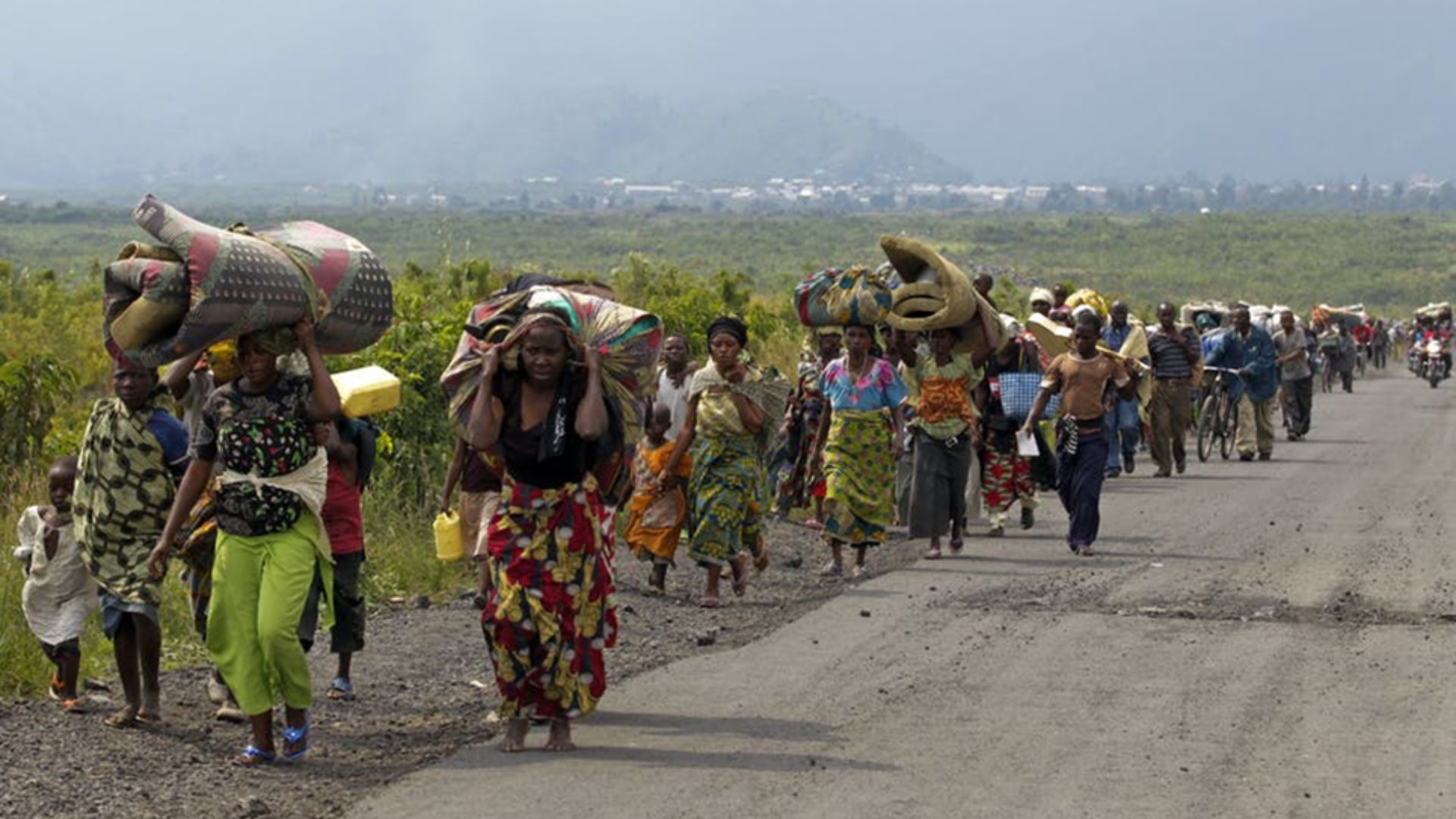
The conditions of migrants, produced by the unequal development and structural inequality of contemporary capitalism, should not be met with criminalization and securitization. Understanding migration through Marxist political economy and decolonial frameworks, not only allows us to understand mobility as rational human right, but it also allows us to harness the benefits of migration, in congruence with Pan African solidarity.
The movement of people across territories is as old as humanity itself. Migration has historically shaped civilisations, cultures, economies, languages, and political systems.[1] African societies themselves were built through centuries of movement, exchange, coexistence, trade, and mobility long before the colonial partitioning of the continent imposed rigid territorial boundaries.[2] Yet in the contemporary world, migration has increasingly become criminalised, securitised, and politicised.
Today, African migrants crossing deserts, seas, and borders are often represented through narratives of invasion, illegality, burden, and danger. Western governments spend billions militarising borders while simultaneously depending on migrant labour to sustain agriculture, healthcare systems, construction industries, domestic work, logistics, and service economies.[3],[4] The contradiction is both glaring and violent: the global economic system relies on migrant labour while frequently denying migrants full humanity, legal protection, and dignity.
Migration debates are often stripped of historical context. Rarely do dominant global narratives acknowledge that many of the migration patterns witnessed today are deeply connected to histories of colonial conquest, land dispossession, extractive capitalism, structural adjustment programmes, unequal trade relations, climate destruction, foreign military interventions, and political destabilisation.[5],[6],[7] Europe and North America frequently portray migration as an external threat while overlooking the role of imperial and economic processes in creating the conditions that contribute to displacement and economic desperation across the Global South.
The Mediterranean Sea has become a graveyard for thousands of migrants seeking survival and opportunity, while detention centres, deportation regimes, and externalised border controls continue to expand.[8],[9] Meanwhile, multinational corporations continue extracting wealth from African economies through global production systems that often reproduce unequal exchange. The same global order that permits the unrestricted movement of capital imposes increasingly restrictive barriers on the movement of poor and vulnerable populations.[10],[11]
Within Africa itself, migration has become entangled with xenophobia, unemployment, political scapegoating, and rising nationalist sentiments. Migrants are frequently blamed for social crises rooted in governance failures, corruption, economic inequality, and structural unemployment.[12] Instead of confronting systemic failures, political elites often redirect public frustration toward vulnerable migrant populations.
This article argues that migration is fundamentally a political and economic question tied to global inequality and historical injustice. It rejects dominant framings of migrants as threats and instead positions migration as a rational human response to systems of exclusion, dispossession, and unequal development. Drawing on decolonial theory, political economy, Pan-Africanism, and critical migration studies, the article contends that contemporary migration crises cannot be understood independently of coloniality, racial capitalism, labour exploitation, and global asymmetries of power.[13] It further argues that the future of Global Africa depends on building solidarities that transcend colonial borders and challenge systems that profit from displacement while criminalising displaced people.
Approaches to Understanding Migration
Migration has been interpreted through diverse theoretical traditions, each offering different explanations for why people move across geographical, political, and social boundaries. Conventional migration theories often emphasise economic motivations, labour market dynamics, demographic pressures, or individual decision-making processes. Neoclassical approaches, for example, tend to view migration as a rational response to wage differentials and employment opportunities between regions and countries.[14] While such explanations provide useful insights, they frequently overlook the historical and structural forces that shape mobility patterns.
A Marxist political economy perspective situates migration within broader systems of global capitalism, unequal development, and labour exploitation. From this standpoint, migration cannot be understood merely as the outcome of individual choice. Rather, it emerges from structural conditions that produce economic disparities between regions, creating pressures that compel populations to move in search of livelihoods, security, and opportunity.[15] Contemporary migration patterns are therefore closely linked to historical processes of colonial expansion, resource extraction, labour incorporation, and the unequal development of the global economy.
Decolonial scholars further argue that migration must be understood within the context of coloniality, a concept describing the persistence of colonial patterns of power long after the formal end of colonial rule.[16] Coloniality continues to shape global hierarchies of race, knowledge, citizenship, labour, and mobility. Consequently, contemporary migration routes frequently mirror historical colonial relationships, with former colonies often serving as major sources of migration while former imperial centres remain primary destinations.[17]
From a decolonial perspective, migration is not simply a demographic phenomenon but a reflection of enduring global inequalities. The economic vulnerabilities, political instabilities, and developmental challenges that contribute to migration are often rooted in histories of dispossession, conquest, and exploitation. As Rodney (1972) famously argued, the underdevelopment of Africa was not a natural condition but the outcome of historical processes through which wealth and resources were systematically extracted from the continent.[18] These legacies continue to influence contemporary patterns of mobility and exclusion.
Critical migration studies challenge dominant narratives that portray migrants primarily as security threats, economic burdens, or demographic risks. Instead, they emphasise the agency of migrants while recognising the structural constraints under which migration decisions are made.[19] Migration frequently emerges within contexts of structural inequality. Individuals and families move not only because of personal aspirations but also because economic and political conditions constrain their ability to secure sustainable livelihoods within their countries of origin. Migration therefore reflects both agency and necessity; both a survival strategy and an expression of human aspiration. It represents a response to systems that generate unequal access to resources, employment, education, and social mobility.[20]
Taken together, these theoretical perspectives suggest that migration should not be viewed as an isolated social problem requiring containment. Rather, it should be understood as a complex phenomenon embedded within historical, political, economic, and social processes. Examining migration through decolonial and political economy lenses enables a more comprehensive understanding of how global inequalities shape human mobility and why migration remains a central feature of the contemporary world.
Coloniality, Political Economy and Global Inequality
Contemporary migration cannot be understood independently of the historical processes that have shaped the global distribution of wealth, power, and opportunity. Patterns of migration that are often portrayed as recent crises are deeply rooted in centuries of colonial conquest, slavery, resource extraction, unequal exchange, and economic restructuring. These historical processes established global inequalities that continue to influence the movement of people across borders today.[21]
Colonialism was not merely a political system of territorial control. It was also an economic project designed to facilitate the extraction of labour, land, minerals, and other resources from colonised societies for the benefit of imperial powers. Across Africa, colonial administrations reorganised local economies to serve metropolitan interests, often disrupting indigenous systems of production, governance, and social organisation.[22] The consequences of these transformations remain visible in contemporary patterns of underdevelopment, dependency, and unequal economic growth.
The concept of coloniality helps explain why many of these inequalities persist despite the formal end of colonial rule. According to Quijano (2000), coloniality refers to enduring structures of power that continue shaping economic relations, knowledge systems, political institutions, and social hierarchies long after political independence has been achieved.[23] Mignolo (2011) and Ndlovu-Gatsheni (2013) similarly argue that coloniality remains embedded within contemporary global systems, influencing whose knowledge is valued, whose mobility is facilitated, and whose lives are rendered vulnerable.[24]
As environmental pressures intensify, migration is likely to become an increasingly important adaptation strategy for vulnerable populations. Addressing climate migration requires responses that recognise the interconnected nature of environmental sustainability, social justice, and human development. Policies that fail to address these underlying inequalities will remain inadequate in responding to the realities of climate-induced displacement.
A political economy perspective further highlights how contemporary capitalism reproduces and intensifies these historical inequalities. Global production systems often rely upon unequal relationships between wealthier and poorer regions, with labour and resources continuing to flow from the Global South to the Global North under conditions that frequently favour already prosperous economies.[25]
The implementation of structural adjustment programmes across many African countries during the 1980s and 1990s further deepened these vulnerabilities and further contributed to the migration of professionals. Promoted by international financial institutions, these programmes typically required reductions in public spending, privatisation of state assets, trade liberalisation, and market-oriented reforms as conditions for financial assistance. While applied in the name of economic growth, such measures often weakened social protection systems, reduced employment opportunities, and intensified economic insecurity for many communities.[26]
Critical scholars have also drawn attention to the contradictions of contemporary globalisation. While goods, capital, information, and financial investments move across borders with increasing ease, the movement of people—particularly those from poorer regions—is subject to extensive regulation, surveillance, and restriction.[27] This asymmetry reveals how mobility itself has become a site of power, where opportunities for movement are distributed unevenly according to nationality, class, race, and geopolitical position.
From a decolonial perspective, migration is therefore not simply about crossing borders. It is also about navigating a global order shaped by historical injustice and contemporary inequality. The journeys undertaken by many migrants reflect broader struggles for dignity, security, and opportunity within systems that continue to reproduce uneven development. Understanding migration in this way shifts attention away from narratives of crisis and toward the structural conditions that make migration both necessary and, for many, unavoidable.
Xenophobia, African Mobility and the Crisis of Solidarity
Migration within Africa has historically been an integral component of economic exchange, cultural interaction, trade networks, and social development. Long before the establishment of colonial borders, African communities moved across vast territories in pursuit of livelihoods, security, commerce, education, and social connections. These movements contributed to the formation of diverse societies and facilitated regional integration across the continent.[28] However, contemporary migration within Africa increasingly unfolds within political environments shaped by colonial boundaries, economic inequalities, and competing notions of citizenship and belonging.
One significant challenge confronting migration in Africa is becoming the persistence of xenophobia and anti-migrant sentiment. Across several countries, migrants are frequently blamed for unemployment, crime, housing shortages, pressure on public services, and broader socio-economic difficulties. Such narratives often emerge during periods of economic hardship and political uncertainty, when frustration with structural inequalities is redirected toward vulnerable populations rather than the underlying causes of social distress.[29] South Africa occupies a particularly significant position within these debates. As one of the continent's most industrialised economies, the country attracts migrants from across Africa seeking employment, education, business opportunities, and security. Yet South Africa has also experienced recurring episodes of xenophobic violence directed at African migrants. These incidents reveal how economic insecurity, unemployment, inequality, and political rhetoric can combine to produce hostility toward non-nationals.[30]
Importantly, xenophobic violence cannot be understood simply as a consequence of migration itself. Rather, it reflects deeper structural challenges relating to poverty, exclusion, governance failures, and unequal access to economic opportunities. Migrants often become convenient scapegoats for problems that originate in broader political and economic systems. In this context, anti-migrant discourse obscures the structural causes of social hardship while reinforcing divisions among populations facing similar forms of marginalisation.[31]
The persistence of xenophobia also raises important questions regarding Pan-Africanism and continental solidarity. Pan-African thinkers have long emphasised the interconnectedness of African peoples and the importance of cooperation in overcoming the legacies of colonialism, underdevelopment, and external domination. Yet xenophobic practices undermine these aspirations by reproducing exclusionary forms of nationalism that fragment African unity and weaken collective responses to shared challenges.
At the regional level, several initiatives demonstrate alternative approaches to migration governance. The Economic Community of West African States (ECOWAS), for example, has developed one of the most progressive free movement regimes on the continent. The ECOWAS Protocol on Free Movement seeks to facilitate mobility, residence, and economic participation among member states, recognising migration as a potential driver of regional integration and development rather than solely a security concern.[32] Such initiatives challenge restrictive approaches to migration and illustrate the possibilities of more inclusive mobility frameworks, but they need enforcement mechanisms.
Similarly, broader continental projects such as the African Continental Free Trade Area (AfCFTA) and the African Union's Free Movement Protocol reflect efforts to deepen economic integration and strengthen intra-African mobility. These initiatives acknowledge that movement can contribute to entrepreneurship, innovation, labour market development, and regional cooperation. By facilitating mobility, African states may be better positioned to harness the developmental benefits associated with migration while reducing barriers that limit economic participation across borders.
At the same time, regional integration alone cannot eliminate the structural inequalities that often shape migration experiences. Effective migration governance requires policies that address unemployment, inequality, social exclusion, and inadequate public services while protecting the rights and dignity of migrants. It also requires political leadership capable of resisting xenophobic narratives and promoting social cohesion within increasingly diverse societies.
From a decolonial perspective, the challenge is not merely to manage migration more efficiently but to reimagine mobility beyond the restrictive logic inherited from colonial systems of territorial control. Colonial borders continue to shape contemporary understandings of citizenship, belonging, and exclusion, often constraining the possibilities for deeper African integration.[33] A more inclusive approach would recognise mobility as a normal feature of social and economic life rather than a threat requiring constant regulation.
Ultimately, migration within Africa presents both opportunities and challenges. While mobility can contribute to development, cultural exchange, and regional cooperation, it can also expose underlying tensions relating to inequality, citizenship, and national identity. Addressing these tensions requires moving beyond narratives of blame and exclusion toward forms of governance grounded in solidarity, justice, and shared human dignity. In doing so, African societies may be better equipped to realise the transformative potential of migration while advancing broader aspirations for continental unity and collective prosperity.
Conclusion
Migration remains one of the most significant social, political, and economic realities of the contemporary world. Yet dominant migration narratives frequently obscure the historical and structural conditions that shape human mobility. This article has argued that migration cannot be understood solely through the lenses of border control, national security, or demographic management. Rather, migration is deeply embedded within broader systems of coloniality, global inequality, labour exploitation, environmental injustice, and uneven development.
Drawing on decolonial theory, political economy, and critical migration studies, the article has demonstrated that contemporary migration patterns are inseparable from the historical legacies of colonial conquest, resource extraction, and the unequal integration of African societies into the global economy. These historical processes continue to shape present-day disparities in wealth, opportunity, and mobility, creating conditions that compel many individuals to migrate in pursuit of security, dignity, and improved livelihoods.
The analysis further highlighted how contemporary border regimes increasingly rely on securitisation, militarisation, and externalisation strategies that expose migrants to heightened vulnerability and risk. The Mediterranean migration corridor and the experiences of migrants in transit countries illustrate the human consequences of migration governance systems that prioritise deterrence over protection. Through the lens of necropolitics, such practices reveal how access to mobility, security, and legal recognition is unevenly distributed within the contemporary global order. The recurrence of anti-migrant sentiment in parts of the continent further demonstrates the need for governance approaches that promote social cohesion, protect migrant rights, and advance the principles of Pan-African solidarity.
Ultimately, migration should not be viewed as a crisis in itself. Rather, it is often a symptom of deeper structural challenges rooted in historical injustice, unequal development, political instability, and environmental vulnerability. Meaningful responses to migration therefore require more than restrictive border policies. They demand efforts to address the conditions that drive displacement while simultaneously protecting the rights and dignity of those who move.
A people-centred approach to migration governance offers an alternative framework for addressing these challenges. Such an approach recognises migrants not as threats or burdens, but as human beings whose mobility reflects aspirations for security, opportunity, and wellbeing. By placing human dignity, social justice, and solidarity at the centre of migration governance, policymakers can move beyond exclusionary approaches toward more equitable and sustainable responses to human mobility.
The future of migration governance will ultimately depend on whether societies choose to respond to mobility through fear and exclusion or through justice and shared humanity. In an increasingly interconnected world, the challenge is not simply how to control migration, but how to create conditions in which mobility, rights, dignity, and development can coexist in ways that benefit both migrants and the societies of which they are a part.
Masilo Sepaela is an educator, academic researcher, and public policy scholar based in South Africa. His research interests include decoloniality, political economy, African development, public governance, migration studies, labour justice, and higher education transformation. He writes extensively on questions of inequality, social justice, state governance, and the future of Global Africa.
Endnotes
[1]Castles, S., de Haas, H., & Miller, M. J. (2014). The Age of Migration: International Population Movements in the Modern World (5th ed.). London: Palgrave Macmillan.
[2]Adepoju, A. (2007). Creating a borderless West Africa: Constraints and prospects for intra-regional migration. Migration Information Source. Washington, DC: Migration Policy Institute.
[3]Sassen, S. (2014). Expulsions: Brutality and Complexity in the Global Economy. Cambridge, MA: Harvard University Press
[4]Walia, H. (2021). Border and Rule: Global Migration, Capitalism, and the Rise of Racist Nationalism. Chicago: Haymarket Books.
[5]Rodney, W. (1972). How Europe Underdeveloped Africa. London: Bogle-L'Ouverture Publications.
[6]Amin, S. (1976). Unequal Development: An Essay on the Social Formations of Peripheral Capitalism. New York: Monthly Review Press.
[7] Harvey, D. (2005). A Brief History of Neoliberalism. Oxford: Oxford University Press
[8]International Organization for Migration (IOM). (2024). World Migration Report 2024. Geneva: IOM.
[9]United Nations High Commissioner for Refugees (UNHCR). (2025). Global Trends: Forced Displacement in 2024. Geneva: UNHCR.
[10]de Haas, H. (2023). How Migration Really Works: A Factful Guide to the Most Divisive Issue in Politics. London: Penguin.
[11]Walia, H. (2021). Border and Rule: Global Migration, Capitalism, and the Rise of Racist Nationalism. Chicago: Haymarket Books.
[12]Crush, J., & Ramachandran, S. (2017). Xenophobic violence in South Africa: Denialism, minimalism, realism. Migration Policy Series, 66, 1–28. See also Landau, L. B. (2011). Exorcising the Demons Within: Xenophobia, Violence and Statecraft in Contemporary South Africa. Johannesburg: Wits University Press.
[13]Mbembe, A. (2019). Necropolitics. Durham, NC: Duke University Press;
Quijano, A. (2000). Coloniality of power, Eurocentrism, and Latin America. Nepantla: Views from South, 1(3), 533–580;
Achiume, E. T. (2019). Migration as decolonization. Stanford Law Review, 71(6), 1509–1574.
[14]Castles, S., de Haas, H., & Miller, M. J. (2014). The Age of Migration: International Population Movements in the Modern World (5th ed.). London: Palgrave Macmillan.
[15]Amin, S. (1976). Unequal Development: An Essay on the Social Formations of Peripheral Capitalism. New York: Monthly Review Press.
Harvey, D. (2005). A Brief History of Neoliberalism. Oxford: Oxford University Press.
[16]Quijano, A. (2000). Coloniality of power, Eurocentrism, and Latin America. Nepantla: Views from South, 1(3), 533–580.
[17]Mignolo, W. D. (2011). The Darker Side of Western Modernity: Global Futures, Decolonial Options. Durham, NC: Duke University Press.
Ndlovu-Gatsheni, S. J. (2013). Coloniality of Power in Postcolonial Africa: Myths of Decolonization. Dakar: CODESRIA.
[18]Rodney, W. (1972). How Europe Underdeveloped Africa. London: Bogle-L'Ouverture Publications.
[19] de Haas, H. (2023). How Migration Really Works: A Factful Guide to the Most Divisive Issue in Politics. London: Penguin
[20]Castles, S., de Haas, H., & Miller, M. J. (2014). The Age of Migration: International Population Movements in the Modern World (5th ed.). London: Palgrave Macmillan.
[21]Quijano, A. (2000). Coloniality of power, Eurocentrism, and Latin America. Nepantla: Views from South, 1(3), 533–580.
Rodney, W. (1972). How Europe Underdeveloped Africa. London: Bogle-L'Ouverture Publications.
[22]Rodney, W. (1972). How Europe Underdeveloped Africa. London: Bogle-L'Ouverture Publications.
[23]Quijano, A. (2000). Coloniality of power, Eurocentrism, and Latin America. Nepantla: Views from South, 1(3), 533–580.
[24]Mignolo, W. D. (2011). The Darker Side of Western Modernity: Global Futures, Decolonial Options. Durham, NC: Duke University Press.
Ndlovu-Gatsheni, S. J. (2013). Coloniality of Power in Postcolonial Africa: Myths of Decolonization. Dakar: CODESRIA.
[25]Amin, S. (1976). Unequal Development: An Essay on the Social Formations of Peripheral Capitalism. New York: Monthly Review Press.
Harvey, D. (2005). A Brief History of Neoliberalism. Oxford: Oxford University Press.
[26] ibid
[27]Sassen, S. (2014). Expulsions: Brutality and Complexity in the Global Economy. Cambridge, MA: Harvard University Press.
Walia, H. (2021). Border and Rule: Global Migration, Capitalism, and the Rise of Racist Nationalism. Chicago: Haymarket Books.
[28]Adepoju, A. (2007). Creating a borderless West Africa: Constraints and prospects for intra-regional migration. Migration Information Source. Washington, DC: Migration Policy Institute.
[29]Crush, J., & Ramachandran, S. (2017). Xenophobic violence in South Africa: Denialism, minimalism, realism. Migration Policy Series, 66, 1–28.
Landau, L. B. (2011). Exorcising the Demons Within: Xenophobia, Violence and Statecraft in Contemporary South Africa. Johannesburg: Wits University Press.
[30]Crush, J. (2008). The Perfect Storm: The Realities of Xenophobia in Contemporary South Africa. Cape Town: Southern African Migration Project.
Misago, J. P., Freemantle, I., & Landau, L. B. (2015). Protection from Xenophobic Violence? An Assessment of Government and Civil Society Responses in South Africa. Johannesburg: African Centre for Migration and Society.
[31]Landau, L. B. (2011). Exorcising the Demons Within: Xenophobia, Violence and Statecraft in Contemporary South Africa. Johannesburg: Wits University Press.
Walia, H. (2021). Border and Rule: Global Migration, Capitalism, and the Rise of Racist Nationalism. Chicago: Haymarket Books.
[32]Adepoju, A. (2007). Creating a borderless West Africa: Constraints and prospects for intra-regional migration. Migration Information Source. Washington, DC: Migration Policy Institute.
[33]Ndlovu-Gatsheni, S. J. (2013). Coloniality of Power in Postcolonial Africa: Myths of Decolonization. Dakar: CODESRIA.