


Global Africa, Reparative Justice and Women’s Health
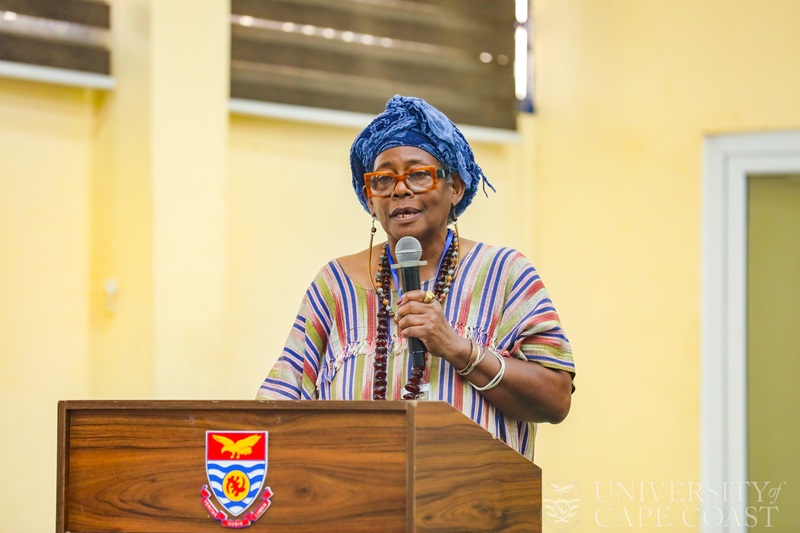
An in-depth analysis with content mostly missing in conversations about reparations and reparative justice; delivered at the African Liberation Day Commemoration held on 23 May 2026 at the University of Cape Coast, Ghana.
Thank you very much, Dr. Mario Nisbett, Director of the Center for African and International Studies, Prof. Emmanuel Y. Tenkorang, Dean of the School for Development Studies, our Member of Parliament for Cape Coast North Kwamena Minta Nyarku, distinguished fellow program participants and honored guests. I am honored beyond words to be in Ghana for the first African Liberation Day celebration after universal acknowledgment and acceptance of our enslavement as the greatest crime against humanity.
But most of all, I want to thank you, the audience members who made a conscious decision to spend a few hours with a few like-minded people to explore what African Liberation Day could mean in 2026, especially with the theme “Global Africa, Reparative Justice and International Law.”
You have heard from community leaders with solidarity statements. You have heard statements that can contribute to furthering your political education on various topics. These have included reflections on contemporary struggles facing Africans and oppressed people worldwide.
And being Africans, we have definitely included our culture with the artistic expression of the Akomapa Dance Troupe. Can we give them another round of applause?
While my presentation includes several of these aspects, I also hope that you will see ways in which you can further your community connections and organize in all our interests.
But first a little about my organization based in the United States
Global Pan African Movement North America (GPAM) seeks to assert and defend the rights of Africans worldwide, and of working people. And we recognize that to do that requires that we look at specific segments or constituencies such as the women, peace, environmental justice, and spiritual health of Africans everywhere.
Our effort is to be as close as possible to Pan Africanism from below, bringing together the best traditions of Pan African struggles and ideas to inform our work. We learn from but are not subservient to The Great Man Theory of History. Our focus for African Liberation Day 2026 is reparative justice, which includes reparations. But more on that later.
In 2026, there are many variants of Pan Africanism, taking varying organizational forms. Why is that?
Your historic president, Osagyefo Kwame Nkrumah, called the first meeting of Africans on the continent in 1958 with the All-African Peoples Conference. We should all be familiar with the subsequent political struggles, including military warfare that occurred from then until now, engulfing the continent in waves of destabilization.
Yet in the aftermath of the specific struggles against apartheid, the Pan African consciousness was so strong that the OAU transformed into the AU. Unfortunately, this AU became informed by the neoliberal ideas of global capital and, in principle, turned their backs on the African communities they represented. In 2026, the President of Kenya, William Ruto, can announce that the AU of today is incapable of taking Africa into the future because the AU, in general, acts at the behest of imperial or western powers.
We are concerned about the recent actions and inactions of the African Union. For instance, with the lack of responses to the NATO destruction of Libya and to the issues of defending Black lives. With their failure to address regional and then broader unification on the continent and beyond, such as the rejection of Haiti as a member. And in a stunning rebuke – the failure to acknowledge the dedication of Cuba and the medical professionals who went deep into rural areas in all their countries and saved thousands of lives and built critical health infrastructure. And for the theme today – an incoherent response to Global Africa and Reparative Justice.
What is Global Africa?
For a number of years, the AU and the associated organs ‘ran’ from Africans in the Diaspora. It was very clear that their concern was only with continental Africans. And then someone did the math. And the math wasn’t ‘mathing’. What was the big discovery? That Africans in the diaspora who came directly from a country of origin were contributing more than 5.1% (or US$95 billion) to the continent’s GDP. This was and remains one of Africa’s largest and most stable sources of external finance. But there was another problem. It was untaxed revenue – little flowed directly into government coffers. Hundreds and then thousands of cash in all currencies were carried home each December and contributed to development projects. Brothers and sisters made purchases and had them delivered not only to homes but to schools and hospitals in urban and rural areas. And the governments wanted access to this cash.
This was the real impetus for the development of the Sixth Region of the AU.
In the Constitutive Act of the African Union,[1] of July 2000 under the proposed amendment to Article 3(q) of the Act (Objectives), the following is stated regarding the African Diaspora: “invite and encourage the full participation of the African Diaspora as an important part of our continent, in building the African Union.”[5] Later the African Union in 2003 formally adopted the following definition for its concept of the African diaspora as the : “The African Diaspora consists of peoples of native or partial African origin living outside the continent, irrespective of their citizenship and nationality and who are willing to contribute to the development of the continent and the building of the African Union.”
BUT who are we really talking about? Who represents this Global Diaspora?
Scholars have identified voluntary and involuntary dispersals of African people ranging from the 8th to 18th Century to Arabia, the Levant and Indian Subcontinent, from the 16th to 19th Century to Brazil, North America, the Caribbean and Latin America to the Post-World War ll Diaspora from 1945 to 1990 to Former and European colonial countries, and then the Post-Cold War Diaspora from 1990 to Present Western Europe, North America. Many Africans were responding with their feet to political and economic challenges within their own countries. Or simply desirous of a change of pace.
That gives you some idea of where we are and perhaps when we got there? But who are we?
We’re 160 to 200 million people worldwide. Only 43 million in the United States because of 11 million enslaved Africans transported to the Western Hemisphere as part of the establishment of corporate capitalism.
67% or just over 27,000,000 are Afro descendants in the Caribbean, with Brazil having the highest number of Africans outside of continental Africa.
South America purports not to keep statistics but looking at available country specific data, over 24,000,000 people could be classified as Africans. And Central America tips the scale at 1,500,000.
Europe keeps better statistics with several countries specifically delineating between those who are born there and “Black Sub-Saharan African”, and comes in at over 15 million for both.
And then the area most people forget about – Asia stands up with less than half a million and the Indian sub-continent with less than 1 million.
We are people who speak most languages of the world.
We are English-based, French-based, Italian-based and Spanish-based depending on those who subjugated us or where we voluntarily migrated.
We have developed Creoles and Patois.
We are Muslims, Animists, Buddhists, Christian and atheists.
We have ritual languages that are used for our religious and communal rites.
We have contributed to most languages with specific structures and words.
And in any geographical region, you can find layers upon layers of complexity and subgroups.
You are beginning to see, I hope, how complex it becomes when you’re discussing representation of the Sixth Region. And for Ghana, your Seventeenth Region.
Reparative Justice
Let’s move now to the question of reparatory justice.
Once the concept of the ‘involuntary’ is introduced, it is clear that somebody did something to someone else without their consent.
Africans were forcibly taken from their homes.
African communities were disrupted and often destroyed when the best of their people were stolen from them.
Enslaved Africans were denied their humanity, denied freedom, denied opportunities for personal growth and development.
Reparatory justice is complex and multi-dimensional. At its heart, reparatory justice seeks to make amends for past wrongs and to provide redress for the physical, material and moral damage inflicted on individuals, groups and nations.
What Are We Looking At?
Reparative justice typically involves five key elements, widely recognized in human rights law:
-
Restitution: Returning victims to their original state before the harm occurred (e.g., returning stolen property or rights).
-
Compensation: Providing financial or material payout for quantifiable losses, physical injuries, or emotional suffering.
-
Rehabilitation: Offering medical, psychological, legal, and social support to help heal the victims.
-
Satisfaction: Actions that restore honor and dignity, such as public apologies, official acknowledgments of guilt, or memorialization.
-
Guarantees of Non-Repetition: Institutional reforms to ensure the harm is never allowed to happen again.
What does Reparative Justice look like, realistically?
A. Africans were forcibly taken from their homes.
Restitution: Who? We don’t know specifically in most cases, but we have very good estimates of numbers, and we know their descendants. They cannot be restored to their original condition.
Compensation: There are economic models showing the value of labor based on increase of GDP and other measures for the host countries. Some funds could go to individuals, others to institutions.
Rehabilitation: Inherited trauma is just being recognized and can be used for psychological support; some are utilizing legal means where ancestors were known, and social support for lingering impacts.
Satisfaction: An acknowledgement of the actual history as opposed to the revisionist whirlwind sweeping the educational systems would be an initial step.
Guarantees of Non-Repetition: Creation of legal systems, formal structures and social conditioning that would bar any reactivation.
B. African communities were disrupted and often destroyed when the best of their people were stolen from them.
Now, let’s look at the key aspects from an African continental perspective. Perhaps, even a Ghanaian perspective.
Restitution: Again, which communities? First, many African societies still fail to acknowledge that they were, in fact, affected by human enslavement.
Compensation: Same issue. There are similar models, beginning with Walter Rodney’s demonstration of the loss of economic power felt by West African countries.
Rehabilitation: Same issue as above: psychological based on inherited trauma, legal where ancestors were known and social support for lingering impacts.
Satisfaction: An acknowledgement of how their ancestors were treated, both initially and even today, with museum exhibits of stolen African remains and artifacts.
Guarantees of Non-Repetition: This is where the matters become really complicated. For instance, economic re-enslavement is occurring today through the imposition of draconian measures to force countries to give up priceless raw materials in return for limited financial gains.
Reparations, as the term is commonly used, which at its core represents a financial transfer of funds, comes under restitution or compensation.
Reparatory justice looks at how to make all humans whole. Not just the ones negatively impacted. But also, the ones doing the impacting. And this is why the last component, guarantees of non-repetition, becomes so important.
Someone can write a check. Make a deposit. And still be a bad actor.
Someone can write a new law that benefits Africans abroad. And still be a bad actor.
There is only one way to avoid repetition, and that is to include ALL actors, Africans and non-Africans, under appropriate rehabilitation and satisfaction measures. That is reparatory justice. That ensures that there will not be a repetition of the thinking that allows for such reprehensible political processes to develop in the first place.
Liberation and Women’s Health
Please let me share one other area of concern before I close. I need to talk about, with and to my sisters for a few minutes.
African women in matrilineal, matrifocal and patrilineal societies have played key roles in adding value to their communities.
We have been at the forefront to retain those spiritual values that provided a base for community stability and personal, sexual and economic autonomy.
We have built important shrines and places of spiritual reflection.
We have led collective work, cooperatives, village councils and urban governments.
We have led revolutions and staffed the kitchen as a matter of course.
Yet today, African women are slowly dying, and few people are paying attention.
And am I being dramatic? I think not.
Pregnancy-related mortality rates among black women are over three times higher today than the rate for white women (49.4 vs. 14.9 per 100,000). Pregnancy-related deaths are deaths that occur within one year of pregnancy.
Approximately one in five (20%)[2] deaths occur during pregnancy, nearly one quarter (23%) occur during labor or within the first week postpartum, and more than half (57%) occur one week to one year postpartum, underscoring the importance of access to health care beyond the period of pregnancy.
Recent data show that more than eight out of ten (87%) pregnancy-related deaths are preventable.[3]
For our babies - similar statistics prevail - black, American Indian or Alaska native (AIAN), and native Hawaiian or pacific islander (NHPI) women also have higher shares of preterm births, low birthweight births, or births for which they received late or no prenatal care compared to white women.
We are dying. Our babies are dying during the most profound and creative act of our existence.
Recently, in GPAM, we discussed Black women’s health in the US today. And many of the points raised are unfortunately equally applicable to African women worldwide.
We face underdiagnosed health challenges, particularly focusing on uterine fibroids and endometriosis. These conditions are often normalized or dismissed in healthcare settings.
We face barriers to accessing proper diagnosis and treatment, including limited healthcare infrastructure, high costs, and fragmented care across different specialties.
We need more community-based approaches, many of which have been developed throughout the Global South over the last few decades.
We need more internal resources, need to support testimony-based advocacy (that is listen, really listen to the sisters when they speak about their health), and make public statements about reproductive justice issues.
We need to validate our own experiences based on centuries of traditional plant-based care.
We need to reduce the challenges faced by birth workers and midwives in home-based and institutional care by highlighting the knowledge and practices that improve health outcomes.
And finally, we need to acknowledge that uterine fibroids can be inherited and connected to racialized trauma. Living in oppressive communities for some women can lead to inflammation and chronic disease. Epigenetics then becomes a key factor in how genes express conditions like fibroids.
If pregnancy-related deaths are preventable, and if the increase in uterine fibroids can be prevented, then why isn’t the health care system doing something about it? Currently, only 6% of medical research in the US focuses on the health challenges of Black women.
We need to create liberatory care systems and community support to address these issues, noting that toxic environments and a lack of protective community structures contribute to health problems for Black women.
We need to ensure that the health care system can change and that programs of reparatory justice be initiated by independent institutions, most commonly universities and churches, to develop health care practitioners from a rehabilitation and guarantees of non-repetition framework. Such programs should seek to address the material and moral injustices of the past in ways that reflect the historical harms inflicted by those institutions with the intention of building a better future. To do that, we need to change everybody connected to these systems.
I want to close with a few verses from Andra Day’s song “Rise UP” – A good pastor and a good organizer should be able to sing, but I will simply read this to you.
Rise Up _ Andra Day
When The Silence Isn't Quiet
And It Feels Like It's Getting Hard To Breathe
And I Know You Feel Like Dying
But I Promise We'll Take The World To Its Feet
Move Mountains
Bring It To Its Feet
Move Mountains
And I'll Rise Up
I'll Rise Like The Day
I'll Rise Up
I'll Rise Unafraid
I'll Rise Up
And I'll Do It A Thousand Times Again
For You
For You
For You
For You
All We Need, All We Need Is Hope
And For That We Have Each Other
And For That We Have Each Other
And We Will Rise
We Will Rise
We'll Rise
We'll Rise
I'll Rise Up
Rise Like The Day
I'll Rise Up
In Spite Of The Ache
I Will Rise A Thousand Times Again
And We'll Rise Up
High Like The Waves
We'll Rise Up
In Spite Of The Ache
We'll Rise Up
And We'll Do It A Thousand Times Again
For You
For You
For You
For You
Julialynne Walker acknowledges over three decades of experience advocating for social change, having been deeply involved in movements such as the Civil Rights Movement and African liberation struggles. She currently holds a position as an Executive Committee member for the Global Pan African Movement (GPAM) and is a founding member of the Urban Farmers Coalition. Driven by a passion for food justice, empowering communities, and fostering connections across Global Africa, she actively engages in various initiatives. Julialynne lectures on the African Diaspora and urban agriculture to both academic institutions and the broader community, and has received recognition for her cross-sectoral contributions. She serves as the CEO of Africa and Diaspora Development Linkages.
Endnotes