


The Nuclear Noose Tightening Around the South African Government
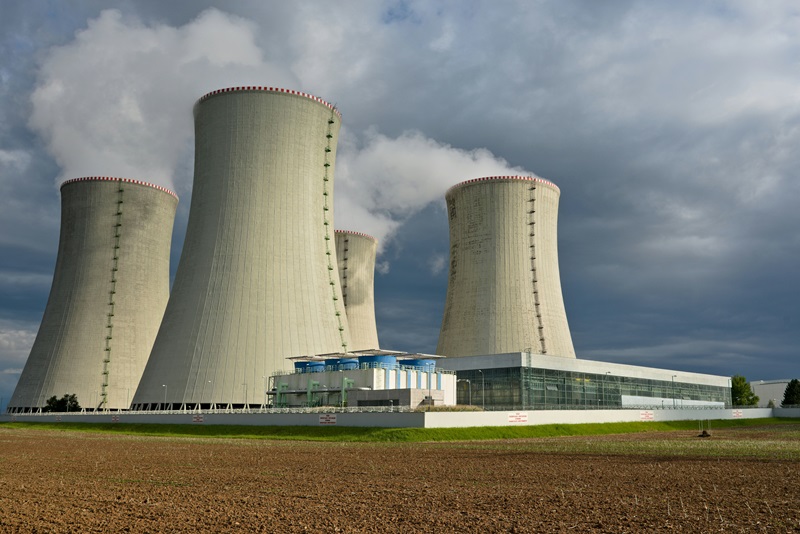
Amid politicking over South Africa’s nuclear energy policymaking and diplomatic tensions, will the South African government put its nuclear plans to a referendum?
On Monday 27 April, South Africa (SA) celebrated the Freedom Day public holiday which marks the date the country held its first non-racial democratic elections back in 1994. Although most ordinary South Africans enjoy far greater freedom than they did under Apartheid, there is an area in which their freedom to determine their collective fate appears to be being diminished; that of nuclear policymaking. Here limited scope for public participation in nuclear decision-making and low rates of knowledge and information on nuclear power hinders citizens’ ability to meaningfully participate where such opportunities are made available. Subsequently, there is little prospect for ordinary South Africans to influence the government’s plans to add at least 5,200MW of nuclear energy capacity to the grid by 2039 to supplement the nuclear energy output of the country’s sole existing nuclear power station at Koeberg in the province of the Western Cape. The little freedom they have to influence nuclear policymaking looks set to be restricted even further in the face of the tough diplomatic pressure to which the SA government is being subjected by the United States (US) government. It is generally agreed that this diplomatic pressure can be attributed in large part to the SA government’s foreign policy stance, principally its decision to bring charges of genocide against close US ally Israel at the International Court of Justice. To alleviate this pressure and appease the US administration under President Trump, it appears as if the government is readying itself to cut a deal with US interests in the nuclear and AI sectors. This author has argued elsewhere that this deal would entail the granting of concessions to US Big Tech companies in South Africa’s nuclear and AI industry, including by allowing them to power their energy-hungry data centres using Small Modular Reactors (SMRs), in return for a respite from US diplomatic pressure.
At first glance, striking such a bargain would seem to represent a nimble act of diplomatic dexterity that bears the hallmark of foreign policy genius as it would cost the government relatively little in terms of diplomatic capital since it would not force it to choose between the US and other Western countries or BRICS allies. The SA government would still retain leeway to partner with state actors from BRICS countries; principally Russia, which seems to be the preferred partner of many in the African National Congress (ANC) - the party that led the liberation movement and is now the biggest party in the Government of National Unity (GNU); to build larger and more cost-effective reactors at two of the public power stations to be operated by state utility Eskom whilst affording it the freedom to engage or partner with US interests by granting corporations which the administration favours permission to build SMRs, access enrichment technology, technological skills and critical minerals. Cynically speaking, hints that the government may have already resolved in principle to pursue this course of action can be found in President Ramaphosa’s recent controversial decision to deploy troops to five of SA’s nine provinces for at least a year, ostensibly to curb crime and combat illegal mining activities. His decision to deploy these troops to areas where critical nuclear installations are currently located or planned has left several crime intelligence experts and commentators baffled. Presumably, any confusion related to this decision could be dispelled if it was understood to be a preventative measure, to quell any local popular opposition that might arise in response to the state’s nuclear plans in general or its decision to partner with US companies in particular.
Upon closer inspection, however, this balancing act might not be as slick as it at first appears. Indeed, it might be downright foolhardy for the SA government to even countenance this notion given the risk of ensnaring the country into a precarious economic position where the real consequences are far greater than that that could be wrought by any plague invoked in one of President Trump’s notorious late-night social media tirades. In support of this view, consider assessments that the global data centre market is saturated or forecasts that that over-investment in these facilities is leading to the creation of a financial bubble or has already done so. To protect the substantial investments they have already made in this infrastructure and reduce the uncertainty and risk to which they are exposed, the same Big Tech oligarchs which the SA government would have to court have sought assurances from the US government to prevent them from suffering crippling financial losses if negative market predictions cited above are realised. These guarantees, in addition to the tax and regulatory concessions, they are eligible for under existing federal and state initiatives to stimulate the growth of the US’s AI sector, have been justified on the grounds that it is necessary to induce these companies to invest more heavily in the development of this technology and ensure US dominance in this sector. This essentially amounts to extorting the equivalent of a blank cheque from the US government in the form of a public bailout in terms of which the US taxpayer would foot the bill should this bubble burst and investment have to be stalled in this sector, which the US administration believes is critical to its national interest. There is little reason to presume that these companies will not lobby to extract similar guarantees and try to impose the same favourable conditions on the SA government.
In SA, however, providing such assurances or accepting these conditions would expose the country, with its far smaller economy and rising public debt level which is starting to raise alarms after a recent modest credit ratings upgrade, to potentially enormous economic risks. These risks will become unavoidable should these companies default on their commitments and the country has to bail them out or foot the bill directly from the fiscus to finance any infrastructure projects left incomplete in the event they abandon their SA investments. Underwriting this expenditure would be catastrophic for economic growth and development even if these companies do not renege on their commitments. Introducing this level of volatility into SA’s public finance system would effectively amount to the placement of a financial time-bomb in the centre of the economy which, if detonated, would weaken the country economically and invariably undermine its foreign policy independence. During this period of intense geopolitical tensions, it does not require a great deal of conspiracy-mindedness to conclude that this scenario would strengthen the hand of the shadowy ‘economic hitmen’ who desire to erode SA’s sovereignty and bend the direction it takes in its economic and foreign policy affairs.
Although the astute SA policymaker is likely to recognise the clear economic threats which this strategy exposes the country to and the foolhardiness of trying to appease a fickle US President whose decision-making is becoming increasingly unstable and erratic, they might nonetheless be inclined to believe that there exists few avenues, if any, available to the SA government to mitigate these risks without provoking severe political blowback domestically let alone internationally. The most obvious way the government could try to do so is by excluding these companies from the country. Alternatively, it could reject the model and variants thereof under which private enterprises would be permitted to generate their own electricity using SMRs or enter into exclusive power purchase agreements with other private companies or the public utility to purchase electricity generated from SMRs that have been purposefully built to supply their electricity needs. Excluding them, however, would only risk antagonising the US even further. It would also immediately place immense strain on the already fraught relationship between the major alliance partners in the GNU, principally the ANC and western-oriented Democratic Alliance (DA), possibly leading to the collapse of the GNU and consequent political ramifications thereof. Alternatively, the government could scrap plans to expand its nuclear capacity altogether. While sound energy market analysis suggests that it would be possible to do so without jeopardising the country’s energy supply needs or hobbling the country’s anaemic economic growth rate, this option is unlikely to be seriously considered by SA politicians of all persuasions. Primarily because the opportunity cost for any serious individual political contender for high office is so high that none would be brave enough to propose foregoing nuclear power, at least without some powerful external incentive.
For leading contenders vying for high office in the ANC, the country’s largest party, where an open elective conference is coming up next year, none of them would dare float this idea given the significant public spending the buildout nuclear infrastructure would involve and subsequently reverse falling electoral support through promises of job opportunities created by large public infrastructure spending. By similar reasoning, the possibility of presiding over a substantial public infrastructure building programme such as that entailed in a nuclear build would grant aspirant office bearers control over a war chest which would enable them to dispense largesse to the entrenched patronage networks that have sprung up around the ANC. These likelihoods prove too enticing, for any politician or political faction which seeks to ascend to leadership and remain in power, to forego. It would also mean foregoing the opportunity to deepen economic and technological ties with Russia, a country that has made energy diplomacy a cornerstone of its African foreign policy. This would threaten its continental standing with Russia vis-à-vis other major African countries like Egypt and Ethiopia that have not only established ties with Russia in the nuclear field recently but reportedly blocked a BRICS declaration that would have backed SA’s bid for a seat on an expanded UN Security Council last year. Coming out against nuclear power would also be perceived as a snub by other BRICS nations like Brazil and India that chafe under having to develop under stricter environmental regulations and are keen to overcome this disadvantage by cooperating with SA in the nuclear energy sphere.
The centre-right DA, the second biggest party in SA which is currently a partner in the GNU but had long been the official opposition in Parliament, is also unlikely to push for the scrapping of plans to expand nuclear power capacity despite having been vehemently opposed to the government’s nuclear plans when in opposition and even when in government, albeit less so. Traditionally seen as the champion of the political interests of Big Business in SA, especially white commercial interests, they have been very careful to emphasise that their position is not based on opposition to nuclear energy per se but on opposition to corruption and demands for greater financial transparency. This is a tactically shrewd position as opposing nuclear power in principle could jeopardise the commercial interests of Western and domestic supporters which back the DA and share an ideological affinity with them should the government opt to proceed with its plans to expand nuclear power capacity without their support. This is likely to be especially damaging for the DA in the Western Cape, the only province run by the DA, where these companies have already made substantial investments. Opposition to nuclear power would also throw their continued participation in the GNU into doubt, an outcome foreshadowed by the furore surrounding their decision to legally challenge the National Energy Regulator of South Africa’s decision to approve the procurement of 2,500MW of new nuclear power in 2024. Their withdrawal from the GNU might clear the way for the ANC to invite parties like the Economic Freedom Fighters and the uMkhonto weSizwe party, both breakaway parties from the ANC, to become governing partners in a reconfigured GNU. Ideologically closer to the BRICS countries than the West, in their public professions at least, this would mean that any nuclear deal entered into by a GNU from which the DA was excluded may benefit Western rivals China and Russia and deepen their influence within SA.
Less apparently, opposing nuclear power could act to reduce whatever edge the DA believes could be gained in negotiations with national government for greater provincial autonomy due to the existence of a small but vocal movement that favours the secession of the Western Cape or at least the holding of a referendum thereon. By opposing the expansion of nuclear power capacity, the dependence of the Western Cape, the sole province the DA governs on its own, on the national electricity grid to meet the province’s growing population’s energy needs is increased. Increased energy dependence on the rest of SA would raise questions about the potential of an independent Western Cape to achieve energy independence and ensure energy security and thence its viability as an independent state. More so since climate models predict that this province will become drier as the planet heats up resulting in it having to rely increasingly on energy-intensive desalination plants to meet its water needs. With the viability of an independent Western Cape in question, whatever leverage the DA believes the threat emanating from the secessionist lobby in the province might give it to push for increased devolution of powers from national down to provincial government is likely to be reduced. Consequently, its ability to satisfy the demands of the more separatist-minded within the party and counter the electoral threat posed by the smaller and more conservative parties which have been whittling away at its support in the province will be reduced.
Such are the political realities which overshadow nuclear deliberations within South Africa’s two main political parties. To these internal political dynamics can be added external considerations such as the thorough job which the domestic pro-nuclear lobby has done of packaging nuclear energy as a crucial part of the country’s Just Energy Transition, the historical strength of the country’s minerals-industrial lobby and the tone of natural resource chauvinism which permeates all levels of political discourse in SA. Factor in fears that will invariably be evoked among South Africans by nuclear supporters that the country risks being plunged back into years of chronic load-shedding (viz. rolling electricity blackouts) which the public utility has only recently managed to bring down to manageable levels if it does not expand nuclear power capacity and sober-minded politicians of all stripes are apt to concede that the country has little choice but to accept the grand bargain which the government appears to be readying itself to make with the US.
Notwithstanding their resigned outlook, there may be a political way for SA to free itself from the nuclear noose which is slowly tightening around the government and prevent the country from being ensnared in an economic debt trap which could ultimately undermine national sovereignty and political stability. The government could do so by putting its nuclear plans to a popular referendum. Holding a referendum would confer a number of advantages on the government in the high-stakes nuclear gamble it is being forced to play with the US. Crucially, these benefits will be realised no matter whether the pro or anti-nuclear camps carry the vote. Foremost of these advantages is that holding a referendum means holding off committing to a deal which comes with a potentially catastrophic price tag until a referendum is held and the outcome is in. This delay might buy the SA government precious time to hold out till the end of the current US administration after which, hopefully, a less temperamental American president would be elected. It would also afford the government additional time to observe trends in the AI datacentre market to better assess market conditions before embarking on this risky venture.
Moreover, delaying this decision to allow for the democratic process to unfold would also enhance SA’s democratic bona fides. This may win the country sympathy with an American public that has been fed blatant lies and distortions about SA, including by certain segments of the SA population, and is itself growing frustrated with leaders who are exhibiting increasingly autocratic tendencies. Public sympathy in the US could, in turn, purchase the country a certain amount of insurance against the actions of more nefarious elements in US intelligence and foreign policy circles that may wish to foment a ‘colour revolution’ in a country whose government the US president, prominent opinion makers and commentators have publicly accused of being racist and complicit in perpetrating a genocide against members of its white population group.
Yet the biggest benefits might accrue to the GNU domestically, where its legitimacy among many South Africans is still in question. Its legitimacy is likely to be further eroded given the stagnant economy blighted by a stubbornly high unemployment rate, especially amongst young people, entrenched socioeconomic inequality, declining trust in public institutions and the fading lustre of SA’s hard-won democracy, as attested by falling rates of voter turnout for instance. Under these circumstances, affording citizens a direct say in the policy direction they would like the government to take in the singularly important area of its nuclear affairs might serve to confer legitimacy on the government and bolster civic faith in the country’s democratic institutions. Provided, that is, sufficient time is afforded to increase low levels of public knowledge of nuclear issues by running suitable public education and awareness campaigns. Increased popular legitimacy and greater public trust may just be what the country needs to usher in the Spirit of 1994 which silenced naysayers and proved pessimists who positively seemed to relish the prospect of a violent transition from Apartheid to a non-racial New South Africa wrong. But for this reason alone, the SA government ought to put the country’s nuclear plans to a popular vote. Asivote!
Dr Gerard Boyce is an Economist and Senior Lecturer in the School of Development at the University of KwaZulu-Natal (Howard College) in Durban, South Africa. He writes in his personal capacity.
Endnotes
1 Heart of the matter: nuclear attitudes in South Africa
2 Knowledge, awareness, and perception of senior high school learners towards nuclear energy: A
South African case study: African Journal of Science, Technology, Innovation and Development: Vol
15 , No 7 - Get Access
3 SA’s new energy blueprint: 6,000MW gas and 5,200MW nuclear power by 2039
4 https://nuclearnewsafrica.com/koeberg-nuclear-power-station-south-afric…
5 Chairman McCaul Calls upon Biden Administration to Intervene in South Africa's Meritless
Genocide Case Against Israel at ICJ | Republican Foreign Affairs Committee
6 Are US-South Africa ties at breaking point over Israel’s war on Gaza? | Israel-Palestine conflict
News | Al Jazeera
7 The Commercial Impetus Behind Trump’s Targeting of South Africa - CounterPunch.org
8 https://www.anc1912.org.za/
9 https://www.africanlawmatters.com/blog/south-africas-government-of-nati…-
in-a-fractured-democracy
10 https://www.dailymaverick.co.za/article/2026-02-16-ramaphosas-decision-…-
deeply-flawed-heres-why/?dm_source=blocks-grid&dm_medium=card-link&dm_campaign=inform
11 https://www.parliament.gov.za/press-releases/media-statement-academics-…-
committee-against-prolonged-sandf-deployments-fight-against-crime
12 https://www.oliverwyman.com/our-expertise/insights/2026/jan/impact-ai-b…-
financial-markets.html
13 https://truthout.org/articles/with-big-tech-talking-government-backing-…-
to-fail/
14 https://www.marketwatch.com/story/has-ai-gotten-too-big-to-fail-how-the…-
backstopping-the-tech-boom-a2523dff
15 https://www.whitehouse.gov/wp-content/uploads/2025/07/Americas-AI-Actio…
16 https://sundaytribune.co.za/business-report/economy/2026-03-10-salga-ur…-
action-on-rising-national-debt/
17 https://www.treasury.gov.za/comm_media/press/2025/2025111401%20Media%20…-
%20Government's%20response%20to%20SP%20Global%20Ratings%20.pdf
18 https://www.da.org.za/
19 https://cms.climatecommission.org.za/uploads/images/PCC-Electricity-Pla…-
Recommendations-Report_2023-06-01-143447_hccs.pdf
20 https://www.dailymaverick.co.za/article/2025-12-10-the-race-to-rule-the…-
numbers-new-frontrunners/
21 https://www.anc1912.org.za/anc-succession-debate/
22 https://www.nuclearbusiness-platform.com/media/insights/south-africa-nu…
23 https://www.researchgate.net/publication/387091960_Political_patronage_…
n_and_misgovernance_in_South_Africa
24 https://upjournals.up.ac.za/index.php/strategic_review/article/view/72/…
25 https://issafrica.org/iss-today/new-africa-brics-members-decry-preferen…-
africa
26 https://www.mea.gov.in/bilateral-documents.htm?dtl/5917/TSHWANE+IBSA+su…
27 https://witness.co.za/news/2026/04/13/das-new-leader-vows-to-shed-party…
28 https://cbn.co.za/industry-news/data-centers-news/cape-town-data-centre…
29 https://iol.co.za/news/politics/opinion/2024-07-11-energy-crisis-looms-…-
nuclear-energy-threatens-stability-and-economy/
30 https://www.polity.org.za/article/western-cape-govt-seeks-to-pass-law-g…-
authorities-more-powers-2023-06-28
31 https://www.tandfonline.com/doi/full/10.1080/00358533.2026.2635604?scro…
e#d1e147
32 https://www.wits.ac.za/media/wits-
university/research/gcsri/documents/Wits_Nedbank_Chair_Climate_Modelling_Distillation_Report_2
025.pdf
33 https://cbn.co.za/industry-news/water-engineering-news/western-cape-wat…-
town-is-building-long-term-supply-resilience/
34 https://justenergytransition.co.za/
35 https://energyinafrica.com/insights/load-shedding-in-south-africa/
36 https://www.pbs.org/newshour/politics/fact-checking-trumps-claims-of-wh…-
south-africa
37 https://theafrican.co.za/opinion/2025-12-31-the-state-of-sas-gnu-18-mon…-
governance/
38 https://www.gov.za/news/media-statements/statistics-south-africa-quarte…-
qlfs-%E2%80%93-q1-2025-13-may
39 https://www.tandfonline.com/doi/full/10.1080/09538259.2024.2318962?scro…
e#abstract
40 https://www.ijr.org.za/home/wp-content/uploads/2024/11/800985_A_IJR-PB-…-
02.pdf
41 https://www.dailymaverick.co.za/article/2024-06-07-the-big-no-vote-over…-
voters-did-not-cast-ballots-in-2024-polls/