


Coconut, Oreo, Uncle Tom: Britain’s Forbidden Vocabulary
An analysis of the criminalisation of intra-community criticism within Black and Brown communities in Britain.
A concerning trend in Britain is emerging, in which intra-Black and Brown criticism is increasingly being criminalised by the established power structure. Calling someone 'Oreo,' 'Uncle Tom,' 'House Negro,' or 'coconut' can now lead to criminal charges.
To illustrate how this criminalisation of intracommunity criticism happens in practice, consider the recent case of Kemi Badenoch, the leader of the Conservative Party. She posted on X a link to her Daily Mail article, titled, “It shouldn't be a revolutionary act to fly our own flags in our own country.” In response, Lucy Hunte, a Black national programme manager for apprenticeships at NHS England, replied, “Are you really this dumb?! It’s people like you they’re upset about! They don’t see it as ‘our’ country, even if we’re born here?!” and ended her tweet with three coconut emojis. After Hunte's tweet came to public consciousness a couple of months later, it generated a huge uproar. NHS England launched a probe into the matter, with its spokesperson stating, “Any form of racism or discrimination by members of NHS staff is completely unacceptable and will not be tolerated.” The Daily Mail, which first broke the news, described Hunt's post as a racial slur, while Kemi Badenoch told the Daily Mail, “The fact that an NHS manager felt comfortable hurling racist abuse at me for loving Britain and our flag tells you all you need to know about the culture that has taken root in many of our public services.”
These incidents are not isolated; rather, they are part of a growing pattern. For example, in September 2024, while attending a pro-Palestinian protest in London, Marieha Hussein carried a banner featuring an image of Rishi Sunak and Suella Braverman superimposed on a coconut on a palm tree. The imagery of the coconut generated public outrage, as Hussein was accused of racism. She lost her job as a teacher and was charged with a racially aggravated public order offence. Besides losing her job and facing criminal charges, some sections of the British media doxxed her by releasing her image, family details, and the cost of her parents' home. After a two-day trial at Westminster Magistrates' Court, she was acquitted. In a similar incident, Professor Kehinde Andrews, Britain's first professor of Black studies, also found himself within the crosshairs of the British thought police for describing Calvin Robinson, a Black GB News commentator, as a house negro while defending Marieha Hussein. In response, Robinson filed a police complaint against Andrews, whom he described as racist. Three police officers from West Midlands Police visited Professor Andrews at his home and invited him to the station for a voluntary interview, threatening arrest if he refused. Taken together, these cases suggest that the criminalisation of Black and Brown people, for calling out those they perceive to be mouthpieces of white supremacy, is an assault on our race.
In light of these recent cases, it is worth turning to efforts by the white power structure (a system that preserves and legitimises racial hierarchy) to criminalise terms such as 'coconut' and 'Uncle Tom.' While the reaction to these words has intensified, it is important to scrutinise their use and meaning. Crucially, these labels are not racial slurs, but adjectives used to describe betrayal within the Black community. While 'coconut' and 'Oreo' are recent additions, 'Uncle Tom' and 'House Negro' have a longer history. To move from today’s issues to the origins of such language, those who have not been affected by a white supremacist system, must understand why these terms are used to label agents of the racial status quo, and recognise their historical context.
The origins of these terms can be traced to the exploitative relationship between the white and Black worlds. Most of this interaction has been characterised by exploitation, subjugation, and oppression. From the Trans-Atlantic slavery era to colonialism and up to today's neocolonialism, the Black race has faced sustained adversity from the West. However, for outsiders to exploit the Black world effectively, they relied on cooperation from members within Black communities. During the Trans-Atlantic slavery era, local rulers and intermediaries assisted white slave traders in capturing their brethren, receiving gin, mirrors, clothes, and guns as a reward.
Following the Berlin Conference of 1884–1885, colonialism took further hold in Africa. Because the colonialists were few and had to rule over a vast area, they often relied on selected local authorities to act as middlemen between themselves and the masses. These intermediaries communicated colonial messages and pacified the Black population to prevent rebellion. As the colonial era gave way to modern neocolonial relationships, the West continues to exert its influence on the Global South through an alphabet soup of organisations, including the United Nations (UN), International Criminal Court (ICC), World Trade Organisation (WTO), Intergovernmental Panel on Climate Change (IPCC), World Bank (WB) and the International Monetary Fund (IMF). Today, to push reforms such as trade liberalisation or the removal of fuel subsidies, Western powers frequently rely on Black and Brown 'respected technocrats' and leaders to advocate for these changes. These spiritual descendants of the coastal elites are rewarded with honours such as the title of Commander of the Royal Victorian Order and invitations to wine and dine at Buckingham Palace. This continuity demonstrates how betrayal within the community has evolved across time, reinforcing the current context and vocabulary.
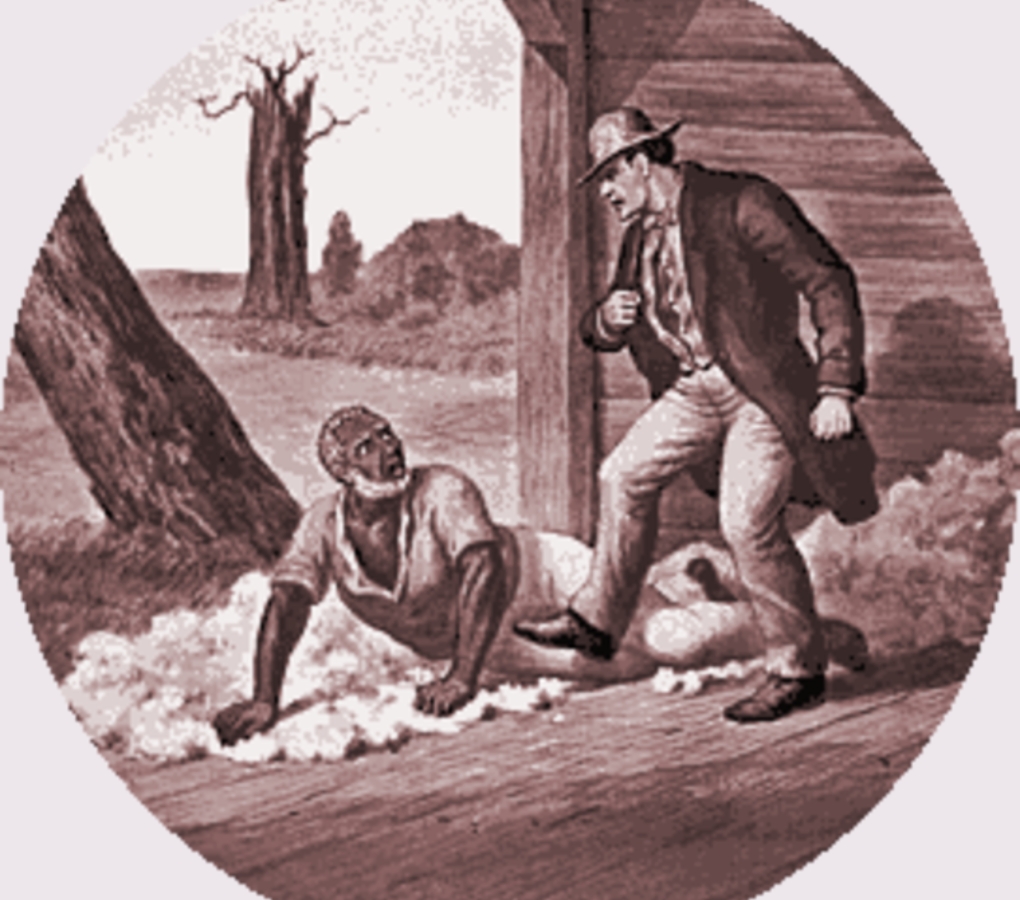
Uncle Tom was popularised by Harriet Beecher Stowe, an American author, in her 1852 book Uncle Tom's Cabin. Uncle Tom, a major character in the book, was a Christian enslaved man who was morally upright and refused to betray his fellow enslaved peoples. For the Black world, the character in the book came to label a typical stereotype used by Black people. At the time the book was embraced by the white world for highlighting the immorality of slavery, and later on adapted to stage shows called the Tom Show. These shows portrayed the Uncle Tom character in the book as subservient and they involved Black minstrels, whereby white actors painted their faces Black to act as Black people. As a result, Uncle Tom came to be seen in the Black community as someone who betrays the experiences of Blackness and remains subservient to white supremacy. Uncle Tom is a term used to describe those within our midst who speak for and support institutional whiteness. According to Malcolm X,
The slavemaster took Tom and dressed him well, and fed him well, and even gave him a little education; gave him a long coat and a top hat and made all the other slaves look up to him. Then he used Tom to control them. The same strategy that was used in those days is used today. He takes a Negro, a so-called Negro, and makes him prominent, builds him up, publicises him, makes him a celebrity. And then he becomes a spokesman for Negroes.
With the long history of exploitation on the basis of white supremacy in mind, it should come as a surprise that Black and Brown people are irritated at the complicity of their brethren in their oppression. To address the perceived betrayal, we resort to naming it. Contrary to what the racial hierarchy would have us believe, coconut, Uncle Tom, house Negro or Oreo are not racial slurs. They are metaphors for those among us who look like us but do not speak for us. Such terms are reserved for those who look Black but speak white supremacy. These defenders of the prevailing system look Black on the outside, but are whitewashed on the inside. On issues impacting the well-being of the Black race, they only see things from the white perspective and make excuses to justify the racial status quo.
Kemi Badenoch, Suella Braverman, and other Contemporary Uncle Toms
Having examined the historical context of race betrayal and the evolution of relevant language, I will now shed some light on the anatomy of the 21st-century race traitor and explain why the likes of Kemi Badenoch, Suella Braverman, and others have been tagged with these race betrayal labels. These legitimisers of contested power structures are quick to deny their heritage, and in order to be accepted by the white power structure, they wouldn't mind dissociating themselves from their heritage, even if it means portraying their brethern in a bad light. Kemi Badenoch is a Black woman of Nigerian heritage who, though born in the UK, spent her formative years in Nigeria before returning. At the slightest opportunity, Aunty Kemi wastes no time in castigating the country of her parents. Despite attending Federal Government Girls College, Shagamu, one of the best secondary schools in Nigeria, she told the British press that she felt that she was in prison while in school. She also disowned Nigeria, stating that she does not identify as being a Nigerian. The main characteristic of these defenders of Britain’s racially stratified system is a tendency not to identify with the oppression of their skinfolks. For instance, Kemi Badenoch once said, “I don’t care about colonialism because I know what we were doing before colonialism got there. They came in and just made a different bunch of winners.” She has also claimed that the United Kingdom's wealth did not come from white privilege or colonialism. As Zora Neale Hurston rightly put it, not all skinfolks are kinfolks.
When Kemi Badench wrote, “It shouldn't be a revolutionary act to fly our own flags in our own country,” she revealed an interesting trait that led to Hunte's response. Salespeople for the racial status quo often have an interesting way of using pronouns when discussing Black and white issues. It comes naturally for people like Badenoch to use the subject or possessive pronouns ‘we’ and ‘our’ when referencing issues pertaining to whiteness, such as “our own flags” or “our own country.” But when they refer to the Black world, they resort to distancing language using terms such as 'your', ‘they’ and 'theirs'. This is because people who betray the Black struggle do not want to be identified with the Black world. Malcolm X discussed this characteristic in his Message to the Grassroots when he said, “Imagine a Negro: 'Our government! I even heard one say “our astronauts.” They won’t even let him near the plant and “our astronauts”! “Our Navy”, that’s a Negro that is out of his mind.”
Suella Braverman and Priti Patel's actions when they were Home Secretaries can help us understand the mindset of brokers of racially structured authority. Just like how Judas Iscariot handed Jesus Christ to the Pharisees for 30 pieces of silver, and Marcus Brutus conspired in the murder of his friend and mentor Julius Caesar, 21st-century spin doctors for racialised power who occupy positions of authority in the West are willing to go the extra mile to throw people of their race under the bus so as to curry favour with their ventriloquist in the form of political advancement, honours, and proximity to power. During her tenure as Home Secretary, Patel introduced the controversial Rwanda Asylum plan, under which those whose asylum pleas were rejected had to be deported to Rwanda. The plan, which breached international law, attracted concerns from various human rights organisations. Braverman doubled down on Patel's policies and ran with it. She championed the removal of asylum seekers from hotels to the controversial Bibby Stockholm barge at Portland Port. Shortly after some asylum seekers were moved to the barge, there was an outbreak of Legionella, a bacterium that causes a harmful lung infection. In January 2025, the British government closed the barge.
These accommodative and compliant actors behave in such a manner because they are racially miseducated. When a Black Kemi Badenoch addresses a majority white audience to say, “We need to fight for our values now, or Western civilisation will be lost,” she demonstrates a miseducated mindset detached from reality. In his book, The Mis-Education of a Negro, Carter Woodson wrote, “The educated Negroes have the attitude of contempt toward their own people because in their own as well as in their mixed schools Negroes are taught to admire the Hebrew, the Greek, the Latin and the Teuton and to despise the African.” When people in the Black and Brown community see one of their own behaving in such a manner, they are left with no choice but to shake their heads and call them race traitors. Besides being miseducated, they also suffer from self-hatred. In their subconscious, they despise the fact that they are Black and wish they were white. To compensate for their skin tone, they go the extra mile to embrace whiteness by speaking white, marrying white, acting white, supporting white, celebrating white, and justifying whiteness. Due to this self-hatred, they are willing to support white supremacy policies that negatively impact Black and Brown people.
To understand why the white power structure is adamant in criminalising those who call out race traitors, one needs to understand their role in reinforcing white supremacy. They can act as spokespeople for the oppressed race while aiding in the reproduction of the white power structure. Under normal circumstances, advocates for the Black race tend to be viewed as controversial because they challenge the prevailing racial status quo. These assimilative individuals also parrot what nobody within the white power structure would dare say, for fear of being labelled a racist. These proponents of the established racial order can also give legitimacy to anti-Black and Brown policies that the government wants to implement without the risk of being called racist. For instance, if a white person came out to suggest that Black and Brown asylum seekers should be detained in a bacteria-infested barge, all hell would have been let loose. The white power structure has always been wary of Black unity, and over the centuries, it has effectively used divide-and-rule tactics to maintain its power. PR agents for racial hierarchy act as a cog in the wheel for the white supremacy machinery by frustrating the efforts of Black advocacy. The Black lackeys of white supremacy serve as useful recruits for unsuspecting members of their race who see their closeness to the white power structure as something worth emulating, and this eventually upholds the system of whiteness, or as Ngũgĩ wa Thiong'o put it, “It is the final triumph of a system of domination when the dominated start singing its virtues.”
The attempt by the British establishment to criminalise intra-community Black criticism directed at defenders of the racial status is a continuation of the historical silencing of Black dissent. During the Trans-Atlantic slavery, slave traders placed iron muzzles on the faces of their slaves. These iron muzzles, which served as a gag, contained an iron bit that kept the tongue tied down, thereby preventing the victim from speaking. The slavers used it as a form of punishment for disobedient and outspoken slaves.
When the white power structure comes to the defence of those we regard as race traitors by criminalising us, it clearly shows whose interests these deferential politicians are representing. It also highlights the hypocrisy of who gets protected and who gets punished on the Black side of the colour line. When people seen as disconnected from a shared Black political consciousness are labelled Uncle Tom's and coconuts, some sections of the British media are quick to call it a racial slur or hate crime. However, when the never-ending onslaught against Black and Brown people continues to take place in Britain, they lose their moral outrage. The hypocrisy of the white power structure is plain to see. When Donald Trump described African countries as shithole countries and disparaged the Somalian people, what did the British establishment do? It rolled out the red carpet as he came to pay the King a visit. Yet British law enforcement is inviting Black people for questioning for calling certain members of their community traitors. When Black people complain about being dehumanised, demonised, and degraded, the white power structure ignores them. It accuses us of being woke and tells us to develop a thick skin. But when Black and Brown public figures are called out for betraying their race, the white power structure calls it a racial slur and criminalises those making the accusation. While the likes of Rishi Sunak, Suella Braverman, and Kemi Badenoch are protected by the British establishment when people label them coconuts, the white power structure looks the other way as Diana Abbott became the most racially abused MP in Britain.
The prosecution of Black and Brown people for calling out race traitors within their community is an attack on free speech. Britain and the West pride themselves on being bastions of democracy, rule of law, free speech and other nice-sounding things, but they do not practice what they preach. We now find ourselves in a situation in which we have to censor our speech because it is not appealing to the white power structure and their lackeys. It is important for us to reclaim the use of these terms by resisting any attempt to criminalise us. The English language originated in Britain, and the white power structure has weaponised the language to promote its interests. Through the language, it labels its allies as freedom fighters and its enemies as terrorists; through the language, it labels countries friendly to its interests as governments, while its enemies are dismissed as regimes; through the language, it labels the supreme legislative body of friendly nations as parliaments; however, when describing China's legislative body, it uses the well-worn term, “rubber-stamp legislature.” Now it has the nerve to tell us that Uncle Tom and coconut are racial slurs in the same category as nigger and Sambo. We should not allow the white power structure to dictate to us what we can say and what we cannot say within our community, to our community.
The white power structure has always been uncomfortable with Black speech, especially when it challenges white supremacy. Historically, Black icons such as Kwame Nkrumah, Patrice Lumumba, Malcolm X, Winnie Mandela and Martin Luther King have been beaten up, imprisoned, or killed for speaking out. When we label Black lackeys of white supremacy as coconuts, it is a rejection of those whom the white power structure tries to impose on us. This is an indirect challenge to white supremacy, hence why it is followed by the full weight of the British judicial system to silence us. The irony is hard to miss. Uncle Tom was coined by a white woman within a framework that portrayed Blacks as docile and submissive. It was later reclaimed by Blacks to label those among us who were agents of white supremacy. Now, the same power structure that created the narrative wants to edit the script by telling us not to use it against its puppets. We should not allow the West to control our speech.
Rather than pinning their hopes on the white power structure to criminalise people for calling them out for their treachery, the agents of the racial status quo should retrace their steps. For the white power structure, if “traitor” is acceptable in the English language, then the sudden criminalisation of its Black equivalent raises an important question: Is it about linguistics or is it about control?
Selah,
Ahmed Olayinka Sule CFA, is a Nigerian writer, financial analyst and documentary filmmaker based in London. He can be reached at [email protected] and @Alatenumo
Endnotes
1 Heffer, Greg. “Kemi Badenoch vows to root out far-Left bigotry from Britain's public sector after NHS
England manager was revealed to have hurled racist slur at Tory leader.” Daily Mail, April 12, 2026.
https://www.dailymail.com/news/article-15726631/Kemi-Badenoch-vows-root…-
public-sector-NHS-England-manager-revealed-hurled-racist-slur-Tory-leader.html.
2 Nagesh, Ashitha. “How woman with coconut placard was tracked down, taken to court - and acquitted.”
BBC News, September 14, 2024. https://www.bbc.com/news/articles/cvgwew5v4qyo.
3 Andrews, Kehinde. "Calling a spade a spade: My police statement on naming the house negroes." Make
It Plain, September 23, 2024. https://make-it-plain.org/2024/09/23/calling-a-spade-a-spade-my-police-
statement-on-naming-the-house-negroes/
4 Federal Ministry of Finance. "President Tinubu Congratulates Coordinating Minister of the Economy,
Wale Edun on Appointment to the Royal Victorian Order." Federal Ministry of Finance, October 28,
2024. https://finance.gov.ng/president-tinubu-congratulates-coordinating-mini…-
edun-on-appointment-to-the-royal-victorian-order/
5 The Royal Family. "State Visit by the President and First Lady of Nigeria." The Royal Family, March
18, 2026. https://www.royal.uk/news-and-activity/2026-03-18/state-visit-by-the-pr…-
of-nigeria
6 X, Malcolm. "Message to the Grassroots Speech Transcript." Rev, November 10, 1963.
https://www.rev.com/transcripts/message-to-the-grassroots-speech-transc…
7 Mohdin m Aamna. "Kemi Badenoch reportedly said ‘I don’t care about colonialism’ in leaked
messages." The Guardian, September 23, 2021. https://www.theguardian.com/politics/2021/sep/23/kemi-
badenoch-equalities-minister-reportedly-wrote-i-dont-care-about-colonialism
8 X, Malcolm. "Message to the Grassroots." Teaching American History, November 10, 1963.
https://teachingamericanhistory.org/document/message-to-grassroots/
9 Anonymous. "Suella Braverman wants us to think the Bibby Stockholm is like a cruise ship. But the
reality is much darker." The Guardian, September 12, 2023.
https://www.theguardian.com/commentisfree/2023/sep/12/suella-braverman-…-
asylum-seekers-ministers
10 Woodson, Carter Godwin. The Mis-Education of the Negro. Washington, D.C.: Associated Publishers,
1933.
11 Thiong'o, Ngũgĩ wa. Decolonising the Mind: The Politics of Language in African Literature. London:
James Currey, 1986.