


Has the United States Suffered a Strategic Defeat in Iran?
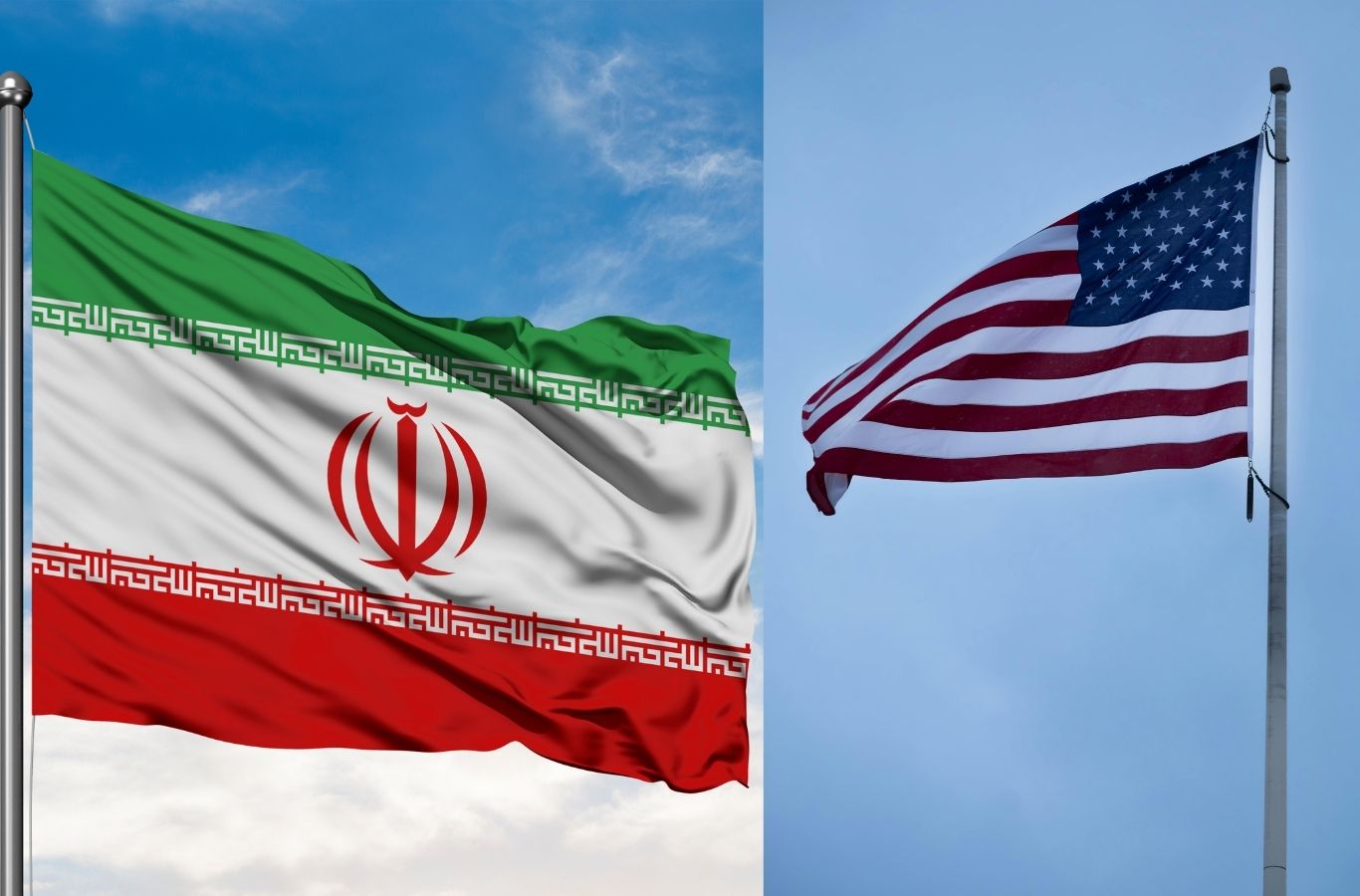
As the US-Iran war lingers on, the erosion of moral authority, questions about exit strategy, and the Iranian resistance to the surprise of the coalition in Operation Epic Fury call for scrutiny of a strategic US defeat.
Introduction: The Suez of the Twenty-First Century
When Great Britain invaded Egypt in 1956, the result was a definitive strategic, diplomatic, financial, and moral collapse. The humiliation was so absolute that, as Peter Beck analyzed in The English Historical Review, successive British governments adopted a policy of "the less said about Suez the better."[1] From 1956 to 1967, the British political establishment deliberately sought to suppress, control, and sanitize the historical record, desperate to protect their domestic reputation and maintain the fragile illusion of continued global hegemony. The Suez attack did not just fail on the battlefield; it exposed the terminal decline of nineteenth-century militarism and gunboat diplomacy in the face of global self-determination movements.
In April 2026, the United States reached a strikingly similar juncture. The invasion of Iran—launched with the hubristic boast that victory would be swift and total—has resulted in a strategic reversal that mirrors the British humiliation of seventy years prior. In an April 2026 news analysis for The New York Times, David E. Sanger argued that the fragile cease-fire in the U.S. confrontation with Iran risked becoming a “Suez moment,” warning that the conflict could carry severe long-term costs, including the erosion of key alliances, the depletion of military stockpiles, and a significant loss of American credibility.[2]
This commentary poses the following question. To what extent does the current crisis represent more than a mere tactical setback, potentially signifying a definitive strategic defeat that challenges the very foundations of the American political economy and the established military management of the international system?
While mainstream outlets like The Guardian or the Texas National Security Review hand-wring over how this "Suez Moment" might hollow out the U.S. alliance system, their analysis remains tellingly bereft of self-criticism. They ignore the horrific destruction of human life and the global insecurity unleashed by the joint Israel-U.S. war against the Iranian people. Even the European governments that once cooperated with Washington to destroy Libya and stifle the Pan-African currency movement are now recoiling from the erratic, unilateral nature of U.S. leadership—typified by bizarre imperial distractions such as calls to annex Greenland.
Alfred McCoy in his article, “Imperial Decline in the Straits of Hormuz: The Iran War as America’s Very Own Suez Crisis” argued that the Iran war represents an American version of Suez Canal crisis, where overwhelming military force failed to translate into strategic control and instead exposed imperial vulnerability through economic disruption, loss of legitimacy, and uncontrolled escalation[3]. Complementing this view, analyses in Consortium News and Asia Times similarly contend that the United States has suffered a strategic defeat in Iran, not through battlefield collapse but through the erosion of alliance cohesion, energy security leverage, and the credibility necessary to sustain imperial power in a multipolar world.
US imperialism has reached a crossroads in which every available course of action carries elements of speeding decline. Any move made by the Pentagon is now likely to compound an already unfavorable outcome. In this contribution, I argue that the U.S. adventure in Iran has resulted in a terminal strategic defeat. This failure forces a choice upon the citizens of the United States: will they continue to subsidize a billionaire class willing to unleash untold destruction to exploit the planet, or will they finally break from the illusions of a "liberal democracy" that serves as a mere facade for a violent, rules-based imperial order? The destabilization of the U.S. ruling circles is now manifest, visible in the frantic, unresolved debates over how to reopen the Straits of Hormuz and stabilize a global energy market that has slipped from their control.
Lessons from Former Strategic Defeats, Especially the Strategic Defeat of Israel in Palestine
Historical experience shows that strategic defeat often precedes formal military withdrawal or institutional collapse. British imperial power was strategically defeated when anti-colonial resistance hollowed out imperial authority long before the empire’s formal dissolution. The United States suffered moral and political defeat in Vietnam well before the humiliating withdrawal from Saigon in April 1975. The Soviet Union was strategically defeated in Afghanistan prior to its eventual withdrawal, leaving a destabilized region for decades. More recently, Israel has suffered a strategic defeat in Palestine despite its overwhelming military superiority.
Across much of the world, it is now widely acknowledged that the destruction of Gaza constitutes crimes against humanity. When the most recent war in Gaza intensified on October 7, 2023, global protests against Israeli actions were systematically dismissed as antisemitic, and students and peace activists in North America and Britain were persecuted across states aligned with Israel and its current government. As evidence of mass bombing, displacement, and civilian suffering circulated globally, even U.S.-based institutions were forced, often grudgingly, to acknowledge that Israel’s actions in Gaza met the legal criteria for genocide. An international consensus has since emerged that the Gaza campaign represents not a temporary setback, but a failure of strategy. Think tanks at the center of U.S. power now openly admit that Israel achieved tactical gains while failing politically, morally, and strategically[4]. This judgment has intensified alongside growing recognition that Israel’s practices in the occupied Palestinian territories constitute an apartheid system under international law, producing massive popular outrage against the genocide in Gaza and the bombing of Lebanon.
Israel is now formally before the International Criminal Court following the issuance of arrest warrants in November 2024 for Prime Minister Benjamin Netanyahu and former defense minister Yoav Gallant on charges of war crimes and crimes against humanity committed in Gaza. The ICC has upheld these warrants despite Israeli jurisdictional challenges. Within the African Union, the South African government took the diplomatic and political lead in calling out the apartheid practices of Israel and the criminal behavior. This legal development coincides with a significant shift in international politics beyond the Global South.
Ireland and Spain have emerged as leading European critics of Israel’s military campaign, openly endorsing the ICC process and pressing for accountability rather than diplomatic deference. Spain has gone further by announcing a formal arms embargo and declaring it would enforce ICC arrest warrants should Israeli leaders enter Spanish territory, while Ireland has coordinated with likeminded states to condemn Israel’s actions in Gaza as violations of international law. Alongside similar moves by Slovenia[5] and growing support across the European Union, these developments signal a breakdown of Israel’s traditional diplomatic insulation in Europe and the emergence of a more assertive legal and moral stance toward Israeli state violence.
Lessons from the Strategic Defeat of Israel
Prior to the current wars across West Asia, the knee-jerk position of mainstream politicians was that ‘Israel has the right to defend itself.’ Those days are now long gone with a chorus declaring and giving specific details of the genocidal war against the Palestinian peoples. Analysts across the ideological spectrum converge on this conclusion about genocide. Marc Lynch, writing in Foreign Policy, argues that Israel’s post–October 7 security doctrine abandoned the logic of “conflict management” in favor of the total elimination of the Palestinian people[6]. In Gaza, that ambition proved unattainable. Palestinian resistance persisted, Hamas survived as a political actor, and regional escalation, especially against the people of Lebanon, intensified rather than subsided. As Lynch concludes in Why Israel’s Post-Oct. 7 Security Doctrine Has Failed, the campaign represents a strategic failure defined not by battlefield loss, but by the growing disjunction between military action and political effect.
Even former cheerleaders for Israel acknowledge this outcome. The American Enterprise Institute’s Critical Threats Project draws a clear distinction between operational success and strategic results.[7] While Israeli forces degraded elements of Hamas’s military infrastructure, the campaign failed to produce a viable political end state or a compliant alternative authority capable of controlling Gaza in the interests of Israel, the United States, or the Gulf Cooperation Council. Brian Carter’s assessment underscores a classic strategic insight: destruction alone does not secure control over the future. Israeli strategic institutions echo this assessment. The Institute for National Security Studies describes Gaza as a “grim range of alternatives,” each carrying severe long-term costs and none plausibly achieving Israel’s stated goals, whether through prolonged occupation, forced displacement, or withdrawal under conditions that enable Hamas’s return.[8]
The moral dimension of this failure amplifies its strategic consequences. The scale of civilian deaths and suffering, the devastation of urban infrastructure, and the collapse of humanitarian conditions have exposed the Nakba as a continuous process shaping Palestinian life since 1948 rather than a closed historical event. David Hearst argues that Israel’s campaign has reversed decades of accumulated diplomatic capital, alienating Western publics and dismantling the narrative of defensive necessity that once shielded Israeli actions from sustained scrutiny.[9] Strategically, this produces a decisive asymmetry: the weaker party absorbs immense material losses while gaining political and reputational ground, while the stronger party wins battles yet forfeits authority and legitimacy.
Crucially, this judgment is not limited to external critics. Veteran figures within Israel’s own military, intelligence, and security establishment now describe Gaza as a structural failure zone. Yossi Alpher argues that repeated operations reflect a long-standing inability within Israel’s strategic community to devise a viable Gaza policy. Former intelligence chief Amos Yadlin similarly warns that Israel faces not battlefield defeat but an enduring strategic loss marked by diplomatic isolation, exhausted reserves, social strain, and the normalization of an open-ended war that violates Israel’s doctrine of short, decisive campaigns.
Understanding the persistence of these military disasters and crimes against humanity —most notably in the Gaza genocide and the subsequent escalation against Iran—requires looking beyond tactical doctrine to the political and diplomatic insulation provided by the United States. This dynamic is best understood through the framework established by John Mearsheimer and Stephen Walt in their seminal and highly significant work, The Israel Lobby and U.S. Foreign Policy.
Mearsheimer and Walt documented the historical reality that unconditional U.S. support across financial, military, and diplomatic domains effectively functions as a strategic shield.[10] This insulation artificially lowers the cost of failure for Israel. In a normal sovereign context, a state facing total international isolation and military stalemate would be forced into a rigorous strategic reassessment. However, because the U.S. provides a "diplomatic veto" and an endless pipeline of munitions, the Israeli leadership is shielded from the natural consequences of its own overreach. To discuss this matter in professional intellectual circles remains taboo in North America.
The reason academics and political analysts have historically been “scared” to address this reality is rooted in the domestic political environment of the United States. Mearsheimer and Walt’s book was met with intense vitriol because it challenged the "taboo" of questioning the U.S.-Israel relationship. The U.S. political environment frequently suppresses the recognition of strategic defeat by weaponizing accusations of antisemitism against anyone who critiques the lobby’s influence on American interests.
The strategic blindness of the U.S. military-political complex is not an accident of history; it is maintained through a rigorous regime of academic and professional policing. This dynamic validates the core thesis of John Mearsheimer and Stephen Walt’s The Israel Lobby and U.S. Foreign Policy, which argues that unconditional U.S. support artificially lowers the cost of failure for Israel by shielding it from international legal and diplomatic consequences. However, the "insulation" Mearsheimer and Walt described is not merely a matter of policy—it is enforced by the systematic marginalization of any intellectual who identifies the "Rules-Based Order" as a facade for imperial violence.
The "intellectual blockade" is evidenced by a clear pattern of professional persecution. Dr. Marc Lamont Hill, for instance, faced immediate termination from his role as a CNN commentator after an address to the United Nations in which he advocated for Palestinian self-determination.[11] His removal signaled that even in the realm of public media, the recognition of Palestinian humanity is a fireable offense. Similarly, Dr. Rabab Abdulhadi at San Francisco State University has endured decades of administrative obstruction and coordinated smear campaigns aimed at hollowing out the Arab and Muslim Ethnicities and Diasporas (AMED) Studies program.[12] Her experience[13] illustrates how universities—ostensibly the bastions of free inquiry—often function as the administrative enforcers of the lobby's "taboos," ensuring that scholarship on Palestinian liberation is starved of resources and legitimacy.
When this culture of silencing is combined with the denial of tenure to scholars like Norman Finkelstein or the rescinding of contracts for academics like Steven Salaita, the result is a sanitized discourse where strategic dissent is effectively criminalized.[14] By purging the American intellectual class of those who would point toward the inevitability of defeat, the U.S. political system has ensured that its policy in West Asia remains unburdened by reality. This internal policing has accelerated the strategic reversal in Iran: because Washington cannot tolerate an honest diagnosis of its moral and military failures, it remains trapped in an escalatory loop that it can neither win nor control. The "Suez Moment" of 2026 is, therefore, as much a failure of the American academy as it is a failure of the American military.
The Mirage of Algorithmic Supremacy in Twenty-First-Century War
U.S. oligarchs boast that the United States commands the most powerful armed forces in the world. In the present era, this power was projected through close collaboration with the Israeli military, which has long marketed itself as a global leader in the fusion of artificial intelligence and high-intensity warfare. Operation Epic Fury was presented to the world as a decisive demonstration of algorithmic supremacy: the claim that artificial intelligence, data fusion, and multi-domain integration could finally transcend the limits of human judgment in war. This conundrum within the U.S/Israeli military apparatus did not emerge suddenly. It had a long period of gestation.
In the twenty-first century, the contradictions of this close collaboration can be traced back to the ‘War on terror’ and Donald Rumsfeld’s doctrine of “Full Spectrum Dominance,” which promised total mastery across air, land, sea, space, and cyberspace. Confronted with the failures of counterinsurgency and the irreducibly human dimensions of war, the U.S. military establishment sought salvation not in political strategy or legitimacy or the reduction of military expenditure but in massive investments in artificial intelligence and Multi-Domain Operations. This pivot sought to substitute technological integration for political legitimacy by prioritizing machine-driven speed over the foundational social and historical realities of warfare.
The U.S. military establishment substituted technological integration for political coherence, effectively bypassing the necessity of sovereign recognition. In doing so, it attempted to resolve through algorithmic force what could only be resolved through a diplomatic acknowledgment of Iran’s independent agency and regional standing. By embedding these advanced technologies within an older logic of capital accumulation and the contractor gravy train, the state reinforced a system of military Keynesianism that thrived on permanent war preparedness while ignoring the mounting social costs on civilian populations. Ultimately, the transition from Rumsfeld’s conventional dominance to the current era of automated warfare reveals a desperate effort to mask strategic impotence with technological acceleration.
The objective was to replace the fallibility of human judgment with the supposed “certainty” of the machine. However, as the 2026 illegal war against Iran has demonstrated, this investment has not delivered strategic victory; it has merely accelerated the pace of strategic failure. Marketed as a new paradigm of twenty-first-century warfare, the operation promised total battlespace awareness, seamless cross-domain coordination, and machine-speed precision. In practice, the campaign exposed the illusions at the core of algorithmic supremacy, revealing how advanced technologies amplify—rather than resolve—the political, ethical, and strategic contradictions of modern warfare.
The operational structure of Operation Epic Fury rested on a familiar architecture of military Keynesianism. Strategic bombers provided global reach and destructive capacity against hardened targets. Fifth-generation fighters functioned primarily as airborne sensor platforms, capturing and transmitting vast quantities of data rather than acting as independent decision-makers. Carrier strike groups and precision missile systems promised persistent, omnidirectional threat, reinforcing escalation dominance through speed and saturation. Although this architecture was presented as technologically novel, it remained embedded in older logics of capital accumulation, contractor dependence, and permanent war preparedness, each imposing mounting social costs on civilian populations.
The central claim of algorithmic supremacy was not superior firepower but superior decision-making. Artificial intelligence systems integrated across platforms compressed the kill chain from minutes or hours into seconds. Target identification, prioritization, and strike coordination were increasingly automated through networked command systems, shifting the tempo of warfare beyond the limits of human deliberation. Rather than strengthening civilian oversight, this acceleration hollowed it out. Political authority was displaced by operational momentum generated at machine speed.
This dynamic confirms longstanding warnings in the literature on AI and warfare that increasing operational speed erodes meaningful human control. As decision cycles compress, political and military leaders are pushed into reactive postures, effectively responding to algorithmically generated imperatives rather than exercising substantive judgment over escalation or restraint.[15][16][17] This is not merely theoretical. Investigative reporting discussed in NPR coverage indicates that AI-assisted systems have generated tens of thousands of potential targets—reportedly on the order of 30,000–37,000—while dramatically accelerating the tempo of strikes.[18] Under such conditions, the scale and speed of targeting exceed the capacity for deliberate human evaluation, reducing civilian oversight to retrospective authorization rather than prior control. Escalation dynamics are thus increasingly governed by automated tempo rather than democratic decision-making, with algorithmic systems reshaping—rather than simply enhancing—the command structures they ostensibly serve.
The limits of this model were further exposed through sensor fusion and automated target recognition. Military officials celebrated machine learning systems as capable of distinguishing combatants from civilians with unprecedented precision, yet these claims rested on unverified assumptions about model reliability, contextual awareness, and bias. Even developers of advanced AI systems have cautioned that such models lack transparency and robust validation in complex combat environments. Reports from human rights monitors, including United Nations agencies and Human Rights Watch, documented cases in which misclassification coincided with strikes on civilian infrastructure, including schools, and resulted in the deaths of children. In such instances, algorithmic supremacy did not eliminate error; it redistributed moral responsibility while obscuring accountability.
These tensions became even more pronounced with the deployment of semi-autonomous swarm systems, where the same logic of speed and delegation operated at a different scale. Swarming drones and unmanned platforms reacted to enemy emissions at speeds no human commander could match, neutralizing threats almost instantaneously. Yet this responsiveness further narrowed the space for interpretation, hesitation, or de-escalation, effectively embedding escalation into the operational logic of the system itself. What appears as technological mastery at the tactical level thus translates into heightened instability at the strategic level.
At its core, algorithmic supremacy rests on a flawed premise: that war is fundamentally a technical problem rather than a political one. Joint All-Domain Command and Control (JADC2) systems promised to dissolve the fog of war by fusing sensors, decision-making, and strike capabilities into a continuous “kill web.” In practice, however, these systems have intensified reliance on predictive modeling and probabilistic judgment, often conflating computational speed with situational understanding. War’s decisive variables—legitimacy, consent, moral authority, and political consequence—remain only partially legible to, and ultimately beyond the full grasp of algorithmic systems.
This technocratic framing must also be situated within the political economy of contemporary imperialist management. As argued by William Murphy in The Empire Comes Home: Managed Neglect and Internal Colonialism in the United States, the same state structures that project power outward are sustained domestically through patterns of managed neglect, uneven investment, and internal racist policing and ICE patrols. Four decades after the first warnings of industrial decline were issued, the 'Rust Belt' has become a monument to deindustrialization. What was once the engine of the American economy is now defined by escalating impoverishment, as the disappearance of stable manufacturing jobs continues to weigh heavily on the communities left in their wake
The expansion of AI-driven military systems is thus not an external anomaly but part of a broader reallocation of resources and wannabe fascism, in which advanced technological capacity coexists with the systematic abandonment of superexploited populations. As social infrastructures deteriorate, the 47th president put forward a trillion-dollar budget for the military, and extraordinary sums are directed toward narrowly defined tactical outcomes, reinforcing a dual logic of external domination and intensified Nazi-type repression at home.
Algorithmic supremacy, in this sense, operates across both warfighting and the contested political relations. The same reliance on abstraction, prediction, and automated decision-making that structures AI-enabled targeting also underpins domestic regimes of surveillance, policing, and resource distribution. In both domains, algorithmic systems redistribute responsibility while obscuring accountability, translating political choices into seemingly technical outputs. For defense contractors and technology firms, this convergence represents a site of accumulation; for affected populations, it deepens exposure to both violence abroad and multi-faceted oppression at home.
Operation Epic Fury thus stands not as proof of algorithmic supremacy, but as a warning. Advanced technologies did not deliver control, clarity, or restraint; rather, they accelerated operational tempo, displaced accountability, and constrained political choice. Far from transcending the limits of war, algorithmic systems reproduced them at greater speed and scale. The internal fractures revealed through the conflict point to a deeper contradiction: the erosion not only of strategic control abroad, but of social cohesion and legitimacy at home. What emerges is not technological mastery, but the intensification of imperial dynamics across domains—externalized as war and internalized as organized abandonment.
The Loss of Escalation Control
Recent escalations against Iran suggest a reversal of traditional hierarchy, where Israeli operational decisions now dictate American strategy. By presenting Washington with faits accomplis, Israel has forced the U.S. into a "binary trap": either join the military conflict or absorb Iranian retaliation against American assets. Pentagon and intelligence officials increasingly view this as a collapse of U.S. escalation control. Rather than the U.S. managing imperialist initiatives, Israeli timelines have compressed American decision-making, catapulting the military into an undefined war. Ultimately, it was the friction within the U.S. security establishment and the unsustainable costs of this dynamic that necessitated the pursuit of a ceasefire with Iran.
The April 7, 2026, ceasefire between the United States and Iran has been widely described as a pause or an opening for diplomacy. Yet such language understates what is at stake. There has been a long tradition of talking while fighting and using ceasefires to boost stocks of depleted military ordnance. From an anti-imperialist and Global South perspective, the ceasefire exposes the catastrophic failure of imperial bullying. It underlines the new and growing awareness that the United States has suffered a strategic defeat in Iran, not in battlefield terms, but in its inability to impose political compliance despite overwhelming force. It was the US ally, the German chancellor, who noted that the US is being “humiliated by Iran” and that the Iranians are handling the situation more intelligently.
The Americans clearly lack strategy. And the problem with conflicts like this is that it is not enough to enter, but also to leave. We watched it with too much pain in Afghanistan for 20 years. We saw it in Iraq. […] An entire nation is being humiliated by the leaders of the Iranian state."[19]
When the gymnastics and verbiage about a ceasefire was announced, retracted and then announced again, the U.S. government stated it had accepted Iran’s 10-point plan as a "workable basis" for discussion. However, Western media outlets have remained notably guarded in reproducing the reparative specifics of this plan. This reticence stems from the realization that the current negotiating position essentially returns the U.S. to the status quo of February 27—the day it originally abandoned the negotiating table before it launched the illegal war against Iran. Having exhausted economic warfare, military encirclement, and technological sabotage, U.S. policy increasingly reverted to coercive rhetoric as a substitute for strategic leverage, revealing the political limits of force when imperial authority no longer commands compliance.
In early April 2026, the tools of pressure deployed against Tehran escalated into explicit threats of civilizational destruction. The President of the United States publicly warned that Iran’s very civilization could be "decimated" if the leadership failed to meet immediate American demands.[20] However, this existential rhetoric did not produce capitulation; instead, it served to stiffen Iranian resistance. Rather than retreating, Iran advanced a comprehensive 10-point counter-proposal that has since become the primary framework for negotiations—negotiations notably mediated outside NATO and U.S. circles, primarily through Pakistan. The failure of coercive escalation did not merely reshape bilateral relations between Washington and Tehran; it exposed a widening realignment across West and South Asia, forcing regional powers to choose between imperial alignment with the United States and Israel and independent diplomatic relevance.
The Regional Perspective: India and the "Mediator Gap"
The diplomatic and logistical landscape reveals a profound fracture in South Asia, where the Modi government’s proclamations of 'strategic autonomy' are increasingly hollowed out by its domestic ideological agenda. In the era of Bandung and principled non-alignment, India had stood at the forefront of Third World Internationalism, providing steadfast support for Palestinian liberation and leading the global opposition to all forms of apartheid. However, under the current administration, the resurgence of Brahminic supremacy—codified through the ideology of Hindutva—has fundamentally reoriented Indian foreign policy. The betrayal of the spirit of Bandung and nonalignment has manifested in the Modi government’s support for governments in Guyana and Trinidad who have broken Caribbean solidarity of support for Cuba and Venezuela. This ideological lens has blinded the Indian establishment to the tectonic strategic shifts occurring across the world. By viewing the war through the prism of a "civilizational struggle" rather than pragmatic regional security, New Delhi has marginalized its own influence, trading its historical role as a leader of the Global South for a subordinate position within a declining US/Israeli and marginalized European orbit.
Nowhere was this ideological and strategic misalignment clearer than within BRICS+, where claims of Global South leadership collided with the realities of an emerging multipolar diplomacy centered outside Western and U.S.-aligned frameworks.
The BRICS+ Fracture
When the Regional Comprehensive Economic Partnership (RCEP) initiated by the ASEAN bloc was being rolled out, India opted out. India limped inside BRICS during the war in Ukraine when it was a beneficiary in selling Russian oil. However, in the current war against Iran, India is being forced to openly ally with the USA and Israel. The increasing isolation of India was laid bare during the April 24 BRICS+ meeting in New Delhi.[21] Tasked with hosting a summit intended to showcase Global South unity, India instead became the primary obstacle to a consensus. By insisting on diluting language regarding Israeli culpability and U.S. "civilizational" threats, the Modi administration effectively blocked a joint statement, alienating key partners like Brazil, South Africa, and Russia.
While India utilized its status as a host to shield the U.S.-Israel axis, IR experts in India spoke out loudly about how Pakistan and China seized the diplomatic initiative.[22] The "10-point plan" currently structuring regional negotiations was facilitated not in New Delhi, but in Islamabad. This represents a significant diplomatic setback: the very neighbors India sought to isolate have emerged as the primary arbiters of regional stability. Meanwhile, the Indian establishment remains fixated on its loss of "diplomatic prestige" to Pakistan, seemingly blind to the systemic breakdown of a security architecture from which it is now increasingly excluded.
This exclusion highlights a broader crisis: the limits of algorithmic supremacy. The failure of data-driven dominance is not confined to the battlefield; it extends into the moral, legal, and financial domains that ultimately define the legitimacy of U.S. power.
The Pope and the Moral Collapse of Coercive Rhetoric
The consequences of this "military adventure" against Iran will be studied by historians and strategists for generations, particularly the moral collapse of coercive rhetoric. These stakes were made unmistakably clear by Pope Leo XIV. In an unusually direct intervention, the Pope publicly condemned threats against the Iranian people, responding explicitly to the dangerous rhetoric of civilizational destruction. In doing so, he stripped the intervention of its ethical standing, signaling a shift where traditional power is no longer enough to command global legitimacy. "This is truly unacceptable,"[23] he said, referring to threats leveled against the population of Iran as a whole. He stressed that this was not merely a political or strategic matter, but a profound moral issue concerning the welfare of an entire people. According to the Pope, such threats violate human dignity and undermine the moral foundations of international order.
The Pope went further. He warned that attacks on civilian infrastructure violate international law and constitute acts of destruction rather than acts of security. He urged leaders to reject war, return to dialogue, and come back to the negotiating table. His remarks explicitly called on citizens, including Americans, to pressure political leaders to choose peace over annihilation.
This intervention matters politically, not only ethically. The Vatican rarely addresses specific leaders with such clarity. That the Pope did so here signals the depth of global alarm and the moral isolation of annihilatory rhetoric. When even traditional guardians of diplomatic neutrality openly condemn a superpower's threats, hegemonic legitimacy erodes further. Strategic defeat is compounded by moral defeat.
International Law and the Shadow of Nuremberg
The language used by the US president also revived uncomfortable legal questions. International law, shaped in part by the legacy of the Nuremberg trials and subsequent developments in the UN Charter system, distinguishes between the prohibition of unlawful use of force and the regulation of conduct in armed conflict. It prohibits acts of aggression under Article 2(4) of the UN Charter and strictly regulates the targeting of civilian populations under international humanitarian law. While rhetoric alone does not constitute a crime, it may serve as evidentiary material in establishing intent when linked to underlying violations of international criminal law.
Whether the February 2026 escalation constitutes lawful self-defense remains contested among states and legal scholars. What is clear is that threats of mass destruction or collective punishment sit in tension with the normative architecture of international law, particularly its protections for civilian populations. The Pope’s warning that attacks on civilian infrastructure violate international humanitarian law echoed concerns consistently raised by legal scholars and humanitarian organizations, including those grounded in the Geneva Conventions and customary international law.
Implications for the United States dollar and the US position in the world
The war in Iran must also be understood as the geopolitical extension of the same dynamics of algorithmic acceleration and constrained judgment identified in earlier sections. As AI-enabled command systems and compressed decision cycles reshape the tempo of war, they reduce the space for deliberation not only at the tactical level, but also at the strategic economic level. The result is a form of policy formation increasingly governed by speed, feedback effects, and crisis response rather than stable planning.
Against this backdrop, the Iran war forced the Trump administration into a striking policy reversal that linked energy insecurity to the partial relaxation of sanctions on Russia. As oil flows through the Strait of Hormuz were disrupted and prices surged above $110 per barrel, the United States issued temporary waivers allowing the sale of Russian oil already at sea, in an effort to stabilize global energy markets and blunt inflationary pressure at home. This episode reflects a broader condition already visible in algorithmically accelerated warfare: compressed decision environments in which strategic coherence is subordinated to immediate systemic stabilization.
At the same time, these dynamics intensify structural pressures on the petrodollar system that underpins US military management of the international system. Temporary sanctions relief for Russia and Iran has coincided with increased oil trading outside traditional dollar-denominated channels, particularly toward Asia, prompting renewed debate over the long-term durability of dollar-centred energy markets. While the dollar has benefited in the short term as a safe haven amid war-driven volatility, pundits outside the US echo chamber warn that repeated Gulf crises, combined with ad hoc sanctions waivers, incentivise producers and consumers to diversify currency settlement in order to reduce exposure to US political risk. In this sense, the same feedback logics that characterize algorithmic warfare—where rapid responses generate second-order systemic effects—also structure economic relations: energy shocks prompt policy relaxation, policy relaxation weakens dollar centrality, and fragmentation of settlement systems further constrains Washington’s ability to exercise economic leverage in future crises.
Defeat or De-escalation
Imperial planners inside the US Beltway, including the Members of the National Security Council of Trump that include the President, Secretary of Defence, and Secretary of State along with the head of intelligence agencies and the military, argued that the ceasefire represents prudence rather than defeat, emphasising its potentially temporary nature. Yet this framing misses the larger structural point. The United States sought to compel strategic outcomes but operated within a compressed decision environment shaped by escalation dynamics and systemic risk management rather than sustained strategic deliberation. It escalated threats to the level of civilizational destruction and still had to negotiate under adversary terms. That outcome signals not imperial confidence, but imperial constraint—an outcome consistent with a broader condition in which both military and economic statecraft are increasingly shaped by accelerated, feedback-driven systems rather than sovereign control. These are the elements of strategic defeat.
Conclusion
Progressive international relations theory explicitly rejects realism’s claims that power politics are neutral or inevitable. The realist has always acted on the basis of the claim of Thucydides, that, the strong do what they can and the weak suffer what they must. It was more than a decade ago when I coauthored a critique of realism pointing to the links between white supremacy, masculinist patriarchy and the realist theories.[24] In that contribution I emphasized that what realism calls anarchy often conceals deeply entrenched hierarchies produced through imperialism and finance capital. South-South relations emerge not from abstract balance of power but from shared histories of seeking bread, peace and justice in the tradition of Bandung.
Iran’s negotiating posture fits squarely within this tradition. Its ten point framework is not simply a bargaining position. It is a counter imperial document that demands an end to sanctions regimes, recognition of sovereign rights under international law, withdrawal of foreign military forces, and termination of external tutelage. These demands challenge the legitimacy of Western imposed political relations rather than seeking accommodation within it. Seen through this lens, the ceasefire signals a crack in imperial authority. The United States could not secure unconditional reopening of global shipping lanes, unconditional nuclear dismantlement, or regional acquiescence. It had to negotiate.
It is worth recalling Napoleon's adage: "You can do anything with a bayonet except sit on it." Napoleon was highlighting the practical but ultimately limited nature of weapons. A bayonet is a powerful tool in combat — for offense, defense, and intimidation — but it cannot serve as a seat. Napoleon employed this formulation to convey lessons about the limits of technology, tools, and tactics in sharp, memorable terms. In essence: a bayonet is deadly and versatile in war, but it is not universally useful. The adage is well suited to understanding the current quandary of the US military apparatus.
When the United States invaded Venezuela and abducted its president, the Western media celebrated the military capabilities of the USA. But sober observers understood that this was a rupture in the basic laws of international decency. The United States and Israel launched Operation Epic Fury against Iran with the boast that victory would be swift. It was not.
The April 2026 ceasefire does not signify the collapse of United States power. But it does mark a strategic and moral reversal. From an anti-imperialist and South-South perspective, the episode reveals the limits of coercion, the tenacity of targeted states, and the erosion of hegemonic authority.
Military supremacy did not yield compliance. Threats of annihilation provoked condemnation, not submission. Diplomacy resumed not because empire prevailed, but because empire reached its limits. When a superpower must retreat from its own ultimatums, when its threats are condemned by global moral authority, and when negotiations proceed on terms set by a sanctioned state, something fundamental has shifted. The United States has not been defeated outright. But it has been strategically checked in ways that will reverberate far beyond Iran.
Is the end of the military management of the international system in sight? What is the future of the petrodollar system? How will these reversals affect states such as the UAE, which supports counterrevolution and genocide in Sudan?
These questions cannot be answered academically but will be fought out as the crisis of masculinity, white supremacy, and finance capital deepens in the years ahead.
Horace G. Campbell is a peace and social Justice activist. He is also Professor of African American Studies and Political Science at Syracuse University and Chairperson of the Global Pan African Movement, North American Chapter. He is the author of Global NATO and the Catastrophic Failure in Libya, Monthly Review Press, 2013.
Endnotes
[1] Beck, P. J. (2009). 'The less said about Suez the better': British governments and the politics of Suez's history, 1956–67. The English Historical Review, 124(508), 605–640.
[2] Sanger, E. D. 2026. A Cease-Fire for Now in Iran, but a Blow to American Credibility. The New York Times.
[3] McCoy, A. (2026, March). Imperial decline in the Straits of Hormuz: The Iran war as America’s very own Suez crisis. TomDispatch. https://tomdispatch.com/imperial-decline-in-the-straits-of-hormuz/
[4] Tasnim News Agency. (2026, April 1). 80 Major Think Tanks Believe US, Israel Have Failed in War against Iran. Tasnim News Agency. https://www.tasnimnews.ir/en/news/2026/04/01/3554574/80-major-think-tanks-believe-us-israel-have-failed-in-war-against-iran
[5] https://www.aljazeera.com/news/2025/8/1/slovenia-becomes-first-eu-country-to-impose-arms-embargo-on-israel
[6] Lynch, M. (2026). Why Israel’s post-Oct. 7 security doctrine has failed. Foreign Policy. https://foreignpolicy.com/2026/04/15/israel-gaza-iran-lebanon-syria-hamas-strategy-doctrine-war/
[7] Carter, B. (2026 March 15). The War in Iran: Operational Progress, But Challenges Remain. Critical Threats Project. https://www.criticalthreats.org/analysis/the-war-in-iran-operational-progress-but-challenges-remain
[8] Guterman, O. (2026, April 10). Strategic Alternatives for the Gaza Strip. The Institute for National Security Studies. https://www.inss.org.il/publication/gaza-strategic-alternatives/
[9] Hearst, D. (2026, March 25). Oops, we have wrecked another country. Middle East Eye. https://www.middleeasteye.net/opinion/oops-we-have-wrecked-another-country#:~:text=We%20will%20rue%20the%20day,where%20he%20was%20education%20correspondent.
[10] Mearsheimer, J. J., Walt, S. M., & Rogers D. Spotswood Collection. (2007). The Israel lobby and U.S. foreign policy. Farrar, Straus and Giroux. http://www.loc.gov/catdir/toc/ecip0720/2007024183.html
[11] Associated Press. (2018, November 30). Marc Lamont Hill fired from CNN after his speech on Israel draws outrage. NBC News. https://www.nbcnews.com/news/us-news/marc-lamont-hill-fired-cnn-after-his-speech-israel-draws-n942151
[12] Fight Back News. (2025 January 16). Esteemed scholar Dr. Rabab Abduhadi discusses institutional Zionism, how to combat it. Fight Back News. https://fightbacknews.org/articles/esteemed-scholar-dr-rabab-abduhaldi-discusses-institutional-zionism-how-to#:~:text=As%20the%20founding%20director%20and%20Senior%20Scholar,conversations%20about%20Palestinian%20oppression%2C%20resistance%20and%20liberation.
[13] Moss, J. (2023, November 1). After Syracuse University bans speaker on Middle East from campus, scholar speaks off-campus. Syracuse News. https://www.syracuse.com/news/2023/11/after-syracuse-university-bans-speaker-on-middle-east-from-campus-scholar-speaks-off-campus.html
[14] See Chatterjee, Piya, and Sunaina Maira, editors. The Imperial University: Academic Repression and Scholarly Dissent. University of Minnesota Press, 2014. JSTOR, http://www.jstor.org/stable/10.5749/j.ctt6wr7wn. Accessed 30 Apr. 2026.
[15] Horowitz, M. C., Kahn, L., & Samotin, L. R. (2026). What is human in judgment? Testing automation bias and algorithm aversion among United States Military Academy cadets.
[16] Payne, K. (2021). I, warbot: The dawn of artificially intelligent conflict. Oxford University Press.
[17] Scharre, P. (2018). Army of none: Autonomous weapons and the future of war. W. W. Norton & Company.
[18] Abraham, Y. (2024 April 3). ‘Lavender’: The AI machine directing Israel’s bombing spree in Gaza
. +972 Magazine. https://www.972mag.com/lavender-ai-israeli-army-gaza/
[20] Ventura, T. (2026, April 7). Trump Says a 'Whole Civilization Will Die Tonight' If Iran Misses Deal Deadline. Times Magazine. https://time.com/article/2026/04/07/trump-warns-whole-civilization-will-die-if-iran-misses-deadline/
[21] BRICS+ comprised the original BRICS nations of Brazil, Russia, India, China, South Africa and new entrants to the bloc, including Egypt, Ethiopia, Saudi Arabia, Iran, and the United Arab Emirates. The eleven members form a political, economic, diplomatic and social coordination forum for countries from the Global South to increase cooperation and influence in international politics. See more at https://brics.br/en/about-the-brics
[23] Lubov, C. D. (2026 April 7). Pope: The threat against the entire Iranian people is unacceptable. Vatican News. https://www.vaticannews.va/en/pope/news/2026-04/pope-leo-xiv-appeal-to-journalists-castel-gandolfo-7-april-2026.html
[24] Campbell, H., & Chaulia, S. (2009). Unequal equals: Angola and China. World Affairs, 13(1), Spring issue.
Further Reading
Beck, P. J. (2009). 'The less said about Suez the better': British governments and the politics of Suez's history, 1956–67. The English Historical Review, 124(508), 605–640.
Carter, B. (2026). Assessment of operational success vs. strategic results. American Enterprise Institute’s Critical Threats Project
Hill, M. L. (2018). Address to the United Nations on Palestinian self-determination
Horowitz, M. C., Kahn, L., & Samotin, L. R. (2026). What is human in judgment? Testing automation bias and algorithm aversion among United States Military Academy cadets.
Lynch, M. (2026). Why Israel’s post-Oct. 7 security doctrine has failed. Foreign Policy.
Mearsheimer, J. J., & Walt, S. M. (2007). The Israel lobby and U.S. foreign policy. Farrar, Straus and Giroux
McCoy, A. (2026, March). Imperial decline in the Straits of Hormuz: The Iran war as America’s very own Suez crisis. TomDispatch.
Nemeth, B. (2025). How a US "Suez Moment" Could Hollow the US Alliance System. Texas National Security Review, 9(1), 82–96. https://doi.org/10.1353/tns.00025
Scharre, P. (2018). Army of none: Autonomous weapons and the future of war. W. W. Norton & Company.
Payne, K. (2021). I, warbot: The dawn of artificially intelligent conflict. Oxford University Press.