


Declaration of the Trafficking of Enslaved Africans and Racialized Chattel Enslavement of Africans as the Gravest Crime against Humanity
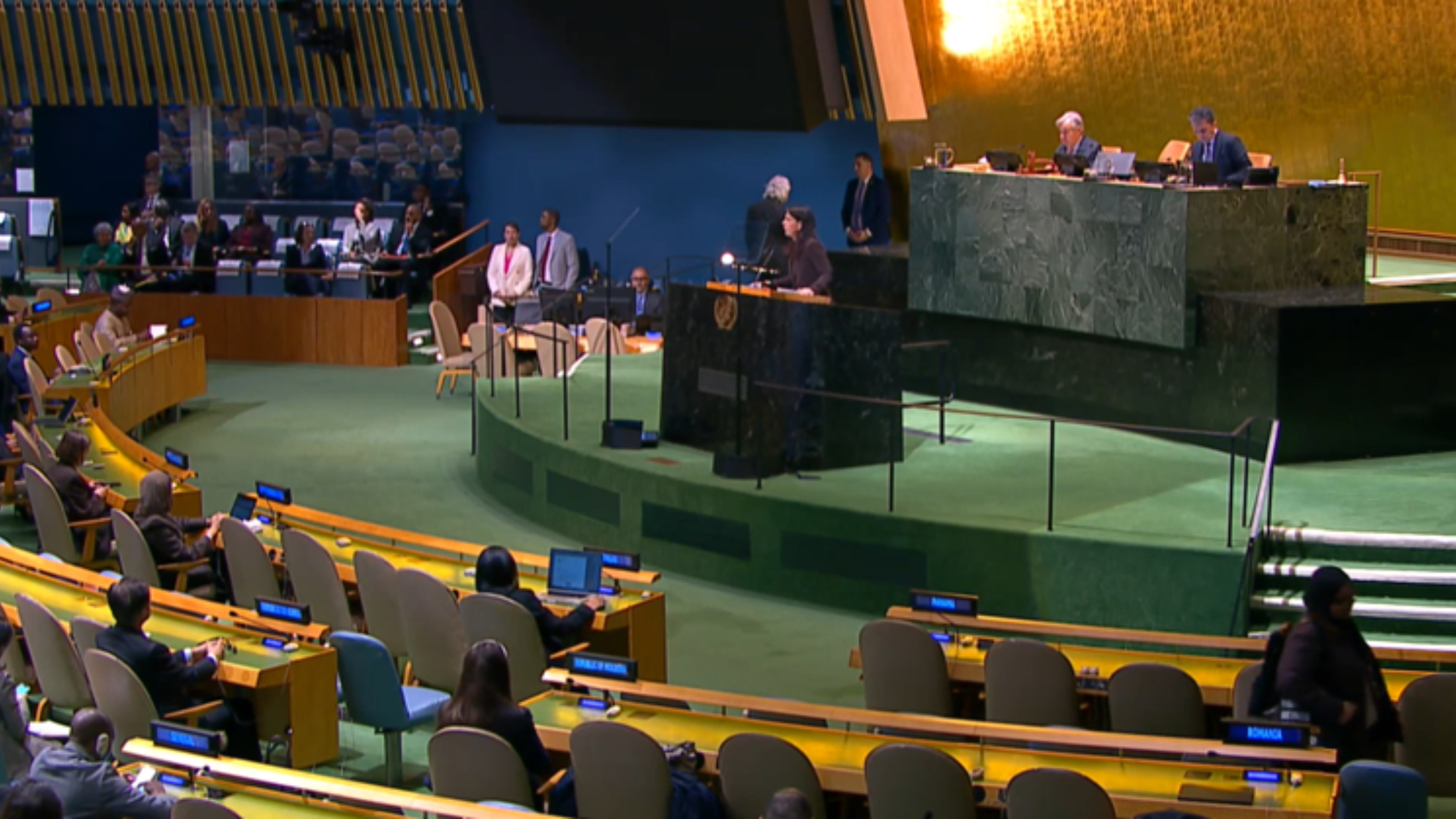
The Trafficking of enslaved Africans and racialized chattel enslavement of Africans is the Gravest Crime against humanity in history.
The General Assembly,
Recalling the aims, purposes and principles of the Charter of the United Nations,
Reaffirming the Universal Declaration of Human Rights,¹ which proclaimed that no one shall be held in slavery or servitude and that slavery and the slave trade shall be prohibited in all their forms,
Reaffirming also the principles of equality and non-discrimination in the Universal Declaration of Human Rights, and encouraging respect for human rights and fundamental freedoms for all without distinction of any kind such as race, colour, sex, language, religion, political or other opinion, national or social origin, property, birth or other status,
Underscoring that the International Covenant on Civil and Political Rights² reaffirms the prohibition of slavery and the slave trade, and that both the International Covenant on Civil and Political Rights and the International Covenant on Economic, Social and Cultural Rights³ reaffirm that recognition of the inherent dignity and of the equal and inalienable rights of all members of the human family is the foundation of freedom, justice and peace in the world, and the International Convention on the Elimination of All Forms of Racial Discrimination,⁴ which states that all human beings are equal before the law and are entitled to equal protection of the law against any discrimination and against any incitement to discrimination,
Reaffirming the Durban Declaration and Programme of Action,⁵ which acknowledged that slavery and the slave trade, including the transatlantic slave trade, were appalling tragedies in the history of humanity not only because of their abhorrent barbarism but also in terms of their magnitude, organized nature and especially their negation of the essence of the victims,
Recognizing that for approximately four centuries millions of African men, women and children were forcibly and violently captured, commodified, transported and subjected to racialized chattel enslavement, constituting the largest forced migration and one of the most enduring systems of organized mass human exploitation in world history,
Recognizing also that this system of enslavement was codified in law, institutionalized by States and sustained by ideologies of racial superiority, and that it generated extraordinary wealth while devastating African societies and their descendants,
Acknowledging the definitive break in world history constituted by the trafficking of enslaved Africans and the racialized chattel enslavement of Africans, owing to its scale, duration, systemic nature, brutality and enduring consequences,
Recognizing further that the legacies of these crimes continue to structure contemporary global inequalities through racialized regimes of labour, property and capital, manifesting in persistent racial discrimination, racism, systemic inequality and unequal development affecting Africans and people of African descent,
Bearing in mind the obligation of States to promote and protect human rights and fundamental freedoms and to address historical injustices in a manner that advances justice, dignity and healing,
- Declares the trafficking of enslaved Africans and the racialized chattel enslavement of Africans as the gravest crime against humanity;
- Unequivocally condemns the trafficking of enslaved Africans and the racialized chattel enslavement of Africans, slavery and the transatlantic slave trade as among the most inhumane and enduring injustices in human history;
- Affirms the importance of addressing the historical wrongs affecting Africans and people of African descent in a manner that promotes justice, human rights, dignity and healing;
- Emphasizes that claims for reparations represent a concrete step towards remedying historical wrongs arising from the trafficking of enslaved Africans and the racialized chattel enslavement of Africans;
- Calls upon Member States that participated in, benefited from or were complicit in the trafficking of enslaved Africans and the racialized chattel enslavement of Africans to engage in inclusive, good-faith dialogue on reparatory justice, including, as appropriate, formal apologies, restitution, compensation, rehabilitation, satisfaction, guarantees of non-repetition, and measures to address systemic racism and discrimination;
- Encourages Member States to take appropriate steps, including through education, public memory, research and truth-telling, to preserve the historical memory of the trafficking of enslaved Africans and the racialized chattel enslavement of Africans and to counter denialism, distortion and erasure of this history;
- Invites relevant United Nations bodies, specialized agencies and other international and regional organizations, within their respective mandates, to support efforts aimed at advancing justice, equality and reparatory justice for Africans and people of African descent;
- Decides to remain seized of the matter.
¹ General Assembly resolution 217 A (III)
² See resolution 2200 A (XXI), annex
³ Ibid
⁴ United Nations, Treaty Series, vol. 660, No. 9464
⁵ A/CONF.189/12 and Corr.1
Source: United Nations, A/80/L.48-EN (PDF), Official Document System. [documents.un.org], [digitallib...ary.un.org]