


Will Nigeria Become Another Libya? Unmasking American Militarism and Invasion Tactics Amid Insecurity in Nigeria
An analysis of the complex (in)security challenges in Nigeria and Trump’s military activities against Nigerians.
The Libyan uprisings originated from the Arab Spring, which began in Tunisia in 2010 and subsequently spread to Egypt, Yemen, Syria, Bahrain, and ultimately Libya. Following the departure of Tunisia’s Bin Ali and the overthrow of Egypt’s Mubarak, Benghazi experienced a rapid escalation of rebellion. Western intervention soon followed, shifting the movement from a popular uprising to an armed conflict. In response, Gaddafi threatened to employ the full power of the state to suppress the unrest.
By February 21, 2011, Western media had rewritten the story, claiming that innocent civilians faced imminent massacre by the Libyan army. Headlines such as "Gaddafi Warns of 'Rivers of Blood' as UN Prepares to Vote" from The Guardian emerged, and reports from CNN emphasised the urgent need for intervention to prevent atrocities, thereby shaping public opinion. Adding to this narrative, Nigerian media outlets presented a more sceptical view, with headlines questioning the motives behind foreign intervention. This illustrates the divergence in how the situation was perceived locally versus internationally. The United States, Britain, and France capitalised on this moment, advancing a UN Security Council resolution under the pretext of 'responsibility to protect' (Campbell, 2013). This facilitated their intervention in Libya, resulting in Gaddafi’s death and the subsequent control over Libya’s political and economic trajectory.
Following Libya's collapse, instability spread throughout the Sahel, enabling militias such as Boko Haram, Jama'at Nusrat ul-Islam wa al-Muslimin (JIMIM), Islamic State in the Greater Sahara (ISGS), Islamic State – West Africa Province (ISWAP), Lakurawa, Bandits, and Ansaru to regain prominence. The resulting power vacuum and the widespread looting of Gaddafi's armoury increased the availability of weapons across the region. Specifically, weapons from Libya's stockpiles flowed into the hands of Nigerian factions, enhancing their capabilities and aggression (LibyaReview, 2023). This proliferation of arms, combined with regional instability, contributed to the resurgence and consolidation of militant groups in some African countries, including Nigeria.
In Nigeria, Boko Haram in the Northeast and armed bandits in the Northwest became widely recognised, primarily operating in the northern region. Boko Haram initiated its campaign in Borno State with the slogan 'no to western education,' subsequently expanding to Yobe, Gombe, Bauchi, and Kano areas characterised by significant Muslim populations. Their activities have included bombings of worship centres, hospitals, markets, and major roads, as well as kidnappings for forced marriage, abuse, and other criminal acts.
Similarly, armed bandits, rivalling Boko Haram in brutality, initially emerged in Zamfara State and rapidly expanded to Sokoto, Kebbi, Niger, and Katsina, now reaching north-central states such as Plateau, Benue, and Kwara. Unlike Boko Haram, these bandits are primarily motivated by financial gain, engaging in kidnappings for ransom, attacks on villages and towns, and deliberate killings of civilians. Boko Haram and ISWAP (a faction of ISIS) predominantly affect the Northeast, with their extremist ideologies largely rejected by the majority of Muslims, who are frequently targeted. Since 2009, their campaigns have resulted in about 20,000 deaths and widespread loss of livelihoods estimated about $5.9 billion among muslims and non-muslim communities in northern Nigeria (AfricaNews, 2016). The recent mosque bombing in Maiduguri demonstrates that religious affiliation does not guarantee safety.
Additionally, it is essential to distinguish the ideologies of Boko Haram, ISWAP, Lakurawa, and the bandits. Boko Haram, ISWAP, and Lakurawa utilise religious rhetoric to recruit members and advance their objectives, whereas bandits are primarily motivated by material gain. Evidence indicates that Boko Haram strategically employs Islamic ideology to organise, recruit, and sustain its conflict with the Nigerian state and its population. Their beliefs are rooted in an extremist interpretation of Sunni-Salafi doctrine. Divergent interpretations of returning to original Islamic practices have led them to justify violence, including against other Muslims. Victims have included Salafi purists and activists who oppose violence and advocate for political engagement. They also align with Sunni-Salafi extremists who promote violence to restore what they perceive as authentic Islam, rejecting all that is considered un-Islamic. As a result, their propaganda, organisational structure, and strategy are centred on rejecting Western civilisation, as embodied by the modern Nigerian state, and establishing a society governed by Islamic principles, with the immediate goal of creating an Islamic state. Nonetheless, their actions, such as the killing of innocent people, are fundamentally contrary to Islamic teachings.
On the other hand, armed Bandits represent a loose collection of various criminal groups involved in kidnap-for-ransom, armed robbery, cattle rustling, rape and other sexual violence, pillage, and attacks on traders, farmers, and travellers, particularly in Nigeria’s North-West region. Many local politicians and traditional rulers have also been complicit in exacerbating the underlying causes of insecurity, for example, by giving bandits a political cover. On the question of the bandits' links to jihadists, a report from Center for Democracy and Development (CDD) finds that jihadists have occasionally offered tactical support or advice to bandits but have failed to recruit a significant number to their ideology. It shows that foreign militants are a minority among the bandits, despite widespread rumours to the contrary within Nigeria (CDD West Africa, 2022).
Both Boko Haram and armed bandits have caused extensive destruction: thousands of civilians killed, worship centres and farms destroyed, and entire villages emptied as people flee danger—their violence cuts across religion, tribe, and ethnicity. Boko Haram has bombed mosques, including the Kano city mosque near the Emir’s palace, killing over 120 and injuring around 200 (BBC News, 2014). On the other hand, Bandits have kidnapped thousands, attacking travellers and villagers without discrimination. Their latest crimes include gunning down worshippers in Mantau village, Malumfashi, during dawn prayers, kidnapping 25 students and killing a staff member at Government Girls’ Comprehensive Secondary School, Maga, in Danko/Wasagu Local Government Area of Kebbi state, and abducting over 250 children and staff from St Mary's Catholic School in Papiri, Niger State.
Before Boko Haram and bandit groups emerged, Nigeria faced insurgencies rooted in religious extremism. In the 1980s, the Maitatsine movement arose in Kano, led by Muhammad Marwa Maitatsine, who was originally from Marwa in northern Cameroon. Maitatsine was known for his passionate sermons condemning modernity and mainstream Islamic scholars, promoting a strict and violent interpretation of Islam. He drew thousands of marginalised youths, mainly ‘almajirai,’ whom he radicalised into a cult-like following. In December 1980, this ideology led to one of Nigeria's deadliest urban uprisings, killing over 4,000 people during an 11-day conflict that destroyed Kano. Contemporary Islamic scholars widely condemned Maitatsine’s teachings, calling him an infidel. Sheikh Abubakar Mahmud Gumi, a prominent Islamic preacher and Grand Khadi of Northern Nigeria, described him as "a trail of one-track-minded Malams versed only in the recitation of the Quran by heart, and not fully comprehending what it contained” (Isichei, 1987).
In contrast, some killings are motivated by religious tensions. These include the 1980s Kafanchan massacre of Muslim students at the Federal College of Education, the 1991 Reinhard Bonnke massacre of Christians in Kano, the 1987 Kafanchan violence, the 1992 Zangon Kataf massacre, the 2000 Sharia riots in Kaduna, the 2001 Jos conflict, and the 2004 Yelwa crisis. Among these, the Kaduna Sharia riots stand out as the most complex, which spread rapidly. The implementation of Sharia law heightened mutual distrust, resulting in violent clashes in Kaduna in February and May 2000, referred to as “Sharia 1” and “Sharia 2” by Paden (Okpanachi, 2010, p. 12). The first phase took place in Kaduna city from February 21 to 25, followed by violence in March. The second phase occurred on May 22–23. On March 23, violence extended to nearby LGAs such as Kachia and Birnin Gwari, with attacks on Muslims and destruction of property (Alao & Mavalla, 2016). Villages like Sakainu, Katul, Adadgai, Sowai, and Gumel were also affected. The violence in May started before the Judicial Commission of Inquiry concluded its investigation into the February clashes, beginning in Narayi and Banarwa and spreading across Kaduna.
Essentially, mirroring the strategies used to justify intervention in Libya, Bill Maher, an American politician, has recently claimed that Christians in Nigeria are being targeted for genocide. He states that Islamists have killed over 100,000 Christians and destroyed 18,000 churches, implying a systematic effort to eradicate Christianity in Nigeria (Atemanke, 2023). These claims are serious and need factual verification. Data from sources like the International Crisis Group show that both Muslims and Christians have suffered violence, complicating the narrative of exclusive Christian targeting. However, some view these assertions as fabrications designed to justify another 'responsibility to protect' intervention (Jackson, 2026). Nigeria's rich natural resources and oil have historically drawn Western interests, and the U.S. seems ready to replicate the Libyan scenario there as well. Equally, the use of terms like 'genocide' warrants careful legal analysis, including the requirement of dolus specialis under the Genocide Convention. Western media often craft divisive stories that serve imperial goals—this is not new. In 'The Liberal Virus: Permanent War and the Americanization of the World,' Samir Amin compares how Hitler exploited the Reichstag fire for repression to Bush's invasion of Iraq and NATO's intervention in Libya. A similar pattern appears to be developing in Nigeria.
It is essential to understand legal definitions when discussing terms like genocide. Genocide, as defined by the Geneva Convention, requires a clear intention to destroy, in whole or in part, a national, ethnic, racial, or religious group. This is legally distinct from other forms of mass violence, such as ethnic cleansing or crimes against humanity, which may not require the same level of specific intent or systemic execution. Such legal criteria help critically assess whether the term 'genocide' is appropriate for Nigeria’s context or if the violence aligns more closely with other categories of mass violence.
Most attacks by Boko Haram, ISWAP, and bandits in Nigeria occur in the predominantly Muslim northern regions. Although these groups do not discriminate based on religion or ethnicity, the Muslim population is disproportionately affected due to its demographic majority. The narrative of a targeted genocide against Christians is not supported when considering the experiences of both Muslim and Christian communities in the North. According to the International Crisis Group, most violent incidents between 2010 and 2019 took place in northern areas, with Muslim communities suffering the most significant impact. Research indicates that approximately 80% of Boko Haram's victims are Muslims (Group, 2010). This figure is based on a comprehensive analysis of incident reports and testimonies from conflict zones, focusing on recorded victim identities and demographic information. Testimonies from affected communities reveal a collective struggle against violence and a shared rejection of externally imposed divisive labels. For example, a Muslim community leader in Maiduguri described a neighbourhood where Christians and Muslims coexist, united in their fear and condemnation of extremist violence. Similarly, a Christian resident of Kaduna emphasised viewing Muslim neighbours as partners in resilience. These accounts challenge oversimplified genocide narratives and demonstrate how local identities and solidarities complicate external binary framings of the conflict.
After these claims, the United States decided to attack Nigeria. On Friday, December 26, the U.S. Department of War released a video on X (formerly Twitter) showing the strike on Jabo in Sokoto State's Tambuwal Local Government Area. This attack came after a post from Trump, prompting Secretary of War Pete Hegseth to address the killings of Christians in Nigeria, warning that “more to come” if violence persists. Trump declared, "Tonight, under my directive as Commander in Chief, the United States conducted a powerful and deadly strike against ISIS terrorists in Northwest Nigeria, who have been targeting and killing mostly innocent Christians at levels not seen in many years or even centuries!" The Nigerian government promptly issued a statement acknowledging the action and confirming that it was part of an ongoing security partnership with the United States. Nigerian Foreign Minister Yusuf Maitama Tuggar informed the British Broadcasting Corporation that the strike was a "joint operation" targeting "terrorists" and "has nothing to do with a particular religion" (BBC, 2025).
The terminology used by officials raises questions about the nature of the partnership between Nigeria and the United States. While the term "joint operation" implies mutual involvement and decision-making, it does not necessarily equate to "sovereign consent," where a nation freely agrees to foreign actions without any coercion. This distinction is crucial in understanding the dynamics of international cooperation and possible underlying pressures involved in the military actions.
Nevertheless, it is important to acknowledge the proactive role of Nigerian individuals and organizations in challenging these narratives and asserting their agency. The Nigerian government has participated in diplomatic engagements and sought support from international organizations to counter misinformation and safeguard national sovereignty. Furthermore, dynamic civil society organizations in Nigeria actively promote inter-communal dialogue and resist efforts to incite division. Both traditional and digital Nigerian media platforms have amplified local perspectives, emphasizing collective resistance to external manipulation. These initiatives underscore Nigeria’s capacity to shape its own future and resist external exploitation.
President Trump and the Department of War continue to assert that Boko Haram, ISIS, and bandits are primarily targeting Christians to justify their actions. This narrative is not supported by those familiar with the security situation in northern Nigeria. In reality, terrorism affects all communities, with Muslims suffering the most due to the concentration of violence in the predominantly Muslim north. The recent mosque bombing in Maiduguri illustrates this point. Furthermore, traveling by road from Funtua to Sokoto or Katsina through Dutsenma, Yantumaki, and Safana reveals numerous destroyed villages and displaced residents. Over the past year, hundreds of villages in the northwest have been attacked, resulting in thousands of deaths. These facts, coupled with the recent attack in Venezuela and the kidnapping of its president, indicate the insincerity of President Trump as his claims are both inaccurate and biased, raising doubts about the sincerity of his intentions.
In contrast, the Nigerian government has consistently failed to address insecurity, enabling militias to perpetrate attacks and kill civilians. The destruction of towns and villages has resulted in widespread displacement and long-term challenges, including hunger and starvation, as agriculture—the foundation of northern Nigeria’s economy—has been severely disrupted. Gang leaders have established control over communities, imposing taxes and committing acts of violence (Human Rights Watch, 2007). For instance, in December 2021, Bello Turji, a prominent bandit leader in Zamfara and Sokoto, attacked a vehicle in Sabon Birni, killing 30 passengers and setting them on fire. In January 2022, he orchestrated the massacre of over 200 people in Zamfara. More recently, he has demanded protection levies totalling nearly 50 million naira from villages in Zamfara State. Other bandit leaders, including Ado Aliero of Yankuzo, Dogo Gide, Gwaska Dankarami, Kwashen Garwa, Kachalla Ali, and Kachalla Dan Bokolo, have committed similar atrocities, primarily targeting local communities. The Nigerian government has not taken effective action to halt these activities, and these perpetrators continue to operate openly, even using social media to justify their actions.
The government’s inability to address this crisis exposes its vulnerability and may be weaponised by imperial forces for international intervention. Simultaneously, President Trump’s approach is problematic and appears biased, reflecting a limited understanding of Nigeria’s complex security landscape. The Northeast is predominantly affected by Boko Haram and ISWAP (a faction of ISIS), whose extremist ideologies are rejected by most Muslims, who are often their primary victims. Since 2009, these groups have caused the deaths and displacement of thousands of Muslims. In northwestern Nigeria, various gangs operate as armed bandits, motivated mainly by financial gain and engaging in kidnappings for ransom and violent reprisals. In north-central Nigeria, conflicts have traditionally involved ethno-religious and intertribal clashes, particularly in states such as Taraba, Benue, and Plateau. More recently, there has been a rise in kidnappings for ransom, frequently carried out by local groups.
The Nigerian government’s failure to resolve insecurity has created openings for western capitalist and imperialist intervention. Although Trump’s involvement could potentially catalyse action, his focus on ‘Christian genocide’ while neglecting the predominantly Muslim victims in the northeast and northwest raises questions about his integrity. If the United States is genuinely committed to combating insecurity, its actions should be informed by comprehensive research and verified data, rather than unsubstantiated narratives. Additionally, the U.S. should support efforts to identify the sponsors and beneficiaries of terrorism, a responsibility the Nigerian government has yet to fulfil. To address these issues, it is essential to implement several actionable policy steps. Firstly, the Nigerian government should establish a robust intelligence-sharing framework with international partners to monitor better and dismantle the operations of militant groups. Secondly, an independent, international commission should be established to provide oversight and ensure accountability in addressing allegations of government complicity in exacerbating the violence.
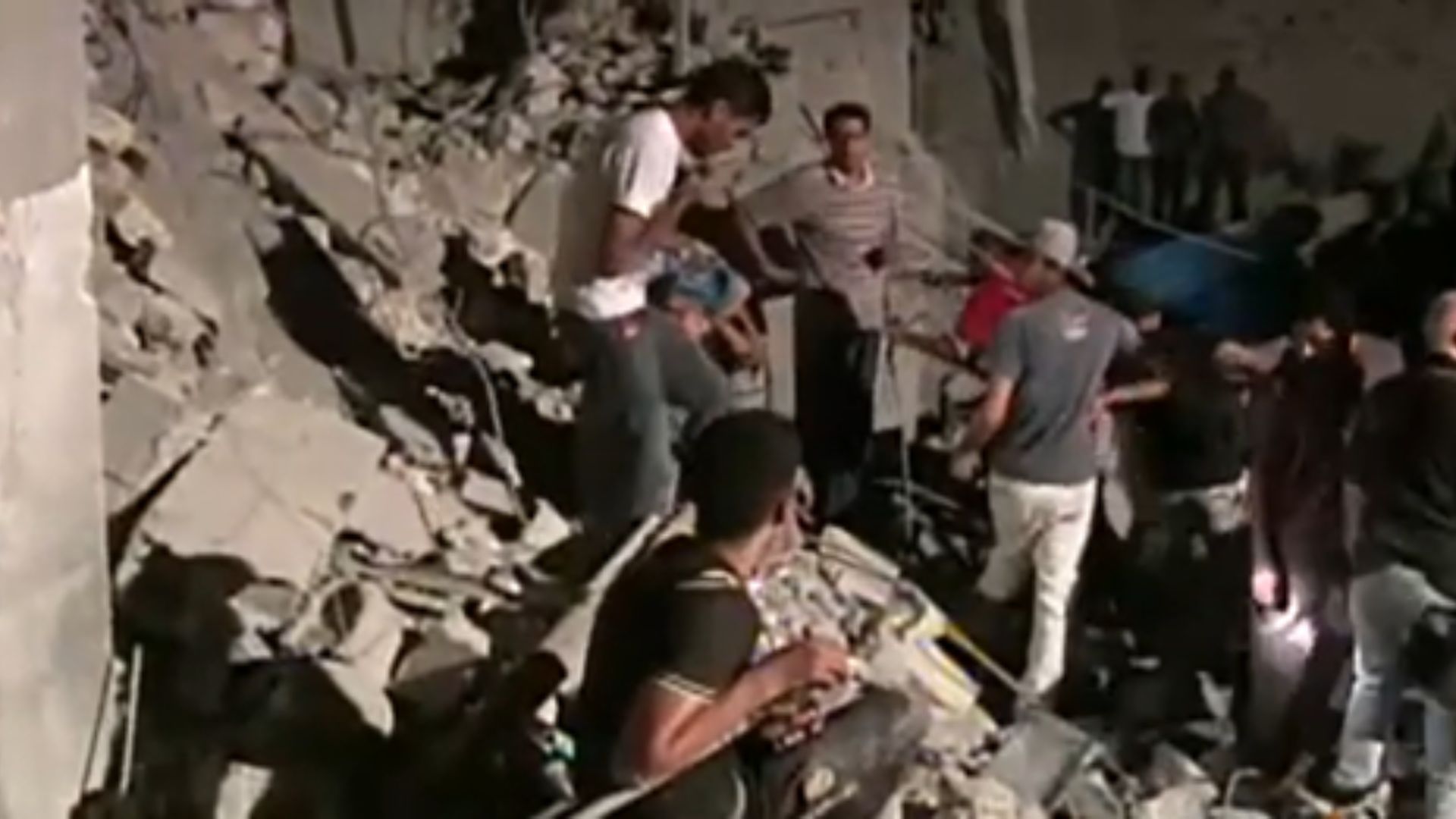
The bombing of civilian areas, as recently witnessed in Jabo, constitutes a form of violence that has instilled fear among communities in Sokoto. The full impact of these strikes remains uncertain, with only remnants of munitions as evidence.
Trump's actions have violated Nigerian airspace and undermined the sovereignty of the Nigerian state. Simultaneously, the Nigerian government has failed to protect its territorial integrity and ensure the safety of its citizens. The social contract between the Nigerian state and its citizens is eroding, as the government struggles to provide the expected security and stability. This breach in legitimacy further exacerbates Nigeria's diplomatic vulnerabilities and challenges the notion of state sovereignty beyond mere geographic boundaries. The government has not established a secure environment necessary for self-defence. For Nigeria to ensure its survival, it must formulate and implement effective strategies to address internal crises and engage constructively within the international system.
Sani Khamees is an independent researcher, a community activist and Pan-Africanist from Funtua, Katsina state of Nigeria.
References
Alao & Mavalla (2016). Kaduna State Sharia Crisis of 2000: The Lessons and Challenges after Sixteen Years. IOSR Journal of Humanities And Social Science (IOSR-JHSS) Volume 21, Issue 10, PP 08-14 e-ISSN: 2279-0837, p-ISSN: 2279-0845.
Amin, S. (2004). The Liberal Virus: Permanent War and the Americanization of the World. Monthly Review Press. https://nyupress.org/9781583671078/the-liberal-virus
Campbell, H (2013). Global NATO and Catastrophic Failure in Libya: Lessons for Africa in the forging of African unity. New York, Monthly Review Press
CDD (2022). Northwest Nigeria's Bandit Problem: Explaining the conflict drivers. Northwest Nigeria's Bandit Problem: Explaining the conflict drivers
I. C. (2010). Northern Nigeria: Background to Conflict. International Crisis Group. https://ciaotest.cc.columbia.edu/wps/icg/0020843/index.html
Vanguard (2020). 90% of Boko Haram’s victims are Muslims — Buhari. https://www.vanguardngr.com/2020/02/90-of-boko-harams-victims-are-muslims-buhari/
BBC News (28 November 2014). Nigeria unrest: Kano mosque attack kills dozens. BBC News. . Retrieved 1st January, 2026.
US launches strikes against Islamic State in Nigeria
LibyaReview (November 13, 2023). Weapons Flowing from Libya to Nigeria Fuel Regional Instability. https://libyareview.com/39209/weapons-flowing-from-libya-to-nigeria-fue…
Africanews (March 22, 2016). Nigeria: 20,000 deaths, $5.9 billion damages in Boko Haram insurgency. https://www.africanews.com/2016/03/22/nigeria-20000-deaths-59-billion-d…
A. n. (2024). Constructing farmer-pastoralist conflict as Islamization: Transformation and adaptation of resource competition discourse in the Nigerian Benue Valley. Geoforum. https://doi.org/10.1016/j.geoforum.2023.103937
The EastAfrican (March 1, 1987). Kafanchan Violence in 1987. https://www.theeastafrican.co.ke/tea/news/east-africa/nigerian-towns-le…
Jackson, J. (2026). Western Intervention in the Middle East and North Africa: The 'Responsibility to Protect' in Libya, Syria and Beyond. Routledge. https://www.routledge.com/Western-Intervention-in-the-Middle-East-and-N…
Al Jazeera (June 2, 2025). Military air strike kills at least 20 people in northwest Nigeria. https://www.aljazeera.com/news/2025/6/2/military-air-strike-kills-at-le…
Human Rights Watch (2007). Criminal Politics: Violence, "Godfathers" and Corruption in Nigeria: Summary. https://www.hrw.org/reports/2007/nigeria1007/1.htm