


Will Tigray Pass the Crossroad or Fail?
.jpg)
Adem draws on direct engagement with communities in the Horn of Africa, especially in Tigray, and highlights perspectives often absent in international debates on Ethiopia’s post-war future.
A Tired People Held Hostage by Fear
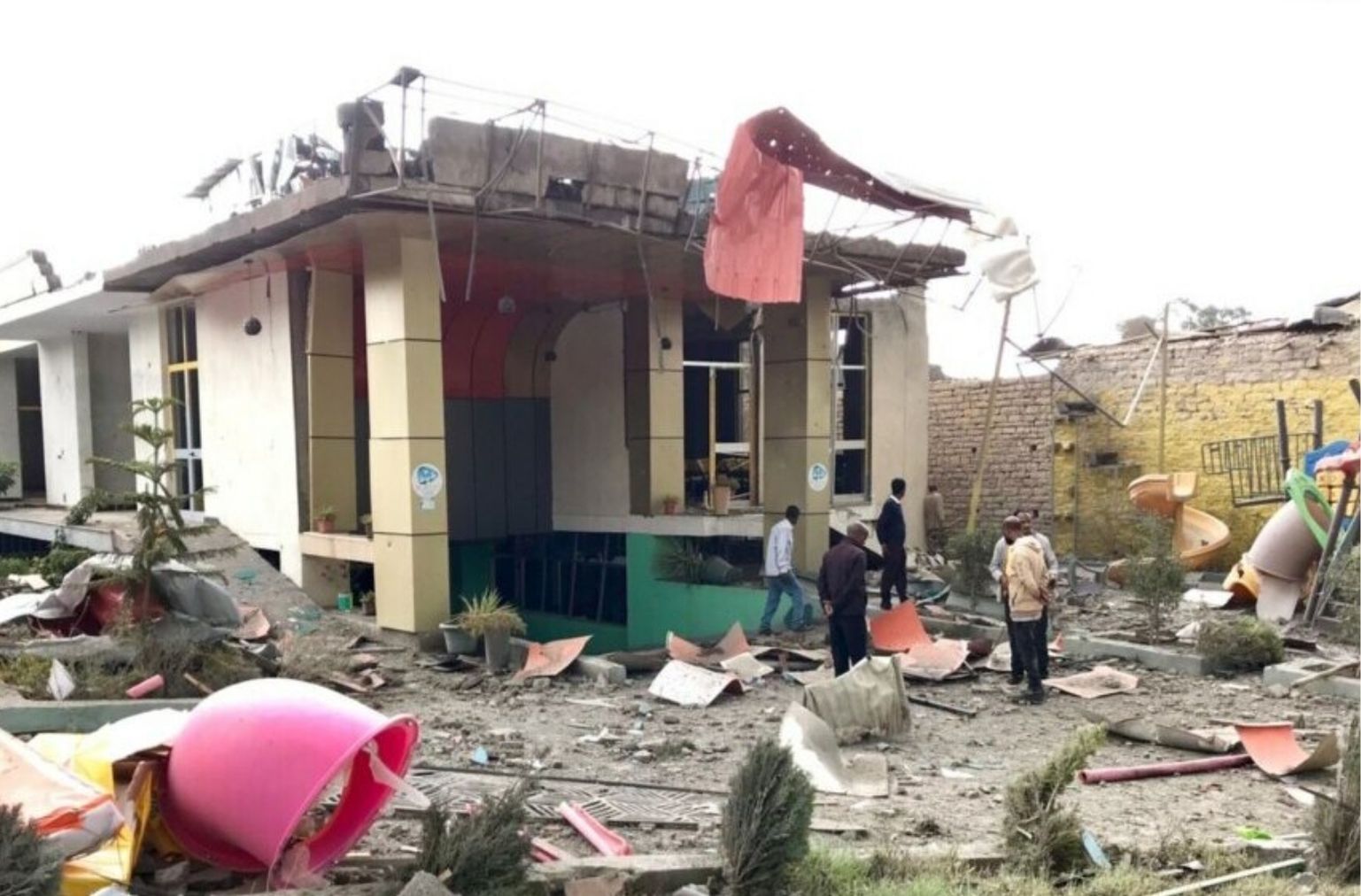
Tigray stands at a perilous crossroad. The scars of war remain visible: destroyed homes, broken institutions, displaced families. But the deeper wounds are political: fragmentation, elite rivalries, and a growing crisis of legitimacy. After the bloodshed and declarations of peace, the fundamental question remains unanswered: Will Tigray chart a new course forward or descend into another chapter of betrayal and instability?
Tigrayans are not just weary, they feel abandoned. They are disillusioned with both the federal government and local powerholders. Their frustration is directed not only at the old Tigrayan People’s Liberation Front (TPLF) elite, but also at Tigray Defense Forces (TDF) commanders who now act like parallel rulers. Yet meaningful change has not materialized.
The answer is fear, not apathy. Tigray remains encircled by threats: federal hostility, Amhara expansionism, and Eritrean aggression. Hundreds of thousands displaced from Western and Southern Tigray still live in limbo, denied justice and stripped of land.[1], [2]
Meanwhile, daily life deteriorates. Fuel scarcity cripple hospitals, inflation soars, and humanitarian aid remains inconsistent. These are not just post-war realities; they are the result of deliberate federal policy choices meant to isolate and weaken the region.[3], [4] In this climate, survival supersedes political organizing. There is no reconstruction, no real justice, and dangerously, no trusted leadership.
Yet Tigray’s plight is not unique. In Oromia, communities live under recurring clashes between federal forces and the Oromo Liberation Army (OLA), with mass displacement and destruction left unaddressed. In Amhara, the Fano militia’s insurgency and the federal state of emergency have produced widespread insecurity and eroded trust in institutions. Afar, caught between warfronts, still grapples with destroyed livelihoods and slow reconstruction. Across these regions, militarization has replaced governance, and ordinary people bear the costs.
Eritrea, Sea Access, and the Return of Imperial Fantasies
Compounding Tigray’s crisis are volatile regional dynamics. Ethiopia and Eritrea, once wartime allies, are now openly at odds.[5] Prime Minister Abiy Ahmed has revived Ethiopia’s irredentist ambitions over Red Sea ports, prompting fresh tensions with Asmara.[6]
While Ethiopia’s push for sea access rests on legitimate economic and historical grounds, framing it through imperial nostalgia rather than a coherent strategy has already turned it into a political and diplomatic sideshow. Eritrea, meanwhile, has its military and propaganda machinery fully mobilized, exploiting every tension. The irony is stark: the same federal government that allowed Eritrea’s occupation of Tigray now objects when Asmara shifts its ambitions, exposing how historical grievances and economic imperatives collide in the Horn’s volatile landscape.[7]
Asmara, feeling excluded from the Pretoria peace process, has turned into a regional spoiler, allegedly backing elements of the TPLF, Amhara insurgents, and Oromo rebels alike.[8], [9] Eritrea does not “thrive on chaos” so much as it leverages regional insecurity, much like Ethiopia, Sudan, and Somalia have historically done, by supporting armed groups across borders as bargaining chips for power and survival.[10]
But Eritrea is only one piece of the puzzle. Djibouti, Ethiopia’s lifeline to the sea, plays its own game by securing revenue through dependency while resisting alternative routes. Meanwhile, the Ethiopia–Somaliland Memorandum of Understanding granting Addis port rights in Berbera has triggered a diplomatic standoff with Somalia’s federal government, which views it as an infringement of sovereignty. These overlapping tensions underscore how port politics have become a new front of instability in the Horn.
Fragmentation from Within: The TPLF–TDF Nexus
Internally, Tigray’s political house is fractured. The TPLF, once hegemonic, is now weakened and divided. The forced resignation of Interim President Getachew Reda and his fallout with Chairman Debretsion Gebremichael and TDF generals marked a clear split. Reda’s allies formed the Simret Party, joining a growing opposition front.[11] But new leadership has not brought stability. Interim President General Tadesse Werede, widely seen as a federal compromise candidate, faces infighting and public mistrust. Controversies around EFERT, appointments, and governance gaps have undermined the interim government’s credibility.[12]
Meanwhile, a new militia, the Tigray Peace Forces (TPF), claims to resist the “TPLF–TDF dictatorship.” Though their support base is unclear, reports of armed clashes and suspected federal links suggest escalating internal conflict.[13] What is striking is not only the re-emergence of armed groups but the way militarization has become the default language of politics in Tigray. Governance, legitimacy, and even opposition are now expressed through military postures, making demilitarization an increasingly distant prospect.
Peacebuilding or Performance Politics?
The federal government’s approach to peace has often felt performative. Tigrayan elders who traveled to Addis Ababa seeking reconciliation were denied audience with the federal leadership and sent back empty-handed.[14]
This is not just a missed opportunity; it is a warning. When symbolic gestures are used to avoid real dialogue, distrust deepens. Military threats have returned. ENDF chief Field Marshal Birhanu Jula warned of “provocations” in Tigray, as diaspora activists and some TDF commanders speak of renewed mobilization.[15] The region is simmering. The federal government appears more focused on controlling Tigray than coexisting with it.
A New Movement or a New Mask?
Against this backdrop, a new initiative has emerged: the Peace-Seeking Movement. It unites three opposition parties—Arena Tigray, Baytona, and the new Simret Party—alongside retired generals Tsadkan Gebretensae and Teklay Asheber.[16]
The Movement has laid out three core aims:
- Prevent a return to war.
- Establish an inclusive transitional government.
- Pave the way for democratic elections.
On paper, this coalition signals a shift from military rule to civic renewal. But scepticism is natural. Can former generals lead democratic change? Can sidelined opposition groups steer reform? Still, even this imperfect coalition marks a break from the winner-takes-all politics that has long defined Tigray. It is a flicker, not yet a fire, but possibly the beginning of one.
A Horn of Africa Powder Keg
Tigray’s volatility mirrors a broader pattern of state fragmentation across the Horn. What is unfolding is not just a local crisis, but part of a dangerous regional realignment. Militarization and instabilities are not unique to Tigray. In Amhara, the Fano militia has entrenched itself in defiance of federal authority. In Oromia, the OLA insurgency expands. In Afar and Somali regions, clan-based militias persist. In neighbouring Somalia, the revival of Al-Shabaab has further weakened state institutions and spillover effects on the bordering Ethiopian areas, pushing Somalia closer to fragility while amplifying the militarization and fragmentation that characterize the wider Horn.
During the height of the Tigray war, Sudan was accused by Ethiopia of harbouring TDF elements, and border tensions escalated sharply.[17] Meanwhile, some reports suggest that Ethiopian soldiers of Tigrayan ethnicity stationed under the African Union Mission in Sudan (AMIS) refused repatriation and later sought asylum. There is even speculation that some became involved in Sudan’s ongoing civil conflict.[18]
Eritrea’s involvement in the Tigray war further internationalized the conflict. Its military incursions and documented war crimes have not been addressed by the Pretoria Agreement.
Eritrean forces remain in parts of Tigray despite promises of withdrawal, fuelling ongoing insecurity and resentment.[19], [20]
Gulf states also played quiet but significant roles. The United Arab Emirates reportedly provided drone and logistics support to Ethiopian forces.[21] Saudi Arabia, which maintains close ties with both Eritrea and Ethiopia, was accused by some observers of tacitly supporting Eritrea’s actions, or at least turning a blind eye in pursuit of Red Sea security interests.[22] These dynamics have prompted analysts to frame the war as a regional proxy conflict.[23]
The West, too, has been deeply involved. U.S. intelligence and diplomatic pressure shaped the trajectory of the conflict, while Washington played a central role in the Pretoria peace process.[24] As in Darfur, narratives of humanitarian urgency were interwoven with geopolitical calculations, reflecting how global powers continue to frame African wars through imperial lenses.
Tigray’s post-conflict fragility is not unique. Comparisons with Darfur are useful but must be nuanced: unlike Darfur’s long-peripheral status, Tigray was for decades a central power-broker in Ethiopia. A better parallel may be Sudan’s simultaneous wars in South Kordofan and Blue Nile, where local armed struggles compounded national crises and undermined peace.
The Narrow Path Ahead
Let us be clear: Tigray is not at peace, not with itself, not with its neighbours, not with the Ethiopian state. It is a wounded region staggering under the weight of war, betrayal, and blockade. But its fate is not yet sealed.
Through reform, realignment, or resistance, Tigray must forge a path to dignity, not just survival.
Its people deserve governance built on legitimacy, not legacy; justice, not impunity; leaders who serve, not rule. To make that possible, all forces that have fed its suffering must step back: the Eritrean regime, the Ethiopian federal government, and the entrenched TPLF–TDF complex. War profiteering in the name of sovereignty or liberation must end.
The federal government, too, faces a choice: Does it want a peaceful, self-governing Tigray within Ethiopia or a fractured region whose instability threatens national unity? That decision will not only shape Tigray’s future, but it will also define the credibility of Ethiopia’s federal experiment. Tigray is at the crossroads. What comes next will not only test its resilience but it will also define its future.
Raid M. Adem is a health economist and policy analyst specializing in institutional reform, labour markets, health policy and post-conflict governance in Africa. His work draws on interdisciplinary research and on-the-ground insights from the Horn of Africa.
Email: [email protected]
Endnotes
[1] Human Rights Watch (2022). Ethiopia: Displacement and Denial of Justice in Tigray.
[2] UN OCHA (2023). Tigray Situation Report.
[3] International Crisis Group (2023). Ethiopia's Tigray Conflict and Humanitarian Crisis.
[4] Médecins Sans Frontières (2023). Fuel Shortages and Health Crisis in Tigray.
[5] Reuters (2023). Ethiopia-Eritrea Rift Widens Over Red Sea Port Dispute.
[6] African Arguments. (2023). Ethiopia’s New Red Sea Ambitions and Regional Tensions.
[7] International Crisis Group (2023). Eritrea’s role in Ethiopia’s Tigray War.
[8] BBC News (2024). Eritrea’s Alleged Support for Rebel Factions in Ethiopia.
[9] Al Jazeera (2024). Regional Spoilers: Eritrea’s Shifting Alliances in the Horn.
[10] The Economist (2024). Eritrea’s Calculations in the Horn of Africa.
[11]Addis Standard (2024). TPLF Internal Divisions and Political Realignments.
[12] Africa Confidential (2024). Tigray’s Fragile Interim Government Faces Challenges.
[13] VOA News (2024). New Militia Emerges Amid Tigray’s Political Fragmentation.
[14] The Guardian (2023). Failed Peace Talks and the Federal Government’s Hardline Approach.
[15] Bloomberg (2024). Military Threats Return as Ethiopia Warns of Tigray Provocations.
[16]Addis Standard (2025, August 7). News: Tigrai Independence Party denies joining new alliance unveiled by Lt. Gen. Tsadkan as Baytona, Arena, Simret confirm participation. https://addisstandard.com/tigrai-independence-party-denies-joining-new-…
[17] Sudan Tribune (2023). Sudan-Ethiopia Border Tensions and TDF Allegations.
[18]Al Jazeera (2024). Ethiopian Peacekeepers in Sudan Conflict.
[19] Amnesty International (2023). Eritrean War Crimes in Tigray.
[20] UN Human Rights Council (2024). Eritrean Forces and Ongoing Human Rights Violations.
[21] The New York Times (2023). UAE’s Role in the Tigray Conflict.
[22] Middle East Eye (2024). Saudi Arabia’s Balancing Act in the Horn of Africa.
[23] Carnegie Middle East Center (2023). Ethiopia’s War as a Regional Proxy Conflict.
[24] Associated Press (2023). U.S. Role in Ethiopia Peace Talks Under Pretoria Agreement.