


Revolutionary Obligations to forego ‘Secondary Social Contradictions’ for ‘Primary Social Contradictions’ in the Quest for Global Pan-African Engagement
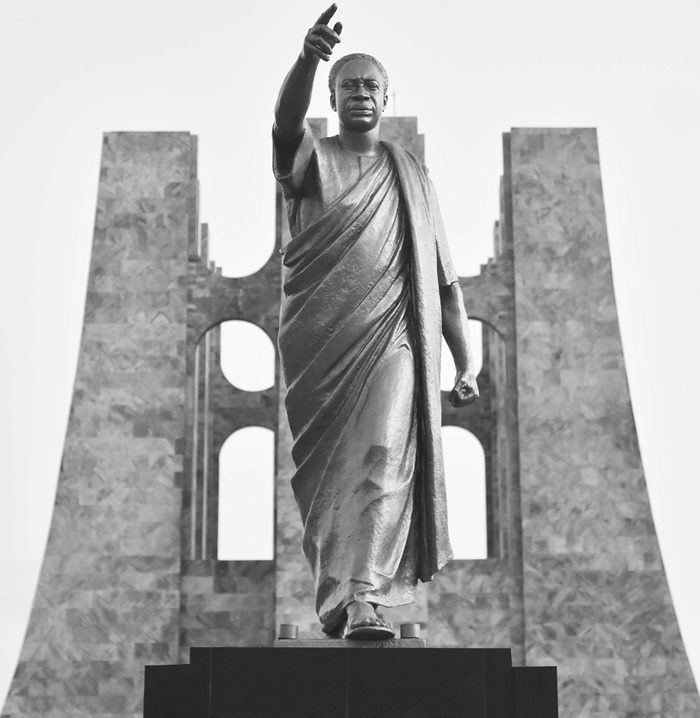
Opicho challenges Global Pan Africanists to concentrate efforts and wage war against major contradictions that confront the quest for Pan African unity and transformation and avoid distractions from minor social contradictions on their paths.
This essay is inspired by recent political events and political scholarships in Africa. The events that inform and shape the thinking about Africa’s liberation from recurrent challenges of social stagnation through the revolutionary path of Global Pan-Africanism. The identified events range from primary social contradictions to secondary social contradictions in the likes of the war in Congo, Xenophobia in South Africa, ban of foreign small-scale traders from Tanzania, endemic politics of ethnic loyalties in Kenya.
On the other hand, current political scholarship and writing that inform the conversation in this article are mainly beyond the ken of an individual adventurer. However, some specific and most obliging are allusions to the Quranic philosophy about the minor and major Jihad, Anwar Sadat’s arguments in Search for Identity, Lenin’s Two Tactics for the Revolution towards Social Democracy, Horace Campbell’s writings about Peace in the Congo published in the issue no. 901 of the Pambazuka News, John Forster Bellamy’s work on Marx and Communal Society published in the Monthly Review and the tribute written by Issa Shivji in homage to Samir Amin and Sam Moyo in the Metamorphosis of the revolutionary intellectual, an essay published in the Third World Legacies section of Agrarian South: Journal of Political Economy published by the Agrarian South Network to inform the need for compatible weapon of theory useful in the struggle towards social engagements and structural realignments in pursuit of collective achievements of Global Pan-Africanism.
Abu Huraira, the friend of Prophet Mohammed, narrates that the idea of primary social contradictions and secondary social contradictions was first discussed in the hadith (stories) by Prophet Mohammed. Abu Huraira informs that Prophet Mohammed called primary social contradictions as the Major Jihad and secondary social contradictions as Minor Jihad. In the words of Prophet Mohammed, major Jihad is the state of contradiction between an individual and his or her heart in relation to Islamic commitment. But minor jihad is an armed war against another person. Prophet Mohamed advises that major Jihad is the most challenging contradiction to any Muslim faithful. Hence, the struggle to remain a Muslim is a primary struggle against the major jihadi. This is a VERY revolutionary virtue which easily translates by logic of extension and connotation to theoretical weaponry that revolutionary struggle to achieve Global Pan-Africanism is and must be a continuous struggle against primary social contradictions by the people of Global Africa but not irrational involvement in secondary social contradictions. Contextually, global pan-Africanism should not waste its social energy on the secondary social contradictions. Wasting time in this realm of socialism is equivalent to what Chinua Achebe likened to stopping to pour water on the burning house in order to chase the escaping rat in Things Fall Apart.
For the purpose of simplicity and extensive discourse, let me mention examples of secondary social contradictions by starting with the irrational and shameless usage of colonially established national boundaries as a basis of economic discrimination against migrant workers and labourers ; irrational and visceral commitment to ethnicity as basis of economic or social as well as political discrimination, regular and recurrent perpetration of the insolence in the gender based discrimination by those that subscribe to patriarchal consciousness; participation in agitations that perpetrate secessionist politics with intention to miniaturize or balkanize Global South country like the experience in the recent conflict between Ethiopia and Tigray; Xenophobic clash and contradictions among the proletariat and the workers as experienced in most countries in Africa; primitive exploitation of the low income people through corporate and political corruption by those that hold powerful political positions in the power systems that be; interstate war within the Global South and many other conflicts that take place among the socialization of the peasants and proletarian where we have one proletariat fighting a fellow proletariat.
Hitherto, for us to get a clear picture of how self-defeating and sham is any political focus on the expedition of secondary social contradiction, is to make some critical observations about the 2025 Policy by the government of Tanzania to ban and chase away small-scale foreign traders and migrant labourers out of Tanzania. This policy was executed by President Samia Suluhu in the spirit of National Consciousness to protect the local Tanzanians from competition by the migrant proletarians for local jobs and markets. Yes, it is a policy with good intentions but faulted for being redolent of Pitfalls of National Consciousness as Frantz Fanon had once discussed in the Wretched of the Earth. This exclusionary policy by the government of Tanzania is faulty in the sense that, ‘all poor people are poor in the same way, but rich people are rich in different ways’, if at all I can be allowed to parody Tolstoy’s Anna Karenina.
Hence, no government worth its salt can claim to be fighting poverty by coming up with a policy that destroys the livelihoods of the poor migrants seeking economic survival on petty trading. I mean if Kenya has poor populations there is no way Tanzania can enjoy economic prosperity and vice versa. Hence, both Kenya and Tanzania as well as all other countries within the East African region must unite and get integrated to form economic regions that can pursue economic liberation in unison. Thus, if a government in Africa chooses to discriminate against poor people or migrant labourers from another country then this is not pan-Africanism. Similarly, is it not a correct focus of the liberation struggle to have Africa out of poverty and social economic challenges. It is not impolite to take such policy as perfect testimony of unfortunate political focus on the cosmetics of nationalism that only puts one proletariat in a position of conflict with another proletariat, a non-revolutionary contradiction dismissible as secondary social contradiction.
So, what are primary social contradictions? Issa Shivji in the Metamorphosis of an Intellectual, which as I mentioned earlier was homage to Sam Moyo and Samir Amin, made connotative arguments that primary social contradictions are the dialectic of materialism, usually operationalized as social-economic clashes between suppliers of labour and owners of capital. In a nutshell, primary social contradictions can be clashes between individuals or between nations, such as those between a labour-rich nation and a capital-rich nation. In a word, secondary social contradictions are the clashes that takes place between the slave master and the enslaved, the exploiter and the exploited, the eco-socialist and the eco-capitalist, the comprador bourgeoisie and the lumpen proletariat, the colonizer and colonized, the mine boy and the miner, the military sex worker and the military honcho, the human trafficker and the trafficked humanity or empirically it is a categorical clash as evinced in the current experience of war in Gaza between Israel (an epitome of American Imperialism) and Palestine (the representation of proletariat and peasant workers) or the clash between French Military entrepreneur (the oppressor) and the West African liberation fighters against post-colonialism(the oppressed) as discussed by Horace Campbell in the issue No. 902 of Pambazuka News.
Now, what is to be done (as Lenin would ask) in relation to strengthening the global pan-African movement under the light of possibility of African political systems getting themselves swept away into the irrational wave of secondary social contradictions while at the same time remaining committed to voluntary involvement in the dynamics of secondary social contradictions?
The answer is found in the diversity of the weaponry of revolutionary theory. Starting with active reading of Lenin’s arguments on the essence of the commune in Two Tactics for the Revolution towards Social Democracy. Revolutionary duty to ignore secondary social contradiction in the likes of national consciousness in the centre-piece of discussion by Karl Marx by stressing for revolutionary unity and liberation of all the workers of the world but not parochial liberation efforts focused on one ethnic identity in the example of Jewish tribe in his work on the Jewish Questions. Sometimes later Karl Marx again stressed for the commune as a universal basis of true worker’s liberation and revolutionary consistency in The Ethnological Notebooks, just in the same way John Bellamy Forster has pointed out in his work on the socialist communes as a basis for viable worker’s revolution in the 2025 August edition of the Monthly Review. And thus, this is a point at which we go back to the words of Issa Shivji that a true revolution like the current Global Pan Africana Movement for social-economic liberation of global African workers, should focus on the primary social contradictions, but not secondary social contradictions that is only bound to err and goof by yielding to the pitfalls of National Consciousness as Frantz Fanon had to put in the Wretched of the Earth.
Alexander Opicho is a Corporate Trainer at RCMRD, Nairobi, Kenya.
References
Chinua Achebe. (1958). Things Fall Apart. Reprinted by Penguin 1994.
John Forster Bellamy, Marx and Communal Society, Monthly Review Press, 1 July 2025
https://monthlyreview.org/2025/07/01/marx-and-communal-society/
Horace Campbell (10 July 2025) ‘The Fraudulent Peace Accord between the Democratic Republic of the Congo and Rwanda signed in Washington DC, June 2025’, Pambazuka News, Issue 901. https://www.pambazuka.org/Fraudulent-Peace-Accord
Horace Campbell (27 July 2025). ‘The French Army Booted out of Senegal: Crisis of French Imperial Hubris’, Pambazuka News, Issue 902. https://www.pambazuka.org/index.php/French-Army-Booted-Out-of-Senegal
Fanon Frantz (1961) The Wretched of the Earth. Republished by Penguin 1990.
Vladimir Ilyich Lenin (1905), ‘Two Tactics for the Revolution towards Social Democracy’, in Lenin’s Collected Works, 1962, Moscow, Volume 9, pp. 15-140.
Karl Marx. (1844) ‘On the Jewish Question’, In Selected Essays by Karl Marx.
Karl Marx. (1974) The Ethnological Notebooks of Karl Marx. Edited by Lawrence Kraber, International Instituut Voor Sociale Geschiedenis, Amsterdam (Assen the Netherlands: Van Corcum & Comp. B.V.) Prophet Mohammed, Hadith (stories)
Anwar Sadat (1979) In Search for Identity: An Autobiography (New York: Harper Row).
Shivji, I. G. (2018). The Metamorphosis of the Revolutionary Intellectual. Agrarian South: Journal of Political Economy, 7(3), 394-400. https://doi.org/10.1177/2277976018800911 (Original work published 2018)