


Reparations Now! The Centrality of Reparative Justice for a Humanizing Future
Reparations Now! Daley makes a clarion call for reparations and reparative justice, redeeming it from neoliberal hijack and reductionism in some leftist circles. A timely contribution to the clarity and key answers required in the struggle for reparations.
The topic of reparations has entered mainstream politics in the West, and the focus is on financial transfer to states where former enslaved peoples live and to former colonies. After decades of campaigns by ordinary people, mainly in Global Africa, the campaign has been co-opted by states, who seek compensation from formerly slave-owning and colonial powers. Demands for financial compensation have pushed members of the UK Conservative Party to attack the Caribbean Community (CARICOM) states seeking reparations as “enemies of the UK”.[1] Kemi Badenoch, the leader of the UK’s Conservative party, reportedly stated, “this is the past, we need to talk about the future. There are many countries now who want to use guilt to try to exploit the UK. They ask for reparation.”[2]
Financial reparations
I have a young family friend who is a socially conscious banker. Her parents hailed from the same country as Kemi Badenoch’s. While having a discussion on reparations, she said the only thing that she and Kemi Badenoch agree on is that Britain does not have the money to pay reparations. In fact, there are a number of ways that the UK can address reparations beyond direct financial transfers or the pithy sum of aid that is given to placate liberals at home, and which recent UK governments have reduced.
Even so, the case for financial reparations is indisputable. Most recently, Oxford Professor Colin Clarke, an elderly white British man, published a book entitled: Racist Regimes, Forced Labour and Death: British Slavery in the Caribbean and the Holocaust in Germany and the Occupied Europe[3], in which he compares the violence of the Holocaust against Jews to that of new world slavery, and argues that reparations should be paid to peoples of Africa and African descent in the same way they were paid to Holocaust survivors and their descendants.
Clarke notes that, in 1951, Western Germany agreed to pay $3 billion over the next 14 years to the State of Israel, where 500,000 Jews were resettled. By the 2000s, over $110 billion had been paid by Germany in reparations, indemnification, and restitution. In 2019, Germany paid $564 million to the Claims Conference which supports medical and cultural charities germane to the holocaust and its survivors. Clarke argues that reparation has been a successful symbolic gesture of benefit to surviving European Jews of the Holocaust generation.
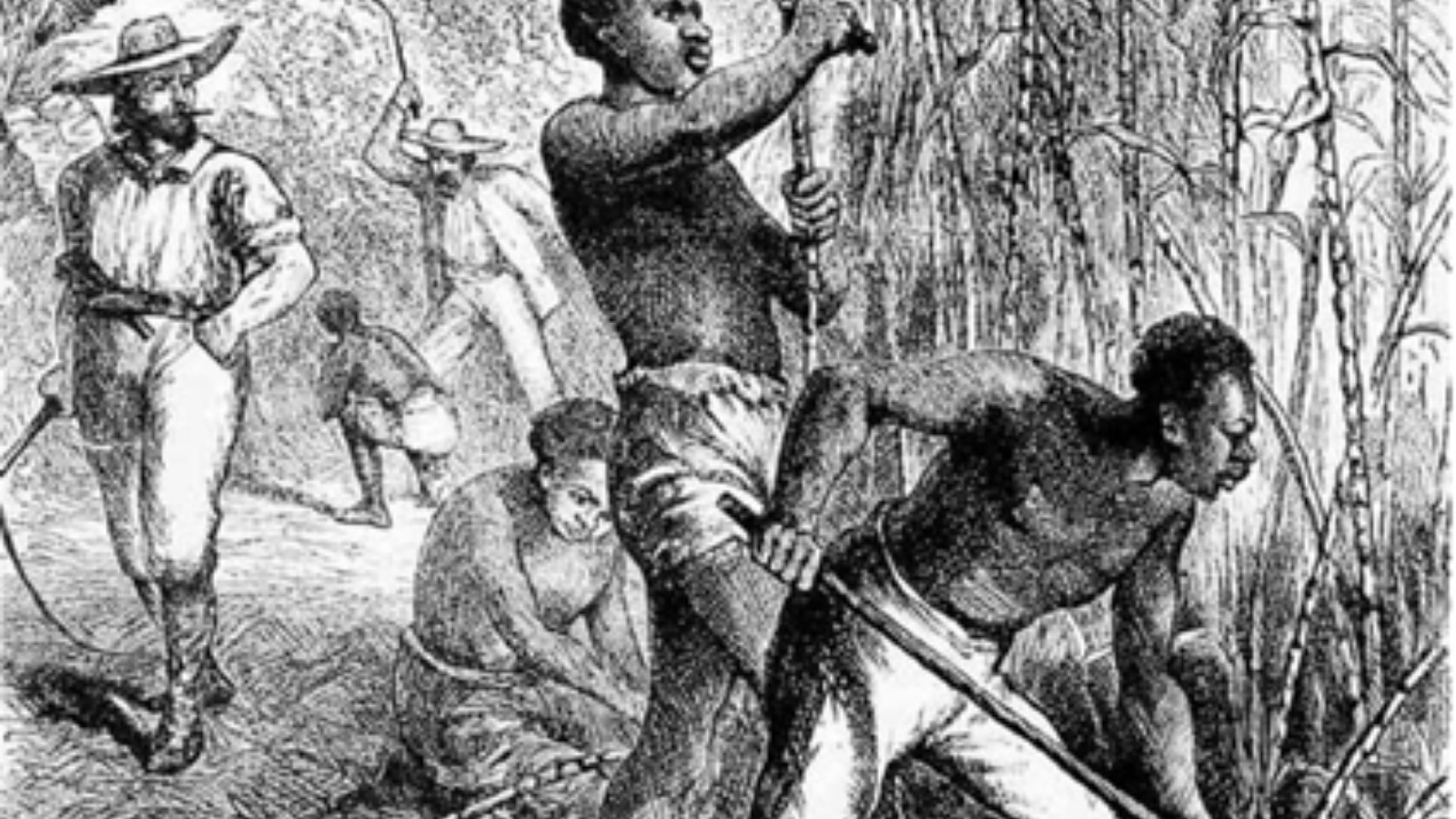
Contrast this to the treatment of the enslaved African peoples and their descendants. Clarke estimated that 2.7 million Africans were shipped to the Caribbean, 350,000 died enroute and that the conditions of slavery were extreme violence and sexual slavery. With regards to the owners of enslaved Africans, in 1834, the British government agreed to pay them £20 million in compensation. That £20 million that the government borrowed in 1834, was finally paid off in 2015. The enslaved people and their descendants received nothing. Furthermore, Hilary Beckles, in How Britain Underdeveloped the Caribbean: A Reparation Response to Europe’s Legacy of Plunder and Poverty[4], shows how, after the ending of slavery, British officials in the Caribbean ensured that Black people could not progress by ‘freezing freedom’, through legislation that prevented any economic advancement. It was the destitution and appalling conditions that Clarke witnessed in early 1960s Jamaica that motivated him to write his book. Not surprisingly, efforts were made to undermine the newly-formed Federation of the West Indies (1958–62) that demanded reparations in the 1950s and saw Caribbean–wide collective action as the only way to foster development in the region. Then, the UK refused to provide the £200 million development support requested by its Caribbean colonies.
Research has also shown that the German genocide against the Herero and Nama people of its South West Africa colony (now Namibia) was the precursor to that of the Jewish Holocaust, and has revealed that the Germans learnt racial segregation from the Americans and exchanged ideas on race science. The Namibians received nothing, until 2021, when, after several years of negotiation, Germany agreed to compensate the Herero and Nama people, by paying them 1.1 Billion Euros via established aid programmes over a 30-year period.[5]
Mainstream discussion on financial reparation has also divided the left in the West, especially the white radicals, who shy away from using the concept of racial capitalism. A term coined by Cedric Robinson[6] to denote the close intersection between capitalism and racial ideology that provided the justification for slavery and the extreme violence that were witnessed in non-slave colonies, and ongoing-economic subjugation of Black people.
Edward E. Baptist, in his book, The Half Has Never Been Told: Slavery and the Making of American Capitalism[7], has shown the centrality of slavery in the development of American capitalism, and that enslavers and slave traders were entrepreneurs in a capitalist context. The proceeds from cotton and sugar production by enslaved peoples were harnessed by the banks. These banks, including UK banks, such as Barings (which collapsed in 1995 as a result of fraud) and Barclays, provided the capital that financed industrialization to take-off in Europe and the Americas. Thus, enabling the economic transformation that took place in the West, and the improvements in the quality of life that ensued.
European and American society benefited from slavery. Not only were mansions and palaces constructed, their educational institutions, churches, concert halls, museums, and infrastructures were improved and enriched through the proceeds of slavery – the scale of which some institutions are now unearthing. For American universities, see Craig Steven Wilder’s Ebony and Ivy: Race, Slavery, and the Troubled History of America’s Universities.[8] In the UK, the Church of England commissioned a report to show its links to transatlantic slavery, [9] after which it committed £100 million in reparations. Not many prominent institutions have followed their example, with the exception of the University of Glasgow agreeing to pay £20 million in reparations through a collaborative project with the University of the West Indies.[10]
It is not unusual to hear white people in the West demanding a class analysis when we speak of the beneficiaries of slavery. They claim that only the ruling classes benefitted and that the white working classes were in the same situation as enslaved peoples, labouring for long hours in horrendous conditions in the factories of Europe. Such conditions are well known, but such critics of reparations tend to dismiss how whiteness acts as a unifier in the West, and how it has been manipulated by elites to prevent class solidarity. The left, by focusing on the UK’s William Wilberforce’s campaign to end slavery, has failed to acknowledge the role of enslaved peoples in freeing themselves, notably the numerous uprisings in slave colonies.
The case for financial reparations is non-negotiable. But, as a social scientist, I am more interested in reparative justice that aims to acknowledge the scale of colonial violence and its central role in the recognition and restitution of the enslaved peoples and their descendants as full human beings, especially at this conjuncture when anti-blackness and fascism have become acceptable in public discourse, and in academic spaces under the guise of ‘freedom of speech’. Asserting Black people’s humanity is even more significant now as white supremacists return to the political centre in the West. It is imperative to document and reveal further the scale of the injustices, extreme violence, genocides, crimes against humanity, including the destruction of productive capacities, knowledge systems, and ways of being in the world.
Acknowledging colonial genocide and continued violence
Reparative justice means recognizing that colonial genocidal practices and their logics did not cease after the ending of slavery and colonialism. Conservative politicians in the UK spout bellicose nonsense that formerly colonized people should be grateful to the UK for leaving them with railways, and “legal and democratic systems”. Their ignorance is galling, since democracy was not an option for the colonized under British rule. Its institution at the moment of independence became a way of ensuring the colonizers could retain control by ensuring that their comprador elites got into power, through what turned out to be choiceless democracies.
Critical social science scholarship has exposed and can continue to reveal colonial continuities in the retention and promotion of economic extractive practices, which are militarized, racialized, and linked to the characterization of African peoples as non-humans. Such practices are exemplified in the development mantra promoted in Africa, which has been accompanied by the International Monetary Fund (IMF) and World Bank’s structural adjustment programmes. Their associated conditionalities have obliterated the social contractual obligations that these new African states, as modern liberal democratic states, were forging with their citizens - devaluing the lives of Africans as human beings and enabled greater corruption.
Scholarship that addresses reparative justice questions the inevitability and acceptance of continuities in state institutions that are pre-disposed to discrimination and genocide. This is exemplified by the training of militaries for the domestic control of citizens, the continued supply of weapons and military training to such states, and the regional expansion of warfare, through the transferral of genocidal ideas relating to the conduct of war.
With Amber Murrey, I have argued that colonial persistence is evident in the geopolitics of knowledge production and the coloniality that requires the devaluation of indigenous knowledge and the obedience to western scientific knowledge and pedagogies, thus maintaining the epistemic violence associated with asymmetrical power relations with former colonies, whiteness, military supremacy, and the hegemony of western development trajectories.[11] Amber Murrey and I, in our book Learning Disobedience: Decolonizing Development Studies[12], seek to inspire people to practice critical interdisciplinary scholarship, thinking beyond genocidal capitalist practices and imagining and working towards just futures.
Abolishing institutions of global extraction and impoverishment
Reparative justice means campaigning for the abolition or transformation of global institutions, such as the World Bank, and the IMF, and their support for the current phase of extractive capitalism that dehumanizes, dispossesses, and eradicates people in order to capture their raw material resources, such as critical minerals.
Reparative justice means transparency in economic agreements for minerals, infrastructure etc., which continue to impoverish peoples in the Global South. Citizens have a right to know the nature of the agreements their governments sign on their behalf with other countries and corporations. In 2016, Mark Curtis published a report entitled The New Colonialism, Britain’s Scramble for Africa’s Oil and Energy Resources,[13] which took place after the 2008 financial crisis. Curtis documented 101 companies that were listed on the London Stock Exchange and involved in mineral extraction from Africa, notably gold, platinum, diamonds, copper, oil, gas and coal. He noted that most of the companies were British and had mining operations in 37 ‘sub-Saharan’ African countries. Collectively, they controlled over $1 trillion worth of Africa’s most valuable resources or prime real estate.
How different are these processes of extraction from those described by Adam Hochschild in his book, King Leopold’s Ghost: A Story of Greed, Terror, and Heroism in Colonial Africa[14], which documents the atrocities committed by extractive companies when DRC was the property of King Leopold of Belgium? Some 10 million people died as a result of Europeans’ rapacious racial capitalism.
With the current war in Ukraine and the West’s growing competition with China, western companies are now scrambling to gain access to critical minerals in Africa. Under the Biden and Trump Administrations, US companies have been rushing to sign mineral deals with the Democratic Republic of Congo (DRC). More recently, in May 2025, in order to end the Rwanda-backed war, the DRC signed an agreement with the Trump administration giving American companies access to DRC’s mineral wealth. One of those companies is KoBold Metals, a U.S.-based mining company backed by prominent investors including [philanthropist] Bill Gates and Jeff Bezos, which, reportedly, ‘is intensifying efforts to secure rights to the Manono lithium deposit in the Democratic Republic of Congo (DRC)—a site widely regarded as a potential world-class lithium mine. A January 2024 estimate suggests Manono holds 669 million tonnes of resources with an average grade of 1.61% lithium’.[15]
Abolishing tax havens
Instead of the UK paying financial reparations, a more progressive act would be to prevent capital flight from Africa to its tax havens. In the context of the scale of poverty on the continent, this capital flight constitutes violence that equates to a crime against humanity. The scholars, Leonce Ndikumana and James Boyce, in their 2022 edited volume, entitled On the Trail of Capital Flight from Africa: the takers and the enablers[16], estimate that since 1970,
‘… capital flight from African countries amounted to $2 trillion, of which almost $600bn exited after the turn of the century. If we include the interest income that would have been earned from these outflows, the cumulative amount of private wealth in off-shore banks stood at $2.4 trillion by 2018. This was more than three times higher than the stock of external debts owed by the same countries, making Africa a “net creditor” to the rest of the world’ (p.1).
In 2019, the advocacy group Tax Justice Network stated that the UK controlled eight of the top ten tax havens in the world,[17] where individuals and corporations hide their money to avoid taxes and financial accountability in their home countries.[18] The British colonies that operate as tax havens include the British Virgin Islands, which had only 36,000 residents, but was ‘listed as the home of more than 400,000 companies and [held] approximately $1.5 trillion (USD) in assets’.[19] Other British territories that act as tax havens include Bermuda, the Cayman Islands, Turks and Caicos Islands, Anguilla, the Isle of Man, Jersey and Guernsey. The UK is then the ‘greatest enabler of corporate tax avoidance in the world.’ Since the bulk of illegal African funds are likely to be held in UK banks and tax-havens, in offshore accounts, the UK has a major role to play in ending exploitation, poverty, and ensuring reparative justice.
To shift blame, one question that often arises in the UK goes along the lines of: what about post-colonial African leaders? They should also be accused? Undoubtedly, African leaders aid post-colonial capital flight, and the most corrupt of them actively participate. Therefore, financial reparations given to rapacious states will be used to prop up the system of racial capitalism. Reparative justice must precede financial transfers, and that requires giving people the freedom to decide on the nature of society and economy that they want to construct. It means enacting anti-racist practices that seek to abolish the carceral system in the West that devalues Black lives, and ending the intergenerational trauma that enslavement and racial capitalism continue to produce.
Concluding remarks
Reparative justice is revolutionary because it challenges and exposes all the unfreedoms of the modern world. After providing an account of the history of the reparations movement in the USA in his book Freedoms Dreams: The Black Radical Imagination,[20] Robin E Kelley writes:
‘The reparations movement exposes the history of white privilege and helps us all understand how wealth and poverty are made under capitalism—particularly a capitalism shaped immeasurably by slavery and racism. It stresses the fact that labor— not CEOs, not scientists and technicians, not the magic of the so-called free market—creates wealth. The reparations movement provides an analysis of our situation that challenges victim-blaming explanations, explaining that exploitation and regressive policies create poverty, not bad behavior’ (p.131).
The UK is struggling to reckon with the ignoble aspects of its past, and is, at the same time, ignoring its complicity in an unjust present. Reparations will free it from the heavy weight of its violent imperial past. And, in recognizing the humanity of Black people, it will begin the process of liberating its citizens from racial, class, and gender inequities. To quote Kelley:
‘If we think of reparations as part of a broad strategy to radically transform society—redistributing wealth, creating a democratic and caring public culture, exposing the ways capitalism and slavery produced massive inequality—then the ongoing struggle for reparations holds enormous promise for revitalizing movements for social justice (p.129).
So long as Black people continue to suffer from an unjust racial capitalist system, their dreams of freedom and dignified futures cannot be crushed. Reparations now!
Patricia Daley is Professor of the Human Geography of Africa at the School of Geography and the Environment, University of Oxford.
Endnotes
[1] https://www.thenational.scot/news/24685505.robert-jenrick-former-colonies-owe-gratitude-britain-empire/
[3] Colin Clarke, Racist Regimes, forced labour and Death: British Slavery in the Caribbean and the Holocaust in Germany and the Occupied Europe (2024, Palgrave Macmillan).
[4] Hilary McD. Beckles, How Britain Underdeveloped the Caribbean: A Reparation Response to Europe’s Legacy of Plunder and Poverty (2021, Kingston: University of the West Indies Press).
[6] Cedric Robinson, Black Marxism: The Making of the Black Radical Tradition (2021, republished by Penguin Modern Classics).
[7] Edward E. Baptist, The Half Has Never Been Told: Slavery and the Making of American Capitalism (2014, Basic Books).
[8] Craig Steven Wilder, Ebony and Ivy: Race, Slavery, and the Troubled History of America’s Universities (2013, New York: Bloomsbury Publishing).
[9] Church Commissioners' Research into Historic Links to Transatlantic Chattel Slavery. Available at: https://www.churchofengland.org/sites/default/files/2023-01/church-comm…
[10] Hannah Capella, Glasgow University's 'bold' move to pay back slave trade profits’ (23 August 2 019). Available athttps://www.bbc.co.uk/news/uk-scotland-glasgow-west-49435041
[11] Patricia O. Daley & Amber Murrey (2022) Defiant scholarship: Dismantling coloniality in contemporary African geographies, Singapore Journal of Tropical Geography 43, 2: 159-176.
[12] Amber Murrey & Patricia Daley, Learning Disobedience: Decolonizing Development Studies (2023, Pluto).
[14] Adam Hochschild, King Leopold’s Ghost: A Story of Greed, Terror, and Heroism in Colonial Africa (1999, First Mariner Books).
[16] Leonce Ndikumana & James Boyce, On the Trail of Capital Flight from Africa: the takers and the enablers (2022, OUP).
[20] Robin D. Kelley, Freedom Dreams: The Black Radical Imagination (2022, Beacon Press).