


Juneteenth: The Long History of Liberation Day and the Revitalization of Protonationalist Strategy
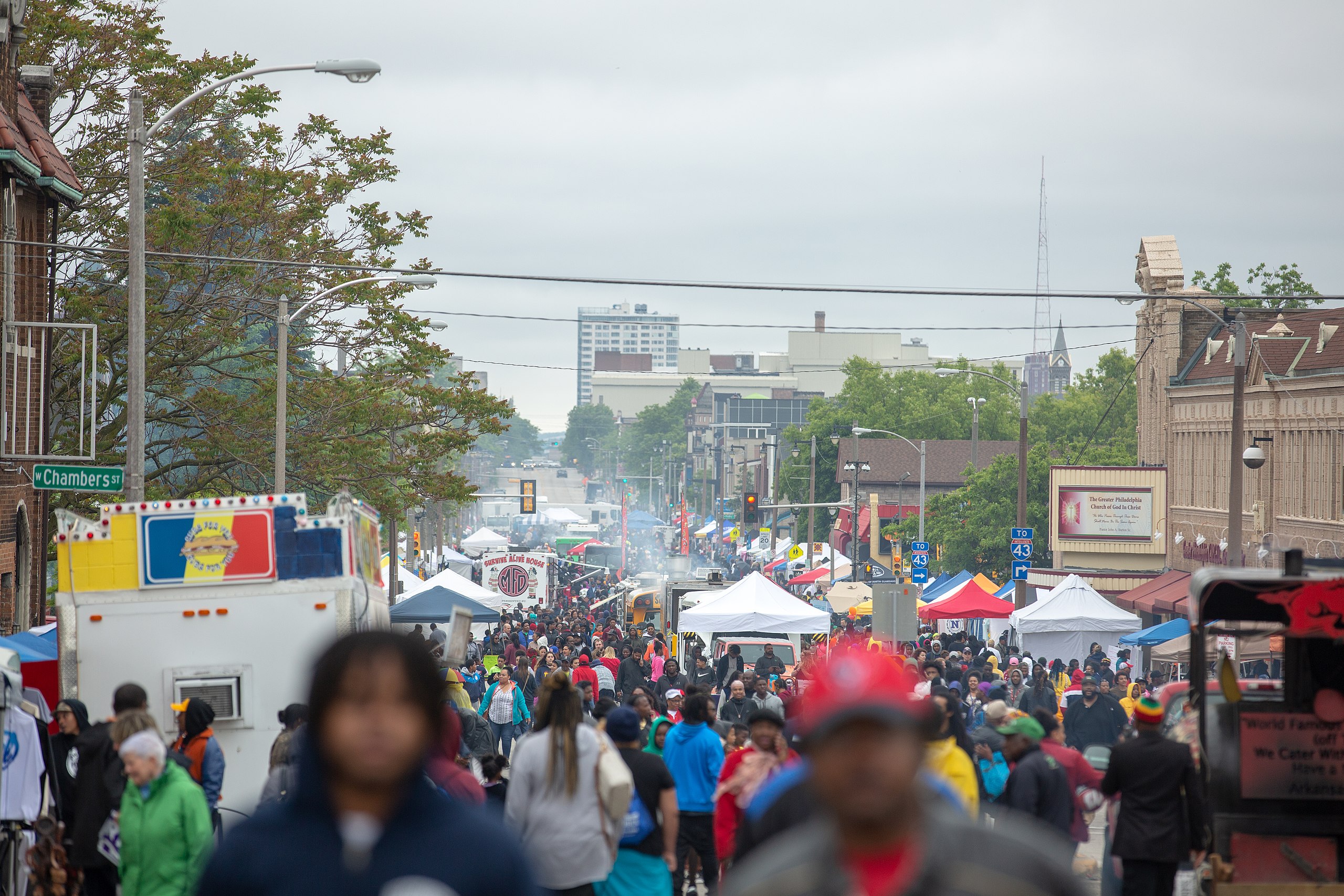
June 19th is a national commemoration day for the emancipation of enslaved Black peoples in the United States. Sundiata Cha-Jua and Gus Wood delve into the rich history of the emancipation struggles around Juneteenth and African liberation, then and now.
We have to do with the past only as we can make it useful to the present and to the future. To all inspiring motives, to noble deeds which can be gained from the past, we are welcome.
Frederick Douglass, “What to the Slave is the Fourth of July.” 1852.
Introduction: The Meanings of Afrikan American Emancipation Commemorations
Our opening epigraph from Frederick Douglass reflects the Sankofa principle, therefore, it speaks powerfully to our understanding of the role of history in liberatory movements. A proverb of the Akan people of Ghana, Sankofa literally means one can return to the past, interrogate previous experiences and retrieve forgotten knowledge. We use Sankofa as a synonym for historical analysis because it enables us to recover erased and disremembered knowledge and use it to help guide contemporary struggles for a liberated future. While gaps remain and liberal interpretations still eclipse the meanings and objectives of our struggle for liberation, over the last 50 years Black scholar activists have made tremendous strides in restitching the history of our quest for freedom. In 1987, William H. Wiggins Jr. noted that “freedom observances had generated little interest” among U.S. scholars.[1] Unfortunately, the recovery and mending of the history of our emancipation celebrations remain rather tattered. In discussing the long history of Juneteenth, we aim to resuture its relationship to the freedom festivities that preceded it and to explicate the proto nationalist vision that animated emancipation commemorations.
Juneteenth is Afrikan Americans’ most popular observance of milestones in their pursuit of liberation. A 2024 YouGov poll found that 90 percent of U.S. residents were aware of the commemoration of emancipation. More than likely a higher percent of Afrikan Americans were knowledgeable of Juneteenth. Sixty-eight percent of African Americans who knew of the holiday had celebrated it at least once and 32 percent had each year. This suggests that about 31 million African Americans have celebrated the day of jubilee.[2]
A Brief History of Juneteenth and its Meanings
Most Afrikan American were constructed around significant political events, specifically,
emancipatory events. This focus reflects Afrikan Americans’ distinctive freedom conscious political culture. In fact, Juneteenth was initially called “Jubilee Day,” in the sense of its ancient Hebrew meaning as a time of emancipation and reparation. It emerged from Afro-Texans’ spontaneous joyful response to Brigadier General Gordan Granger’s announcement of General Order No. 3 on June 19, 1865, in Galveston, Texas. Issued two years, five months and 18 days after the Emancipation Proclamation, General Order No. 3 abolished enslavement for the remaining 250,000 enslaved persons in the U.S. empire. By 1891 it had been rechristened “Juneteenth.”[3]
Denied access to public space for their freedom celebrations, the freedpeople relied on African American institutions— churches and fraternal orders — and eventually on land owned by Afrikan Americans. For instance, Galveston’s inaugural organized Juneteenth commemoration was held at Reedy Chapel, African Methodist Episcopal Church on June 19, 1866. In scores of communities, African Americans collectively purchased land in order to commemorate Juneteenth. Most significant, in Texas, the freedpeople founded 557 “freedom colonies” or “informal” autonomous rural settlements. By 1870, nearly 50 such communities existed in the Comanche Crossing area in Limestone County, near Mexia. There in 1898, the Nineteenth of June Organization bought 10 acres of land for Booker T. Washington Park, the site of Juneteenth commemorations.[4]
Even in its essential features, such as barbecuing, Juneteenth’s rituals were not unique to Texas. Instead, they reflected a broader Afrikan American tradition, the retention of Afrikan cultural characteristics. In addition to its Carib etymology, barbeque also has Afrikan origins. Moreover, the word also derives from a Hausa term, babbake which “describe[s] a complex of words referring to grilling, toasting, building a large fire, singeing hair or feathers and cooking food over a long period of time over an extravagant fire.”[5]
The Texas based holiday emulated the ritual organizational structure of earlier freedom festivals. Parties, food, dancing and sporting events were prominent but so too were more solemn activities. It included a parade, partying, prayer, singing spirituals or freedom songs, such as “Many Thousands Gone,” and a formal address that traced the history of and evaluated the current state of “the race.” And after the passage of the 15th Amendment, which enfranchised Black men in 1870, political mobilization became conspicuous.[6] Juneteenth like its predecessors was a communal affair. It inherited from them its core mission--to reinforce that Afrikan Americans constituted a distinct people. First and foremost, these commemorations brought Black people together. And in doing so, they used Emancipation Day events as organizing vehicles, “to celebrate, to educate, and to agitate.”[7]
Pan-Afrikan Origin of Afrikan Americans’ Commemorative Celebrations
Thus, Juneteenth did not emerge sui generis. It was preceded by several prior emancipation day celebrations. These early 19th Century commemorations reflected a Pan-Afrikanist consciousness. As they celebrated the abolition of the European Slave Trade[8] and diaspora wide eradication of enslavement.
Therefore, as a commemorative event, Juneteenth’s antecedents go back to January 1, 1808, when quasi-free[9] African and African Americans gathered in New York City and Philadelphia[10] to celebrate the abolition of the European Slave Trade by England, Denmark and the U.S.[11] New York’s New Year’s Day program established the pattern for Emancipation Day celebrations which Juneteenth observances mirrored. Around 1816, the celebration ceased. More than a decade later they were replaced with festivities commemorating the July 4, 1827 abolition of enslavement in New York state. Ironically, Afrikan people celebrated New York State Abolition Day on July 5th. Most Fourth of July celebrations in the early 19th Century U.S. “outlawed black participation if not black presence.”[12] Like the January First observation, most July Fifth commemorations were held in Black controlled institutions. Celebrations of freedom in New York state continued into the late 1850s, but mainly lasted from 1827-1834, when they were superseded by commemorations of West Indian Emancipation Day. The later celebrations spanned the period from 1834-1862.
Emancipation Day, 1865-1965
Before it became a federal holiday, Juneteenth was a regional celebration of Afrikan American emancipation. Freedom came unevenly; because it came when Union troops arrived, thus, Black folk in different regions, states, and within different states celebrated emancipation at different times. Indeed, 20 separate state emancipations occurred between 1780-1865. Until the 1970-80s, Juneteenth was observed primarily by Afrikan Americans in Texas, Louisiana, Arkansas and Oklahoma. Meanwhile Black folk in Alabama, Georgia, and Mississippi commemorated May 28, while Afrikan Americans in Illinois, Indiana, and Ohio celebrated on September 22, the date Abraham Lincoln announced the Emancipation Proclamation.[13]
For Afrikan Americans, Jubilee is bound to Watch Night. The first Watch Night service took place on “Freedom’s Eve,” December 31, 1862. Afrikan Americans congregated anxiously in churches awaiting the issuance of the Emancipation Proclamation. Midnight brought a new day and theoretically a new condition, Emancipation, and a commemoration of a day.
However, throughout much of the country, and overtime Afrikan Americans settled on January 1st as Emancipation Day.
National Freedom Day, 1948
Perhaps, the emancipation day most erased from Afrikan American memory is “National Freedom Day.” Between 1933-1940, Richard Robert Wright, Sr. revitalized Philadelphia’s Emancipation Day observances. And at the age of 90, in 1942, he organized the National Freedom Day Association and launched a campaign to get February 1st designated National Freedom Day. Between 1942-1944, he secured the support of most Black religious denominations and African American civic organizations. On January 19, 1942, Wright’s efforts were rewarded with a joint-resolution presented in Congress with both Democratic and Republican support including 31 governors. Nonetheless, on July 25, 1947, Democratic opposition scuttled the bill. Undaunted, his supporters reintroduced it and in 1948 it swept through Congress. President Harry S. Truman signed it on June 30, 1948, designating “each succeeding February 1st a national holiday.” Wright had expansive hopes for National Freedom Day. Appropriating the language of President Franklin D. Roosevelts’ Four Freedoms, for Wright National Freedom Day represented “freedom from want, freedom from fear of the future and freedom from economic oppression.”[14]
By the 1950s, and especially during the heyday of the civil rights movement Emancipation Day commemorations declined sharply. However, in the context the Black Power movement (1966-1979), Juneteenth experienced a revival. Black Power’s nationalist/Pan-Afrikanist character--its emphasis on autonomy, celebrating Black culture, pride, reconnecting to Afrika, and an accurate history emphasizing resistance facilitated the recovery of Juneteenth.
Afrikan Liberation Day, 1972
Black Power’s core Pan-Africanist values propelled the movement to support Afrikan and Afro-descendant peoples’ anticolonial liberation movements. In 1972, Afrikan American activists took up the charge issued at the First Congress of Independent African States, “to mark each year the onward progress of the liberation movement in Africa and to symbolize the determination of the people of Africa to free themselves from foreign domination and exploitation.” Thus, the formation of the African Liberation Support Committee (ALSC) in September 1972. [15]
The ALSC organized the first African Liberation Day (ALD) outside the Afrikan continent on May 27, 1972 in Washington, D.C., San Francisco, Toronto, Grenada, Dominica, and Antigua. The first ALD in the Americas “drew some 60,000 demonstrators in cities across the U.S. and Canada.” The 1973 event attracted 100,000 participants.[16] ALD was formed to:[17] 1) raise funds for freedom fighters in southern Africa and Guinea-Bissau; 2) conduct political education on racial oppression, imperialism, colonialism and neo-colonialism; 3) Develop and distribute media, particularly films and pamphlets on political education topics; 4) participate in and aid in specifically Black working class struggles; 5) strategize how to influence and transform the United States’ imperialist policies; 6) build and sustain mass social movements actions, particularly boycotts, against governments, products, and companies that aid in repression in Africa; and 7) expand African Liberation Day into an International solidarity event with Black and darker skinned working class populations.
The 1972 African Liberation Day created more than an annual community commemoration. It both continued the tradition of Afrikan American celebrations and departed from them. Unlike, the observances of the abolition of the European Slave Trade and Juneteenth, ALD was not a commemoration of a victorious struggle. It was a mobilization to provide “material, financial and other forms of concrete support to the African struggle.” It established a new social movement organization centered on building solidarity between Afrikan Americans continental Afrikans. The event generated the formal establishment of the ALSC—although it was decided early on to separate it from the celebration. The ALSC directed offensive measures, including demonstrations, boycotts, petition drives, and community fundraising initiatives like community barbecues and coconut cake sales, church suppers, card parties, dance and cabarets, and street bazaars. ALSC mounted a sophisticated campaign to repeal the Byrd Amendment. Named after Virginia Senator Henry F. Byrd, the 1971 act created an exemption which permitted the U.S. empire to import chromite from the white supremacist colonial nation-state Rhodesia. It was finally repealed in 1977.[18]
Conclusion: Juneteenth and Proto-nationalism as Liberation Strategy
We began with an epigraph from Douglass, it is fitting to begin the end with another from the preeminent Black leader of the 19th Century. Douglass was hopeful but skeptical about the coming of freedom. In perhaps his shortest speech, of emancipation, Douglass remarks, “It surpasses our most enthusiastic hopes that we live at such a time and are likely to witness the downfall, at least the legal downfall of slavery in America.”[19] The ever prescient Douglass suspected a social relationship close to enslavement would continue despite it being outlawed. Emancipation commemorations represent organic critiques of the U.S. empire’s “racial” tyranny. Juneteenth and other emancipation day commemorations ultimately reveal tarnished triumphs, compromised victories. The various emancipations did not liberate the Afrikan American nationality. Yet, the proto nationalist strategy which undergirds Juneteenth and its antecedents and posterior commemorations remain significant.
The enactment of the Juneteenth National Independence Day bill making the Afrikan American commemoration a federal holiday places it at risk. Like vultures, the forces of white American appropriation, commercialization and commodification are circling around the new holiday. Capitalists, Black as well as white are organized to convert Juneteenth in another meaningless U.S. holiday. Federalization of Juneteenth potentially takes a potent weapon for organizing struggle against economic exploitation and racial oppression away from liberators and marshals it for our oppressors.
Yet, embedded within Juneteenth and the other emancipation day celebrations lies a proto nationalist strategy whose time has come. The Trump regime is aggressively unraveling the civil rights movement’s rapprochement with the liberal sector of capital. The fascists aim to further marginalize Afrikan Americans into a permanent subproletariat, exacerbate apartheid social relationships, systematically disfranchise Black folk through voter suppression legislation, and remove the meager restraints on police and vigilante racial terrorism.
Proto Nationalism represents a strategic vision rooted in the building and maintenance of autonomous counter institutions. It aims to strengthen Black civil society and maximize its distinctiveness. To create dual power! Juneteenth and the other festivals were nourished in a semi-autonomous Afrikan American culture constructed from the remnants of hundreds of captive Afrikan cultures. Each emancipation day celebration thrived in the rich soil of Black controlled institutions, and in all-Black communities.
Juneteenth and numerous emancipation days teach us that even at its best, the U.S. empire can only conceive of gradual and partial emancipation. From the aftermath of each emancipation, we learn that the system of racial oppression is not destroyed but reconstituted in a new form.
Juneteenth is pregnant with historical insights. It offers several historical lessons, some invigorating, others frightening. But more than anything, it and the other emancipation day celebrations offer a window into the beating heart of the African American people.
Sundiata Keita Cha-Jua is a member of the Leadership Team of The Ubuntu Project CU in Champaign-Urbana, Illinois, a member of the Executive Council of the Association for the Study of African American History (ASALH), writes a bi-weekly column, “RealTalk: A Black Perspective,” for the News Gazette daily newspaper and hosts RealTalk: History as a Weapon for Black Liberation on the Black Liberation Media network.
Augustus Wood is an Assistant Professor in the Labor Education Program at the University of Illinois at Urbana-Champaign. He is a scholar of political economy and labor, Black radicalism and working-class social movements in modern African American history. He is the author of the book, Class Warfare in Black Atlanta: Grassroots Struggles, Power, and Repression Under Gentrification. He also serves on the Editorial Boards of the Journal of African American History and Labor Studies Journal. He is the President of the Urbana-Champaign Independent Media Center and hosts the podcast, “Off the Shelf: Revolutionary Readings in Times of Crisis,” and the award nominated Radio Free Labor program.
End Notes
[1]. William, Jr, H. O Freedom!: Afro-American Emancipation Celebrations. Univ. of Tennessee Press, 1990 rpt. 1987, xi.
[2]. In December 2012, Public Policy Polling found that 4 percent or 12.5 million people in the U.S. celebrated Kwanzaa and its 2017 survey revealed 48 percent of registered voters held a “favorable” opinion of Kwanzaa. One can safely assume that nearly all are Black people. With 31 million celebrants Juneteenth observances involve two and half times more adherents. Public Policy Polling, “Voters See Gifts from Santa for Obama, Romney.” December 10, 2012. https://www.publicpolicypolling.com/wpcontent/uploads/2017/09/HolidayPollResults121012.pdf; Public Policy Polling, “Only Trump Voters Care About Merry Christmas/Happy Holidays Debate.” December 19, 2017. https://www.publicpolicypolling.com/wpcontent/uploads/2017/12/PPP_Relea…
[3]. Garrett-Scott, Shennette, Rebecca Cummings Richardson, and Venita Dillard-Allen. “‘When Peace Come’: Teaching the Significance of Juneteenth.” Black History Bulletin 76, no. 2 (2013): 76.
[4]. Sitton, Thad, and James H. Conrad. Freedom Colonies: Independent Black Texans in the time of Jim Crow. University of Texas Press, 2005; Garrett-Scott, et al. “‘When Peace Come,’” 76; Green, Adam. “Early Photographs of Juneteenth Celebrations.” The Public Domain Review. June 18, 2020. https://publicdomainreview.org/collection/juneteenth-photographs/
[5]. Twitty, Michael W. “The Colonial Roots of Southern Barbeque: Re-Creating the Birth of an American Culinary Staple.” Afroculinaria. July 14, 2012. https://afroculinaria.com/2012/07/14/the-colonial-roots-of-southern-barbecue-re-creating-the-birth-of-an-american-culinary-staple/
[6]. Ibid, 76; Gravely, William B. “The Dialectic of Double-Consciousness in Black American Freedom Celebrations, 1808- 1863.” The Journal of Negro History. Winter, 1982, Vol. 67, No. 4, 303.
[7]. Kachun, Mitch. Festivals of Freedom: Meaning and Memory in African American Emancipation Day Celebrations, 1808-1915. University of Massachusetts Press. 2003, 9; Hume, Janice, and Noah Arceneaux. "Public Memory, Cultural Legacy, and Press Coverage of the Juneteenth Revival.” Journalism History 34, no. 3 (2008): 156.
[8]. Walter, Rodney. How Europe Undeveloped Africa. Howard University Press. 1982 rpt. 1972, 75-78.
[9]. Because “free” Afrikan Americans’ suffered legal restrictions, social proscriptions, and political disfranchisement historian John Hope Franklin describes their status as “quasi-free.” Franklin, John Hope and Alfred A. Moss, Jr., From Slavery to Freedom: A History of African Americans. Eighth Edition. McGraw Hill. 2000, 167.
[10]. Gravely. “The Dialectic of Double-Consciousness in Black American Freedom Celebrations, 303.
[11]. Cha-Jua, Sundiata Keita. America’s First Black Town: Brooklyn, Illinois, 1830-1915. University of Illinois Press, 2000, 104.
[12]. Sweet, Leonard I. “The Fourth of July and Black Americans in the Nineteenth Century: Northern Leadership Opinion within the Context of the Black Experience.” The Journal of Negro History 61, no. 3 (1976): 262.
[13]. Cha-Jua, Sundiata Keita. America’s First Black Town: Brooklyn, Illinois, 1830-1915. University of Illinois Press, 2000, 104-105.
[14]. Roosevelt, Franklin D. “FDR and the Four Freedoms Speech.” Franklin D. Roosevelt Presidential Library and Museum. January 6, 1941. https://www.fdrlibrary.org/four-freedoms; Kachun, Mitch. “‘A beacon to oppressed peoples everywhere’: Major Richard R. Wright Sr., National Freedom Day, and the Rhetoric of Freedom in the 1940s.” The Pennsylvania Magazine of History and Biography 128, no. 3 (2004): 291. See Walton Jr, Hanes, Kenneth A. Jordan, Modibo Kadalie, Merolyn Stewart, and Roosevelt Green Jr. “The Presidential and Congressional Documents on the First African-American National Holiday: National Freedom Day.” The Journal of Negro History 86, no. 3 (2001): 348-371.
[15]. Contributor. “African Liberation Day: A Celebration of Resistance.” Pambazuka News. October 5, 2012. https://www.pambazuka.org/pan-africanism/african-liberation-day-celebration-resistance; African Liberation Support Committee. African Activist Archive. https://africanactivist.msu.edu/organization/210-813-780/
[16]. African Liberation Support Committee. African Activist Archive. https://africanactivist.msu.edu/organization/210-813-780/
[17]. Erhagbe, Edward O. “The African-American contribution to the liberation struggle in southern Africa: the case of the African Liberation Support Committee, 1972-1979.” The Journal of Pan African Studies 4, no. 5 (2011): 30; Oudes, Bruce. "The African Liberation Day March." Africa Report 17, no. 6 (1972). See also Johnson, Cedric. “From Popular Anti-Imperialism to Sectarianism: The African Liberation Support Committee and Black Power Radicals.” New Political Science 25, no. 4 (2003): 477-507.
[18]. “Repeal the Byrd Amendment.” ALSC Handbook for Struggle. African Liberation Support Committee. 1973. African Activist Archive. https://africanactivist.msu.edu/recordFiles/210-849-31064/ALSCHand1opt…
[19]. “The Day of Jubilee Comes: An Address Delivered in Rochester, New York, on 28 December 1862.”
Douglass’ Monthly, 5: 770 (January 1863). The Frederick Douglass Papers. https://frederickdouglasspapersproject.com/s/digitaledition/item/9164