


The 25th of April is the "Liberation" of Sinai Day: How Did Camp David Remove Egypt from History?
Moussa Ibrahim debunks the myth that normalizing relations with the Zionist entity leads to economic growth, highlighting the detrimental impact on Egypt’s economy and reputation in Africa and the region.
The fundamental problem with the Camp David Accords and the so-called "Liberation of Sinai Celebration" lies in their entity-based, rather than Pan-Arab, nature. In other words, they were formulated to serve a ruling elite within an Egyptian entity detached from its nation—stripped from the broader context of the comprehensive Arab liberation struggle. It is an agreement for a small state that retreated within its borders, no longer seeing itself as part of a larger project of unity or liberation. Celebrating this occasion represents a triumph for the narrow, Egypt-centric entity idea, as opposed to the comprehensive Pan-Arab vision, which sees the conflict with the Zionist project not as a mere border dispute or a matter of negotiation, but as an existential battle requiring the mobilization of the Arab and African fronts. This vision calls for strengthening the economy, sovereignty, and building a unified army capable of liberating the land—not surrendering it under tamed conditions.
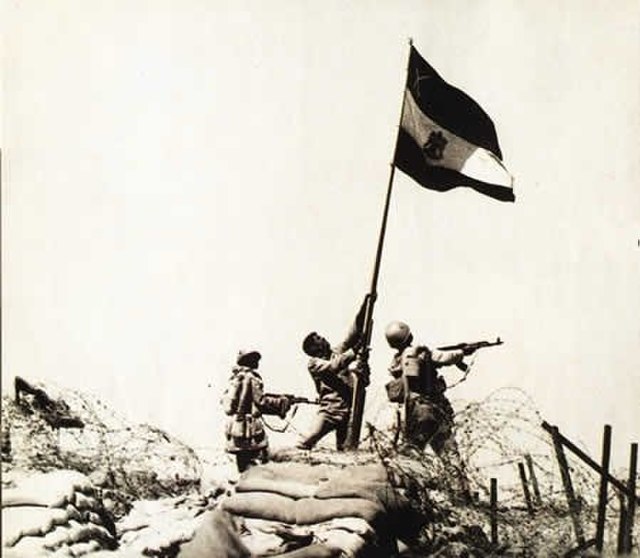
Since 1982, Egyptian media has celebrated what it calls "Sinai Liberation Day," marking the withdrawal of the enemy from Sinai under the Camp David Accords, which led to the normalization of relations between Egypt and the Zionist entity. However, the official narrative conceals a bitter truth: Egypt did not truly achieve liberation. Instead, it signed the largest strategic concession in its modern history, removing itself from the equation of national sovereignty and from its leadership role in Africa and the Arab world. Four decades later, the result is not sovereignty but conditional submission, with accumulated losses on all fronts—security, economic, cultural, and political.
1. Partial Sovereignty Over Egyptian Land
Under the Camp David arrangements, Sinai remains divided into three security zones restricting the Egyptian military’s presence, particularly in "Zone C" adjacent to the Zionist entity, where only civilian police are allowed, monitored by multinational forces. This has turned Sinai into a fragile environment for armed groups, costing the lives of over 1,000 soldiers and officers between 2013 and 2020 and inflicting direct economic losses exceeding 45 billion Egyptian pounds[1]. The Egyptian state remains unable to freely deploy its forces in the Sinai Peninsula, rendering its sovereignty effectively incomplete.
2. Sharp Economic Decline Despite "Peace"
Egypt received annual U.S. aid—$1.3 billion in military and $250 million in economic assistance—as a reward for abandoning its strategic role[2]. Yet, it failed to invest in building a real productive base. Industry’s contribution to gross domestic product (GDP) dropped from 22% in 1975 to less than 16% in 2020[3]. Egypt went from being a developmentally ambitious state under Nasser’s confrontation era to one of the most loan- and aid-dependent countries.
3. Comparison with Countries that Refused Surrender
Despite Western sanctions, Iran, for example, developed its national industries, producing over 90% of its pharmaceuticals domestically, along with exports in automobiles and electronics. The Iranian model achieved a degree of self-sufficiency and economic independence, while Egypt—choosing "peace"—became indebted to international financial institutions and subservient to Gulf agendas, begging for grants and loans.
Iran is a clear example of a country that faced confrontation, paid a political price, but won independence in decision-making and economy. Meanwhile, Egypt signed a peace treaty but spiraled into debt and total reliance on foreign powers. Iranian industry grew under coercive economic sanctions and siege, while Egyptian industry collapsed under "peace."
4. Restricting Military Doctrine and Turning the Army into a Domestic Force
Post-Camp David, the Egyptian military is no longer prepared to confront real regional threats. Its doctrine has been confined to counterterrorism within its borders, particularly in Sinai. While the agreement restricts the army’s presence in strategic zones, military deals are used as leverage for external influence over sovereign decisions, such as military collaboration between the Zionist army and Egypt’s armed forces[4]. The Egyptian army remains strong but is "stripped of its nationalist essence", lacking engagement in building a comprehensive Arab-African defensive structure to protect Egypt.
5. Dismantling Industrial and National Development Projects
The agreement came in an international context that pushed Egypt to abandon its planned economy for open markets. The result was mass privatization that weakened local production and shut down hundreds of national factories. Major national projects established under Nasser, such as heavy industries, were dismantled, eroding productive sovereignty. Meanwhile, the enemy developed its productive and financial economy in ways that threaten Egypt’s (regionally isolated) ability to confront it independently.
6. The Collapse of Education and National Consciousness
Post-Camp David, Egyptian education was stripped of its nationalist content, reduced to technical indoctrination devoid of patriotic spirit. Textbooks omitted liberation concepts, and the notion of the enemy was hollowed out, creating generations without a sense of struggle, responsibility toward Palestine, or understanding of Arab solidarity, defense, and resistance.
7. Subordination of Political and Sovereign Decision-Making
After the treaty, Egypt’s major decisions became directly tied to U.S. and Zionist entity’s stances. Positions on Gaza aggression, Iran’s nuclear program, and even the Nile Dam crisis are adjusted based on international funding and support considerations. Egypt’s ability for sovereign decision-making has been circumscribed since the signing of the agreement, and the “liberation” of Sinai is traded for Egypt’s sovereign decision-making.
8. Loss of Arab and African Influence
Egypt withdrew from its historical role in Africa, leaving a vacuum filled by other regional powers. Cairo is no longer a key player in African affairs but negotiates from a position of weakness. The Grand Ethiopian Renaissance Dam (GERD) crisis highlights Egypt’s declining influence in its vital sphere.[5] Before Camp David and the “liberation of Sinai”, Egypt was secure because of its African depth and continental leadership, starting from its role in the Non-Aligned Movement to its support for national liberation struggles (e.g., Algeria and South Africa).
9. Erosion of Soft and Cultural Power
Egypt’s cultural production lost its leadership as nationalist cultural policies faded and state-supported arts institutions were dismantled. The media became entertainment rather than a voice of national consciousness. Egypt can no longer shape Arab sentiment as it did in the mid-20th century. The Arab sphere now follows Emirati, Qatari, and Saudi agendas—often narrow and harmful to Egypt.
The Outcome: Total Collapse, Not National Victory
- External debt exceeds $165 billion[6].
- Inflation soared to over 30% in 2023[7].
- The Egyptian pound has completely collapsed, becoming a global case study in currency failure.
- Over 29.7% of the population (32 million people) lives below the poverty line[8].
Ironically, many Western politicians and scholars—including Jimmy Carter, Robert Fisk, Norman Finkelstein, John Pilger, Phyllis Bennis, Avi Shlaim, Noam Chomsky, and Seth Anziska—have acknowledged Camp David’s negative impact not only on Palestine but on Egypt and the entire region; the former Foreign Minister of the Zionist entity famously said “if I were a Palestinian, I would have rejected Camp David”[9]. Their analyses reveal that what is marketed as a "historic peace" and "liberation day" was, in reality, a deal at the expense of justice, sovereignty, and national interest—one that Egypt continues to pay for with fragile peace and lost military, economic, and cultural sovereignty.
Thus, "Sinai Liberation Day" is nothing but the institutionalization of a major defeat—the day Egypt was removed from the equation of power and turned into a functionary state within a regional security arrangement serving the enemy first. It was not a day of sovereignty but of relinquishing will. Not liberation, but a conditional withdrawal by one side, in exchange for prolonged silence and a heavy price paid daily by Egyptians in their security, dignity, and dreams.
Yet, hope remains. Egypt—with its history, civilizational weight, and geographic position—has all the elements to reclaim its natural role as a leader of the Arab world and Africa. No liberation, developmental, or revival project in the Arab region can succeed without Egypt’s full, independent, and sovereign engagement. We, as Arabs and Africans, know that our renaissance depends on Egypt’s return to its historical role—not as a mere border state, but as the beating heart of Arabism and a pillar of liberation and development in the Global South.
Moussa Ibrahim is the Executive Secretary of the African Legacy Foundation - Johannesburg
Endnotes
[1] https://www.thenationalnews.com/mena/2022/04/27/egypt-has-lost-more-than-3000-in-fight-against-militants-since-2013-says-el-sisi/
[5] see more about the Dam project here: https://www.rt.com/africa/606233-egypt-control-over-nile-waters/