



An exceptionally interesting debate about how imperialism is now behaving.
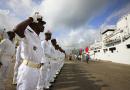
The world changed this past week in ways that it may take decades to fully appreciate. With the opening of its first overseas military base in Djibouti, China sent an unmistakable message that its role in the world is changing. The implications for the Middle East and Africa are immediate, but the larger message is that China is no longer pretending to be an inward-looking, exclusively Asian power.

America’s Africa policies have consistently remained destabilizing and predatory over the decades, despite the well-choreographed pretenses. It is this imperialism that has impeded the capacity of African nations to direct their future. Despite Africa’s vast mineral and agricultural wealth and labor power, a renewed debt crisis compounded by US interference is reversing the modest gains made in past years.
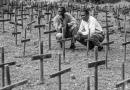
The mass killings in Rwandan in 1994 are often invoked inside and outside the country for ulterior purposes. In Canada, the story is part of developing a “do-gooder” foreign policy mythology designed to lull the nation into backing interventionist policies. More generally, a highly simplistic account of Rwanda ‘94 has repeatedly been invoked to justify liberal imperialism, particularly the responsibility to protect doctrine.

The third generation of African freedom fighters is growing impatient with the contradictions of ongoing coloniality in the Motherland. Europe and its allies continue their imperialist subjugation and plunder with the support of puppet leaders as Africans suffer. A new anti-imperialist wave is gathering momentum across Africa to complete the continent's unfinished liberation.

Morocco’s vociferous attempts to legitimise its occupation is the foundation of a duplicitous narrative it continues to propagate. Foreign journalists are often banned and censorship of the local press goes so far as to prohibit the printing of the name Western Sahara. This occupation is supported by the so-called leading world democracies such as the US and France. Saharawi cultural activists are fighting this oppression – with their words.
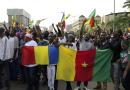
What is often described as “aid” to Africa is in fact part and parcel of the cycle of dependency stemming from centuries of slavery, colonialism, neo-colonialism and imperialism. The only real solutions for advancement of the continent must derive from the struggle of the masses against Western domination, which can only be effectively realized through Pan-Africanism and Socialism in practice.

For the French president and policy of francophonie Africa, from de Gaulle in 1958 to Hollande in 2017, all members of the French establishment, the operational plaque for action in the Elysée palace has been: invade, intimidate, manipulate, install, antagonise, ingratiate, indemnify, expropriate, invade, intimidate. Nothing in this election will change that – only Africans can.

In order for Africa to assume responsibility for its own transformation and elevation, and be able to undertake self-reliant development and create secure domestic prosperity, it must create its own specific ideology and strategy of self-development. To do this there are 5 irreducible components that have to be designed and put in place.