


Fanon and the Unfinished Project of Decolonisation: Toward a Radical Re‐imagining in Zimbabwe and Africa
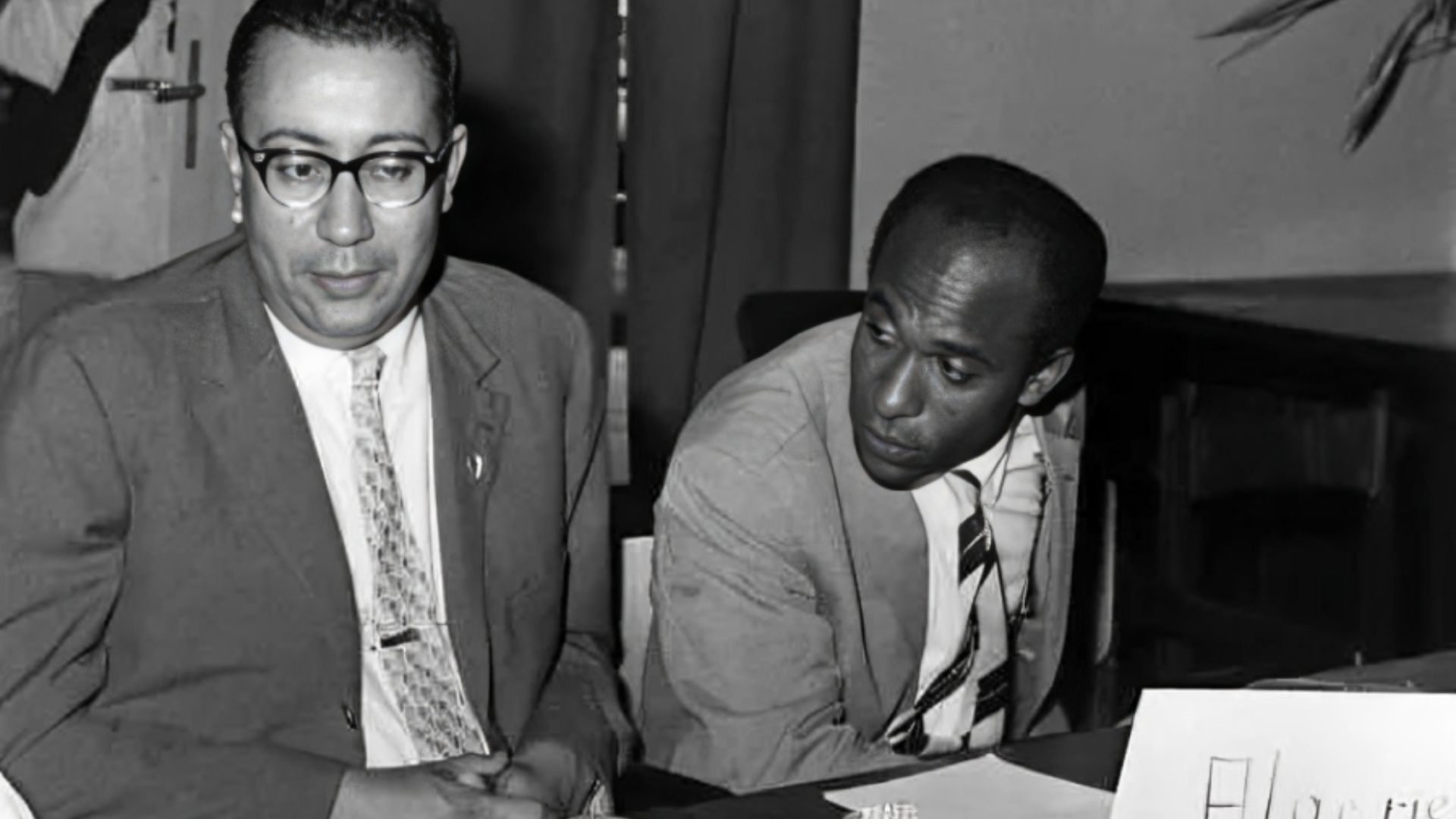
An analysis of Fanon’s Wretched of the Earth in relation to the decolonisation project in Zimbabwe and other parts of Africa.
Frantz Fanon’s (1961) seminal work, The Wretched of the Earth, shook the foundations of colonial epistemologies by asserting that decolonisation is not simply an event or a transition, but a radical restructuring of being, knowing and power. As postcolonial African states mark decades of formal independence, Fanon’s insight—that colonial structures persist even after political transfer—has become increasingly relevant. In Zimbabwe and across Africa, independence often represented the handover of power rather than the total eradication of colonial habitus. This essay examines Fanon’s vision of decolonisation, the reasons it remains ‘unfinished’, and how this diagnosis resonates in the Zimbabwean and broader African context, illustrating the lingering structures of coloniality, neo‑imperial dependency, and epistemic subjugation.
Fanon’s Vision of Decolonisation
For Fanon, the colonial world was divided into compartments of power, identity, and humanity: the coloniser and the colonised. He insisted that decolonisation is “a programme of complete disorder” (Mabaso, 2014, p. 36) and that “decolonisation is always a violent phenomenon” (Fanon, in Herald, 2024). Decolonisation meant more than independence: it meant the substitution of one species of men by another, a total destruction of colonial institutions and the birth of a new national and human subject. Decolonisation for Fanon thereby encompassed not only political sovereignty but also economic autonomy, cultural self‑determination, and psychic decolonisation of the formerly colonised (Fanon, 1961/2004).
He argued that the post‑colonial nation‑state often replicates the logic of colonial domination: the national bourgeoisie emerges as a new elite that inherits colonial structures rather than dismantles them. In his critique of the “pitfalls of national consciousness,” Fanon warned that merely transferring power without restructuring power relations and economic orders would produce neo‑colonial dependency. Decolonisation, therefore, for Fanon, was both an ontological and epistemic project.
The Unfinished Project in Zimbabwe
Zimbabwe provides a compelling case study of Fanon’s unfinished decolonisation thesis. Independence in 1980 delivered political sovereignty, but many of the colonial economic, linguistic, educational, and institutional infrastructures remained intact. Rusero (2025) explains that Zimbabwe’s liberation struggle was never independence, it was decolonisation. The distinction matters: independence may hand over the façade of power, but decolonisation would dismantle colonial matrices of governance, economy, knowledge, and culture. The journalists highlight continuing coloniality in governance systems, economic inequalities, educational curricula privileging colonial languages, and unresolved questions of resource ownership.
For instance, the adoption of the Westminster constitutional framework, English‑medium education, and continued economic ties to former colonial powers illustrate the persistence of colonial structures. Fanon anticipated that such structures would persist under “neo‑colonial” forms—state apparatuses that appear independent but replicate the coloniser’s logic.
Broader African Resonances
Across Africa, Fanon’s thesis continues to resonate. Post‑colonial states have struggled with structural adjustment programmes, elite capture, and global economic dependencies that mimic colonial extraction. As Mabaso (2014) puts it, the removal of colonial monuments and the discourse of decolonisation are symbolic, yet the deeper scopic regime of knowledge production and institutional dominance remains unchanged. Hence, the challenge is not merely to change symbols but to ‘delink’ epistemic and economic sovereignty from capitalist‑colonial continuities.
Moreover, Fanon’s emphasis on culture and knowledge underscores an often-neglected dimension of decolonisation: the cultural and epistemic. He wrote that culture is “not an inventory of behavioural patterns” but “a dense subterranean life in perpetual renewal” (Mabaso, 2014). Scholars such as Smith (2012) and Mignolo (2011) argue that the coloniality of power extends to the coloniality of knowledge and being: truly decolonised systems must reconstruct epistemic foundations, language, and ontology rather than simply adopt Western frameworks.
Challenges and Critiques
No project of decolonisation is without its tensions. Fanon’s emphasis on violence has been critiqued as problematic for its embrace of violent rupture (Majavu, 2008). Additionally, the ideal of a unitary national subject has been challenged for ignoring internal divisions, gender, and ethnicity. In the African context, the multiplicity of social realities, international capital flows, and the hybridity of identities complicate Fanon’s singular revolutionary narrative.
Yet the critique also reaffirms the unfinished nature of the project: decolonisation remains incomplete, both in structural transformation and epistemic sovereignty.
In conclusion, Fanon’s vision of decolonisation remains vital precisely because it emphasises the totality of the project—political, economic, cultural, and psychic. Zimbabwe and many African nations display the incomplete transfer of sovereignty into true freedom from colonial structures. To finish the project requires not simply independence but the dismantling of colonial architectures of power, knowledge, and being. Consequently, Fanon’s unfinished decolonisation continues as a challenge and a possibility for Africa’s next generation of intellectuals, policymakers, and cultural actors.
Nelson Mutongi holds a Bachelor of Arts Degree (2008) from the University of Zimbabwe. He is currently pursuing a Master of Arts Degree in Language and Literature Production at the same University. Nelson Mutongi is an editor and published writer of fiction. [email protected]
References
Mabaso, N. (2014). Decolonisation and the scopic regime. On Curating, Issue 35. https://www.on-curating.org/issue-35-reader/decolonisation-and-the-scop…
Majavu, M. (2008, December 3). Africa: Life After Colonialism. ZNetwork. https://znetwork.org/znetarticle/africa-life-after-colonialism-by-mandi…
Mignolo, W. (2011). The Darker Side of Western Modernity: Global Futures, Decolonial Options. Duke University Press.
Rusero, A.M. (2025, August 11). Unfinished business of Zim’s liberation struggle: Decolonisation. Newsday, https://www.newsday.co.zw/local-news/article/200044881/unfinished-business-of-zims-liberation-struggle-decolonisation
Smith, L. T. (2012). Decolonizing Methodologies: Research and Indigenous Peoples. Zed Books.
Fanon, F. (1961). The Wretched of the Earth. Pluto Press.