


Contours of Resistance: Migration in West Africa
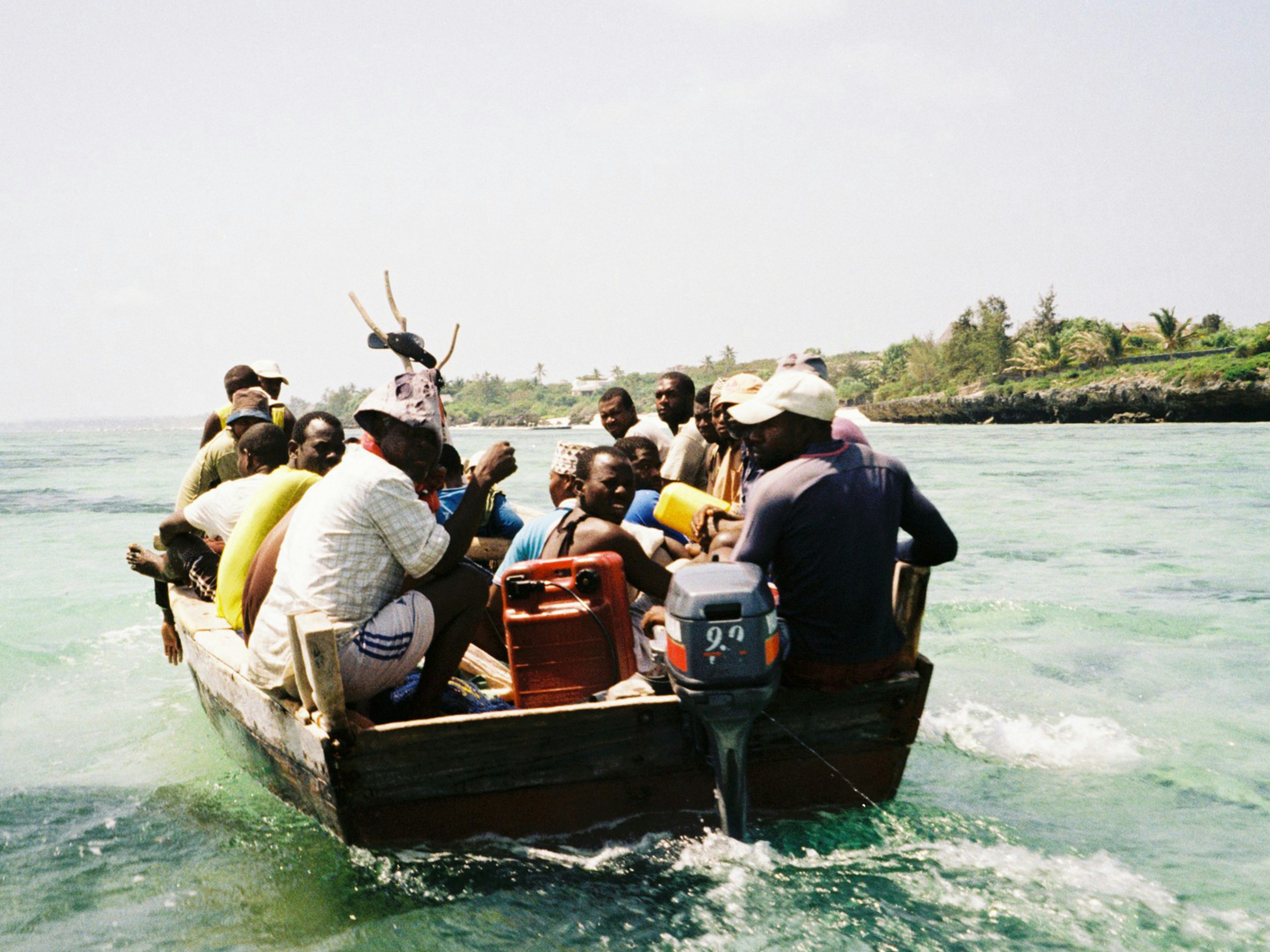
In what ways and contexts does migration serve as a form of resistance? Who are the actors in such resistance? Kallon examines the contours of this phenomenon in West Africa.
A glance at the headlines circulating in the media and online reflects a continued global shift against migration, questioning who is allowed to migrate while aiming to punish those who dare to leave home. Claims of belonging are being fiercely contested. Migrants in the US are unjustly deported to El Salvador. In South Africa, migrant owned spaza shops have been targeted by Operation Dudula in an attempt to “reclaim” local businesses. This move to stem mobility reverberates throughout West Africa. New technologies are being employed to police migration journeys to Europe while accusations have emerged of Ghanaian authorities forcibly expelling Fulani asylum seekers.
Such hostilities towards migrant communities are not new, building upon historical legacies such as racism and colonialism. Nor has previous backlash fully stopped people on the move. Cross-border migrations are increasing, specifically in the Global South, which in absolute numbers represented one-third of international migration in 2020. In addition, migratory flows are changing as factors from capitalism and climate change to the right to move shape how, when and where people move. What does this mean for African migrants on the continent? This article focuses on West Africa, exploring migration as a way of navigating, adapting and resisting hardening borders. Being transient is embedded in the West African experience and can provide a lens to understand resistance to marginalization at the local, regional and global level.
A region marked by movement
West Africa is a region shaped by migration, from the journeys of Muslim traders and scholars to the large-scale forcible removal of Africans by Europeans during the Trans Altantic slave trade. Borders, erected arbitrarily to mark imperial conquests, served as points of control which colonial empires used to direct labor to their plantations. Such forced labor served as a tool for colonial enrichment, fundamentally shaping the migration corridors that exist between West African countries today. Post-independence, mobility was integral to the ethos of the Economic Community of West African States (ECOWAS), a regional body originally established by 15 West African states in 1975. ECOWAS prioritized implementing an environment of free movement across the region. All ECOWAS citizens were entitled to live, work and settle in the region, ensuring that everyone belonged to the region. However, deportations of Ghanaians from Nigeria in the 1980s, refugees from the 1990s civil wars in Sierra Leone and Liberia and the recent departure of the Sahelian states have challenged regional integration.
Coupled with the securitization of West African borders, ECOWAS’ dream of free movement is often contradictory and fraught. For example, the International Organization for Migration (IOM) is working with governments in Ghana, Togo and Benin to construct and renovate five border posts and install biometric digital processing systems to curb terrorist related activities. However in a region where many lack legal documentation, some turn to intermediaries who facilitate movement through more dangerous routes. Routine military patrols in the borderlands of Burkina Faso and Niger profit off finding undocumented migrants as they request “settlement fees” and bribes. All of which makes migrants more vulnerable to extortion and exploitation in a region where freedom of movement is meant to be recognized.
Yet, West Africans continue to move with most recent, and likely underestimated, accounts of 7.6 million migrants in the region. Mobility becomes an everyday practice of resistance - a response to the borders designed to exclude them politically, economically and socially. It provides economic opportunities as young people leave their communities decimated by the Structural Adjustment Program (SAP) development policies of the World Bank and IMF. For young Burkinabé men, migrating to Cote d’Ivoire presents a source of income that helps facilitate the transition to adulthood - from marriage to supporting the household. Increasingly undertaken by women, market traders engage with global trade markets while navigating harassment at the borders. Migration also is a process of the imaginary. Educational opportunities and access to a global, online world can fuel dreams and aspirations that shape motivations to migrate.
Migration flows across the region reflect the dialectical relationship between the local and the global. Not only are West Africans shaped by the broader, global processes that transform the region, but are also deeply embedded in the flow of goods, ideas and people. Cameroon scholar Francis Nyamnjoh argues that these encounters, specifically in urban environments, shape frontier African identities that cross cultural and physical boundaries. For Nyamnjoh, Frontier Africans reflect “incompleteness”, a way of being that centres the possibilities and connections that emerge through social relationships. Not only does incompleteness encourage interdependence and fluidity, but also, as Nyamnjoh argues, challenges ideas around belonging and citizenship bound to the nation-state.
Geographies of resistance
As geographer Cindi Katz warns, it is important not to romanticize everyday practices, particularly in the face of the harsh material realities of the neoliberal, capitalist system. Such systems actively work to marginalize and displace migrants throughout the region. Borders are increasingly surveilled as Europe expands its “fortress” in partnership with West African governments. Migration journeys have become more precarious, with gender inequalities shaping how migrant women experience crossing borders. Around 45% of migrants in West Africa are women and understanding their journeys complicates the image of migrant women as either victims or empowered entrepreneurs. Rather, their experiences are more varied and warrant further research on how gender impacts migration journeys.
Within West African cities, efforts to displace migrants are rampant. Government-led accumulation of land and resources, through legal, physical and political means, is used to attract private sector investment and interests. Policies to “modernize” cities, often lead to threats and subsequent demolition of homes and businesses in low-income and migrant neighborhoods. As Victoria Okoye notes, these strategies can be traced to the colonial project, which deemed indigenous spaces as inferior, incompatible with modernity. In remaking West African cities, such as plans to revitalize Cape Coast’s market area, migrants are displaced and relegated to the margins.
While there are visible signs of resistance, such as migrants engaging in protests, transience also reflects the subtle, entangled ways in which migrants navigate structural inequalities. Having the ability to extract from environments, without being bound by them, is a strategy which opens possibilities for new opportunities. Migrants also carry language, culture and religious practices which transform the areas where they live. These changes occur over time as people build and integrate into communities, carving space within cities that relegate them to the sidelines. Such overlapping, everyday practices underpin visible frictions that emerge as migrants fight to protect the spaces they create and live in. Katz highlights the importance of contextualizing everyday practices within a given environment. Other political geographers have built upon this work to unravel the various forms that resistance can take, from maintaining collective memories to negotiation.
As borders become more restrictive, the desire to move remains constant and integral to the experience of Frontier Africans in the region and more broadly on the continent. Thus, continuing to protect free movement across Africa is necessary to opening possibilities of solidarity, engagement, and exchange economically, culturally and politically. As such, mobility is not just a question of securing borders but rather how it can alleviate or exacerbate local and global inequalities. In recognizing this, West African migrants and their communities within the region reflect sites of knowledge; a lens to think globally and critically examine broader issues such as capital accumulation, displacement and marginalization. Their fluidity highlights the challenges to such systems, as they navigate, adapt and reconstruct pathways to build brighter futures.
Baindu Kallon holds a MA in African Studies and is interested in understanding the intersections of migration, urbanization and displacement in West Africa. She has a wealth of experiences working in research, communications and business development within international development, specifically focused on Sub-Saharan Africa.