


Gun battles broke out near the international airport in the Libyan capital, Tripoli, army officials said. An army spokesman told Libyan TV two gunmen opened fire on Saturday on a convoy accompanying army chief Maj-Gen Khalifa Haftar but called it an 'isolated incident'. It was reportedly followed by hours of clashes along the coastal road. The violence adds to concerns over stability in Libya after the toppling of Muammar Gaddafi earlier this year.
The graffiti and street art in post-revolution Libya is a constant reminder of what most fought for this year. Some of the picturesque artistry in bright and warm tones depicts nature and Libyan traditions. There are also caricatures mocking the late Muammar Gaddafi - no longer a symbol of fear.
Militias outside the control of Libya's central government are holding vast stores of tanks, rockets and small arms in the city of Misrata, an arsenal that will test the ability of the country's new rulers to assert their authority. A Reuters team gained rare access to militia warehouses in Misrata and counted thousands of boxes of arms and ammunition, most of it seized from forces loyal to ousted leader Muammar Gaddafi and hauled back to the city in trucks.
Muammar Qaddafi's daughter has urged Libyans to overthrow their new rulers, possibly violating the terms of her exile in Algeria. In an audio message broadcast on Syria's al-Rai television station, Aisha Qaddafi called for a revolt against the men who overthrew her father, the government she said 'arrived with the planes of NATO'.
Libya's former rebels are holding some 7,000 detainees, many of them sub-Saharan Africans, without access to due legal process after the country's civil war, UN chief Ban Ki-moon said in a new report. Ban cited reports that some detainees had been tortured, that some people had been targeted because of their skin color, that women were held under male supervision without female guards and that children were being detained alongside adults.
‘What if anything has Libya got in exchange for all the death and destruction that have been visited on it over the past seven and a half months?’ asks Hugh Roberts.
It has now been confirmed that the two remaining Libyan suspects wanted by the International Criminal Court (ICC), Saif al-Islam al-Qaddafi and Abdullah al-Senussi, have been detained by national authorities. What happens now? Under international law, Libyan officials are required to surrender the two suspects to The Hague. However, members of the Transitional National Council (TNC) have stated their intention to hold the two accused in custody for trial in Libya. Resolving this apparent clash of jurisdictions will be the first and critical step for the new Libyan regime in demonstrating their commitment to international justice, says this Open Society blog post.
World powers have urged Libya to work with the International Criminal Court and ensure a fair trial for Seif al-Islam, son of slain leader Muamar Gaddafi who was arrested after months on the run. Seif, wanted by the ICC for crimes against humanity allegedly committed in crushing anti-regime protests, was captured in Libya's far-flung Saharan south early on Saturday in a trap set by fighters of the Zintan brigade.
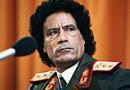
‘Despite the neocolonialist excuses of humanitarian motives, the real motivations’ for Gaddafi’s assassination ‘keep popping up’, writes Nana Akyea Mensah. But 'where is the international outrage and condemnation'?
At least two men have been killed in a second day of clashes as fighters from Zawiya set up roadlocks to prevent rivals from the nearby town of Wershefana entering their territory. There are conflicting reports about what triggered the confrontation on Saturday near a military camp. The reports of the clashes came as production resumed at Italian energy company Eni's largest oilfield in Libya.
‘Was Gaddafi the most threatening figure on the African continent? Or was he convenient as a pretext to push through military missions vying to establish bases in Africa,’ asks Khadija Sharife.
At the outbreak of the Libyan conflict, it was estimated that over 900 Sahrawi children and youth, 100 Palestinian students, and up to 70,000 Palestinian migrant workers were based in Libya. Their presence in Libya, and both the challenges they have faced since February 2011 and the nature of international
responses to these challenges, highlight a range of issues, which this paper, produced by the UN Refugee Agency, explores.
Following the fall of Tripoli and the rise of the National Transitional Council, a rejuvenated national resistance has begun on Libya’s borders, writes Franklin Lamb.
Evidence is emerging of unregulated and probably illegal tuna fishing in Libyan waters during this year's conflict. Signals recorded from boats' electronic 'black boxes' show a large presence inside Libyan waters, a major spawning ground for the endangered bluefin tuna. Several strands of evidence, including a letter from a former industry source, suggest the involvement of EU boats.
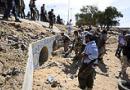
All nations, governments and people who ‘believe in the concepts of international law and morality’ should ‘forcibly register a strong and profound protest against the manner in which the operative principles of the United Nations and the fundamental precepts of international law were flouted and desecrated by the powerful nations of France, Britain and the United States of America (and their NATO allies) in their actions against the people, government and nation of Libya’ over the period of February to October 2011.
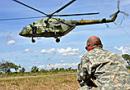
Libya is the first country that the Euro-American consortium has invaded exclusively on the pretext of human rights violations, writes Aijaz Ahmad.
Libya is plunging into a cycle of tribal violence and retribution which, if left unchecked, could undermine the authority of its new leaders, spur new forms of insurgency and throw the country back into chaos, says this Reuters article. More than a week after the death of Muammar Gaddafi, anger is on the boil again with what many Libyans see as the inability of the interim government to rein in its brigades and stop a wave of revenge attacks. The cycle of retribution appears already to have started. The town of al Jemel, a scattering of sandy homes in the palm-studded desert southwest of Tripoli, is one example. Residents said brigades from faraway Misrata had appeared at their doorstep a week ago, breaking into people's homes and looking for Gaddafi loyalists.
This article from Media Lens looks at the mainstream media coverage of Gaddafi's killing. 'We suspect that most journalists are not actually unfeeling brutes. They are conformists wary of the high price they can be made to pay for even the suspicion that they might be "apologists" for an official enemy,' says the article in response to many of the crass headlines that have been seen in some newspapers.
The taking-control of Libya by the West and the assassination of Gaddafi may signal the beginning of the militarisation of Africa and the hastening of its recolonisation, writes Demba Moussa Dembélé.