


Libya will exercise its right to buy Verenex Energy Inc., trumping a proposed C$499 million ($393 million) takeover of the Canadian explorer by China National Petroleum Corp. “We will exercise the right of preemption,” Shokri Ghanem, chairman of Libya’s state-run National Oil Corp., said today in an interview in Vienna. Libya wants to buy the Calgary-based explorer for “purely commercial reasons,” he said. Under the preemption clause, Libya has to match the offer from China’s biggest oil company.
Libyan leader Col Muammar Gaddafi has said he would like a United States of Africa to include "Caribbean islands with African populations". Col Gaddafi, speaking in Tripoli as the African Union's (AU) new chairman, said this could include Haiti, Jamaica and the Dominican Republic. The Libyan leader also sympathised with Somali pirates, describing their actions as self-defence.
Libyan leader Colonel Muammar Gaddafi was elected African Union (AU) chairperson by the Assembly of heads of state and government at their twelfth ordinary session to replace Tanzanian president Jakaya Mrisho Kikwete. The outgoing AU chairman briefed the Assembly on the achievements of the union under his tenure which included the peace process in Kenya, interventions in the Comoros, Zimbabwe and Somalia, among others. In his acceptance speech, Muammar Gaddafi pledged to reform the position of the chairperson and added that the call for a united Africa was not his own, but that of the founders of the organisation and a popular demand from African citizens. He also used the occasion to note that his long advocacy for the unity of Africa had nothing to do with what people call his ambition to lead the AU. Prior to his election, Gaddafi arrived at the summit venue accompanied by seven members of Africa’s royalty who support a quicker move towards a single government for the continent.
African heads of State and Government also during this summit decided, ‘as a compromise step toward eventually forming a continent-wide government’, to transform the AU Commission into the African Union Authority, an institution that will have ‘a bigger mandate, with bigger capacities’ and headed by a president with a vice-president and secretaries charged with portfolios.
The chairperson of the AU Commission noted that the current global financial crisis has highlighted the need and urgency for NEPAD integration into the AU structures and processes to enable the continent to face its challenges with a strong united voice. The African Development Bank, entrusted with a leading role in Africa’s infrastructure development, maintained that the acceleration of infrastructure development on the continent will play a critical role for economic growth.
In other news, only two member countries - Ethiopia and Mauritania - have ratified the African Charter on democracy, elections and governance while 26 others have neither signed nor ratified the document. Nine countries have signed the first regional agreement between Arab and African countries on combating piracy at a special meeting organised by the International Maritime Organisation. In the agreement, the nine countries that are affected by piracy would cooperate in preventing ship hijackings and apprehending suspected pirates for arrest and prosecution. “The Djibouti Code of Conduct - as the agreement is referred to - allows one signatory country to send armed forces into another signatory country's territorial waters to pursue pirates and, in some cases, to jointly conduct anti-piracy operations. The nations have also agreed on the creation of piracy information centers to be set up in Kenya, Tanzania, and Yemen, and an anti-piracy military training center to be established in Djibouti.
Lastly, the AU celebrated Miriam Makeba and Aimé Césaire as acknowledgement for their contributions to the emancipation of Africa.
The new African Union (AU) chairman, Libya's leader Muammar Gaddafi, has said that multi-party democracy in Africa leads to bloodshed. Speaking at the AU summit in Ethiopia, Col Gaddafi said Africa was essentially tribal and political parties became tribalised, which led to bloodshed. He concluded the best model for Africa was his own country, where opposition parties are not allowed. Analysts say the AU is in for an interesting year under Col Gaddafi.
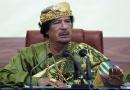
Following Muammar al-Gaddafi’s election as the African Union’s new chairperson, Tajudeen Abdul-Raheem calls upon the long-time Libyan leader to promote genuine strides towards greater pan-African unity. Noting Gaddafi’s traditional support for minority groups and left-wing political causes across Africa and around the world at large, Abdul-Raheem argues that substantive achievement will rest on the ability of the new leader and the AU to effectively engage with pan-Africanists at all levels outside of the corridors of governmental power.
Giving details of its investments in Africa in 2008 on the sidelines of the Africa Union Commission summit in Addis Ababa, Ethiopia, Libya has organised a fair depicting the investments. At the fair, Libyan companies are showing off their products and where they could be found in various parts of Africa.
Libya's only internet service provider is launching its first commercial wireless network which it says is one of the most advanced in the world. The state-owned firm said only a handful of countries have rolled out the advanced internet connection known as WiMax on such a wide scale. Libya Telecom and Technology aims to start with WiMax coverage, including a mobile feature, in 18 cities.
Libyan prisoner of conscience Idriss Boufayed was released by the Libyan authorities on Wednesday 8 October.An outspoken critic of Mu’ammar al-Qadhafi and secretary general of the Libyan organisation National Union of Reform, Idriss Boufayed was arrested on 16 February 2007 for trying to organize a peaceful demonstration against the Libyan government.
The UN refugee agency has recently signed an agreement with three organizations aimed at ensuring the protection needs of refugees and asylum seekers in Libya. This is in line with UNHCR's responsibility to advocate for better protection of refugees in the context of mixed asylum and migration flows.
At least 40 people drowned and about 100 are missing after a boat carrying illegal immigrants from Libya to Italy capsized, an Egyptian security official said on Monday. Forty bodies have been recovered after the boat sank shortly after leaving the port of Zuwarah, about 100km west of Tripoli, on June 7, the official said, citing a report from the Egyptian embassy in Libya.
Muammar Gaddafi, the Libyan leader, has opposed the proposal of a so-called Mediterranean Union. Gaddafi said at a mini-summit of North African and Syrian leaders on Tuesday that it would harm efforts to achieve Arab and African unity. "We are member states of the Arab League and also the African Union and we will not take any chances with damaging Arab or African Unity," he said.
Eni, Italy's biggest energy group has rewritten all of its contracts in Libya, setting the tone for the rest of the industry by accepting worse terms in return for another 35 years of access to one of the world's most important hydrocarbon reserves.
Libya is getting the backing of Ukraine to build nuclear reactors. Mustafa Adam-Noble looks at the implications of an oil-rich country going nuclear and the possible impact on Libyan people.
A honeymoon is rapidly emerging between Libya and the Ukraine.
Viktor Yushchenko, the Ukrainian President, has declared his intention to help Libya develop its use of “peaceful” nuclear energy. According to Afrique En Ligne, an online African magazine, bilateral economic projects have been emphasised by Yushschenko. They include the granting of a Libyan contract to a Ukrainian oil and gas company in return for the use of Ukrainian agricultural land by Libya. The Ukraine has also offered to build roads and railways in the North African country and has recently supplied Libya with an Antonov AN-124-100, the world’s largest cargo plane.
Such a large scale of political and economic bartering and investment is bound to raise a few eyebrows.
On the one hand, the rush for oil by the Ukrainians makes sense: Moscow’s threat of turning off Russian-Ukranian pipelines is ever-present. Libya’s need for cheaper food amid rising food prices is a very real concern, and Gaddafi can’t seem to fix agriculture domestically. However, this eager international relationship is murky and far from straightforward.
Libya is awash with corruption amongst its officials and desperation within its population. Decades of crippling policies by Gaddafi, and subsequent trade sanctions, have left the country in tatters.
Libya was an active sponsor of terrorism until only recently when, in 2003, Gaddafi admitted to bombing a Pan American flight over Lockerbie in 1998, killing 270 people. The dictator also admitted to bombing the French UTA airliner over Niger in 1989 that killed all 170 civilians on board.
The declaration of his guilt prompted the immediate lifting of UN sanctions imposed on Libya in 1992; Libya promised compensation for the victim’s relatives ($2.7 billion in instalments for those on the Lockerbie flight) and everyone ran to Libya with open arms, embracing the now reformed rogue state.
Congratulating Libya by supplying it with nuclear technology and a gigantic cargo plane hardly seems wise.
The argument for nuclear energy in Libya may not seem to make economic sense. Its population is only 5 million, but it has the largest oil reserves in Africa. However, Alan McDonald, an official with the International Atomic Energy Agency, explains that nuclear energy could be a strategic economic move for oil-rich countries. He said, “they know their oil will only become more valuable as global demand increases […] It may be more cost-effective to sell oil to Americans driving SUVs than to burn it domestically.”
It is likely that Libya has an additional, political motive for developing nuclear technology.
Iran’s uranium enrichment programme has forced the region into nuclear proliferation (recently Kuwait, Jordan and Bahrain have also begun planning nuclear plants). According to the Washington Post, 40 developing countries have recently signalled plans to develop nuclear power, which can then lead to the completion of nuclear arsenals.
Algeria and Morocco are also planning the construction of nuclear reactors. This would paint a very different picture to the current nuclear African map, with only two reactors on the whole continent (both in South Africa).
According to Igor Kriponov, writing for Bulletin of the Atomic Scientists, “South Africa accounts for 60 percent of all of Africa's energy production. (Africa as a whole generates only 3.1 percent of the world's electricity)”.
Using nuclear energy could help increase both Libya’s and Africa’s electricity generation without immediately polluting the environment. What you do with containers of nuclear waste is another question.
Easing fears of a world armed to the teeth with nuclear weapons, Mohammed ElBaradei, director general of the IAEA, is quoted as saying in the Washington Post, “You don't really even need to have a nuclear weapon. It's enough to buy yourself an insurance policy by developing the capability, and then sit on it. Let's not kid ourselves: Ninety percent of it is insurance, a deterrence.”
Libya’s nuclear programme could thus satisfy both an economic and a political agenda. However, the possibility of an unstable tyrant like Gaddafi attaining nuclear weapons poses a serious threat. Additionally, the Ukraine’s dealings with Libya are unlikely to benefit the general Libyan economy.
Senior British businessmen now working in Libya warn that the agreements with the Ukraine are convoluted and are not based in direct foreign investment procedures. The bartered nature of the agreements decreases transparency and creates a scenario loaded with the potential for theft. Additionally, because there is now so much more money coming into a newly open Libya, corruption is getting worse. The country cannot cope well enough to bear the fruits of investment. There are no institutions or protocol, no free press, very few educated Libyans and an unreliable communications system.
Although Gaddafi has begun to allow the creation of financial institutions, with economic reform gradually building in the banking sector, development in other areas of the economy is simply not happening. Perhaps we must be patient as there are still some positive signs that internal change is possible.
In an address to Libya’s General People’s Committee, Gaddafi stated that the nationalised Libyan economy has been inefficient and wasteful of money. He emphatically said, “The traditional state is over”.
Not so fast.
It would be tempting to think that the bad times of a state-run, isolated Libya have come to an end. While Libya catches up, continued malpractice, corruption and poverty will have long term effects that would be difficult to reverse even if all sectors are eventually reformed and regulated.
Gilbert Achcar, Professor of Development Studies and International Relations at SOAS University in London, argues that the oil deal with the Ukraine suits the Libyans because it offers them better conditions than an agreement with, say, France or Italy. This may be true, but the benefit of working with the Ukrainians in the four very different fields of nuclear technology, oil, roads and railways must be questioned.
One senior businessman likened the Ukraine’s multi-project approach in Libya to an accountant that can provide further services as a lawyer, a writer and an acrobat. It is unlikely that each role can be done sufficiently well by one party.
These deals manifest a special relationship between Libya and the Ukraine based not on economic efficiency and competition but on favouritism.
Pitfalls also arise in the Libyan economy.
According to Eman Wahby in an article published in 2005 by the Carnegie Endowment to International Peace, “[Libya] is the top recipient of foreign investment in Africa.” But unemployment in 2008 is estimated at 30%, and has in fact increased from 25% in 2005.
This shows that the Libyan system does not benefit the masses and, coupled with Libya’s significant growth rate of 9% in 2008, demonstrates that wealth goes only to the few and the powerful.
Wahby mentions that the country had announced plans “to cut $5 billion worth of subsidies”. She adds: “For decades, the state has been subsidizing 93 percent of the value of basic commodities, notably fuel.”
It seems that Libya’s sprint towards reform will leave it out of breath as prices increase, squeezing the population beyond its means. Wahby explains that subsidy cuts in May 2005 increased fuel prices by 30 % and electricity prices by 100%, leading to price rises in other goods and services.
This is simply not sustainable.
In order to be successful, Libya’s development must be gradual, assessed and measured using foresight and rationality - characteristics Gaddafi has consistently lacked throughout his 39 years in power.
It is doubtful that the Libya-Ukraine relationship will be profitable for the Libyan population. Given Libya’s severe economic difficulties as a consequence of a totalitarian system, each decision Gaddafi makes must ultimately be questioned.
Even if Gaddafi does spend his country’s wealth on the things it most needs, it is unlikely that he will be able to improve the lives of the Libyan people.
*Mustafa Adam-Noble is a political commentator.
*Please send comments to or comment online at http://www.pambazuka.org/
Libyan leader Moammar Gadaffi accused a "corrupt" government of failing to manage the country's oil wealth and ordered it to hand out oil money directly to the country's five million people. Western diplomats said the call, late on Wednesday, appeared aimed at putting pressure on the government to speed up reforms to improve the living standard of the population at a time of soaring oil revenues.
Tajudeen Abdul-Raheem turns a timely and critical eye on Colonel Muamar Gaddafi and asks: Have we indulged the Spiritual guide and first citizen of the Libyan Arab People's Socialist Jamahiriya for too long?
The Brother Leader, Colonel Muamar Gaddafi, the Spiritual guide and first citizen of the Libyan Arab People's Socialist Jamahiriya, is in Uganda on a four-day official visit.
No sooner than he landed in Uganda did he start saying things that delighted his adulatory supporters and lullaby to his host, but make his critics cry wolf. In closing a ten-day meeting of African/Arab Youth he repeated his controversial thesis about revolutionaries not retiring, not needing term limits and democracy as an imposition from the west and surprise! Surprise!! The revolutionary leader He (in power for 39 years)declared his host, Museveni (in power only for 22 years but still counting!) and uncle Bob of Zimbabwe (in power for 28 years and soon getting himself 're-elected' whether Zimbabweans like it or not!), as the genuine articles among Africa's state house bound revolutionaries!
I do not subscribe to a lot of the Gaddafiphobia that we have been fed with over the years by reactionary African leaders and western ideological warriors who are now falling over themselves to do business with Gaddafi. I have met the Leader several times and support Libya on many Pan African and international issues. When we held the 7th PAC in Kampala his support was only second to that of the host country, Uganda. I am and will always consider myself a friend of the Jamahiriya.
However, as any person who has been in solidarity with Libya may admit privately, Brother Gaddafi is a very difficult friend to have. The political system he has developed in Libya is highly personalised and leader-centric with the inner core vulnerable to instability based on who is in and who is out based on his whims. While the Leader may enjoy popular support, there is no strong evidence that the popular masses have really internalised the ideals of the revolution, four decades after. That is why you have periodic conflicts between Libyans and other Africans often with racial overtones while the Leader is busy promoting stronger unity, solidarity and Pan Africanism.
Unfortunately, most of the supporters and the so called friends of the Jamahiriya do not tell the Leader the truth. This makes him vulnerable to flatterers, charlatans and opportunists both in interstate relations and in popular diplomacy. And he seems to enjoy and even crave the fake adulation. And they come wearing all kinds of ideological and religious masks. The more militant the better!
A consequence of this cheap populism is the tendency for the Brother leader to say anything, make unguarded declarations and sometimes espouse half-baked ideas that should embarrass any genuine comrade. But no one will tell the emperor that he is naked.
Sometimes when he really has original ideas and is willing to put his money where his mouth is, the penchant for showmanship becomes fertile ground for his enemies and critics to kill the ideas and even some of his so-called friends to play games with him.
One of such is his support for an accelerated integration of Africa which he has been championing since the Sirte extra ordinary Summit in September 1999. It was not just reactionary African leaders that led the onslaught in Accra. His 'revolutionary’ friends, including Presidents Museveni, Mbeki, and Prime Minister Meles were among those who torpedoed the Union Government proposal in favour of tortoise speed.
Yet Libya continues to spend disproportionate resources on lobbying leaders believing that once they say yes, we will achieve Unity by fiat. If Libya had spent a tiny proportion of what it spends on these leaders in building strategic partnership with democratic forces, peoples groups, parliaments, youth women and student groups, trade unionists and other progressive forces in raising popular consciousness and political mobilisation in many countries in Africa, there would have been greater success because the masses will be driving and pushing the leaders. Unfortunately because its system is also leader-driven from top downwards it cannot engage with genuine democratic forces. When Libya attempts popular diplomacy because they are not always good readers of country situations, they fall victim to conference mercenaries just like the jamboree that has just ended in Kampala.
In spite of his continuing rhetoric against imperialism Libya is in reality now aligned to the west in an understandable Post Lockerbie realism. It is no longer a pariah state. And Tripoli has again become a magnate for all manner of western companies and executive tourism for western leaders. That is why it is cooperating with the EU on xenophobic immigration policies to enhance fortress Europe by stopping desperate Africans from using Libya to cross into the EU. I am no advocate of Africans going to wash plates and do all kinds of dirty jobs in Europe. Our future lies on this continent with so much wealth but only appreciated and appropriated by others thanks to the collaboration of our leaders who act as dealers. However a genuine Pan Africanist state should not act as Gate Keepers for the West. Instead of deporting these Africans, why can't Libya show its seriousness about freedom of movement for Africans by giving them the right to settle and work in Libya? That will be leadership by example with which it can challenge other African states to set our peoples free and return Africa to Africans.
We have indulged the Brother leader for too long.
While Revolutionaries may not retire from the revolution, they should not imprison the revolution in the state house by insisting they have to remain there for life. The longer they hang on to power the more reactionary they become as revolutionary goals give way to personal and regime security.
What kind of revolution is the Brother leader talking about that depends on only one leader after so many decades?
Let history judge whether those who speak uncompromising truth to power are the real revolutionaries or those who flatter leaders as irreplaceable.
There is no doubt in my mind that even if the citizens cannot remove these permanent leaders, death will eventually retire them. The grave yards of history are full of many delusionary leaders who thought themselves immortal.
*Dr Tajudeen Abdul-Raheem writes this syndicated column in his private capacity as a Pan Africanist. His views are not attributable to that of any organization he works for or is affiliated with.
**Please send comments to or comment online at www.pambazuka.org
Up to a million migrants have gathered in Libya, from where they will attempt to sail across the Mediterranean for Europe and, ultimately, the United Kingdom. New estimates reveal that there are two million migrants massed in the North African country and that half of them plan to sail to the European mainland and travel on to Britain in the hope of building a new life.
On 18 October 2007, the Human Rights Committee completed its review of Libya’s fourth periodic report, which was due for consideration in 2002. Libya not only submitted its report five years after the deadline but also, more importantly, did not comply with the recommendations of the Committee made in 1998 on the conclusion of the review of the country’s third periodic report. In the words of the Committee, “the recommendations of 1998 have not been fully taken into consideration and [the Committee] regrets that almost all subjects of concern remain unchanged”.
In a landmark decision, El Alwani v. Libya, Communication No. 1295/2004, the United Nations Human Rights Committee has found that Libya committed multiple serious human rights violations including torture, disappearance and arbitrary execution. The case was filed by Mr. Farag Mohammed El Alwani whose brother was disappeared by Libyan security forces in 1995. He is represented by the World Organization Against Torture (OMCT) and Human Rights Solidarity, two Geneva-based human rights organizations.
Chad's government and rebel leaders gathered in Tripoli on Friday for Libyan-brokered peace talks aimed at ending an insurgency against President Idriss Deby's rule, rebel chiefs and Libyan officials said. A coalition of Chadian rebels have been fighting a hit-and-run guerrilla war for well over a year against Deby's forces in eastern Chad, which is also hit by a spillover of refugees and Arab Janjaweed raiders from Sudan's Darfur region.
Kenya is set to receive oil from Libya at preferential rates according to a bilateral agreement signed earlier this month between the leaders of the two countries. Insiders in the oil industry say this makes it likely that Kenya will award the contract for the establishment of a petroleum facility of 45 million US dollars and a truck and rail loading project worth 22 million US dollars to a Libyan-connected investor.