


Capturing the spirit of his inimitable public-speaking style, this [mp3] of Tajudeen's comments at a debate on the union government at the 2007 African Union summit in Accra is a fitting testament to his ability to combine quick-thinking and humour when delivering a critical message.
The irony of Africa being a very rich continent but Africans being some of the poorest peoples in the world is no longer lost on anyone. While we can argue about the historical, structural, attitudinal, personal and institutional causes of this state of affairs the fact remains that majority of our peoples remain in need amidst plenty. Decades of Aid, humanitarian intervention, prayers, activism, development plans, action plans, government declarations and so many other initiatives have not produced fundamental change for the poorest and weakest sections of our societies, writes the late Tajudeen in his last Pan African Postcard.
Its no surprise that the African Union (AU) can’t persuade people to ratify the when not even the commisioners’ countries are prepared to do so, writes Tajudeen Abdul-Raheem. Although 28 nations have already signed up to the charter, they are not obliged to comply with it unless they ratify it. Nor can the charter come into force until it is ratified by 15 countries, a goal, Tajudeen suggests, that the AU is unlikely to achieve given the lack of ‘political will’.
Highlighting the relative strength of Kenyans' voting power despite the country's difficulties, Tajudeen Abdul-Raheem contends that Nigerians have no illusions around their own votes. With Ekiti State witnessing the re-run of its local election following the Court of Appeal's 17 February 2009 ruling, the State Governor and People's Democratic Party's (PDP) Olusegun Oni faced Dr Kayode Fayemi of Action Congress (AC) on 25 April. Of national significance in potentially denting the PDP's near-monopoly of political power, the determination of electoral monitors to oversee a clean count led to their suffering a brutal attack by PDP thugs while en route back to the state capital Ado Ekiti, an attack observed with amusement by local police. While the intervention of a senior officer stopped the attack, the victims were then ludicrously arrested and detained over a 48-hour period in Abuja. This situation, Abdul-Raheem contends, is tantamount to a June 12 1992 – when Ibrahim Badamosi Babangida oversaw the forceful detention of a candidate he found unpalatable – at state level, the overall responsibility for which must lay at President Umaru Yar' Adua's door.
 cc As Kenya and Uganda face off over the sovereignty of the tiny Migingo Island in Lake Victoria, Tajudeen Abdul-Raheem suggests explanations for why two previously highly cordial nations have allowed the dispute to escalate to such a degree. While Uganda echoes the view of the Kenyan government that the dispute should be solved diplomatically, Abdul-Raheem suspects Ugandan President Yoweri Museveni's talk of peace belies military preparations behind the scenes. Kenya, for its part, has seen the opposite situation, with President Mwai Kibaki employing a typically 'hands off' approach while his country's media becomes increasingly frustrated and militant in its demands over how to deal with Uganda. If these 'patriotic' frustrations reflect deep dissatisfaction with the deficiencies of the Grand Coalition government, Abdul-Raheem states, they should not be permitted to spill over into calls for definitive military action or jeopardise wider East African integration.
Following his involvement in a recent joint ECA–CODESRIA conference, Tajudeen Abdul-Raheem reflects on his growing convictions around the importance of every individual doing their part to root out corruption in Africa. Suggesting that a collective policy of zero tolerance will be ultimately necessary, Abdul-Raheem urges Africa to look to many Asian countries for examples of how potential punishments can serve as effective deterrents.
Reflecting on the general progress on tackling gender-based violence on the African continent, Tajudeen Abdul-Raheem argues that while enshrining women’s rights in law represents a positive step, it is in the actual implementation of the spirit of the law that genuine advances are achieved.

Reflecting on some of the troublesome statistics around maternal mortality for sub-Saharan Africa, Tajudeen Abdul-Raheem urges greater support for the continent’s women. Arguing that these statistics need to be humanised to fully illuminate their severity, Abdul-Raheem laments the lottery of geographical proximity in determining people’s access to effective healthcare, along with the tendency of the politically powerful to wholly ignore the needs of their citizens. Stressing that a bleak statistical picture is far more reflective of deficiencies in policy than an absence of resources, the author invites readers to join the UN’s Millennium Campaign.
With Venezuelan President Hugo Chávez having successfully won voters’ backing through a referendum on the removal of official term limits, Tajudeen Abdul-Raheem considers the dangers of allowing leaders of revolutionary clout to remain in power indefinitely. As a marked contrast from the country’s former imperially-backed political leaders, Abdul-Raheem points to the Chávez administration’s great achievements in health and education and continuing popularity with the poor. But if democracy is truly to function and sustain itself, the author argues, presidents must not be permitted to simply entrench themselves in power.
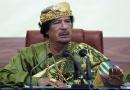
Following Muammar al-Gaddafi’s election as the African Union’s new chairperson, Tajudeen Abdul-Raheem calls upon the long-time Libyan leader to promote genuine strides towards greater pan-African unity. Noting Gaddafi’s traditional support for minority groups and left-wing political causes across Africa and around the world at large, Abdul-Raheem argues that substantive achievement will rest on the ability of the new leader and the AU to effectively engage with pan-Africanists at all levels outside of the corridors of governmental power.
While calling on Obama to “pursue a policy change that we can believe in” Tajudeen also argues against our seeing Obama as a messiah who will solve all of the world’s problems. Rather his election should give “both Americans and the rest of us a chance to look at things afresh and probably find a solution that we can all live with even if it may not be perfect.”
http://www.pambazuka.org/
With Ghana witnessing elections broadly heralded as free and fair, Tajudeen Abdul-Raheem considers the country’s enduring two-party political system. Arguing that John Kufuor’s outgoing administration simply owed its electoral success to a fortuitous set of circumstances, the author delves into the country’s post-colonial history and considers the persistence of the Danquah-Busia/Nkrumahist divide in contemporary politics.
Though applauding the success of this year’s record-breaking Stand Up action on global poverty, Tajudeen Abdul-Raheem wonders whether revitalising the UN’s Millennium Development Goals (MDGs) will simply amount to lining the pockets of a few individual African recipients in positions of power. Taking up the example of the National Resistance Movement (NRM) in Uganda, the author situates such latent misappropriation of resources within a broader problem of one-time liberation leaders lingering in power. Once a genuine force for changing the system, Yoweri Museveni’s NRM, Abdul-Raheem argues, have now become the system.
In this week’s postcard Tajudeen takes issue with what he calls ‘noisy western diplomats’ and their tendency to speak out injudiciously against the misdeeds of African governments. In the same vein, he deplores African envoys for their silence in the face of misrule and injustice on the part of host governments. He calls on African diplomats to stand true to the shared values on human rights, protection of the weak and vulnerable respect for the dignity of Africans, and not to abdicate this role to western diplomats
Following the arrest of Lieutenant Colonel Rose Kabuye in Frankfurt, Tajudeen Abdul-Raheem explores the core hypocrises and injustices underpinning France’s attempts to try a key figure in the Rwandan genocide. The author contends that France has since 1994 been attempting to wash its conscience through denial and counter-narrative, and that whatever one may think of Paul Kagame’s current regime the recent French indictments should never be mistaken for justice. Far from a move towards genuinely bringing an alleged player in the genocide to justice, Abdul-Raheem suggests judicial developments in the France reflect the guilt of a former imperial power with blood on its hands.
Miriam makeba was an icon who used music to serve Africa and the cause of humanity. The ancestors would be pleased to receive her as a worthy daughter who gave her best. She lived through apartheid, fought it and survived to see a liberated multiracial dsemocratic state, was part of the liberation wars against colonialism across Africa and civil rights in America and she dies after the election of the first Black person to be president of the USA. She will have a lot to report to the ancestors. And how proud they will be that she was on the right side of all these struggles. Go well, Mama Afrika, your memory is forever green and your music everlasting.
Following Barack Obama’s historic electoral victory, Tajudeen Abdul-Raheem reviews the new president-elect’s global appeal and comments on prospects for the future. Cautioning against any notion that Obama’s presidency will automatically reverse the fortunes of the poor and downtrodden, the author nevertheless celebrates the historic ascendancy of an individual whose own path will serve as a potent example for others around the world.
In light of the current global economic downturn and bailout plan for the rich, Tajudeen Abdul-Raheem examines the hypocrisy and profound limitations of a neoliberal market orthodoxy ostensibly hostile to state intervention yet increasingly reliant on its restorative role. Berating the continued failure of Western institutions to provide adequate conditions and support for African development, the author urges African governments to turn their backs on foreign ‘aid’ and instead concentrate on their own course of action.
There are indications that after so many false starts, grand standing, braggadocio and unrealistic demands, both sides in the Zimbabwe conflict are finally negotiating genuinely and a deal may be reached soon. It will be a tribute to the much criticised President Thabo Mbeki's tenacity but also a final realisation by the hawks on both sides that neither can finish the other without finishing the country.
One recalls a statement I made at a public meeting in Harare in 2000 soon after the unexpected defeat of Mugabe and ZANU PF in the referendum on the constitution. The Public Forum at Hotel Monomopata was organised by SARIPS (a formidable institute then, under the leadership of Prof Sam Moyo). The CDD Observer Group was led by Former President of Liberia, Prof Amos Sawyer, who also spoke at the forum. One of the speakers, Dr Ibbo Mandaza was booed because of his pro-Zanu PF stance.
My key contribution in that Forum was that the government was not prepared for defeat while the opposition was not prepared for victory. My conclusion was based on extensive conversations we had with different groups and leading figures on both sides. When we met Prof Jonathan Moyo, one of the key figures propelling the government proposals, at his Sheraton residence and office the day before the referendum, I asked him what will happen if they were defeated. His answer was that there was no way they could be defeated and if it happened, there was going to be chaos. When the delegation met Morgan Tsvangirai, the MDC leader, the same day, his response when I asked him what would happen if they won, was that there was no way Mugabe would allow it. He was convinced that the government would jail all opposition leaders.