


Ghana will seek to boost revenues from its mining industry next year by hiking taxes, according to a text of the 2012 budget delivered to parliament. The corporate tax rate on miners will increase to 35 per cent from 25 per cent and a separate 10 per cent tax on windfall profits will be introduced, according to the text.
Civil society organisations in Ghana, including the Media Foundation West Africa (MFWA) on 15 November launched the Coalition for the Transparency of the Airwaves (COTA) in Accra, to ensure openness and accountability of the electronic media in the country. The coalition is made up of regional, national and district organisations under Ghana Community Radio Network, Ghana Journalists Association, Legal Resources Centre and Participatory Development Associates and MFWA.
Disturbed by two incidents involving elderly women suspected of witchcraft – one of whom was burnt alive, while the other was denied medical treatment – Cameron Duodu calls for Ghana to value the lives of all its citizens.
On the grubby edge of Old Fadama, Accra’s infamous illegal slum settlement, 67-year-old Mariana Sayitou sits under a parasol and tends to her livelihood – selling several dozen kola nuts and a few piles of bagged beans to passers-by. Untouched by Ghana’s meager social support system and beyond the reach of its tatty pension scheme, she is a composite of this West African country’s elderly women: poor, struggling, and often forgotten. Gender activists say the situation of women like Sayitou is caused by a confluence of factors, from low rates of female education to increasingly nuclear family structures, and from social policy vacuums to cultural discrimination.
An Italian worker at a restaurant in Ghana under investigation for allegedly operating a 'whites only' policy has told the BBC it was a misunderstanding. Marco Ranaldi said he made 'a joke' about the racial profile of members of the Atlantic Lobsters and Dolphins. A Ghanaian woman started an online protest after visiting the restaurant a week ago and allegedly being told that it was 'only for white people'.
Mountains of hazardous waste grow by about 40 million tons every year. This waste, mostly from Europe and North America, is burned in developing countries like Ghana in a hazardous effort to recover valuable metals. A children's school in Accra, Ghana's capital, was recently found to be contaminated by lead, cadmium and other health-threatening pollutants at levels over 50 times higher than risk-free levels. The school is located directly beside an informal electronic waste salvage site.
Health officials in Ghana say breast cancer is a growing problem compounded by untrained medical practitioners, a lack of equipment, and unhealthy, sometimes fatal, cultural beliefs. Historically, breast cancer has received scant attention in this West African country. International donors and institutions have been focused on communicable diseases like malaria and HIV/AIDS. Despite the fact that, according to Ghana Health Services (GHS), non-communicable diseases are the leading causes of death.
Tucked away in Kumasi, Ghana’s second city, is a small office manned by four ambitious software engineers promoting African languages and cultures around the world through publishing downloadable phrase books for study. 'It started as a dream but three years after we set up Nkyea Learning Systems (NLS), the company has been able to develop software to help in the study of Akan and Swahili,' NLS chief executive officer Kwabena Sarpong told the Africa Review.
Sick people have been left to their fate as Ghana’s doctors continue with their strike that began on 7 October over a salaries dispute, a move backed by the Ghana Medical Association (GMA). The actual dispute is with the government’s Fair Wages Commission (FWC) which the GMA is accusing of putting professionals with similar skills and job descriptions in different salary scales.
There are an estimated two million disabled people in Ghana, who, according to the World Health Organisation, account for seven to 10 per cent of the population. Five years after its passage, the Persons with Disability Act has brought few changes to their lives. On paper its provisions promise plentiful employment opportunities, free education, accessible buildings and transportation, and societal acceptance. The reality is much different.
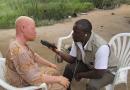
 There is enormous discrimination against people who live with Albinism in Ghana. Perception about the condition has assumed a superstitious twist, with suggestions sufferers don’t die, that they vanish. But why this level of discrimination against people who are only different from others because of pigment? In Tanzania, and many other African countries, they are killed for rituals and those in Ghana are scared these unwarranted attacks could soon occur here.
 Every graduate in Ghana is mandated to do a year’s national service. The programme coordinated by the National Service Secretariat was introduced 30 years ago. The purpose was for graduate students to give their first fruits of labour to their country. Students should also be posted to areas where they can best apply the knowledge acquired at university. This documentary highlights concerns the programme is not achieving the purpose for which it was introduced.
 This documentary investigates the alleged sexual exploitation of female students in some of Ghana’s schools, especially the tertiary institutions. In this piece, former students talk about how their lecturers pestered them for sex in exchange for grades. For some of the victims the experience has completely changed their outlook on life.
 The counterfeit medicine business is a big business in Ghana. Experts say only 60 per cent of anti-malarial medicines in the country are genuine; the remaining 40 per cent are fake. As a result hundreds of people are dying yearly. But the institutions charged with the responsibility of dealing with the problem appear not to have the capacity to end it. This documentary investigates the counterfeit medicine business and reveals the business doesn’t look like ending now.
President Alassane Ouattara of Cote d’Ivoire is determined to apprehend compatriots he accuses of committing crimes during the country’s protracted post-election crisis. The position bumps against his other declared quest for national reconciliation. When he arrived in Accra on an official visit on 6 October, President Ouattara sought to proclaim national reconciliation but at the same time pushed for the arrest and repatriation to Cote d’Ivoire of persons who have been indicted for war crimes. Earlier, his foreign minister, Mr Daniel Kablan Duncan, had signed a tripartite agreement with Ghana and the United Nations High Commissioner for Refugees (UNHCR) to facilitate the voluntary repatriation of the approximately 18,000 Ivorian refugees.
‘Mention South Vietnam, Cambodia and Laos, and those with good memories can attest to the lesson of history, which is that if you want to remain friendly with the USA, keep its military at arm’s length.’ So why would Ghana risk souring its relationship with the US, as Pakistan has already done, by allowing it to use Ghanaian territory for military purposes, asks Cameron Duodu.
A general hospital in a port city in Ghana has driven away patients, including pregnant women, due to a shortage of doctors since last Sunday. A notice posted on the walls of the general hospital in Tema asked clients seeking medical attention to visit other hospitals for their own safety as a result of the shortage of doctors in the hospital, especially at the maternity ward.
Already struggling with the realities of being displaced, Ivorian refugees in Ghana are now faced with another problem: That of ex-combatants living amongst them and said to be fomenting discontent, including through holding secret meetings. Two mysterious deaths have already been linked to the former fighters, although Ghanaian police say they are investigating the circumstances under which they died.
 Woes of the Borstal Child delves into the poor conditions in which children are held in Ghana’s remand homes for children. Hundreds of the children under the age of 18 are held in these institutions under shocking conditions. Most of the facilities were built decades ago and have seen little or no renovation since they were built. But why would the courts be keen on sending children to these poorly-resourced facilities built decades ago? There is also concern that many of these children were unfairly convicted and sent to these facilities. Fiifi Koomson of Joy FM in Accra has been following the issue.
 Political Promises reveals how promises given the electorate end up unfulfilled. It is a special documentary on Obom, a village a few miles away from the Ghanaian capital, Accra. Many of the residents are suffering from Buruli ulcer. Children still carry desks to school, and sit in classrooms with leaking roofs. Joy FM reporter Seth Kwame Boateng tells the story of how the health, education and economic needs of the locals have yet to be fulfilled.