


Legislation and practices aiming to safeguard customary land rights are largely failing to give real decision-making authority to communities affected by large-scale land acquisitions in sub-Saharan Africa, says a recent report by the Center for International Forestry Research. This has seriously undermined the widely anticipated benefits from the recent surge in land-based investments for food, fuel and fiber on the continent.
International climate negotiators were at odds Tuesday 29 November on how to raise billions of dollars to help poor countries cope with global warming. Details of the tussle over the funding emerged as the UN's weather agency reported that 2011 was tied as the 10th hottest year since records began in 1850. Putting the final touches on what's known as the Green Climate Fund is a top issue at the 192-party UN climate conference.
Civil society leaders in South Sudan are closely watching a legal battle unfolding in Sweden, as prosecutors investigate an oil company accused of involvement in massive human rights abuses here. James Ninrew vividly remembers the day Sudan’s military attacked his community, which had the misfortune of living above vast oil reserves consigned to a consortium led by the Swedish oil giant, Lundin Oil. 'They used helicopter gunships to bomb houses,' he said. Such accusations form part of the basis of a report that has recently prompted Sweden’s public prosecutor, Magnus Elving, to launch an investigation that could lead to a criminal case against Lundin Oil.
A leading US environmental group is opposing the planned purchase of 325,000 hectares of land in Tanzania by an American company. Tanzania’s parliament is debating the government’s willingness to lease the land in the Rukwa and Kigoma regions to Agrisol Energy Tanzania Ltd, which is backed by a consortium of US investors. Opponents charge that the deal amounts to a 'land grab' that would result in the displacement of 160,000 refugees from Burundi, some of whom have lived on the land for 40 years.
'We, women and men peasants, pastoralists, indigenous peoples and their allies, who gathered together in Nyeleni from 17-19 November 2011, have come from across the world for the first time to share with each other our experiences and struggles against land-grabbing. One year ago we supported the Kolongo Appeal from peasant organizations in Mali, who have taken the lead in organising local resistance to the take-over of peasants' lands in Africa. Now we came to Nyeleni in response to the Dakar Appeal, which calls for a global alliance against land-grabbing. For we are determined to defend food sovereignty, the commons and the rights of small scale food providers to natural resources.'
Condom brand Durex has issued a hasty apology over an offensive, misogynist tweet apparently sent out by their public relations company on Friday. Blog memeburn.com breaks down the various reactions to the controversy over the tweets, which came just before the launch of 16 Days of Activism for No Violence Against Women and Children. The post quotes from another blog, FeministsSA: 'It’s sad though that Durex’s actions were able to bolster the opinions of those who already thought that using your penis to shut someone up is not rape, and to give them a small semblance of credence. I hope that everyone realises that in the first place, the sentiment that women need to be shut up at all is only valid or valuable in an extremely sexist society.'
Visit for news and event information about COP17, currently taking place in Durban, South Africa.
Corporations have colluded with governments to capture climate change negotiations for their own interest. At the start of the ‘Dirty Energy Week’ in South Africa, participants called for real commitment to heal the Earth. More than 100 community, union and NGO representatives gathered on 23 November to kick of the ‘The Dirty Energy Week’ gathering, organised by the South African based environment justice NGO groundWork, together with 14 national and international NGOs and community organisations. On the eve of the UN negotiations, they gathered to discuss climate proofing communities and cleaner energy solutions.
'We, the undersigned civil society organisations from Africa and around the world, strongly object to a decision in Durban for an agriculture work programme focused on mitigation, which would lead to agricultural soils and agroecological practices being turned into commodities to be sold on carbon markets, or used as sinks to enable industrialised countries to continue to avoid reducing emissions. African ministers have been urged by the World Bank to endorse this approach, coined as “climate smart” agriculture. Yet legitimizing soil carbon offsets through a mitigation-based agriculture work programme will further destabilize the climate, fail to tackle the real causes of agriculture emissions, present a major distraction from the need to generate public finance, and exacerbate social injustice by shifting the burden of mitigation onto developing countries – especially their small producers. Soil carbon offsets also have the potential to drive a new speculative land grab, further undermining food sovereignty and the right to food.'
With attacks on journalists and media continuing in the final run-up to the 28 November presidential and parliamentary elections and an opposition parliamentarian’s murder in Kinshasa adding to the tension, Reporters Without Borders appeals again to all parties to do their best to ensure that the elections are not marred by violence and that media freedom is respected. 'The initial results of the media monitoring by Journalist in Danger, our local partner organization, are quite clear,' Reporters Without Borders said. 'They show beyond any doubt that, as well as attacks on journalists and repeated closures of news outlets, many media are being turned into propaganda tools, thereby heightening the tension in a climate that has already worsened dramatically in recent weeks.'
In the China Overseas Dams List, International Rivers Network documents 289 overseas dam projects in which China is involved. For the large part, most of these projects have been proposed and/or built in the past 10 years. Forty-two per cent of the projects are in South-east Asia, 30 per cent in Africa, and growing steadily in number are the number of projects in Latin America.
Climate change will exacerbate the existing vulnerabilities of children in South Africa, unless mitigation and adaptation strategies are child-sensitive and implemented in a timely manner, UNICEF said. ‘Exploring the Impact of Climate Change on Children in South Africa’ was commissioned by UNICEF in partnership with the Department of Women, Children and People with Disabilities, and the Department of Environmental Affairs and highlights the likely impact of climate change on children’s health, education, nutrition, safety and access to adequate housing and sanitation in South Africa - both directly and indirectly.
With climate talks set to open Monday, African civil society activists are alarmed, writes Nnimmo Bassey for the New Internationalist. 'The Ethiopian Prime Minister, Meles Zewani, who is the spokesperson for the African Union, is credited with saying that Africa will be "flexible" in the negotiations. This announcement would considerably weaken the hands of African negotiators who have taken a strong stance against the failure of developed countries to deliver on their moral and legal obligations for climate action.' Should African civil society bother turning up at all?
Foreign investors aren't just after land in Africa. Access to water is essential – which can bring them into direct competition with the needs of local communities. Ongoing research from the London-based International Institute for Environment and Development seeks to redress this blindspot, honing in on how such land deals might affect water access for fishing, farming and pastoralist communities. In a policy paper out on Thursday, the IIED's Jamie Skinner and Lorenzo Cotula warn that an alarming number of African governments seem to be signing away water rights for decades, with major implications for local communities.
The lead petitioners in the ongoing oil sector probe have tabled what they said was more evidence implicating the three ministers accused of taking bribes from oil firms. Testifying before the House ad hoc committee, they presented letters linking Minister Hilary Onek to a $3 billion deal to construct an oil pipeline to connect Uganda, Kenya and Democratic Republic of Congo to the Lake Albert region. The petitioners, who revealed they are carrying out a parallel investigation on the sector, said the minister’s involvement was contrary to the national policy to have a refinery.

Corporations have colluded with governments to capture climate change negotiations for their own interest. At the start of the ‘Dirty Energy Week’ in South Africa, participants called for real commitment to heal the Earth.
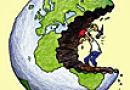
For Africa, writes Yash Tandon, liberation from imperialism overrides all other issues. So, to view negotiations about climate change as an isolated issue, as the left activists tend to do, is dangerously myopic.
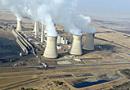
Patrick Bond makes the case for the occupation of Durban during the COP17 summit, due to take place in the city between 28 November and 9 December.
Foreign investment in arable land in Mali increased by 60 per cent between 2009 and 2010, says a report published to coincide with the first international farmers' conference to tackle the global rush for land. The report, by the US-based Oakland Institute and the Malian national farmers organisation, estimates that more than 544,500 hectares of Malian land have been leased or were under negotiation for lease by the end of 2010.
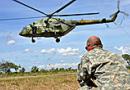
Ugandans are unsure of the Obama administration’s agenda in its military intervention in the hunt for rebel leader Joseph Kony. Why now, they ask. Jackee Budesta Batanda reports that peace activists are skeptical about military approaches to the conflict.