


In his book, Le bicentenaire de Marx, Samir Amin reflect on the work of the man who has immensely influenced his own work and life.

Reflecting on the current crisis in the capitalist system, Samir Amin wonders whether China would be attempted to try to cure the system.

To understand the present capitalist economic crisis, Ama Biney contends that there is an urgent need to revisit the works of Egyptian political economist Samir Amin. His bold proposals on ending global inequalities and injustices are timely.

Honouring Samir Amin as he celebrated his 80th birthday in September 2011, Horace Campbell paid tribute to Amin’s tireless work “to strengthen effective forms of popular power” and underlined his enormous contribution to our understanding of global capitalism’s increasing destructiveness.

Samir Amin was an exceptionally humble person. In spite of his huge influence on younger generations, he never treated them patronisingly or with condescension. Samir did not see himself as a leader, teacher or mentor. He treated younger scholars and comrades as his equals, engaging with them and critiquing them where necessary.
Yash Tandon dedicates a poem to his close friend and comrade in the struggle, Samir Amin.

I was requested by the Pambazuka News editors to give a brief tribute to Samir Amin. I will do precisely that—a brief tribute to one of Africa’s leading intellectual luminaries, whose intellectual legacy offers great potential for African Renaissance in the 21st century.

Immanuel Wallerstein, one of the close colleagues and comrades in the struggle of Samir Amin, shares a personal experience of working with him.

Samir Amin was as ruthless a critic of extreme religious movements as he was of neoliberal imperialism. (Ricardo Ramirez)

Natasha Issa Shivji, a young Tanzanian academic and activist, gives a moving tribute to Professor Samir Amin.

Samir Amin was an economist and intellectual, that has left his marks on academia, as well as on activists.

Samir Amin (1931-2018) was one of the thinkers of the global South who contributed decisively to starting the epistemological break with the Eurocentric discourse that permeates the social sciences and humanities. His passing on 12 August is a huge loss for his family, friends, collaborators and many sympathisers around the world.

Former Chief Justice of Kenya, Willy Mutunga, gives a special tribute to Samir Amin.

The Council for the Development of Social Science Research in Africa (CODESRIA) wishes to officially inform members of the African intellectual community of the passing on of Professor Samir Amin on Sunday, 12 August 2018. For CODESRIA, this marks nothing less than the end of an era in the history of African social research given the many pioneering roles the late Professor Amin played as a scholar, teacher, mentor, friend, and revolutionary.
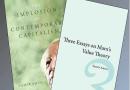
Celebrating his legacy, the author offers a critical analysis of a number of Samir Amin's books.

On Sunday, 12 August 2018, shortly after 4pm (local) Professor Samir Amin passed away in a hospital in Paris, France where he had been flown for emergency treatment at the end of July.

Egyptian economist Samir Amin observed the dangers of our world but also its possibilities.

With the demise of Samir Amin—an indispensable component of the new genre of the Radical Political Economy School of Marxism—the global South has lost an important intellectual prime mover of its history.

Samir Amin, already a major figure in the political economy of development, was the author of the first article in the first ever issue of ROAPE, in 1974. As the editorial noted, the article was “a summary of his basic model of the workings of the international system as a whole, presented at length in his two recent books” (the two- volume Accumulation on a World Scale, Monthly Review Press, 1974).

The author looks at the theories of one of Africa’s greatest radical thinkers.