


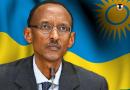
Journalist Anjan Sundaram’s book on Rwanda exposes a terrifying dictatorship at the heart of Africa that few people get to hear about. Paul Kagame has tremendously succeeded – with the eager help of his western backers - to feed the world a carefully choreographed false narrative. His chilling tyranny is so pervasive and entrenched that Rwandans police themselves unbidden.
In this interview, Devlin Kuyek, Senior Researcher at GRAIN, talks about a report that reveals how a Canadian agribusiness company, Feronia, financed by American and European development institutions, is involved in land grabbing, corrupt practices and human rights violations in the Democratic Republic of Congo.
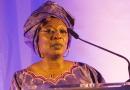
Jacqueline Moudeina is a Chadian lawyer and President of The Chadian Association for the Promotion and Defense of Human Rights (ATPDH). She is a recipient of the 2011 Right Livelihood Award. Moudeina is pursuing justice for the survivors of former Chadian president Hissène Habré’s terror regime.

The environmentalist, Nnimmo Bassey, deplores the Green Revolution in Africa and oil spills in the Niger Delta region. He does not underestimate the work to be done to educate people on the need to stop those who wish to destroy the environment and to redefine new concepts of development
A bill sponsored by the government and backed by IMF to raise more money to finance a huge budget announced recently seeks to impose value added tax on basic commodities. This has led to angry protests by Kenyans
http://www.pambazuka.org/images/articles/530/contaminated_water_tmb.jpg… Moloo investigates the impact of a Canadian-based gold mine on the North Mara region in Tanzania. Villagers in the area complain about deaths and ill-health due to pollution of the Thigithe River.
In May 2009, toxic waste from a gold mine located in North Mara, Tanzania, spilled into River Thigithe. Reports from the surrounding villages alleged that 20 people and from 700 to 1,000 head of livestock died from the contaminated water. The company that operates the mine, African Barrick, denied that the spillage led to the deaths of villagers, and Barrick's spokesperson said recently that there are no more problems with the river. But villagers living in Tarime district claim they are still experiencing health-related illnesses from the water. There are also reports that a number of people have been killed by security forces belonging to the company. Zahra Moloo reports in this
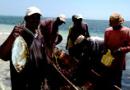
Kenya's artisanal or small-scale fishermen have been living off the sea for decades. They have been facing a range of problems over the past years. In Malindi, a number of conflicts have arisen between the fishermen and prawn trawlers, large vessels that trawl the ocean floor catching prawns for sale. The fishermen say that the trawlers often cut their nets and discard healthy fish as by-catch. One trawling company faced a number of law-suits relating to these conflicts. Along Mombasa's coastline, fisherman are increasingly having to compete with the expanding hotel industry for access to scarce land along the sea. As more and more hotels take over these areas, the fishermen fear that they will lose their only means of survival. Zahra Moloo reports in this
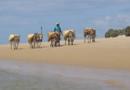
As the Kenyan government continues its plans for multi-billion dollar port, oil and transport project, Zahra Moloo considers the socio-economic and environmental effects on Lamu and the absence of news coverage on the topic.

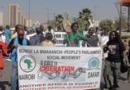
While world leaders and NGO delegates from around the world converged in Copenhagen for the 15th UN climate change conference, thousands of activists, writers, academics and artists gathered at [mp3] features interviews with representatives of different countries across sub-Saharan Africa who were at Klimaforum. Wahu Kaara of the Kenya Debt Relief Network provides a critique of the UN climate change conference and addresses the significance of the Copenhagen mobilisation for movements in Kenya; Demba Moussa Dembélé, from the Jubilee South campaign in Senegal, talks about the need for sufficient funds to flow from the North to the South to compensate for ecological and climate debt; Julia Agwu from the University of Nigeria in Nsukka gives an analysis of gender and climate change and the impacts of climate change on women in Nigeria; and finally, Mabule Mokhine of the Greenhouse People's Environment Centre in Johannesburg explains the process by which land dispossession in South Africa was consolidated at the end of the apartheid and the need for collaborations between global grassroots movements.
In Joseph Conrad’s Heart of Darkness, first published in 1899 and years later subject to a polemical but much-needed critique by one of Africa’s most prolific writers, King Leopold’s colonial project in the Congo is described as “the vilest scramble for loot that ever disfigured the history of human conscience.” More than a century later, writes Zahra Moloo, after a protracted war in which an estimated 4.2 million citizens perished and the nation’s stability was invested in the UN’s largest peacekeeping force to date, Conrad’s oft-repeated phrase is, tragically, just as pertinent.