



Migration is as old as Africa itself. People have always moved in search of a better life. The economic crisis in Africa fueled by development policies imposed on the continent by the World Bank, IMF and other donors is one of the factors forcing some Africans to undertake dangerous journeys to Europe in an attempt to improve their lot.
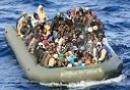
This special issue of Pambazuka News shows that the question of migration is entangled with complex political, economic, legal, social, cultural issues. One cannot address this issue from an African perspective without thinking about the violence and pillage rampant on the continent over the past several centuries
Although murdered by retrogressive forces opposed to Burkina Faso’s true liberation and that of Africa, Thomas Sankara’s revolutionary ideas and initiatives remain a powerful inspiration to those individuals and movements that are dedicated to struggles for social justice everywhere
With Pambazuka News publishing its 200th French-language edition this week, Tidiane Kassé – Pambazuka’s French-language editor – discusses the importance of alternative, Africa-led media and the challenges for the future.
Following food crises in 2005 and 2008, Niger is once again reeling under a famine that has reached Chad and northern Mali, with repercussions for other countries in the Sahel region. As appeals for solidarity increase, Tidiane Kassé cautions that by tackling the consequences rather than the causes of the crisis, the region’s people are likely to remain vulnerable to hunger.
Following the election of Ali Ben Bongo to the Gabonese presidency, Tidiane Kassé considers the reaction of commentators in the African press to the victory. With the death of his father and long-time dictator Omar Bongo in June, many regard Ali Ben Bongo's election as the mere continuation of the Bongo dynasty, Kassé notes, a continuation decidedly in the interests of the French former colonial power.
 cc The death of Gabon’s President Omar Bongo on 7 May has sparked a range of reactions, reflecting the dubious legacy of a man who played a central figure in the shady web of political and economic ties between France and Africa. Tidiane Kasse explores what politicians and commentators had to say.
http://www.pambazuka.org/images/articles/404/Mine_Zimbabwe_tmb.jpgRefle… on an Institut Panos Afrique de l’Ouest (IPAO) training workshop for West African journalists held at beginning of October, Tidiane Kassé provides an introduction to the murky world of extractive industry in the region and the role of the media in informing public opinion.
Mouhamadou Tidiane KASSE argues that the implementation of neo-liberal policies and strategies in Africa, which have culminated today in globalisation, resulted in the feminisation of poverty on the continent. “Liberalisation began by hitting social services. Women were to suffer the most from the effects, due to tradition and their social position.”
Today, two concepts stand together. They work in parallel, but also together, since, inevitably, the two situations they encompass feed off one another. Since the beginning of the 1980s and the implementation of neo-liberal policies and strategies in Africa, which culminated today in globalisation, the feminisation of poverty has become an irreversible, downward spiral. Among other consequences of this situation, the 1990s saw the spread of Aids in Africa begin to take on a feminine character.
Just as poverty becomes more feminine, Aids also takes hold of it. In the first decade after its appearance, the disease was mainly rife among men, but now it has seen its distribution reversed to the detriment of women. Of the 25 million people living with HIV in Africa (out of 37.8 million globally), 58% are women. The proportions are the same for the 9,000 people who contract the virus every day in Africa.
The feminisation of poverty and its effects on women’s health are preventable. Neo-liberal policies paved the way for this when they began taking control in Africa from the 1980s onwards. The Economic and Financial Recovery Plan (EFRP) of the 1970s was followed by Structural Adjustment Programmes (SAPs) in the 1980s, and Poverty Reduction Strategy Papers (PRSPs) in the 1990s. This semantic shift shows the successive failures of these policies that were set up by the World Bank and the International Monetary Fund, which both locked Africa in an endless spiral of poverty. All these policies have today resulted in globalisation, which has moved the continent’s fragility up one level, with the same disastrous effects. What previously happened merely at a local level, within States, now takes place on a global scale, transcending borders and state sovereignty.
The template for today’s tragedy was drawn in the 1980s. Liberalisation began by hitting social services. Women were to suffer the most from the effects, due to tradition and their social position. The decision to make access to education more and more expensive led to girls falling behind. Twenty years later, millions had to be invested to provide them with an education to make up for the effects of this disaster. At the same time, mortality rates among mothers and children went well beyond being scandalous and the reduction of these rates is today one of the development goals of the new millennium. All this is happening in such a way that it looks like one is emptying a barrel in order to refill it again. And this is serious when human lives are at stake.
Survival strategies
The findings of a study entitled “Les familles dakaroises face à la crise” (“Families in Dakar confronting the crisis”) were worrying for the years following the implementation of liberal policies: “It is in fact wage earners in the private sector who are most acutely affected by the crisis of the 1980s. Among men, the unemployed make up 13.7% of industry. In construction, the figure is 14.3%, it is 4.6% in the private service sector and production and 9.1% in business. The agricultural and fishing industries have been hit the hardest by unemployment (18.8%).
“But the situation is all the more tragic for women, whose level of unemployment is 21.6% in industry, 15.0% in the service sector and production and 19.2% in business. The higher levels of unemployment among women are so acute that many have had to state that they are housewives after looking for work in vain. The figures given for women are therefore low estimates for female unemployment.” (Cf. Les familles dakaroises face à la crise – Ifan, Orstom, Ceped - 1995)
The continued process of world trade liberalisation has created a context of economic and social disintegration, with women suffering the most in Africa. In the two-tier societies that are being set up, the effects are piling up at the end of the line. Here, women are the final – and weakest – link. Girls are being deprived of an education, ruining their futures through teenage pregnancy, and wives are experiencing all manner of marital violence (latent or visible, codified or not by society), which is exacerbated by poverty and the absence of life’s basic necessities.
The survival strategies women have employed, through becoming involved as workers in production or industry, do not stand up to new deprotection laws. Factories close or streamline their staff and imports kill off whole sections of production they invest in. Today, female traders in Africa have to go ever further to compete with Asian products that are flooding into markets. As one Senegalese woman put it, “In the 1980s, I used to go to Gambia. When the 1990s came, I had to go as far as Nouakchott and Las Palmas to develop my business. Today, you have to go to Dubai, Taiwan and Hong Kong to compete with the markets that have been established where we are. Especially with the Chinese. Investment is more expensive, journeys are longer and difficulties are greater when it comes to reconciling our role as pillars of the family and our economic functions. In the group of women with whom I organise alternate trips and shared purchasing, we spend hundreds of millions of francs on business each year. But because we work informally, because we do not offer the guarantees deemed necessary, the State will not support us and banks will no longer offer us credit.”
So, laws do not work in women’s favour and the social environment even less so. Natalie Domeisen, of the ITC International Trade Forum, is quoted as saying: “Do women encounter added difficulties when trying to expand their trade through exports because they are women? This is precisely the fundamental question societies should be asking themselves and should be agreeing upon in order to speed up change. For small businesses, access to finances, market information and training is essential. Women who are involved in exports have, however, fewer opportunities to access the support networks that a good number of their male counterparts have. The type of assistance they need is also different. Most businesses belonging to women are part of the service industry, and the main way of developing these businesses is by setting up networks with a view to creating a client base.”
Life and health
The great majority of women, however, are far from these concerns of market dominance. Instead, daily concerns revolve around health and survival strategies. One major concern today is that millions of women do not have access to healthcare during pregnancy and childbirth that could save their lives. For example, only 53% of births in developing countries take place with the assistance of a qualified person (a doctor, midwife or nurse). With the poor nutritional condition of women before pregnancy, due to healthcare that is inadequate, inaccessible or too expensive, not to mention the lack of hygiene and care during labour, there has been a huge increase in dangerous pregnancies.
Beyond the failures of national policies, globalisation has turned healthcare into a market area, and drugs into a market good. The debate and conflict between countries in the South and the North in relation to the Agreements on Intellectual Property Rights (TRIPS), under the framework of the World Trade Organisation, have been instructive in this regard. Supported by the patents they hold, drug multinationals have been opposed to certain products being made in countries in the South, where local industry could do this job in order to reduce accessibility costs and improve the health of populations. The issue made the headlines in 2000, when thirty-nine drugs companies undertook legal proceedings against South Africa for allowing its population access to low-cost drugs, particularly anti-retrovirals. In April 2001, they withdrew their action when African States raised their shields by sticking to safeguards. The agreement on TRIPS requires WTO member governments to ensure, over a period of twenty years, copyright and patent protection for various new products, including pharmaceutical products. Without the consent of the inventor, no one can use, make or sell a particular product during this period. In the meantime, Aids is killing people – and particularly more and more women. The 2005 UNAIDS data for sub-Saharan Africa shows that 58% of infected adults are women.
To end this pandemic and slow down its effects, anti-retroviral treatment required, at one point, 600,000 CFA francs per month (around 1,000 dollars; the costs have been reduced since then and the drugs are even free in certain countries thanks to public spending). Yet it would have been possible to produce generic drugs locally, thus reducing costs. In India, a pharmaceutical group set the price of ARV’s at 600 dollars (per person, per year) for African governments. However, between the rights of patent holders and the right to life for millions and millions of people, it was necessary to reach a contentious legal decision. Brazil had to face attacks from America for adopting a law that authorised local production of anti-retroviral drugs such as AZT, which helps to prevent transmission from mother to child.
With the mobilisation of countries in the South, ethics took precedence over profit. And after threatening South Africa with sanctions at a point when the country was wrestling with American pharmaceutical companies, President Bill Clinton signed a decree to change American intellectual property laws applying to the distribution of drugs to counter HIV/Aids in sub-Saharan Africa. This decree forbade anyone from lodging a complaint to the WTO in order to block the wishes of sub-Saharan African countries to produce or obtain drugs to fight Aids.
The market logic that is taking hold of healthcare relates to the fact that this sector is an enormous source of revenue, in terms of drugs, the provision of healthcare, laboratory materials, etc. And up until now under the WTO, the precedence of the right to healthcare over patent rights has not yet become a reality. Even if small gains have been made, the United States remains tied to the idea that a wider agreement on property rights could tomorrow be extended to the diseases that generate much higher profits for laboratories.
In effect, even if the debate has focused on diseases like tuberculosis, malaria and Aids, medical research on these three most deadly pandemics comes to less than 5% of the total budget for research at the ten largest pharmaceutical companies in the world. But to make concessions in this domain is seen as a threat to making a tidy profit. A case in point is the sale of drugs that are threatened by the arrival of generic drugs between now and 2007, which is valued at 50 billion dollars – 17.8 billion of which go to the American companies Merck and Pfizer.
This is how some people’s billions are the source of other people’s misfortune. According to the current logic of globalisation, world trade rules control national policy. We are witnessing the loss of sovereignty and international agreements are directly influencing public policy. In social services such as healthcare and education, finance ministers determine what is invested and what is undertaken according to the standards of international financial markets. The wild logic of economic gain thus takes precedence over the necessities of social well-being.
In Mali, for example, the fight against malaria has at its disposal neither the necessary financial means nor an adequate institutional policy. The national programme is only one of the areas of the Prevention Division of the National Health Directorate, and has a budget of 1.5 billion CFA francs per year. And to put to work even the slightest of action, many steps need to be taken to move it along (cf. Panos News, forthcoming). Yet, according to the United Nations’ 2005 report on the Millennium Development Goals, malaria destroys a million lives each year, mainly women and young children – consequently slowing down economic growth by 1.3% per year. And 90% of these deaths take place in sub-Saharan Africa, where more than 2,000 children are lost to this disease every day. Mali is among those countries where this disease is still endemic, and requires prevention and constant funding.
Since the 1980s, African countries have done nothing but put up with this. But do they have the means to resist? The partial failure of the last WTO ministerial summit in Hong Kong in December 2005, which was supposed to close the Doha Round after the Cancun stage in September 2003 (which also failed), was due to the mobilisation of countries in the South against a process that places them in an endless trap. But the resistance over cotton, where the reserves of countries in Asia, Latin America and Africa, on top of other issues, are not enough to stop the machine called globalisation. The WTO is but one structural framework to have ended in failure. Meanwhile, the process continues according to its own dynamics, led by multinationals.
Resistance from civil society, through the mobilisation of the anti-globalisation movement, remains a very weak obstacle, whose consequences have struggled to take root in wider society. And in this movement, the proportion of women remains very slight. In the demonstrations of the African Social Forum, the female component is still very marginal. It is less a vehicle for reflection on resistance and alternatives to globalisation than an appendix to the changes that a being sought. We continue to debate what we put up with (physical violence, mental violence and so on) rather than the solutions women hold and the tools to give them impetus to act.
In the current climate of the feminisation of poverty and the feminisation of disease, the vicious circle is growing and affecting more and more women, and at the same time is closing in them as part of a continued process that is making precariousness more widespread. Page (2000) writes: “The subordination of women in African society, in the face of the HIV/Aids pandemic, is leading to premature deaths and the break-up of millions of families across the whole of the [African] continent. The fact that this in turn is creating a generation of rootless and traumatised children will have grave consequences for the future stability of many countries in Africa. While we concentrate solely on preventing infection and caring for those who are dying, we are neglecting the opportunity to prolong the healthy and productive lives of Africans who are HIV-positive, particularly mothers with children of a young age.” The logic of globalisation does not want this process to end.
•Mouhamadou Tidiane Kasse is Coordinator of Flamme d’Afrique, a daily newspaper published by IPAO and ENDA on occasions of meetings of social movements.
•Please send comments to or comment online at www.pambazuka.org
In the countdown to the World Social Forum due to be held in Nairobi in January 2007, Mouhamadou Tidiane Kasse analyses the trajectory of the social forum movement in Africa and warns that a lot of work remains to be done if the transformative potential of the movement is to be optimised. “By taking the torch from Bamako in January, the Kenyan social movement and the secretariat of the WSF find themselves faced with a lot of work, at the level of the structuring of the social movement in Africa, to raise awareness and popular mobilisation within the country itself, and to consolidate the dynamic of regional solidarity,” he writes.
When Africans first participated in the World Social Forum (WSF) in Porto Alegre, they were only about thirty people, drowned by tens of thousands of others. At the meeting in Mumbai in 2004, their delegation was bigger, but they still comprised no more than 500 people in a sea of anti-globalisation protesters which exceeded 100,000. Their lack of presence was almost laughable.
Africa’s voice was nonetheless heard at the International Council of the WSF, when it was raised to lay claim to the big-tent anti-globalisation event for Africa. Despite the scepticism of some people, even amongst the African delegates themselves, that Africa could welcome such a popular mobilisation on the continent, and could host an event of freedom where so many freedoms are abused, the request was granted. Holding the WSF in Africa will become a reality in 2007, and it will fall on Kenya to host it. But behind the enthusiasm, the challenges facing the Africans are numerous.
When the Indian Social Forum took place in Mumbai, the aim was to de-localise an event associated with Porto Alegre, and to enhance its popular dimensions, thematic richness and excellent organisation. Moreover, on the Asian continent, there were particular concerns at stake within the framework of structural global inequalities. In Asia, the imbalances are not only vertical between the South and North. They are also horizontal and endogenous, and cut across the societies of the Southern countries: the issue of the Indian caste system characterised the Mumbai forum.
The successes of India strengthened Africa’s wish to host the big anti-globalisation event. This was despite some doubts about the suitability of its political environment to host the iconoclastic and critical debates, about the continent’s capacity to host and organise an event for tens of thousands of people, and to ensure real, mass mobilisation.
Until the polycentric World Social Forum in Bamako in January 2006, meetings of African social movements had never been anything but quasi-confidential conclaves. The African Social Forum in Lusaka in December 2004 failed to attract more than 1000 people to the Mulungushi International Conference Center, which resounded with a despairing emptiness. Barely 50 people participated in the march on the streets of Lusaka, and in any case, a ban on demonstrations would have aborted the skeleton procession, which only made it as far as 500 metres from conference centre.
The first west-African social forum in Conakry in November 2004, which attracted about 2000 people, gave a glimpse of the kind of local mobilisation that is possible. But the ensuing events have not exceeded this level of participation, and the popular voice remains restrained. That the events have no roots in the majority populations is evident. Nowhere, with the exception of the last WSF in Bamako, which claimed some 30,000 participants, has the event been strongly linked to the local agenda. It is as if there is a disjuncture between the ferment of opposition and the daily lives of ordinary people.
The African social movements still lack visibility even though the pertinence of the ideas and causes they embrace are in keeping with the urgent matters confronting Africa in the construction of a better world. There have been delays in implementing mechanisms which would allow this dynamic to reach through to the roots of society, and create a genuinely popular movement. From one meeting to another, the debates struggle to escape from the circles of those in the know. Panel discussions are essentially bringing together the same people, going over the same old ideas, and struggling to find an anchorage in people’s realities. The structure of the organisation probably also needs to be challenged, and their chief instigators could do with being reconsidered.
Getting it off the ground
Said Saadi, a member of the Moroccan social forum, stated at the African social forum in Lusaka: “After three meetings, we are at a turning point. The forum must be strengthened by opening it up to all the other groups, which are fighting on the ground. What about the trade unions for example?...We must avoid looking like a group of NGOs, which are keen on travelling but do little real work at grassroots level. The forum must position itself to redress the balance, and outline an opposition agenda with a precise timeframe.” In the same tempo, Abdourame Ousmane from Niger remarked: “It is time to develop alternatives that take account of the aspirations of the populations at the bottom of society, that will be legitimised by nature of their democratic anchorage.”
The social forum evidently remains a space where participation is not predetermined. It is not about groupings that anyone is looking to engineer, rather is organised in such a way that ideas ferment reciprocally and experiences inspire change elsewhere. But certain tendencies are favoured. There will not be real change unless there are veritable actors at the centre of the processes. Whatever the merits of the unions and the rural movements, there is a virtual absence of organised social movements in Africa at present. The themes discussed in the panels and workshops are omnipresent, discussions about the future – ‘a different world is possible’ ¬– are shaped from the perspectives of ordinary people, and yet their own dynamic does not let itself be felt.
The question of the unions in Africa in relation to globalisation was usefully analysed at the Conakry meeting in 2004 in terms of the necessity for their re-orientation. First of all, solidarity is an imperative. When the multinationals set out to blackmail the workers, there is no better defence than union solidarity. How can this be achieved? There must be a fusion of the groups of affiliated unions at both national and global levels. In this respect, the Anglophone countries are further on. COSATU in South Africa is a good example. The second stage involves the promotion of international norms: International agreements, treaties, UN institutions, the World Bank and the IMF must integrate union liberties that symbolise the social dimension of development politics.
The final stage of mobilising the unions in the struggle for ‘another world is possible’ involves the ‘enlargement of the mandate of the union movement’. This change must take effect in several stages. It requires the mobilisation of supporters, sourcing of funding, the democratisation of the union movement, and the construction of partnerships with governments and multinationals. But the union representation in Conakry was not sufficiently consistent to institute a real debate on this ‘road map’.
For the five years that the African social movement has been aligned with the anti-globalisation movement, it has still not identified the motor to get itself off the ground. The key actors for change and the path of ‘liberation’ has been identified, but the forces yet to be unleashed remain marginal to the event.
Can the ‘Women’s Court’ for example, launched in Lusaka in 2004, and again in Bamako in 2006, push for the mobilisation to change the situation of women, moving beyond the mere habitual condemnations of violence and the denial of all sorts of rights, which through being churned out again and again, risk becoming clichés? Will the ‘youth forum’ be a space for the raising of awareness where the identity of the future can be constructed around values which break with the discredited politics of the day? The discourse often betrays a willingness, but the means of bringing about change are neither clearly identified nor widely-embraced.
Paving the way for the younger generation
At the centre of the youth element of the African Social Forum in Conakry, the Ivorian Ouattara Diakala expressed the problem thus: “Young people are out of touch…with the objectives of the WSF. The struggle against neo-liberalism for example - what does that mean to them? What are the ins and outs of it? When someone does not understand a given situation, it is difficult for them to engage. We are going to have a find mechanisms for supporting mass youth participation in these discussions, to generate more activities in which young people can get involved locally.”
At the 2006 forum in Bamako, the rallying cry to pave the way for the young people was around Thomas Sankara, a symbol of protest, defined as an anti-globalisation pacesetter – in word and in deed – ahead of his time. But a representative from an NGO in Burkina Faso remained unconvinced about the impact of this strategy: “Sankara lived what he lived, but the important thing is what he did. He had a strong instinct of what had to be done, and this is what young people today must imitate. Today’s youth strikes me as being more ideological than pragmatic. They need to flesh out their talk with work.”
The secretariat of the WSF is conscious of the importance of the Nairobi forum for the structuring of the movement in Africa. The choice of Kenya from amongst several other candidatures, more-or-less the officially advanced countries such as Morocco, was decided on the basis of criteria drawn up and approved at the World Social Forum held in March 2005. These imply, that at the level of the host country, there is the opportunity for the freedom of expression of opinions, including through public marches and demonstrations, publications, radio and TV broadcasts, and contact between the local populations and the organisers from abroad; and for the possibility of ‘mass social mobilisation’. To ensure the forum achieves an impact, the application must issue from the mainstream social movements of the candidate country, and the sub-region. At the same time, the social movement of the candidate country must prove a certain level of organisation and dynamism, as well as the capacity to mobilise the population around national, continental and international issues.
By taking the torch from Bamako in January, the Kenyan social movement and the secretariat of the WSF find themselves faced with a lot of work, at the level of the structuring of the social movement in Africa, to raise awareness and popular mobilisation within the country itself, and to consolidate the dynamic of regional solidarity.
From Bamako to Nairobi, one trend is to favour ‘linkages’, to give a reality, indeed an identity, to the African social movement. The aim is to construct a continental solidarity which goes beyond the linguistic divisions and sub-regional groupings which have thus far marked the evolution of the WSF through its polemics and internal conflicts.
Bamako also identified a trajectory: “Beyond all political, cultural, economic, and social resistance at the basis of anti-globalisation, one of the challenges in Nairobi will be to resume the process of establishing a Charter of unity, for the people and future of Africa, the foundations of which were laid sixteen years ago in Arusha. Between now and then, there must be a process of consultation throughout society and within social movements, so as to achieve a meeting of ideas, consensus, and an affirmative assembly in Nairobi in 2007.”
* Mouhamadou Tidiane Kasse is Coordinator of Flamme d’Afrique, a daily newspaper published by IPAO and ENDA on occasions of meetings of social movements.
* This article was translated from French by Stephanie Kitchen. It was originally published in the French version of Pambazuka News, Please send comments to [email protected]