


Horace Campbell is a peace and social Justice activist. He is also Professor of African American Studies and Political Science at Syracuse University and Chairperson of the Global Pan African Movement, North American Chapter. He is the author of Global NATO and the Catastrophic Failure in Libya, Monthly Review Press, 2013.
The debate on the United States public debt ceiling is ‘really another gambit to step up class warfare against the majority of American citizens and the planet by the growing political power of the top one per cent of US society,’ argues Horace Campbell.
With General Magnus Malan – the main architect of South Africa’s apartheid military – passing away on 18 July (Nelson Mandela's birthday, no less), Horace Campbell reflects on Malan’s central role in the systematised discrimination of apartheid and the system’s troubling legacy.
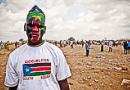
‘The new tasks of building a society to meet the needs of the people in the South Sudan must be conducted in a manner that puts the interests and wellbeing of the ordinary people above everything else,’ says Horace Campbell.
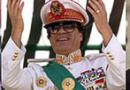
Those within the peace and justice movement seeking an end to NATO’s illegal bombing of Libya must also be careful not to extend misplaced support for dictators, writes Horace Campbell.
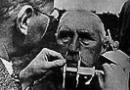
Michio Kaku’s new book shows how science and technology are transforming ‘social relations among humans and between humans and the universe,’ writes Horace Campbell, but it fails to convey that ‘[t]echnological revolution by itself cannot change society; it requires the intentional and purposeful intervention of humans to make a break from traditions of slavery, bondage and exploitation.

Horace Campbell charts Africa’s exploitative history of ‘aid’ and the struggle to establish a new global system rooted in dignity, equality and genuine social justice.

The demise of the IMF's former managing director Dominique Strauss-Kahn is an opportunity to dismantle the fund and replace the current financial architecture with one that ‘invests in the repair and reconstruction of livelihoods and the planet’ instead of ‘destruction, dehumanisation, exploitation, and rape,’ writes Horace Campbell.
As Africa celebrates Africa Liberation Day this week, the great challenge for the continent’s peoples remains liberation from privatisation, writes Horace Campbell.
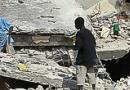
The process that brought Michel ‘Sweet Micky’ Martelly to Haiti’s ‘presidency was a farce that will 'force popular forces to distinguish between processes of democratisation and pseudo-elections without democratic participation’, writes Horace Campell, in an article on the people of Haiti’s two-hundred year struggle to reconstruct their society.
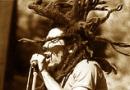
Reflecting on the life and work of Bob Marley, Horace Campbell discusses the positive messages of hope, mobilisation and self-esteem at the core of the legendary reggae artist’s music.
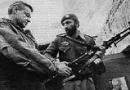
‘As quiet as it is kept, international terrorism did not begin on 11 September 2001.’ Before Osama bin Laden, there was Luis Posada Carriles, writes Horace Campbell.
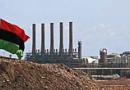
The debates raging at the highest levels of the US National Security establishment and NATO over the military ‘stalemate’ in Libya conceal an even more competitive effort on the ground in Libya, by petroleum interests keen to divide up the territory to ensure access to the country’s vast oil resources, writes Horace Campbell.
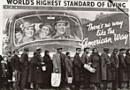
Manning Marable, African American activist, scholar and author, passed away on April 1. Horace Campbell pays tribute to a man who dedicated his life to the struggle against oppression.
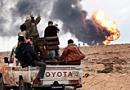
'The Western bombardment of Gaddafi’s forces in Libya has become an opportunistic public relations ploy for the US Africa Command and a new inroad for US military stronghold on the continent,' writes Horace Campbell.

Unless Libyans themselves own the struggle against Gaddafi, opponents to his regime may find that even if he has been removed from power, ‘Gaddafism’ will continue – but this time propped up by the West, Horace Campbell warns.

Following protests by thousands of Wisconsin workers and their supporters in response to new legislation that bans collective bargaining by public sector workers, Horace Campbell places the struggles in the state in the wider social and political struggles in the US. As in Tunisia and Egypt, workers faced austerity measures, decline in income, dispossession, and states that were more accountable to the corporates than citizenry, Campbell notes.
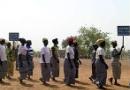
 cc HuguesHonouring the struggles of women all over the world against patriarchy and oppression in the week of the 100th anniversary of International Women’s Day, Horace Campbell focuses on the instrumental role of key women activists in the Egyptian protests.

Those who have solidarity with the Libyan uprising must not only support the people in Libya but also ‘denounce any attempts by the Western forces for military intervention’, argues Horace Campbell, in an interview with Democracy Now’s Amy Goodman.
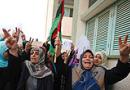
Tracing Colonel Gaddafi’s dubious history of collusion with Western interests, Horace Campbell stresses that current developments in Libya must push towards a people-centred democratisation of the country’s society.
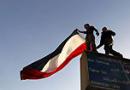
‘The task ahead for the Egyptian people may be enormous. But the same will, determination and sense of collectivism and focus with which they triumphed over Mubarak should be drawn upon for the reconstruction phase of the revolution,’ writes Horace Campbell.