


This Human Rights Watch report documents the intensification of the eight-year conflict over the past six months. Since December 2010, a surge in government-led attacks on populated areas and a campaign of aerial bombing have killed and injured scores of civilians, destroyed property, and displaced more than 70,000 people, largely from ethnic Zaghawa and Fur communities linked to rebel groups.
Five years after the Democratic Republic of Congo (DRC) revised its laws against sexual and gender-based violence (SGBV), these crimes continue to go unpunished because of judicial inaction and a legal culture at odds with the changes. The laws, ignored and misinterpreted, have left escalating numbers of sexual violence survivors unprotected, and perpetrators free to violate again. When the penal code was amended in 2006, it was intended to 'prevent and severely reprimand infractions relating to sexual violence and to ensure systematic support for the victims of these crimes,' according to the text. To this end, it included previously ignored sexual violations addressed in international humanitarian law, and toughened up sentencing for those who violated the vulnerable, including children, the disabled and subordinates.
A human rights campaigner from Madagascar was in the UK recently to demand that the Royal Bank of Scotland withdraw its financing of companies mining tar sands in her country. The Royal Bank of Scotland (RBS) has a long track record of financing companies operating in the Canadian tar sands, which are devastating the land and lives of First Nations people in Alberta. The bank has also financed French oil giant Total’s test mining of tar sands in Madagascar over the last three years. Total is expected to decide next month whether to go ahead with larger scale exploitation of tar sands in the country. If it does, the water supply of more than 120,000 people in one of Madagascar’s poorest areas could be disrupted and poisoned and its unique biodiversity severely threatened.
While this toolkit has been designed primarily for the local partners and activists of the VNC campaign, this can be a resource, too, for human rights activists who are keen to develop their
online activism and want to know where and how to start. The toolkit aims to impart the following skills:
- An understanding of why and how information and communication technologies (ICTs) can
be appropriated by women's rights and human rights groups in their advocacy skills
through their use of online tools, including networking and mobile tools for advocacy and
campaigning.
- The ability to develop an advocacy/communication strategy.
- Knowing what social neworking is and the various spaces and tools they could use in their
online activism.
- An understanding of online privacy and security issues relevant to building their online
activism.
Sudan’s President Omar al-Bashir continues to commit crimes against humanity and carry out genocide against the residents of Darfur in defiance of the United Nations, the Prosecutor of the International Criminal Court (ICC), Luis Moreno-Ocampo, told the Security Council. In 2005 the Council referred the situation in Darfur to the ICC after a UN inquiry found serious violations of international human rights law. The ICC has since issued arrest warrants against Mr. Bashir on charges of genocide, war crimes and crimes against humanity, making him the first sitting head of State to be indicted by the court.
'When I was pregnant with my son I drank a lot – mostly on weekends,' says Marion Williams, a 45-year-old mother who lost two of her five children in childbirth. Williams lives in one of South Africa’s famous wine-growing areas in the Western Cape. She started drinking as a teenager and was taken out of school, she suspects, to work to buy wine for her parents. 'It is estimated that at least one million people in this country have fetal alcohol syndrome and approximately five million have partial fetal alcohol syndrome and [other] fetal alcohol spectrum disorders. It’s tragic because it’s completely preventable,' says researcher and human geneticist Denis Viljoen in Cape Town, the provincial capital of South Africa’s Western Cape.
The Media Foundation for West Africa (MFWA) has applauded President Goodluck Jonathan, of the Federal Republic of Nigeria, for signing into law the Freedom of Information (FOI) Bill. 'The objective of the act is to make public records and information more freely available and to also protect public records and information to the extent that they are consistent with the public interest and the protection of personal privacy,' according to a statement from the presidency.
Two witnesses were taken to task by the truth commission over their contradicting and inconsistent testimonies on the 1984 Wagalla massacre, reports the Daily Nation. Former Finance minister David Mwiraria maintained that a visit by the Kenya Intelligence Committee to Wajir a day before the killings was purely to assess development projects. But on closer scrutiny, he admitted that the trip was sanctioned to resolve the Shifta movement in north eastern Province.
Parties to the conflict in Western Sahara continued to deepen their discussions on the electoral mechanisms for self-determination during three days of United Nations-backed informal talks in New York, according to a communiqué issued at the end of the meeting. By the end of the talks, however, 'each party continued to reject the proposal of the other as a sole basis for future negotiations,' said the communiqué, reached after the meeting in Long Island, New York, that was convened by the Secretary-General’s Special Representative for Western Sahara, Christopher Ross.
Around the world, street papers have been welcoming people who felt too insecure to stay in their home lands. Whether or not they have official refugee status in their newly adopted countries, what these vendors often have in common is the fear of returning to where they came from. Coming to a new country might save people from a potentially dangerous situation but it is not, by any means, a magical solution for all problems.
Liberian officials at Bahn refugee camp - set up by the government and the UN refugee agency (UNHCR) to shelter Ivoirians fleeing violence - prefer residents to play down their political affiliations, and discourage the wearing of partisan T-shirts or the holding of political meetings. But late on a Saturday afternoon, with little to do and much to discuss, Ivoirian refugees talked with anger and concern about their future, while ruefully reviewing the events of the past six months in their country just across the border. 'I don't want to be here, but what choice does a refugee have?' asked Sandigui Lacinje Traoré, who previously worked for the Ivoirian state media in Yamoussoukro, Côte d’Ivoire’s administrative capital. 'The war is not over yet as far as I am concerned,' Traoré told IRIN.
The homes of 12 Tafelsig backyarder families were demolished by the city’s Anti-Land Invasion unit recently, in a fierce face-off that left several people injured, including a woman who was seven months pregnant. This came two days after the Cape High Court granted a postponement to allow backyarders sufficient time to get legal representation to appeal the city’s application for an eviction order.
An African gay activist, Edson 'Eddy' Cosmas, has had his first appeal for UK asylum turned down by a judge in a hearing 26 May at Harmondsworth detention centre, where he is being held. Judge S. Chana accepted the UK Border Agency (UKBA)'s argument that Cosmas's story was not 'credible' and that he has no reason to fear persecution in Tanzania even if he was gay, which he isn't. A lawyer for Cosmas, who had only been instructed for the case the previous night, asked for the case to be removed from the 'fast track process' so a psychological and physical assessment (to establish whether he had been tortured) could take place. This was refused.
FEATURING: Raakwys (The reunion of one of Cape Town's greatest Bands)
PLUS: The Zoe Abrahams & De Kaapo, DJ Sampie: Zounds of Da South, Spoken word/poetry, Stand up Comedy & more...
DATE: 15 June 2011
TIME: 7pm till late
VENUE: AIDC Solidarity Centre,129 Rochester Rd, Observatory, Cape Town
DONATION: R10, Bring your own XYX and meat to braai.
INFO: [email][email protected], 0838867164 or 0214472525
Equatorial Guinea has built a multimillion-pound deluxe 'city' to host African leaders while the majority of its people live in dire poverty. Sipopo boasts 52 luxury presidential villas, a conference hall, artificial beach, luxury hotel and the county's first 18-hole golf course. It was built over two years to host an African Union (AU) summit that will last just a week. 'It's definitely a misplaced priority by the Equatorial Guinea government,' said Tutu Alicante, executive director of EG Justice, a group focused on human rights in the west African nation. 'This is a country where 75 per cent of people are living on less than $1 (60p) a day. This attempt to give an image of prosperity is totally misguided.'
World leaders began meeting in New York on 8 June to review progress made in the fight against HIV/Aids, 30 years after the pandemic first struck. The joint United Nations Programme on HIV/Aids (UNAids) says the meeting will also adopt new declarations and commitment to guide and sustain the global Aids response. UNAids says while progress has been made, more work remains to be done in coming years - especially in reducing the number of new infections. Globally, some 7,000 people get infected with HIV daily.
'In a world of changing priorities, can we spare some change for female-initiated preventive technologies, such as microbicides and female condoms, to support HIV-positive women and not just to protect women who are HIV-negative?' asks Morolake Odetoyinbo in this article from the UN Chronicle. 'Can we dare take a look at those national laws and policies which make women second-class citizens? Is it conceivable - and that is no accidental pun - that women’s rights can include sexual, reproductive, inheritance, and property rights?'
The global reach of the internet, and its ability to transmit information in real time and mobilise populations, creates fear among governments and the powerful, says Frank La Rue, United Nations Special Rapporteur on the promotion and protection of the right to freedom of opinion and expression. During the presentation of his report to the UN Human Rights Council 3 June, La Rue mentioned information filtering systems used in China that block access to websites containing key words such as 'democracy' and 'human rights'. The strength of the internet and the popular uprisings in recent months in North Africa and the Middle East, especially in Tunisia and Egypt, 'scares politicians', he told a press conference.
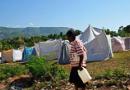
A number of organisations in Haiti representing social organisations, grassroots movements and people displaced in the aftermath of the 2010 earthquake came together over the period 19–21 May 2011 to discuss the country’s housing crisis.
The World Bank is holding back $40 million in budget support to Malawi because the country hasn’t completed the review of its program with the International Monetary Fund, the Daily Times reported, citing the bank’s country manager. The lender is waiting for a review of reforms to help address persistent external economic imbalances, the Blantyre - based newspaper cited Sandra Bloemenkamp, the World Bank’s manager for Malawi, as saying. The money is for the budget for the fiscal year through June.