


The Governor of the Central Bank says President Museveni’s erratic policies and the government’s fiscal indiscipline have led to higher inflation and declining foreign reserves, a UK-based newspaper reported. Mr Emmanuel Tumusiime-Mutebile told the Financial Times newspaper that he had disagreed with Mr Museveni over the decision to spend $740 million on jet fighters, which has pushed reserves down from six to four months of import cover. The Ministry of Defence, under President Museveni’s directive, withdrew a reported $400 million (Shs960 billion) from the Central Bank to pay for the fighter jets without parliamentary approval.
Across the continent, there is new attention to the practical requirements of effective immunisation campaigns. Dr Seraphine Adibaku, head of Uganda's malaria control programme, says his country has already started raising popular awareness of the coming availability of a malaria vaccine, with the most recent meeting of officials from the ministry of health and developers of the vaccine and other stake holders held in May. 'We are conscious not to cause excitement because it can lead to undesirable consequences but we have to tell the people that a vaccine could be here sooner than later,' says Adibaku.
The global shortage of health workers is estimated at 4.2 million by the World Health Organisation (WHO), but the migration of doctors, nurses, midwives and pharmacists from poor to rich countries means the shortfall is not evenly distributed - of the 57 nations identified as having reached a crisis point, 36 are in sub-Saharan Africa. In some countries with fragile health systems and heavy disease burdens, over half of all highly trained health workers have left for job opportunities abroad. In some of the worst cases rural hospitals have been left with just one doctor and a handful of nurses to attend to thousands of patients. What has worked so far in addressing the problem? IRIN took a look at some of the push and pull factors behind health worker migration, and what countries are doing to address them.
'The Lesbian and Gay Equality Project (LGEP) joins the Crisis in Zimbabwe Coalition in calling on this weekend’s Extra-Ordinary Summit of the Southern African Development Community focusing on Zimbabwe can lead to a peaceful, free, fair and legitimate democratic transition in that country. We fully endorse and support the Coalition’s call on the summit to put on public record minimum pre-conditions that Zimbabwe must meet in order to create an environment conducive to holding free and fair elections where violence and intimidation play no part and to inspire confidence in the people of Zimbabwe, in SADC and the wider international community.'
In an enigmatic U-turn, Algeria's political parties now support presidential term limits, just three years after they fought tooth and nail to defend the idea of an indefinite term for the chief executive. 'Algeria cannot stand aloof from globalisation and the systems applied in most countries, namely limitation of terms of office,' the National Liberation Front (FLN) said during a meeting of its Central Committee on Sunday (5 June) in Algiers. The majority of Algeria's political organisations, whether among the opposition or close to the government – Islamist, republican and secular – now advocate a return to the principle of limited terms of office as enshrined in previous Algerian constitutions.
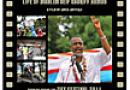
 Journey to the State House: The Life of Seif Shariff Hamad depicts the long and winding story of one of Zanzibar’s most dedicated politicians. Brimming with accounts from politicians and observers alike, the film paints an insightful backdrop to the sheer political magnitude of Maalim Seif Shariff Hamad being elected into power by the Zanzibari people in 2010..
The Refugee Law Project (RLP), Faculty of Law, Makerere University, Kampala, Uganda, in collaboration with the African Transitional Justice Research Network (ATJRN) is accepting applications to its 2nd Institute for African Transitional Justice (IATJ), an annual week-long residential programme with a focus on Transitional Justice issues in the context of Africa. The Institute, which is scheduled to take place from 20-27 November 2011, in Kitgum, Northern Uganda has as its theme: 'Whose Memories Count and at What Cost?'
Four persons are reported to have died as Gabonese gendarmes forced more than three thousand African migrants out of a gold mining site. According to Mr Ndongo, a crisis committee set up by the Cameroonian authorities has counted a total of 2,000 Cameroonians and over 1,000 Africans of various nationalities among those who crossed the border from Gabon. They include nationals of Senegal, Burkina Faso, Niger and Mali.
Impact studies warn that TRIPS-Plus provisions can lead to higher prices and reduced access to medicines, say Nusaraporn Kessomboon and colleagues in this article. The non-technical term TRIPS?Plus refers to provisions for the protection of intellectual property rights that go beyond the World Trade Organisation's Agreement on Trade-Related Aspects of Intellectual Property Rights (TRIPS Agreement). They include extending the life of a patent beyond the minimum requirement imposed by TRIPS; limiting government permission to reproduce a patented product or to reprocess without the patent owner's consent ('compulsory licensing') in ways not required by TRIPS; and limiting exceptions that facilitate the prompt introduction of generic drugs into the market.
The Climate Change Media Partnership (CCMP) has announced the launch of a Fellowship programme that will send journalists to the United Nations Climate Change Conference in Durban (COP17) in late 2011. The Fellowships are open predominantly to journalists from developing countries, but journalists from the US and Russia are also welcome to apply.
After several years of fragile gains, Malawi’s healthcare sector is running into trouble, with the latest challenge an aid freeze by its largest international donor, the UK's Department for International Development (DFID). The UK provided about US$122 million annually to Malawi, of which $49 million went to funding Malawi’s public health sector, but DFID made its final aid disbursement in March and has decided not to renew a six-year funding commitment which ends in June.
Reporters Without Borders has learned that six opposition activists, who are also reporters or informants for La Voix de Djibouti, an opposition radio station that broadcasts on the short-wave from Europe, have been held in Djibouti’s Gabode prison for the past four months without being tried. The six detainees - reporters Farah Abadid Hildid and Houssein Ahmed Farah and informants Houssein Robleh Dabar, Abdillahi Aden Ali, Moustapha Abdourahman Houssein and Mohamed Ibrahim Waïss - who are members of various opposition parties, were placed in pre-trial detention on 9 February on a charge of 'participating in an insurrectional movement'.
In this week's edition of the Emerging Powers News Round-Up, read a comprehensive list of news stories and opinion pieces related to China, India and other emerging powers...
The following can be found in the new issue:
- An in-depth look at the food price volatility and food markets
- The launch of the People’s Food Policy in Canada
- Voices and testimonies from Brazil and Mozambique
- An update from the International Seeds meeting in Bali.
Visit the website for more information.
This conference aims at promoting scientific exchanges involving researchers and stakeholders dealing
with land issues. Participants will be invited to share their work and experiences in order to assess land
strategies and policies within a comparative framework. This conference was initiated by Ugandan and
French researchers from the Institute of Research for Development (IRD, France) and the University of
Makerere (Kampala, Uganda). Many local and international researchers in East Africa have documented
land-related issues and wider scientific exchanges are expected to stem from this meeting.
The aim of Meet You At The Crossroads is to circulate, document, provoke, inspire and support. It is a library of public images of resistance, rebellion, revolt and rebuilding occurring in cities right across the globe, often on the streets; in the public realm.
As donors gathered for a major meeting on funding vaccines for the developing world, campaigners called for vaccine production to be transferred to Africa to save money and contribute to the continent's broader economic development. The Global Alliance for Vaccines and Immunisation (GAVI), a public-private initiative, is asking for US$3.7 billion in funding over the next four years to immunise 243 million children against a variety of diseases. But vaccines supported by GAVI are produced almost entirely in Europe, North America, Latin America and Asia, said the Council on Health Research for Development (COHRED), based in Switzerland.
The Ivoirian government has extended a special period of free health care to help a population reeling from months of turmoil. But in a country where cost recovery for health services has long been the policy, an abrupt change to free care is posing challenges. Shortly after Alassane Ouattara took power in April 2011, he announced that public health services would be free until the end of May as a way to help people in the aftermath of widespread unrest and economic stagnation. Doctors reported 20-30 times the number of patients after free care was announced. Advocates of free care say the explosion of patients indicates that cost is one of the biggest barriers to access.
Following the so called 'Arab spring', and in the midst of the ‘acampadas’, organised mass mobilisations through social networks in many Spanish cities, the Spanish Agency for International Development Cooperation (AECID) in collaboration with IPS Inter Press Service News Agency launched the book 'Politics, Networks and Technologies in Communications for Development', a tour through the different visions of new technologies and their contribution to information in general and more concretely, to communication for development. The book has contributions from experts who analyse challenges faced by journalism and communication for development, in front of the revolution of new technologies.
Rebels and forces of Libyan leader Muammar Gaddafi have fought over Zawiyah, a major oil port just 50km west of Tripoli, and in locations across the North African country. Libya's government said it has stopped opposition fighters from entering Zawiyah but rebels said they were continuing to fight for the town on Sunday, after hours of battles. Mussa Ibrahim, the government spokesman, said that Gaddafi's forces had 'total control' of the area from Ajdabiya in the east to the Tunisian border in the west.