


Tribute to Kwame Akon Ninsin: Scholar, Institution Builder, and Son of Global Africa
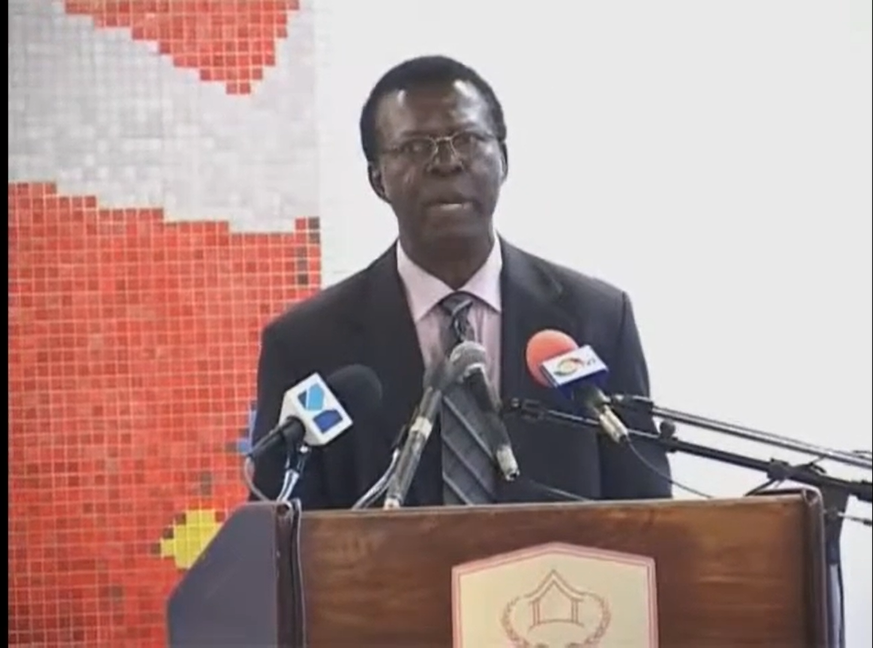
A towering voice in Global Africa has joined the ancestors. Professor Kwame Ninson’s scholarship and contributions to Africa’s transformation remain an impactful legacy.
Part I: A Personal Remembrance
Kwame Ninsin was a committed son of Africa who loved his people deeply. I was fortunate to count myself among those who benefited from his friendship, solidarity, and profound intellectual insight.
Our bond grew closest when he was based in Harare, Zimbabwe, serving as the Executive Secretary of the African Association of Political Science (AAPS). He could not survive the political culture that had grown around those leaders of AAPS who paid less attention to building serious scholarship than to accumulation and self-aggrandizement. We spent many hours together, and our families intertwined; my partner, Makini, became as close to his wife, Margaret, as I grew close to Kwame.
As a youth growing up in the wake of the Great Depression, World War II, and the roaring anti-colonial struggles, Kwame was an enthusiastic member of the Ghana Young Pioneers. He carried that foundational Nkrumahist and Pan-Africanist fervor with him throughout his entire life, paired always with unyielding personal integrity. He often reminisced on the possibilities that were open to the working peoples of Ghana by the transition process. In his own scholarship he sought to understand the limitations of the approach to the economy that emanated from the conceptions of formal and informal economy. That dichotomy is still preventing the political and intellectual leaders from grasping and tapping into the real political and intellectual energies of the mass of the working peoples.
Yet, for all his international travel and continental stature, he never forgot his roots. In 2010, when I travelled to Ghana for a major conference honoring Kwame Nkrumah, Kwame kept a long-standing promise. He took me directly to his home village of Mumford in the Central Region of Ghana. He remained deeply connected to that coastal community, later producing a meticulous study on how the introduction of new technologies impacted the traditional fishing village of his youth.
Part II: Biographical & Academic Foundation
Professor Ninsin’s journey from a coastal fishing village to the upper echelons of African academia was built on a rigorous educational foundation that came out of the people’s struggle for self-rule.
He did not come from that stratum in Ghana that owned property and exploited their fellow brothers and sisters. Neither did he fall prey to the politicization of ethnicity and regionalism. His scholarship showed that he understood populism for what it represented, emptiness and sloganeering. In this regard, Kwame Ninsin can be distinguished from those sections of the left that served militarism and then became servants of the Bretton Woods institutions. He understood that under the colonial and neo-colonial principles of the Washington Consensus, millions of Ghanaians would not have been able to enter the fields of work that became available after independence. He never became attached to the cultural reference points of the aspiring petty bourgeoisie who proclaimed love for this or that Hall at the University of Ghana.
Kwame Ninsin’s intellectual journey began within Ghana’s teacher education tradition. As a graduate of Komenda Teachers College, he emerged from an institution that represented both the colonial and postcolonial effort to cultivate African educators who would become agents of social transformation and public intellectual life. Teachers became a powerful constituency in Ghanaian politics because they were producers of knowledge, agents of nationalist mobilisation, and intermediaries between the state and communities undergoing profound social change. Their political significance reflected the central role of education in transforming colonial subjects into citizens and in building the intellectual foundations of an independent Ghana.
After teaching for two years and undertaking further teacher training for another two years, Ninsin continued his educational journey by pursuing a Bachelor of Arts degree at the University of Ghana, Legon. He later completed a Ph.D. in Political Science at Boston University in 1977, developing the analytical and diplomatic skills required to engage within international academic spaces where interpretations of Ghana’s postcolonial trajectory were often shaped by Cold War perspectives. As a scholar of Ghanaian politics, Ninsin entered debates in which Nkrumahism, Pan-Africanism, and Ghana’s role in African liberation were frequently contested, requiring a careful engagement with dominant narratives about Ghana’s revolutionary project and its historical significance.
Upon returning to Africa, he dedicated his career to his alma mater, the University of Ghana, climbing the ranks from a post-graduate Lecturer to Professor, and eventually serving multiple terms as the Head of the Department of Political Science. Later in his career, he extended his leadership beyond the university walls as the Director of Research at the Institute of Democratic Governance (IDEG), an independent, non-profit policy research and advocacy organization in Ghana.
Outside of Ghana he found a home in the African Association of Political Science (AAPS) and CODESRIA and became a leading force in both organizations.
Part III: Intellectual Legacy
A scholarly assessment of Kwame Akon Ninsin must recognize him as one of the most significant Ghanaian political scientists of the post-independence era. He belonged to a legendary vanguard of African intellectuals—including Claude Ake, Mahmood Mamdani, Archie Mafeje, Thandika Mkandawire, Issa Shivji, Emmanuel Hansen, and Peter Anyang' Nyong'o—who sought to explain the crises of the postcolonial African state from within African historical realities, fiercely rejecting Western modernization theory.
What distinguished Ninsin was his insistence that political institutions could not be understood separately from underlying economic relations. He viewed the state not as a neutral administrative apparatus, but as a contested terrain where competing class forces pursued power and resources.
Kwame Ninsin's scholarship constitutes one of the most sustained and rigorous analyses of the social struggles of postcolonial Ghana. Throughout his career, he examined the relationship between state power, class struggles, imperial manipulation and the struggles for democratic relations. He consistently exposed how capital accumulation and networks of local and foreign capitalists colluded to frustrate the prospects for genuine democratic and economic transformation. His work combined careful empirical research with a deep commitment to social justice and the aspirations of ordinary Ghanaians.
Kwame Ninsin's major publications reflect a lifelong commitment to understanding the political economy of postcolonial Ghana and the contradictions of capitalist development in Africa. Political Struggles in Ghana (1966–1981) examined the dynamics of political conflict in the post-independence state, while The Informal Sector in Ghana's Political Economy challenged conventional understandings of the so-called informal sector by demonstrating its centrality to the livelihoods and resilience of Ghana's working people. Rather than treating these economic activities as marginal or residual, Ninsin situated them within the structural limits imposed by colonial and postcolonial capitalism. This concern with the relationship between state power, economic transformation, and popular agency continued in The State, Development and Politics in Ghana (1989), co-edited with Emmanuel Hansen, which offered a penetrating assessment of the postcolonial state and the obstacles it posed to equitable development.
While Emmanuel Hansen and others for a short while dabbled with the so-called ‘progressives’ of the Rawlings administration, Kwame Ninsin understood populism for what it represented and remained true to his opposition to populist manipulation. After one year with the Rawlings administration, Emmanuel Hansen understood the same reality of empty populism. After the untimely passing of Hansen in a tragic accident in Tanzania, Ninsin turned his attention to democratisation and electoral politics in Ghana: Transition to Democracy (1998) and the edited volume Issues in Ghana's Electoral Politics. Throughout these works, he distinguished the formal existence of democratic institutions from the substantive practice of democracy, asking whether elections genuinely expanded popular participation or merely legitimised elite rule and the accumulation of private wealth. His scholarship consistently warned that democratic consolidation required far more than periodic elections. It demanded accountable institutions, an engaged citizenry, and structural reforms capable of breaking the grip of patronage and clientelism.
In the final phase of his career, Ninsin continued this critique with undiminished intellectual vigour. The Corrupt Elites: Anatomy of Power and Wealth in Ghana (2023) exposed the mechanisms through which political power has been converted into private wealth by Ghana's ruling classes. Published in the same year, Mumford: A Ghanaian Coastal Fishing Community in Transition returned to the fishing community that had shaped his intellectual formation, documenting decades of economic, social, and cultural change. His autobiographical memoir complements these scholarly works by tracing his journey from a childhood rooted in the communal life of Mumford to his distinguished career as a public intellectual. More than a personal narrative, it offers a reflective account of the history of coastal Ghanaian society, the aspirations and disappointments of postcolonial nation building, and the enduring struggle to build a democratic and socially just Africa.
Part IV: Institution Building and African Social Science
Ninsin’s impact extended well beyond his written prose; he was, fundamentally, an architect of intellectual infrastructure. Between 1995 and 2001, he served as the Executive Secretary for the African Association of Political Science (AAPS) in Zimbabwe. In this role, he managed continental research networks, directed strategic academic exchanges, and served as the Editor for the African Journal of Political Science (AJPS). As the Executive Secretary of AAPS and the Editor for the African Journal of Political Science (AJPS), the official publication of the association, He requested me to be the guest editor for Volume 1, No 1, where we made a special issue on the Seventh Pan African Congress in Kampala in 1994. Kwame Ninsin was astute enough to distinguish between state-centered Pan-Africanism and people-centered Pan-Africanism. His scholarship was dedicated to people-centered Pan-Africanism.
Alongside his close association with CODESRIA, Ninsin helped build autonomous, African-based knowledge production at a time when African scholarship was routinely marginalized internationally. Decades later, in 2018, he was instrumental in reviving the Ghana Political Science Association. Delivering the keynote address, titled "Political Science Research and the Quest for Ghana's Democratic Development," he challenged a new generation to rescue African research from low output and use empirical data to directly influence national policy on human development, inequality, and justice.
Through this tireless mentorship, editorial work, and institutional leadership, he directly shaped generations of African social scientists.
Conclusion: An Enduring Pan-African Legacy
For scholars of Pan-Africanism, Kwame Ninsin is best understood not as an overt political activist, but as an institution builder and brilliant political economist. Pan-African institutions survive not only through state leaders, but through the quiet, rigorous work of scholars who train students, edit journals, and bridge national boundaries.
His enduring legacy lies in three interconnected contributions: his structural analysis of the African political economy, his uncompromising scholarship on true democratic representation, and his foundational role in building autonomous African intellectual spaces. He stands proudly in the lineage of Ali Mazrui, Emmanuel Hansen, Claude Ake, Okwudiba Nnoli, Archie Mafeje, Adebayo Adedeji, and Thandika Mkandawire—a true luminary of African social thought. The naming of The Kwame Akon Ninsin Library at the University of Ghana stands as a permanent monument to a man who gave everything to the mind and soul of his continent. To his partner Margaret, his two children Elorm and Kafui, and his immediate family, we offer our deepest condolences.
Rest in peace my brother!
Mwalimu Horace Campbell is a peace and social Justice activist. He is also Professor of African American Studies and Political Science at Syracuse University and Chairperson of the Global Pan African Movement, North American Chapter.