


Türkiye’s Neo-colonialism in Africa & the Islamic Cover: Somalia’s Case
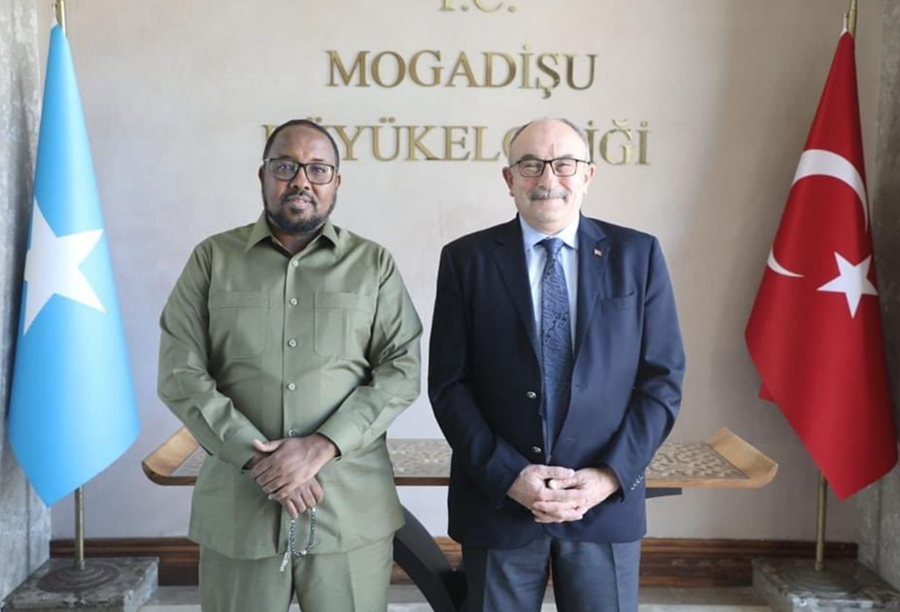

This essay examines Türkiye’s two-stage intervention in Somalia since 2012. First came humanitarian involvement during the Somali famine in the early 2010s. Once the immediate crisis waned, Turkish economic and strategic interests came to dominate its relationship with Somalia. It is as if Islamic humanitarianism was the trojan horse for Türkiye’s long-term interests in and exploitation of Somalia.
Many African Muslims think colonialism and imperialism were and are only a European project, but that was/is not the case. For instance, non-European Japan imposed one of the cruelest colonial regimes on East Asia. The Rape of Nanking (China) and the Korean comfort women marked the epitome of Japanese colonialism[1]. In addition, other forms of conquest existed in the world before capitalist Europe raped the rest of the world. Among these was the Ottoman Empire. Superficially, the Ottoman Empire was shrouded in an Islamic sheen, but its essence was a pre-capitalist subjugation project camouflaged in the name of Islam. Even more recently, the cruel treatment of the Kurdish people in “republican” Turkey underscores other forms of suppression and erasure under the guise of sectarian nationalism.
It appears that Türkiye’s current march on Africa,[2] and particularly in Somalia, reflects a post-colonial world where pure military occupation is, in most cases, no longer tenable or necessary to exploit the vulnerable. In this instance, Turkey has used humanitarianism and Islam[3] as a cover to conceal its economic exploitation and military penetration in Somalia by taking advantage of the latter’s most tragic livelihood crisis and political/economic vulnerabilities. This essay briefly maps the two stages of Turkish intervention in Somalia since 2012, the humanitarian phase and subsequent economic penetration, and the political implications of its evolving role for the country’s future.
The Humanitarian Phase
Somalia has been in one form of a disaster or another for nearly four decades. It all started in the late 1980s when the military regime embarked on massive violent operations against its political opponent and without sparing the civilian population.[4] That conflict ultimately led to the collapse of the government in 1991 and the disintegration of the country into warlords and tribal fiefdoms. Since then, Somalis have limbed along without a cohesive national political scaffolding. The 1990s and 2000s were among the most cruel periods in Somali history. Millions of people perished or were displaced. The second most cruel period was in 2011 and 2012 when many parts of Southern Somalia were afflicted by man-made famine.[5] Nearly a quarter of a million people perished while the world watched.
Then Prime Minister Erdogan, his wife, and a team of Turkish humanitarians came to Mogadishu. He was moved by the catastrophe he witnessed and called on the Muslim world to help. Immediately thereafter, teams of Turkish humanitarians came and supported the survivors of the famine. Turkish agencies rebuilt a major hospital, resurfaced some roads in the capital, and continued to sustain famine victims in rehabilitated camps, etc. Somalis across the spectrum were grateful for the Turkish assistance, and several praise songs were created in Erdogan’s honor.
Beyond the famine relief program, the government of Turkey and associated humanitarian agencies provided educational opportunities for some young Somalis in Türkiye. Despite the evolving one-sided relationship between the two countries, some Somali businesspeople partially shifted their commercial links and operations away from the United Arab Emirates to Türkiye. Meanwhile, many Somali politicians, government officials, and businesspeople bought properties in Istanbul and Ankara.[6]
From Empathy to Exploitation
Many Somalis assume that the fundamental difference between Western and Turkish approaches to Somalia is due to the latter’s Islamic faith and the deep humanitarian empathy it engenders. However, they appear not to understand Ankara’s shrewd political, economic, and strategic calculations. For Ankara, Islam was/is an excellent hegemonic cover. Consequently, Turkish commercial and defense interests sail through this trojan horse. Currently, there are at least six major Turkish projects that operate across Somalia’s economic and military spectrum. These are: a) Mogadishu airport rehabilitation and management; (b) Mogadishu seaport management; (c) the defense establishment, i.e. the missile and satellite base near Adale and the military base located just outside Mogadishu; (d) the Petroleum exploration and drilling project; (e) Soma-Turki fish company; and (f) Ziraat Bank. A brief description of each follows.
Mogadishu Airport: Once Somalia’s government collapsed, the airport fell into disrepair under the control of a warlord. It was not operational until 2006 when the Union of Islamic Courts liberated Mogadishu. Although the landing area and approaches were in decent condition, the airport building was dilapidated while most of the former management and trained staff were gone. The Turkish Government saw this as a business opportunity, speedily erected a new airport building adjacent to the old one, and secured the perimeter of the airport. Subsequently, a Turkish firm, Favori Airport Company, has been managing the airport ever since. Once the refurbishing was completed, Turkish Airlines became the first international carrier to land in Mogadishu in 2012 and has had daily flights ever since. It is reported that the Istanbul-Mogadishu route is one of the airlines’ most profitable. Thirteen years later, Favori and the Turkish government are not in hurry to train Somalis to take over, while the Somali government is complicit in this charade.
Mogadishu Seaport: The seaport was padlocked for almost 15 years. Somali professional and skilled staff who used to operate the port, before the state collapsed, disappeared. Much like the airport, the harbor was handed over to a Turkish company, Albayrak, after Mr. Erdogan’s visit. But unlike the airport, marginal investments were made in the harbor to upgrade the facility. I recently visited the port and noticed that the Turkish managers are the final authority, rather than the Somali director general, a political appointee, of the port operations. More than a decade after the seaport was handed over to the company, there are no signs that Somalis will take over the port’s operations any time soon. Similar Turkish-operated ports in Africa have been reported.[7] The airport and the seaport are the most vital economic organs in the capital region.
The defense Establishment: The original rationale for building Turkey’s largest military base outside its homeland[8] was ‘meant’ to recreate the Somali Defense forces when other countries were unwilling to make such a contribution. The base was built on the southern shore of Mogadishu. Turkish forces have been training and partially equipping the Somali troops for over a decade.
Once this base was operational, another related defense project was underway. The missile and satellite base north of Mogadishu is designed to advance Turkish military and space agenda. Somalia’s parliament and people have yet to see the details of the project ‘agreement.’
Currently, Somalia is in a political transition and turmoil as the parliament’s and the president’s four-year terms ended in May 2026. Contrary to this constitutional limit, the president has decided to extend his term, and used the Turkish-trained and equipped troops to violently bully the opposition who are determined to hold him accountable. The Government in Ankara has not only failed to block the illegal political use of the troops and more particularly the weapons it provided, but publicly sided with the regime when the diplomatic community in Mogadishu recently tried to mediate the conflict.
Turkish Petroleum Corporation: One of the major developments in the recent Somalia-Turkish relations was the announcement that the latter has been awarded an exclusive license to explore and drill Somalia’s territorial waters. The details of the agreement and who negotiated on behalf of the Somali people have yet to be made public. More critically, the Somali parliament has not seen the contract, as the former speaker of the lower house ‘convinced’ members (through bribes) to vote on the agreement without seeing the document. As a senator, I witnessed this sham firsthand. The Turks happily went along and accepted the ‘agreement’ knowing full well that it was a farce. It was recently reported[9] that a Turkish minister publicly declared that his country was befitting a great deal from its relations with Somalia. He cited oil exploration as case in point.
Soma-Turki Fish Company: The name suggests that this is a jointly owned state company, but contrary to the label, confidential sources in the Somali government told me the Soma tag is symbolic. Somalia’s parliament has yet to see the details of the agreement although Ankara declared that it has exclusive right to fish in Somali waters. Such development underscores the prevalence of corruption in the management of the country’s resources, but also Turkey’s willingness to use its clout to exploit Somali vulnerabilities under the cover of Islamic brotherhood.
Several areas of the Somali coast are rich in fisheries. In fact, Somalia possesses the third richest fishing coast in Africa, the other two are in the northwest and the southwest coasts of the continent. Resource pirates[10] from many countries in Asia, Europe, and Africa have been illegally exploiting Somali fisheries since the collapse of the government in 1991. Now, Turkey has become the latest addition to the list of pirates ravaging these resources.
The Ziraat Katilim Bank: One of few sectors Somalis have had tremendous success in creating since the collapse of the state are in finance and telecommunications. A novel and exceptionally efficient and reliable money transfer system, called Xawala,[11] was established, followed by locally owned banks. The Xawala enabled Somalis from all over the world to efficiently and effectively remit money to their home country. As a result of this experience, Somali Xawala entrepreneurs created local banks and telecommunications companies. Despite their efficient operations, these banks lacked other countries’ recognition, and particularly the American SWIFT system. Thus, they have been unable to interact with foreign banks.
A Turkish bank saw the weakness of the Somali banks, seized the opportunity, and established a branch in Mogadishu. Some Somalis involved in imports of Turkish commodities have established accounts with Ziraat, instead of using Somali money transfer channels. Further, Somali traders engaged in import trade with China and elsewhere have begun to use this bank instead of Somali channels.[12] Once again, a Turkish enterprise took advantage of Somalia’s economic vulnerability.
Finally, and alarmingly, the Somali president in cahoots with Türkiye has orchestrated a scheme to ‘elect’ a new speaker for the lower house of the Somali parliament. The candidate, a former member of the Al-Shabaab who was later trained in Turkey, has been a close ally of Ankra, and was the minister of Ports and Marine Transport in the current government. The election was held on August 10, 2026. MPs present barely constituted the required quorum. At the end the candidate was declared the winner. Ankra has succeeded in putting its man at the helm of parliament and can vigorously pursue its neo-colonial agenda at the forefront of policy making in Somalia. This change should alarm all concerned.
The Islamic Cover
Over 99 percent of Somalis are Muslims and have become more religious than spiritual since the outbreak of the civil war. The combination of their devotion to the faith, their deep and enduring misery, and the absence of civic minded and politically experienced leadership have made them exceptionally susceptible to the manipulative use of Islam. The Turkish regime has milked this vulnerability to its advantage as described in the above vignettes. As a senator in the Somali parliament, I can confirm that none of the agreements signed by the Somali president which have enabled Türkiye and its firms to operate in the country have been subjected to rigorous and transparent parliamentary process. Concealing the agreements from public scrutiny is the clearest evidence that the Somali president is least concerned about protecting the interest of the Somali people. For the Turkish government, the Somali famine was an ideal opportunity to use humanitarianism and Islam as a cover to gain access to Somalia’s resources and strategic location. Islamic Africa in particular and the rest of Africa must beware of the abuse of faith as a political ploy!
Abdi Ismail Samatar is professor of geography at the University of Minnesota, an extraordinary professor at the University of Pretoria Department of political science, and a member of the Pan African Parliament.
Endnotes
[1]Chang, Iris. The rape of Nanking: The forgotten holocaust of World War II. Hachette UK, 2014. Min, Pyong Gap. "Korean “Comfort Women” the intersection of colonial power, gender, and class." Gender & Society 17, no. 6 (2003): 938-957.
[2] Bembir, Peter. “Turkey’s New Turn in Africa: Alternative trade relations, a search for relevance and African resources?” Pambazuka News. 8 August 2025. https://www.pambazuka.org/Turkey-in-Africa
[3]Other colonial and post-colonial states used faith as one of the instruments to conceal their exploitative agenda, as was best discussed by Abernethy for European empires. Abernethy, David B. The dynamics of global dominance: European overseas empires, 1415-1980. New Haven: Yale University Press, 2000.
[4] Africa Watch. Somalia: A Government at War with its People. New York, 1990.
[6] Several Members of Parliament, provincial governors, and businesspeople have told me that they have bought properties in the two cities.
[7] Similar cases have been reported in East, West and Central Africa, such as Gambia, Guinea, Equatorial Guinea. In Banjul, Gambia, the same type of port exploitation has been reported. Interview, Gambian Member of Parliament, Pretoria, July 2026.
[8]Turkey’s second military base in Africa is located in troubled Libya.
[9] Here is the translation of the minister’s statement, “Reporter: In some political circles, people ask why Turkey is in Somalia. What do you want to tell them? Alparslan Bayraktar: They were previously asking why Turkey is in the Mediterranean. I am not surprised that they are now asking the same question for Somalia. Our objective is to explore everything in Turkey’s waters and on its land. We will integrate whatever we discover into our economy. But we may not have the 2 million barrels of oil and natural gas that Turkey needs within our own waters and on our own land. We might not have this resource underground. Therefore, we are doing what many other countries like France and Italy have already been doing. France and Italy do not produce any oil or gas in their own countries, but French and Italian companies are within the top ten companies [of oil and gas production]. Therefore, we say we can explore for the resources that Turkey does not have in other places like in Somalia. Tomorrow, we can do it in Libya, in Iraq, in the Caspian Sea, in Kazakhstan and Turkmenistan. Through establishing partnerships in these places, we can integrate these resources into our economy.”
[10]Samatar, Abdi Ismail, Mark Lindberg, and Basil Mahayni. "The Dialectics of Piracy in Somalia: the rich versus the poor." Third World Quarterly 31, no. 8 (2010): 1377-1394.
[11] Khalid Mustafa Medani, Black Markets and Militants: Informal Networks in the Middle East and Africa. Cambridge: Cambridge University Press, 2021.
[12]Samatar, Abdi. Interview with seven Somali businessmen /women. June 2026.