


Reflections on Rwandan Plunder in the Congo: The Global Pan African Movement (GPAM’s) Internal Education Meeting on Rwanda and the Democratic Republic of the Congo
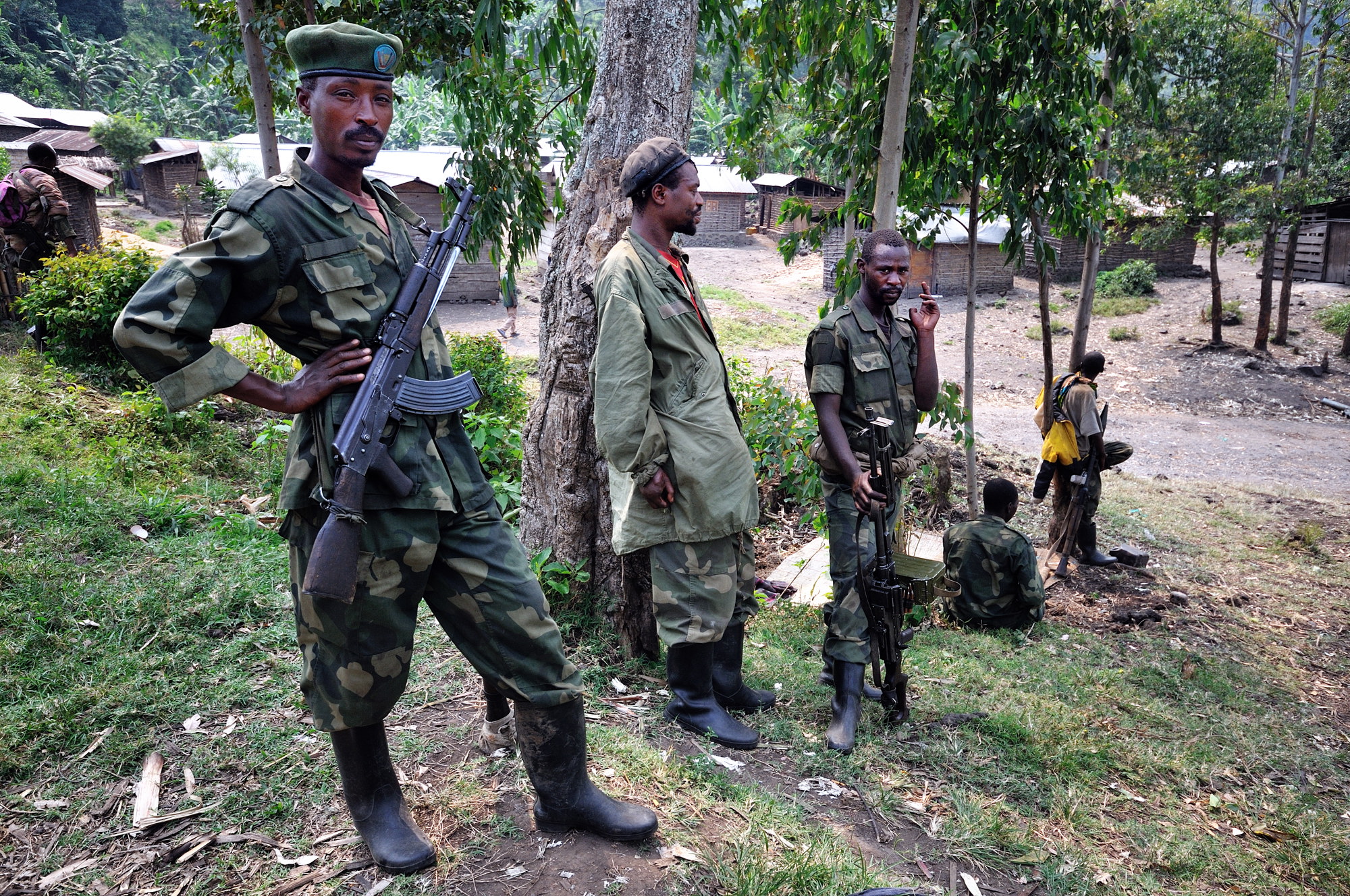
The Global Pan-African Movement held an internal education on Rwanda’s role in the imperialist destabilization in the Democratic Republic of Congo.
The GPAM Internal Education Meeting on the 26th of March 2025, was centered on the current military escalation in Rwanda and the Democratic Republic of the Congo (DRC). This internal discussion was led by Dr. Theogene Rudasingwa with Professor Georges Nzongola as a discussant. This discussion was aimed at clarifying the current war and military takeovers of M23 in the DRC. It briefly explored the history of militarism and plunder between the two countries and deviated from mainstream analysis by media sources and international governing bodies to place responsibility for the conflict between the two countries on President Paul Kagame. The rich discussion contextualized the struggle for self-determination that is currently taking place in the Congo and the intense efforts since independence in 1960 to destabilize the country, the most well-known of which is the assassination of Patrice Lumumba and the western support for Mobuto Sese Seko in his place.
From this discussion, two drivers of this war situation were identified. The first being the notion that the Kivu region used to be part of Rwanda and the claims/interests in the region are therefore well founded and the second being the lucrative nature of Kagame's involvement in the Congo. Both Dr. Rudasingwa and Professor Nzongola denounced the former claim on the basis that there is no evidence to support the claim. The second claim, which deals with the systematic extraction of natural resources from the Congo by President Kagame and his military, helps us to understand the true nature of Kagame’s interest in the Congo and the source of his influence. In considering the current conflict, both Rudasingwa and Nzongola utilized historical context based on the idea that the DRC has never been the aggressor and attacked Rwanda.
It is under this premise that the question was asked - why has Rwanda been in the Congo for so long? Both speakers linked Kagame and Rwanda's presence in the Congo to Kagame's larger bids for power which include its relationship with the European Union[i], “...focusing on promoting global governance and cooperation in international institutions, promoting sustainable and inclusive development of Rwanda, as well as increasing trade and investment between the parties”. It is these sorts of relationships, which are based on the selling of minerals extracted as part of this conflict that highlight the predatory, lucrative, and illegal nature of Kagame and Rwandas involvement in the Congo. Rudasingwa goes on to describe Rwanda as “the principal protector of economic interests of France in Mozambique” (by way of providing peacekeeping forces) and relates it to the broader idea of African countries as conduits for the development of the industrial centers of the world. In considering these two relationships, that of Rwanda with the European Union and with France, we see Rwanda taking its place as a tool for the continuation of extraction and conflict in Africa for the benefit of Western nations. Walter Rodney's text How Europe Underdeveloped Africa offers a useful framework for further understanding the continuation of imperialism in Africa.
In discussing M23, Professor Nzongla was clear to highlight the duplicitous role that Uganda plays in addition to Rwanda in backing the armed group which has carried out rapes, forced recruitment of children, and violence in the Congo. The backing of M23, as explained in the discussion, has deep ties to questions of ethnicity that were exacerbated by the colonial system and continues to be utilized by Kagame. Although this brief will not attempt to unpack the implications and history of the manipulation of ethnicity as it pertains to Rwanda and the DRC, it is important to highlight the connection that Rwanda is drawing from in its support of M23. The discussion described Kagame's promotion of himself as “the hero of the 1994 RPF revolution and the savior of the Tutsi” and his military backing of M23 are indicative of the despotic state that Kagame has created. A state in which, according to Rudasingwa, “there is no openness”.
The discussion also touched on the failures of the Southern African Development Cooperation (SADC) and the East African Community to recognize Rwanda as the aggressor in this current situation. Similar disappointment was expressed in regard to the Organization of African Unity (OAU) before and the African Union (AU) now. The impunity as shown by other African nations highlights the corruption that Kagame has fostered on the continent. The power of his armies, backed by funds received from the extraction of resources from the Congo, has created an obstruction to peace and progress. Conversations around a ceasefire when the East African Community and SADAC have the military, political, and diplomatic resources to support the Congo and its pursuit of self-determination is disappointing.
One of the most critical points raised in the meeting was Rudasignwa’s denouncement of Kagame as a Pan-Africanist:;
“In the period since the Congo War, Congo 2 up to now. Kagame's army has fought Congolese people. Has lynched and killed Rwandans, has fought Zimbabwe, has fought Angola, has fought Namibia, has fought Burundi, has fought Ugandan troops, although for different reasons, has fought Tanzanian troops, has fought South Africa, ... How can anybody claim Kagame to be a Pan Africanist?”.
Rudasingwa offered additional support for this statement by noting Kagame's editorial[ii] - written by Tony Blaire but signed by Kagame - on why President Qaddafi must be removed from power. It is this statement that allows for the demystification of Pan Africanism within the context of African leaders. It is from this statement that GPAM has distinguished itself from the Pan Africanism of Uganda and Rwanda which have delegitimized Pan Africanism through their support of M23 and complicity in the plunder of the Congo - the heart of Africa.
Kailey Smith is a member of the Global Pan African Movement and co-editor of Pambazuka News.
Readers can follow up on this statement via the following sources which accuse President William Ruto of exploiting the terror in the Congo for personal gain.
https://www.youtube.com/watch?v=DbqsFqSPh8g
https://www.tiktok.com/@lightcasttvkenya/video/7490625218151484677
https://www.theafricareport.com/381267/kenya-ex-allies-lambast-ruto-accuse-him-of-war-profiteering/
ENDNOTES