


Tribute: Okello Oculi (1942-2025), Scholar, and Pan Africanist Activist Bows Out
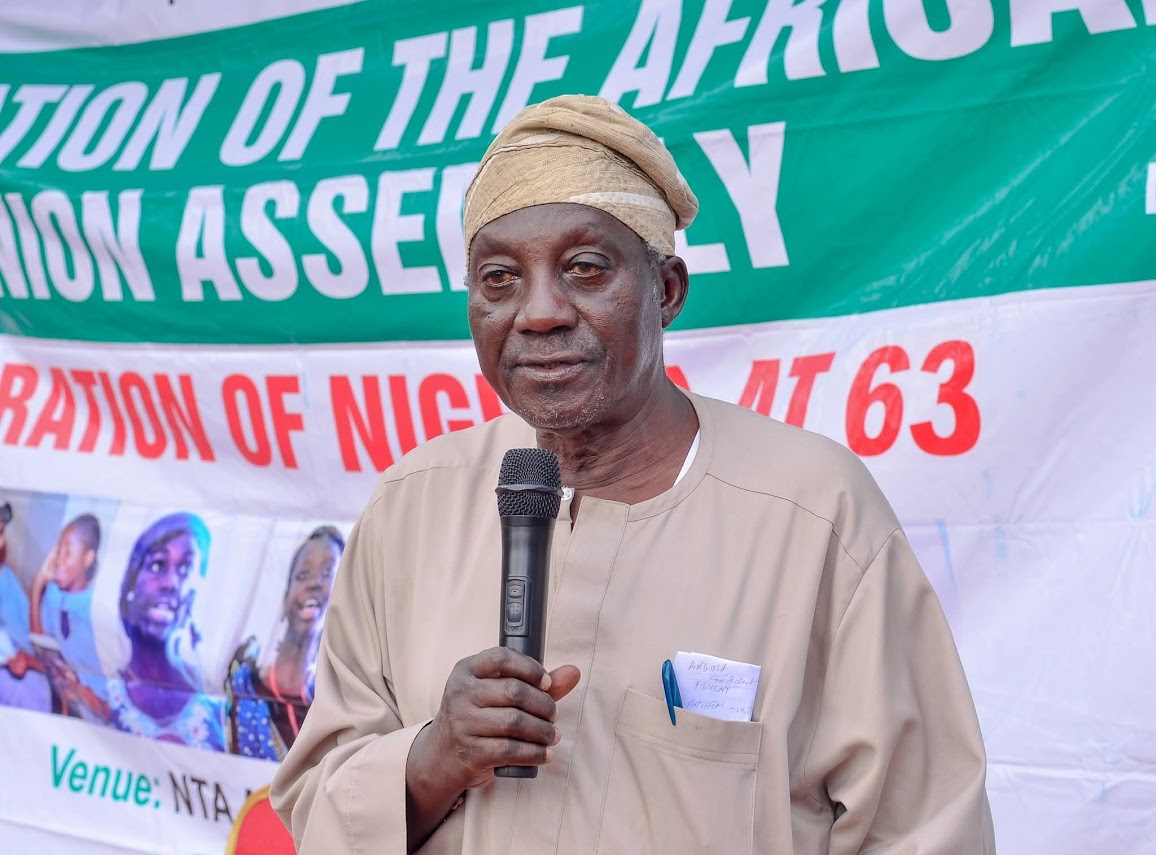
Ozoemena draws from his over two decades acquaintance with and pays tribute to the late Professor Okello Oculi, who passed on July 26, 2025, in Abuja, Nigeria.
In this tribute in honour of the acclaimed scholar, poet and Pan Africanist, the late Professor Okello Oculi, who passed on July 26, 2025, in Abuja, Nigeria. Emman Ozoemena, a policy consultant who knew Oculi for more than two decades, highlights the significant contribution of Oculi who bestrode the African educational landscape through his impactful intellectual harvest, leaving behind a huge landmark and memory on millions of his colleagues, students and policy makers and ordinary people. Oculi, who was originally from Uganda, spent over decades in Nigeria where he was a well-respected public intellectual and patriot. He was a contributor to Pambazuka where he was a valuable member and author with a litany of works on various thematic issues, politics, policy, art, and religion, among others.
The passing of Prof. Okello Oculi, a distinguished scholar, poet, Pan-Africanist, and activist on July 26, 2025, at the age of 83, undeniably deprived Africa, the global academic community, and all people of goodwill of the invaluable contributions of this dedicated patriot.
He was a prodigious intellectual, philosopher, teacher, researcher, mentor, and humanist; his passing has diminished Africa’s reservoir of knowledge. As the old saying goes, “the passing of the village elder is like burning down the village library.”
Prof. Oculi was more than a repository of Africa’s history, autonomous philosophy, and ancient wisdom intertwined with contemporary Western thought. He embodied institutional memory and served as the curator of African historiography, political theory, and practice.
With an infectious sense of humour, a distinctive storytelling style, and a clear way of presenting complex subjects in an easily understandable manner, free from the obfuscation often associated with scholars, which I honestly believe he imbued this trait, while studying under Africa’s eminent scholars at Makerere University, Kampala, Uganda, a centre of emerging scholarship and a training ground for scholars of his generation.
Oculi admired Professor Ali Mazuri, Kenyan-born political thinker, his teacher, and mentor at Makerere University in 1960s, then briefly at the University of Jos, Nigeria in 1980s, with concurrent academic positions in the United States. Mazuri shaped generations of African scholars, including Oculi. Their bond, forged at Makerere and beyond, was built on deep respect, mentorship, and friendship.
Prof. Oculi earned a Ph.D. from the University of Wisconsin, USA, in 1972, and a master’s degree from the University of Essex, UK, in 1968. He graduated with a bachelor’s degree in political science from Makerere University in 1967, during which he spent a year as an exchange student at Stanford University in California, USA. For his secondary education, he attended Soroti College and St. Peter's College Tororo, and completed his A-Level education at St. Mary's College Kisubi, all in Eastern Uganda
As a frequent traveller and skilled collector of authentic African wisdom, he journeyed across the continent’s North, East, West, and South, gaining firsthand insight into the unique customs, nuances, and ideologies of diverse African traditions and beyond. An expert in anthropology, cosmology, religion, and politics, he knew Africa inside out, drawing sharp insights from its many traditions, faiths, landscapes, and peoples.
Over two decades as a mentee and friend, I found Oculi down-to-earth, deeply committed to family and friends, and driven by a vision of a better Africa that honours past generations’ legacies of truth, justice, and equity.
A teacher by birth, public intellectual by passion, activist by cause, and humanist by nature, he spent his career at the Ahmadu Bello University, Zaria, Nigeria shaping future Nigerian and African leaders now serving humanity in key roles, guided by values instilled under his mentorship.
Oculi saw his debt to future generations as a duty to champion good governance, accountable leadership, and inclusive, citizen-focused policies that protect the poor and vulnerable. As a thought leader and public intellectual, he actively engaged with diverse stakeholders, encouraging them to bring out Africa’s best and uplift the interests of the continent and its people.
Among his published works that continue to inspire generations of students, leaders, and citizens globally, guiding them to embrace virtue, knowledge, and wisdom in service of humanity are:, Discourses on African affairs: directions and destinies for the 21st century (2000); Song for the Sun in Us (2000); Political Economy of Malnutrition (1987); Kookolem (1976); Malak: An African Political Poem (1976); Imperialism, Settlers and Capitalism in Kenya, (1975); Kanta Riti (1972); Orphan, (1968) (dramatized poetry); and Prostitute (1968)
Our paths first crossed more than twenty years ago during my time as a journalist at a workshop in Abuja, Nigeria, where he presented a paper. I clearly remember approaching him during the tea break, and we discussed his presentation. After that, we exchanged contact information and have stayed in touch ever since.
Anyone familiar with Prof knows he possessed a remarkable intellect and an outstanding memory. Because of this, I made a point to mentally note the theme of every conversation I had with him, relying on the principle of 'Associationism' from psychology to help me recall the details.
About a year ago, in July 2024, I ran into Prof Oculi at the General Post Office, Area 10, Garki, Abuja Nigeria, where I had gone to keep a business appointment. On my way out I saw him from afar talking to the mail clerk at the Express Mail Section (EMS) section. I later learnt from him that he came to mail advance copies of an upcoming book he had finished working on. I waited patiently for him to finish the transaction with the postal office staff.
Immediately, I knew that I would have to reorder my schedules for the day as the manner had been since I knew him. After about 2 minutes, he asked me to come close, so we could talk, while the NIPOST staff processed the parcels, and prepared the receipts.
We exchanged pleasantries, in our jocular manner. I began by saying, ‘Good afternoon, Prof.’ He responded, ‘Jambo Comrade Ozoemena.’ I replied thus: ‘Professor and Comrade.’ He told me that he was engaged with a book project aimed at promoting scholarship among Africans.
We also discussed about the African Union Assembly of Head of States Simulation Session, the non-governmental organization, he founded, Africa Vision 525 organised for secondary school students in Abuja, Nigeria to inculcate grand vision of founding fathers of the continental body as well as expose the young people to procedures for high-level meetings and engagement.
I apologized that I received the invitation to the AU Simulation session for 2024, some months before our meeting, but I was unable to attend. He smiled and responded that there would be other events in the future. I thanked him for his understanding.
Our conversation shifted to political trends in Africa and Nigeria, and the need for an impactful change that would significantly improve the lives of ordinary people across villages and communities in Africa, especially the poor and excluded, who are striving to eke out a living.
When the NIPOST staff finished and handed him the delivery receipts, he stocked them in his breast pocket. He told me, “Comrade, let us go.” He asked if I had some time to spare, as he wanted me to accompany him to the pharmacy to pick up some medicine. I gladly agreed without hesitation.
We headed to a shopping complex located at Gimbaya Street Area 11, Garki, Abuja, where he purchased the medicine. When we stepped out, he turned to me and said, let us go upstairs and check for books, as the Roving Height Bookstore is located in the same complex.
We spent time going through book shelves, neatly arranged by themes, politics, economics, autobiography, sciences, engineering, fiction, children’s novels, among others. We were in the bookstore for about 45 minutes, until he was able to identify two books which he bought and told the storekeeper that he would return some other day to check for new arrivals.
As we parted that day, I had the feeling that my day was well spent. I recalled telling Prof. Oculi about a discussion we had sometime in 2000 on why African leaders need to be well prepared ahead of international engagements with data, facts, and logic to get a good bargain for their people. He asserted that Africa has immense potential for greatness, but what is needed to reverse negative narratives on Africa's development trajectory is intentional leadership and commitment to change.
When I left that day, I was sure that we would meet up soon to catch up on some discussions we were unable to finish. We shook hands and his parting words were, ‘Comrade Ozoemena, see you soon.” Thank you for your time’ I responded, saying, “Prof, thank you for sharing the wisdom of the elders with me today. I will live with the nuggets you shared today forever. He responded with a broad smile. I could recall the last encounter with Prof with nostalgia, one year after, as if it were just yesterday.
I recall a conversation we had some years ago, when we said that instead of crying wolf about brain drain, Africa should change the narrative, turning it into brain gain. He went to reference the thesis of a publication on brain drain published by Ahmadu Bello University Press Zaria, which he co-edited with other scholars. In January 2025, while researching for a paper on the theme of ‘JAPA’ syndrome, Prof Oculi’s arguments on ‘brain gain’, provided key insights for advancing a case for the ‘brain gain’ instead of the traditional lamentation of the ‘brain drain’.
Earlier July, I wanted to call him to enquire how I could get a copy of the book on Brain Drain and Brain Gain, which he co-edited. Unfortunately, I was distracted by some other commitments, and I was unable to make the call. In hindsight, perhaps that may have been my last conversation with Prof. Okello Oculi, a great son of Africa, who believed that anywhere in Africa is home to any African. He lived and died, a staunch Africanist, though originally from Uganda, he found a home in Nigeria from where he served Motherland Africa. He had a metropolitan worldview like Stoic philosophers; he dedicated his prodigious talents and intellectual resources to actualizing the vision of a united Africa.
Good night, Prof. Okello Oculi. May our ancestors who went before you welcome you with the sound of the drum and flute, for you made the Motherland Africa proud!
May his memory be for a blessing. My condolences to his family, friends, and associates. He will be sorely missed.
Emman Ozoemena is a policy consultant. He lives in Abuja, Nigeria. With over two decades experience working across multiple sectors including media, international development, and policy consulting. He can be reached at [email protected]