


Report from the Second National Black Radical Organizing Conference, 30 May-1 June 2025, Indianapolis, Indiana
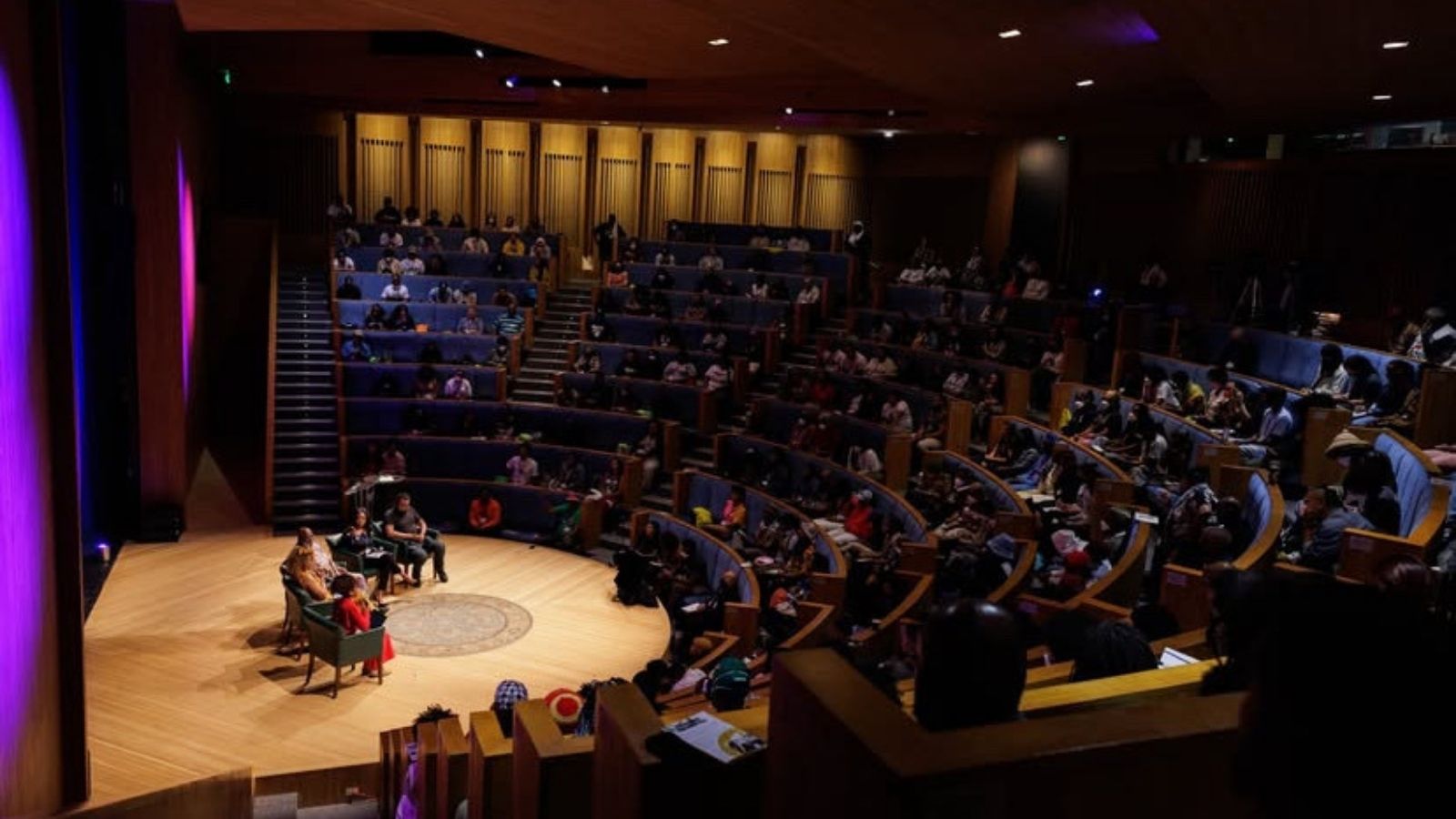
Sanaa Young summarises the workshop discussions on the current state of organizing and how to build movements for Black/Pan-Afrikan liberation.
On the weekend of 30 May 2025, 500 people from all over the U.S. convened in Indianapolis, Indiana, for the second National Black Radical Organizing Conference (NBROC). The conference was organized by Community Movement Builders, Black Alliance for Peace, Cooperation Jackson, Malcolm X Grassroots Movement, National Black Liberation Movement, and Black Men Build. Attendees gathered at Butler University for three days of plenaries and workshops to develop the knowledge, skills, and relationships necessary for Black/New Afrikan liberation. The convening of the conference came 53 years after the first ever National Black Political Convention held in Gary, Indiana.
The second NBROC was an attempt to cultivate a space for organizers and organizations to assess the current state of organizing efforts for Black/New Afrikan liberation and discuss a collective way forward to achieve liberation. Workshops were offered to teach attendees skill-building and organizing theories. Campaign breakout sessions afforded attendees the opportunity to learn about some of the work that sponsoring organizations are involved in, along with avenues to support the organizational work.
The conference opened with a timely plenary, “What time is it?”, which addressed the current conditions facing Black/New Afrikan people in the U.S. and abroad. Panelists Dr. Charisse Burden Stelly, Malaika Jabali, Derecka Purnell, and Dr. Akinyele Umoja addressed current conditions and how the movement has responded to them. Necessary, indisputable criticisms of the current movement raised by these panelists cannot be overstated. As we consider what appears to be a lack of revolutionary, Black radical perspectives amongst “the people”, we need to recognize that people lack these perspectives because organizations and organizers are not actually with and amongst “the people”.
Panelists addressed the need to be present on the ground and in the lives of people. But that means we cannot be all ideology and dialogue. We need tactics that reflect political clarity about the situation we are living under. What tactics make sense as we experience in real time the expansion of the surveillance state and the deputization of citizens that accompanies it? Would one canvass in a neighborhood door-to-door, ripe with Ring doorbells and their faces uncovered, talking about sensitive issues?
In this current moment, panelists reiterated that we find ourselves extremely disorganized. Who amongst us has been able to stop just a single shipment of weapons to Israel as they continue their aerial genocide of the Gaza Strip? As one panelist asked, how many Black organizations supported labour strikers at Amazon? At this point in time, where the settler colonial state has not slowed down its violent enforcement of imperialism, settler-colonialism and capitalism, self-defense, political exile, and armed struggle must be considered seriously as we seek to organize against and confront the settler colonial state. We can theorize about what is to come for our communities, but how are we addressing what is happening to our communities right now? A direct assessment of our current moment tells us we need new tactics, we need unity and a collectivization of our efforts, and we need to be with the people to effectively organize.
The plenary that followed, entitled “What is to be done?”, continued to build on conversations about what organizers and organizations must do to combat the colonial capitalist system we live under. Panelists Ajamu Baraka, Erica Caines, Ashaki Binta, and Ashanti Alston touched on an array of perspectives regarding the role and structure of organizations. Rather than defining ourselves by word choice or latching onto abstract self-descriptors, organizers must be evaluated solely on the material actions they take towards liberation. In other words, what we are calling ourselves does not seem nearly as important when we consider how we are moving. The importance of ideological struggle became apparent during this plenary as panelists presented different attitudes towards organizations and leadership structure. Regardless of our differences, emphasis should be placed on partaking in democratic, ideological struggle to advance liberation efforts by sharpening our analyses. Strikingly, organizers and organizations must propose a superior ethical framework and the future they are offering in opposition to the current colonial capitalist one. As Baraka said, we need a total and fundamental transformation of the reality we presently live under.
The richness and the value of the second NBROC shone through in its multitude of smaller, breakout discussions. Workshops included – Organizing 101: defining our mission, objectives, strategies and tactics (MOST); building Black radical grassroots media; building a solidarity economy: land trust and cooperatives; building Black working class power: in this period under capitalism, imperialism, and fascism; dismantling the settler colonial logics of patriarchy in the New Afrikan liberation struggle; building a people's self defense network: community safety and defense.
The struggle for Black/New Afrikan liberation is a material, cultural, and ideological one. If we understand that the settler colonial state knows no bounds in its tactics of violence and repression, then our skill sets should be expansive beyond what we are comfortable with in order to strengthen our movement. Strategic planning of an organizational campaign is a skill. Creating propaganda and utilizing media channels available to us for dissemination is a skill. One cannot Free The Land with no ownership or knowledge of working and maintaining the land. Dismantling gender and sexual oppression cannot occur without a proper analysis of colonial socialization and understanding the harms of bioessentialism. And perhaps most importantly, to achieve self-determination, all organizers must take seriously the tasks of security and community defense. All aforementioned topics and more were fleshed out in these small group workshops. Sessions enabled attendees to engage with topics through Q&As, robust discussions, and lectures. For attendees who wanted to stay in touch with presenting organizations, some sessions provided contact forms for future resource sharing.
One of the most critical outcomes of the conference was the rally that followed for two political prisoners known as the Pendleton 2. On June 1st, after the closing plenary, dozens of conference attendees travelled an hour north to Anderson, Indiana, in support of John “Balagoon” Cole and Christopher “Naeem” Trotter. In 1985, Cole and Trotter saved a fellow inmate's life at the Pendleton State Correctional Facility, who was almost beaten to death by a group of white supremacist guards in a KKK splinter group known as the “Sons of Light”. Both Cole and Trotter received 84 and 142 years added to their respective sentences for their life saving intervention. They were subject to torture in solitary confinement for their heroism. Trotter’s clemency hearing is scheduled for 10 June 2025. The rally, covered by Truthout, was a means to show the settler colonial state that not only are people following the case of the Pendleton 2 closely, but are also fiercely committed to organizing towards seeing these political prisoners free.
As with any type of convening, the conference comes with limitations and areas for improvement. A gathering of only three days is not sufficient to address every single, unique circumstance facing all organizers and organizations. The time allotted for plenaries, workshops, and campaigns was dictated by logistical and practical constraints. The desire to continue these conversations and skill sharing sessions beyond the allotted time was apparent. For attendees to get the most out of a convening like this, their role is to make connections, follow-up, and stay in touch with the organizers and organizations they desire to build with and learn from. The NBROC was not able to cover every single issue or topic, but it was able to create a space for attendees to seek out and make connections that may benefit their own organizational work. In-person convenings offer benefits that simply cannot be replicated by online meetings or webinars; connecting face to face is imperative.
Congratulations and thank you to the organizers of the second NBROC for providing this space and laying the groundwork for creating connections. For all organizers and organizations, the lessons are clear: we must do more to meet the needs of this moment.
Sanaa Young is a researcher and organizer based in the U.S.