


The Intellectual Giant Uganda Forgot - A Tribute to Okello Oculi
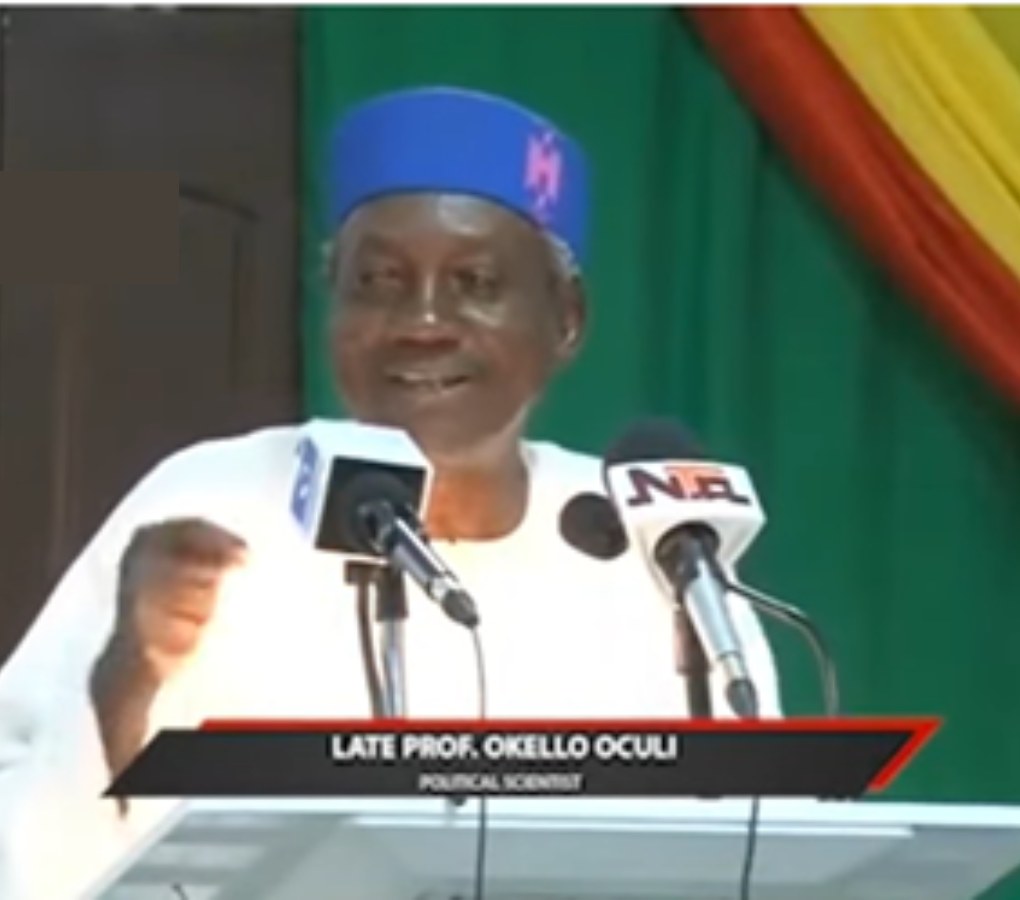
Otim remembers the Nigerian-based, Pan-Africanist, Ugandan novelist, poet, and champion of the rural poor.
If you conduct a search in Google after him, it would return a flood of results, including books, essays, interviews, and academic papers. Yet in Uganda, where he was born and raised, Okello Oculi remains largely unknown. On Sunday, 26 July 2025, the news broke: Okello was gone.
“What? How? When?”
That was the stunned disbelief of those who knew him. Just days earlier, he had been his usual self. Robust, confident, full of drive. Active on social media and present in Abuja’s intellectual circles. How could such a man vanish so suddenly?
In the early hours of a Sunday morning, Okello passed away at his home in Abuja, Nigeria. He had lived there for years and had become a fixture in the city’s public life. A columnist, a commentator, an intellectual. Although he was not a young man his death felt unreal. He leaves behind his wife, Debrah Ogazama, and their son, Usman Sembene Oculi.
Okello had become widely known in Nigeria and much respected in academic circles. Yet in Uganda, his name barely registers. But if you were to list the great African writers of the post-independence era, Okello Oculi would be there. Preceded in East Africa only by Okot p’Bitek, Ngũgĩ wa Thiong’o, and perhaps David Rubadiri.
A Young Man in a Hurry
In 1968, Okello returned to Makerere University from the University of Sussex, where he had earned a master’s degree in political science. He was twenty-five. A year earlier, he had graduated from Makerere with a Second Class Upper. He loved Makerere.
But even as a student, Okello was already making waves. His first published work, Orphan (1967),[1] marked him as a literary voice to watch. He quickly followed it with Prostitute (1968),[2] a novel that cemented his reputation.
Okello was the archetype of the artist as a young man of action. Writing for newspapers, engaging in debates, and giving lectures at top schools like Namagunga and Budo. These young students held him in awe. What he told them, we may never know. But his urgency was unmistakable. It was the post-independence moment. Africa had thrown off colonial rule. For young intellectuals like Okello, the future was wide open.
The Dream Unravels
Then came the coups. Nigeria, Ghana, Uganda. The dream began to unravel.
In 1971, while a teaching assistant at Makerere, Okello narrowly escaped death in Idi Amin’s coup against Milton Obote. He survived only because Ali Mazrui, Dean and head of his department, vigorously intervened for him.
Okello fled Uganda and became a PhD student at the University of Wisconsin. From there, he moved to Nigeria. Each step took him further away from home but deeper into the heart of Africa’s intellectual struggle.
In 1977, he joined Ahmadu Bello University in Zaria, as a lecturer in political science. He loved Zaria. It became his adopted home. There, he thrived. He organized weekly seminars that drew scholars from across disciplines. The event grew so popular they had to move it to a larger venue at the Graduate School Boardroom.
A Bridge to the World
But Okello’s vision extended far beyond the confines of academia. He believed African students deserved to see the world. Not just through textbooks, but through images, stories, and sound.
So, he boarded a bus to Lagos, 915 kilometers away, at his own expense, a whole day’s journey. There, he persuaded the Chinese embassy to lend him a documentary on the building of the Tanzania-Zambia Railway. The film was a revelation. Chinese and African workers toiled side by side, carving a rail line through mountains, valleys, and wilderness. It was a feat many had thought impossible.
When the film was screened on campus, it was more than an event. It was an awakening. Students saw what collaboration could achieve. They saw dignity in labor. They saw Africa not as a continent of problems, but of possibilities.
Okello didn’t stop there. He returned to Lagos and secured a video from the Cuban embassy featuring the National Symphony Orchestra of Cuba. For many students, it was their first encounter with classical music performed by fellow members of the Global South. The elegance, the discipline, the artistry! it shattered stereotypes and expanded horizons.
In a time before YouTube, before smartphones, before global streaming, Okello was a one-man culture ministry. He brought the world to Zaria. He made the abstract tangible. He made excellence visible.
A Life of Ideas
Soon after, he invited his old professor and mentor Ali Mazrui to campus for a lecture series. The Marxist campus prepared for Ali Mazrui. But the event went smoothly. Okello had a gift for bridging divides.
Yet his activism drew resistance. Department leadership began to sideline him. In 1996, Okello left Zaria and joined his wife in the Federal Capital of Abuja. There, he continued to blaze trails. He had pioneered research on food politics and published Food and Revolution in Africa.[3] The Federal Ministry of Agriculture enlisted him as an advisor.
He founded Africa Vision 525, focusing on youth leadership. He became Abuja’s resident intellectual. Much like public intellectuals of New York. If that model takes root in African cities, Okello will have pioneered it.
He was the first in his village to attend college. One of the first to write the African novel with a rural lens. He brought a distinctive flavor to literature.
Remembering the Native Intellectual
Peter Nazareth, novelist and professor at the University of Iowa, once said of him: “Okello Oculi is the Native Intellectual Frantz Fanon was talking about.”
Oculi was not just a writer or a scholar. He was a culture architect. He built bridges between Africa and the world, between past and present, between the village and the university. He taught that Africa’s story was one of vision above all else.
And yet, Uganda forgot him. Today, none of Uganda’s many universities offer courses on Okello Oculi’s vast collection of literary works, despite the fact that he is considered a significant African writer, whose name is frequently mentioned alongside that of Ngugi and Okot p’Bitek. Okello Oculi’s works are not taught in Uganda schools either. Despite the fact that he is considered a leading African social scientist, Okello is nowhere to be found in social science syllabuses in Uganda. How did this paradox come about?
Perhaps forgetting is not final. Perhaps memory is a choice. Perhaps in the wake of his passing, we can choose to remember.
John Otim is a lecturer in Journalism and Mass Communication at All Saints University Lango in Lira, Uganda. Email: [email protected]
Endnotes