


Nasserism Reimagined: The African-Arab Anchor of Global South Liberation
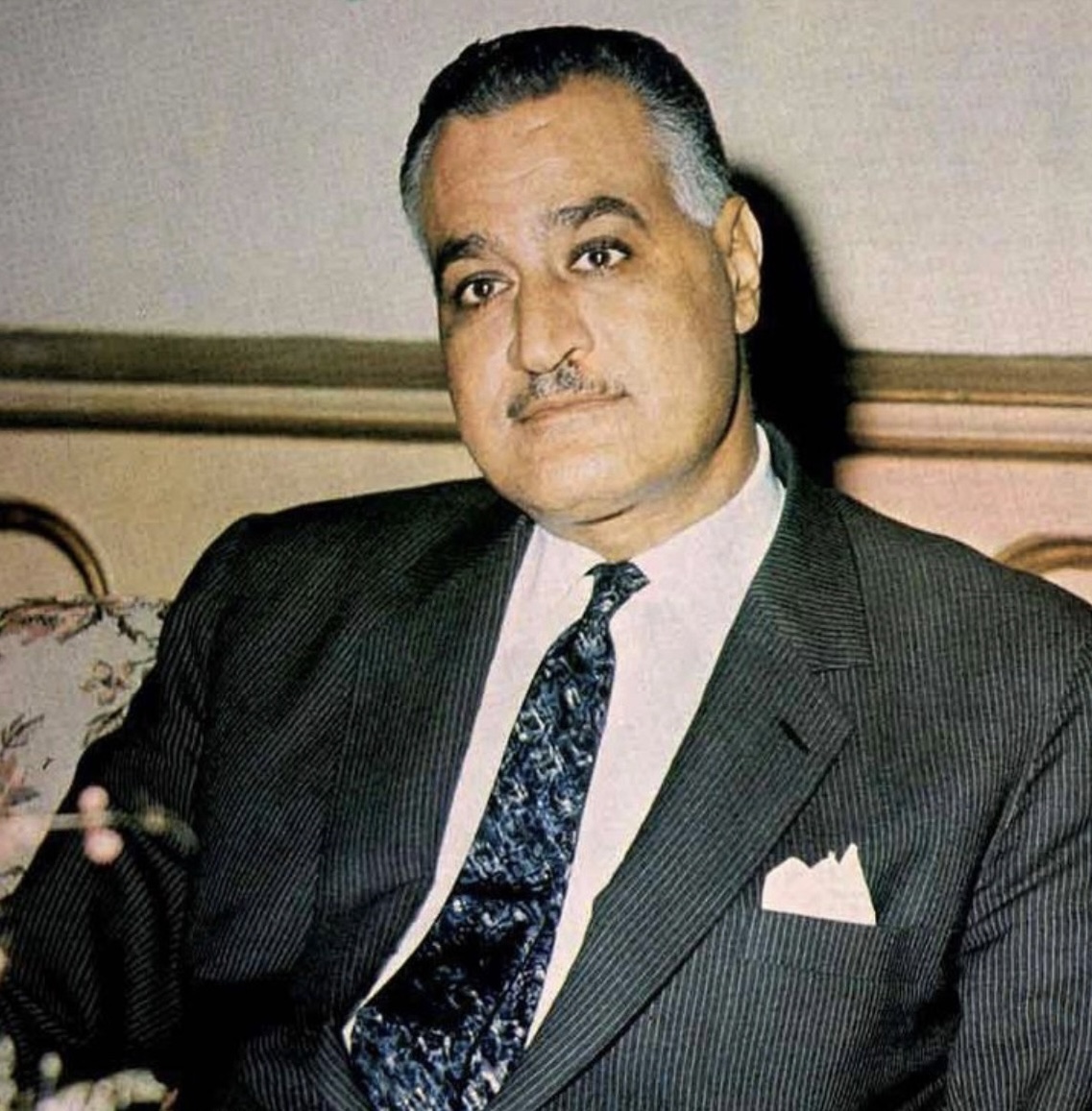

Ibrahim reimagines the ideals of Egypt’s first president, Gamal Nasser for Afro-Arab solidarity and south-south cooperation.
More than half a century after his passing, the voice of Gamal Abdel Nasser still echoes through the battered streets of Gaza, the resistance strongholds of the Sahel, and the university halls of Algiers and Addis Ababa. For some, Nasser is a relic of Cold War dreams. But for those who understand the structure of global domination, Nasserism is not nostalgia, it is a necessity. It remains, perhaps more than ever, the only coherent project of sovereignty and emancipation that fuses the liberation of the Arab nation with that of Africa and the Global South.
Nasserism Was Never a Local Project
To understand the enduring relevance of Nasserism, we must first correct a distortion: Nasser’s project was never merely Egyptian, nor even exclusively Arab. It was a tri-continental vision, a synthesis of Arab nationalism, African liberation, and Global South solidarity. Cairo under Nasser was not just a capital, but a revolutionary node that connected the Maghreb to the Sahel, the Mashreq to Southern Africa, and all of them to Latin America and Asia.
The roots of this were not rhetorical. They were operational, material, and strategic. Egypt supported the Algerian Front de libération nationale (FLN) with arms and training, offered safe haven to African freedom fighters like Amílcar Cabral and Nelson Mandela, and was a co-founder of the Non-Aligned Movement. Nasser viewed Cairo not as the endpoint of liberation, but as the starting line, a revolutionary “base area” that must expand in concentric circles outward: Arab, African, Islamic, and Global Southern.
The African Core of the Nasserist Project
Nasser did not approach Africa as an afterthought to Arabism. His understanding of Africa was grounded in both geography and geopolitics. Egypt was African not just by map, but by historical fate and civilizational debt. The Nile connected Cairo to the heart of the continent, and the colonial chains that fettered African nations were the same that shackled Egypt.
Hence, Nasser’s policies were aggressively Pan-African. He co-founded the Organization of African Unity in 1963 and saw African liberation as an essential front in the anti-imperialist struggle. Egypt provided military training and radio infrastructure to African revolutionaries, facilitated diplomatic campaigns against apartheid and colonialism, and invested in south-south networks of media, education, and agriculture. The Aswan High Dam, a national project par excellence (which was lauded by Malcom X too), was also an African experiment in infrastructural sovereignty, using the Nile’s waters not only for Egypt but for a future African industrial economy.
In doing so, Nasser challenged the Western-backed “Francophone vs. Anglophone” divisions in Africa and proposed a different model: a unified African destiny connected to modern Egypt's Arab roots and Islamic heritage but also open to secular, socialist, and indigenous frameworks.
Arab Unity and African Liberation: Two Fronts of One Battle
Critics who claim Nasserism was too Arab-centric fail to see that for Nasser, Arab unity was never chauvinist, it was strategic. The Arab world, fragmented into artificial borders by Sykes-Picot, could not achieve sovereignty in isolation. Nor could Africa. Their fates were intertwined.
In fact, one of Nasser’s most radical insights was that Arab unity and African liberation were not parallel struggles, but mutually reinforcing ones. The very existence of Israel, a settler-colonial state implanted in the Arab heartland, was understood by Nasser as an imperial outpost designed to prevent both Arab-African integration and the emergence of a coherent southern geopolitical bloc. The same powers that supported Israel’s wars also propped up apartheid in South Africa and military coups in the Congo.
This is why Nasser insisted that anti-Zionism was not an Arab problem alone, but an African and global one. His alliance with Kwame Nkrumah, Sekou Touré, and Patrice Lumumba was not a diplomatic gesture, but a declaration of interdependence: only a united front of oppressed nations could overturn the global architecture of control.
Beyond Socialism: Nasserism as Liberation Strategy
Many commentators, particularly in Western leftist circles, misread Nasserism as merely a brand of Arab socialism. While social justice was central, by that I mean land reform, education, healthcare, and the nationalization of industry, these were not ends in themselves. They were means of building a sovereign society capable of resisting external domination.
Nasser was not a doctrinaire Marxist. He did not view class struggle as an isolated dynamic. Instead, he situated economic justice within a broader matrix: the struggle against imperialism, Zionism, and cultural alienation. In this sense, his socialism was functional, it was the economic arm of national and continental liberation.
Unlike the developmentalist regimes that mimicked socialist rhetoric while serving Western interests, Nasser’s model aimed to restructure dependency. The economy had to serve national dignity, not global capital. The state had to represent the poor and the colonized, not just manage them.
The Global South: Strategic Depth, Not Symbolic Alliance
Nasser's commitment to the Global South went far beyond the Bandung conference and the Non-Aligned Movement. He understood that the battle against hegemony was global because hegemony itself was global.
Nasser’s opposition to Bretton Woods institutions, his rejection of conditional Western aid, and his push for South-South trade, media, and defense alignments were early blueprints of what we now call “multipolarity.” His vision anticipated the logic of BRICS before BRICS existed. Cairo Radio broadcast in Swahili and Hausa, not just Arabic. Egyptian engineers and doctors were sent to Tanzania and Guinea. Liberation for Nasser was logistical, not just ideological.This is the part of Nasserism that African movements today must reclaim, not slogans, but infrastructures of independence.
Nasserism Today: A Project of the Future, Not the Past
The question is not whether Nasserism is still valid, but whether it has ever been more needed. The very conditions that birthed it – imperialist wars, economic dependency, cultural erasure – are still with us. If anything, they have mutated.
Today, Africa faces new forms of resource extraction through digital economies and climate colonialism. The Arab world, from Sudan to Syria, is fractured by war, sanctions, and occupation. The Global South is still bound by the dollar and subject to the International Monetary Fund’s conditionalities.
But the old centers of power are no longer absolute. The West is in decline. The East is rising. China, India, and Brazil offer imperfect but real alternatives to Atlantic dominance. This flux creates opportunities, but only for those who are organized.
Here, Nasserism re-emerges not as memory, but as map. It offers a political grammar that connects sovereignty with justice. It offers a vision of Arab-African unity not as myth, but as a strategic counterweight. It offers a critique of liberal democracy and market fetishism that remains relevant in a world where elections coexist with occupation and inequality.
Toward a Nasserism for the 21st Century
What would a Nasserist project look like today?
First, it must be popular, not elitist. The age of charismatic saviors is over. The new Nasserism must emerge from grassroots networks, unions, youth movements, and local struggles across Cairo, Dakar, Khartoum, and Accra.
Second, it must be Arab-African in scope. No project confined to the Arab world will survive. The future lies in an Afro-Arab identity that reclaims the Nile and the Sahara as bridges, not barriers.
Third, it must be intellectually radical. We need new thinkers, artists, filmmakers, and economists who speak the language of liberation, not just manage crisis. Culture is a battlefield.
Fourth, it must embrace multipolarity without falling into clientelism. We do not replace Washington with Beijing or Moscow. We build sovereign partnerships rooted in common struggle.
Fifth, it must treat Palestine not as an exception, but as the core. Because Palestine is where imperialism, racism, and capitalism converge, and where their defeat begins.
Conclusion: From Memory to Movement
Nasserism is not a chapter in a textbook. It is a compass in a storm. It reminds us that dignity is not granted, but seized. That unity is not a dream, but a strategy. That sovereignty is not charity, but the essence of liberation.
Africa and the Arab world share more than borders. They share trauma, hope, and the unfinished task of decolonization. And in a world cracking under its own contradictions, it is not the models of Paris or Washington that will save us, but the roadmaps drawn in Cairo, Algiers, Accra, and Havana.
The question is no longer: “Was Nasser right?”
The question is: “Are we ready to finish what he started?”
Moussa Ibrahim is the Executive Secretary of the African Legacy Foundation - Johannesburg