


US Denial of Cuban Athletes’ Visas Exposes the Contradictions of “International Sport”, as Well as Potential Sites of Resistance Against It
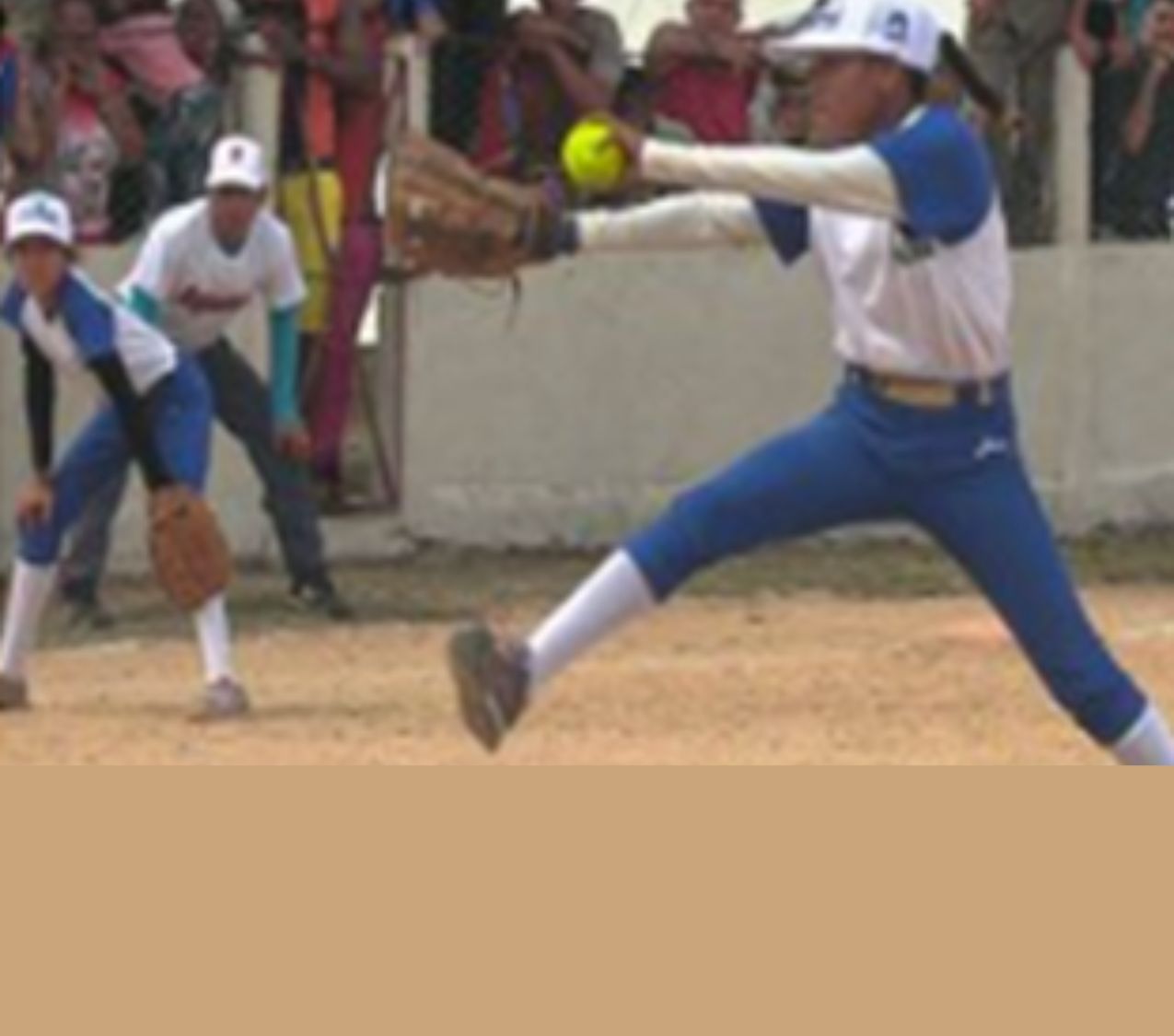
Hernandez highlights the injustices condoned in the refusal of US visas to Cuban athletes who then could not participate in the Little League Softball World Series held in Puerto Rico and outlines a history of US exclusion of Cuban athletes, who continue to triumph in sports.
On July 13th, the Cuban Baseball and Softball Federation announced[1] that seven members of the coaching staff of the Cuban Little League softball team had their visas denied by the United States. This prevented the group of 10 year old girls from La Palma from competing in the Latin American Regional Tournament for the Little League Softball World Series taking place in Puerto Rico.[2]
This marks the third time in the past two months that a Cuban team was prevented from competing in an international tournament due to the US denying their visa. According to the Deputy General Director of the Cuban Ministry of Foreign Affairs,[3] there have been over 80 Cuban athletes and coaches who have had their visas denied since the Trump administration took office in January. Even non-Cuban athletes have faced penalties for simply travelling to the island, such as experienced by the Brazilian Table Tennis World Champion Hugo Calderano who was denied entry into the US for the World Table Tennis Smash Event earlier this month in Las Vegas due to having participated in international competitions held in Cuba in 2023[4].
Contemporary Tightening of US Policy Towards Cuba
The ostracization of Cuban athletics on the part of the US government is just one component of the brutal sanctions and embargo that have been a pillar of US foreign policy over the last 60 years, with brief moments of rapprochement during Obama’s second term and Biden’s presidency serving as short-lived outliers. However, this current administration, headlined by rabidly anti-Cuba Secretary of State Marco Rubio, has been hell-bent on intensifying the economic strangulation and isolation of the island through multiple mediums.
Whether it be sanctioning officials from Caribbean and Central American countries that rely on Cuban medical assistance[5] and pressuring them to end contracts with Cuban doctors[6], re-certifying Cuba as a “not fully cooperating country” with US “counterterrorism efforts”[7], requesting at least 35 million US dollars in increased funding for destabilizing programs targeting Cuba under the guise of “promoting democracy”[8], or bolstering the Cuba Prohibited Accommodations List[9] which prohibits US visitors from staying at state-owned hotels and pushes them towards the growing private sector on the island, there has been an obsessive flurry of decrees and policies by the US State Department that reeks of desperation to take advantage of Cuba’s precarious economic situation. Following the playbook of US imperialist intervention in the region[10] in years past, the current administration seeks to put internal pressure on the Cuban government by exacerbating the social inequalities and degrading material conditions on the island that have sharply intensified over the last 5 years.
The History of Sport in Revolutionary Cuba
In the face of these constant attacks on various Cuban institutions by the US, the denial of Cuban athletes’ visas might seem like just a sad sidenote and petty show of force by the US government. However, a closer examination of the role of sport in Cuban revolutionary history exposes not only the gravity of this assault on Cuban athletics but also how it represents the broader reality of sport and sporting institutions as key pillars of the capitalist world-system, as well as potential sites of resistance against it.
In 1961, two years after the Cuban revolution, the Cuban government banned professional sports and established the Instituto Nacional de Deportes, Educación Física y Recreación (INDER) with the stated goal of “[contributing] to well-being and health, individual and social fulfillment, as well as the healthy use of free time and the formation of values”. As the Third World struggles for liberation ruptured colonial relations around the world in the mid-20th century, states such as Cuba, the People’s Republic of China[11], and Indonesia[12] conceptualized sport and physical education as core components in the formation of a new world order that could challenge the global dominance of Western institutions.
Cuba quickly developed into a Latin American sports powerhouse, particularly in combat sports and baseball, eventually dominating regional and international competitions. To this day, Cuba leads every country in the Americas other than the United States in total gold medals at both the Pan American games and Summer Olympics, an almost unbelievable feat when comparing population size and access to resources. Cuba’s melding of socialist governance, biomedical knowledge production, and an overarching emphasis on “science and innovation”[13] laid the foundation for institutions like INDER dedicated to both developing top-tier athletes to represent the country and utilizing sport/physical education as tools to address community health in vulnerable populations throughout the island.
In many ways, the health of Cuban sport became intricately linked and representative of the health of the Cuban revolutionary project. As Cuba continues to face a variety of internal contradictions due to economic policies[14] the government implemented in order to navigate draconian sanctions and the fall of the Soviet Bloc, the Cuban sports system has also faced significant challenges that have impacted its output. A study[15] done by Cuban researchers at the Universidad de Ciencias de la Cultura Física y el Deporte in Havana highlighted a “lack of cutting-edge tools and technology to ensure sports preparation, its monitoring, and evaluation” as well as “low effectiveness in managing, directing, and utilizing available material, technological, and human resources” as two of the key issues facing Cuban sports today. These issues were reflected in the country’s performance at the 2024 Paris Olympics, where Cuba posted its lowest number of athletes sent (61) and lowest medal count (9) in over 50 years.
Sport and the Capitalist World-System
With this context in mind, one would think that the international sports community and the institutions at its core would be outraged that the United States government (esteemed co-host of the 2026 FIFA World Cup and host of the 2028 Olympics) is attacking and isolating Cuban sports. Sport should be a pillar of “gender equality, non-discrimination and social inclusion” as well as a “fundamental right for all”, at least that’s what the UNESCO International Charter of Physical Education, Physical Activity and Sport claims[16]. The International Olympic Committee authoritatively banned Russia from the last Olympics due to its conflict with Ukraine, so surely the United States’ continued economic strangulation of Cuba which was voted against[17] by every country in the UN other than the US, Israel, and Ukraine merits some form of penalty.
Sadly, not even having Michael Phelps’ superhuman lung capacity[18] would be enough to hold your breath waiting for some sort of punishment to be handed down. The reality is that the international organizations that regulate the most popular sporting events in the world, along with the International Olympic Committee, were formed during and shaped by the tail end of the era of European colonial expansion[19]. This legacy has transformed along with the capitalist world-system, in which international sport has become a key pillar.
The realm of sports contains some of the clearest modern examples of violent processes that are inherent to neoliberal capitalist accumulation, often covered over with a veneer of terms such as “development” and “security”. These examples range from FIFA collaborating with the Brazilian government to bulldoze favelas and displace predominantly Afro-Brazilian communities in order to construct stadiums for the World Cup[20], to the plunder of African and Caribbean talent by top professional sports leagues[21] along with the underdevelopment of sporting infrastructure in those regions, or even the private equity take-over of youth sports in the United States, amplifying the already growing inaccessibility of sport for poor children [22].
One of the most grotesque current contradictions that highlights the alignments of international sport institutions and professional leagues is the fact that Israel has been allowed to participate in all major sport events in the midst of its continued genocide and colonization of the Palestinian people, while fans have been brutalized at games[23] for waving Palestinian flags, and athletes have been blacklisted and suspended for speaking up against the genocide[24].
Cuban Sport Internationalism and South-South Cooperation
Within this backdrop, the US denial of Cuban athlete’s visas is another example of a Western state utilizing its hegemonic position within the sports world to throw its weight around. However, what's crucial to understand is that the Cuban sport system is not just a threat due to its athletic overachievement as an adversary to the United States, but how it represents an alternative paradigm for organizing sport that counters the capitalist extractive mechanisms undergirding international sport.
There’s no better example of this than Cuba’s Escuela Internacional de Educacion Fisica y Deporte (EIEFD), which graduated over more than 2,000 students from 83 different countries[25] during its time as a standalone institution before integrating into the Universidad de Ciencias de la Cultura Física y el Deporte in 2014[26]. The EIEFD followed a similar structure to Cuba’s world-renowned Latin American School of Medicine (ELAM). Students from countries throughout the Global South could go to La Habana to receive training in sport and physical education with the only requirement being returning to their home communities to put what they learned into practice. This was a powerful example of what Robert Huish[27] described as “Cuba’s use of sport for South-South cooperation”, a counter-hegemonic antidote to Western Sport for Development NGOs that populate the Global South and reinforce neoliberal individualistic logics.
One former graduate of the EIEFD from Zambia, In’utu Jacqueline Mubanga, reflected[28] on her experience at the school in an academic volume titled Beyond Sport for Development and Peace, noting that:
“Every aspect of my education in Cuba demanded that I apply what I was learning to my national context so as to improve social issues with the sport education I was receiving… I learned not to aspire for personal gain via my education but to work for the greater good of my community. I was constantly using the knowledge and skills I was acquiring to meet a need and to solve problems I had first-hand experience of.” Mubanga makes the powerful claim she “was pursuing this degree in sport in order to return to contribute positively to the development of both physical education and sport for Zambians…” and that through her time at the EIEFD she “gained a sense of love for Zambia, even more so than when I was in Zambia.”
The EIEFD is just one example of the possibilities that can come with South-South cooperation and engagement through sport. With the ascendance of BRICS and China as potential sources of alternative forms of development[29] for nations throughout the Global South, the opportunity for sport and physical education to play key roles in establishing solidarity and sovereignty, as well as addressing community health, seems as ripe as it has been in decades. Imagining a world in which the infrastructure exists so that the best African, Caribbean, and Latin American athletes can stay, inspire, and develop their home communities may seem far-fetched now, but it could be reality in the future, a prospect which must terrify international sport institutions and their corporate sponsors.
And finally, even under a brutal blockade, shortages of resources, and increased US aggression, it should be noted that the Cuban sports system continues to produce at a high level. In the very same week that the US denied visas to the Cuban Little League Softball team, Cuban weightlifter Marifelix Sarria won two gold medals over her US counterpart and set two records at the Pan American Championships, while the Cuban Men’s Volleyball team defeated Number 1 ranked Poland in the FIVB Men’s Volleyball Nations League. Luckily, these events were held in Colombia and China, respectively, so the US had to actually compete against Cuban athletes, not just deny them entry.
Omar Agustin Hernandez is a PhD Student in the Department of Anthropology at the University of Illinois Urbana-Champaign. He reaches Sport, South-South Development, and Community Health in Cuba. Originally from Berkeley, California, he works with the Education Justice Project in Illinois while completing his Doctoral program.
Endnotes
[2] Puerto Rico is an unincorporated US territory with semi autonomy after the colonial purchase from Spain in the 19th Century and various developments in the early 20th century. A US visa is required for entry into the territory.
[10] Connell‐Smith, Gordon. “The Grenada Invasion in Historical Perspective: From Monroe to Reagan.” Third World Quarterly 6, no. 2 (April 1984): 432–45. https://doi.org/10.1080/01436598408419775.
[11] Riordan, James, ed. Sport under Communism: The U.S.S.R., Czechoslovakia, the G.D.R., China, Cuba. 2nd ed. rev. London: C. Hurst, 1981.
[13] Montillier, Osvaldo, Melix Avilés, and Mayda Robaina. “La Organización Del Sistema Deportivo Cubano Basado En Ciencia e Innovación.” ACCION: Revista Cubana de La Cultura Fisica 19 (November 18, 2023).
[14] Schincariol, Vitor Eduardo, and Joana Salém Vasconcelos. Cuba and the Economic Policies of Peripheral Socialism: Recent Reforms in a Historical Perspective. Routledge Studies in Development
[15] Montillier, Osvaldo, Melix Avilés, and Mayda Robaina. “La Organización Del Sistema Deportivo Cubano Basado En Ciencia e Innovación.” ACCION: Revista Cubana de La Cultura Fisica 19 (November 18, 2023).
[19] Besnier, Niko, Susan Brownell, and Thomas F. Carter. The Anthropology of Sport: Bodies, Borders, Biopolitics. The Fletcher Jones Foundation. Oakland, California: University of California press, 2018.
[20]https://www.washingtonpost.com/news/volokh-conspiracy/wp/2014/06/18/brazil-forcibly-displaced-thousands-of-people-to-make-way-for-the-world-cup/.
[21] Darby, Paul. “Out of Africa: The Exodus of Elite African Football Talent to Europe.” WorkingUSA 10, no. 4 (2007): 443–56. https://doi.org/10.1111/j.1743-4580.2007.00175.x.
[25] Martínez, Santiago, and Raúl Soriano. “Acción y La EIEFD, 25 Años de Un Sueño Compartido: La Internacionalización de La Ciencia.” ACCION: Revista Cubana de La Cultura Fisica 25 (December 13, 2023).
[27] Huish, Robert. “Punching above Its Weight: Cuba’s Use of Sport for South-South Co-Operation.” Third World Quarterly 32, no. 3 (January 1, 2011): 417–33. https://doi.org/10.1080/01436597.2011.573938.
[28] Chawansky, Megan, Lyndsay Hayhurst, and Tess Kay, eds. Beyond Sport for Development and Peace: Transnational Perspectives on Theory, Policy and Practice. Routledge Research in Sport, Culture and Society 53. Abingdon, Oxon: Routledge, 2016. https://doi.org/10.4324/9781315751559.
[29] Qiu, Yue, Paget Henry, and Caribbean Philosophical Association. “Between Caribbean and Chinese Economic Development: Third World Solidarity, Arthur Lewis, Primitive Accumulation and the Belt and Road Initiative.” The CLR James Journal 30, no. 1 (2024): 19–47. https://doi.org/10.5840/clrjames2025128120.