


Former Namibian Ambassador to Germany, Prof. Peter H. Katjavivi, who was instrumental in getting the repatriation process with Charité started, calls upon both Namibians and Germans to confront the past honestly as part of the process of recovering human dignity and thereby healing of the wounds of the past. This process, he writes, is in the interest of both nations.
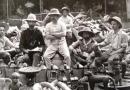
The repatriation of human remains more than a century after they were taken to Germany from Namibia has evoked painful memories of colonial wars in which primary African resistance was crushed, and genocide perpetrated (1904–08) in what was then the colony of German South West Africa. This contribution situates the current issues and practices of memory politics between Namibia and Germany within their historical context.
On 22 March 2012, the German parliament will debate a motion to acknowledge its brutal 1904-08 genocide of the Nama and Herero peoples. Germany’s refusal thus far, and its less than even ‘diplomatic’ treatment in 2011 of the Namibian delegation at the first-ever return of the mortal remains of genocide victims, demands a reassessment of suppressed colonial histories and racism.
'The German Bundestag is requested to adopt the following motion:
1. The German Bundestag remembers the crimes perpetrated by the colonial troops of the German Empire in the former colony of German South-West Africa, and bows down in memory of the victims of expulsions, expropriation, forced labour, massacres, rape, medical experiments, deportations to other German colonies, and inhuman confinement in internment camps. Academic studies estimate that the war of extermination between 1904 and 1908 resulted in the deaths of up to 80 per cent of the Herero, over 50 per cent of the Nama and a large part of the Damara and San.'
'We – the Black and white initiatives, organisations and institutions of the civil society signed below - welcome the conciliatory approach adopted by the German Federal Government as demonstrated by the visit to Namibia by the Director General of African Affairs from the Federal Foreign Office in early February 2012. We also welcome the resulting commencement of direct talks with the committees representing the descendants of the victims of the German genocide of 1904-08. We consider this overdue willingness to engage in dialogue with bodies of representatives of the affected peoples as a first indispensable step towards reconciliation between the peoples in Namibia and Germany.'
Namibia’s indigenous Himba and Zemba people of Kaokoland in the far north-west of the country, long thought to be voiceless, isolated and marginalized, are demanding that the Namibian government ends forced land grabbing, halts plans for the Orokawe Dam in the Kunene region, stops interfering in ancestral tribal institutions, provides culturally sensitive schools and allows them to move freely across the border with Angola.
Namibia has tried to promote national unity and contain the scourge of tribalism, but it hasn’t quite succeeded. Top positions in government and in the ruling party are in the hands of people from one ethnic group. Now voices are being raised against this, as debate on presidential succession gathers pace.
Namibia, the fourth biggest uranium producer in the world, first floated the idea of acquiring a nuclear power plant of its own four years ago. If it goes forward, the nuclear project represents the culmination of Areva’s more than five years’ efforts in the African country, which have been beset by problems, including cost overruns, reports New Era.
Namibia is estimated to have lost US$750 million (over N$5.8 billion) between 2000 and 2009 in illicit dealings such as trade mis-pricing, tax evasions, corruption, bribery and kickbacks. The syndicate - reports research and advocacy group Global Financial Integrity (GFI) - involves foreign companies that are doing business in Namibia, most of which are headquartered in the West. GFI reports that these companies are bedfellows of corrupt local officials, with whom they struck ill-fated cordial relations meant to ease the flow of money from Namibia to foreign destinations.
In this brief, researcher William Odendaal of the Land, Environment and Development Project at the Namibian Legal Assistance Centre, examines some emerging trends and dynamics in changing power relations in rural Namibian communities due to emerging new elites and the threats to subsistence farmers’ access to communal land and natural resources. 'Land enclosures mean that powerful individuals have appropriated communal land for personal use at the expense of many communal farmers who do not have sufficient access to grazing land.'
Namibia will have to pay more than half a billion dollars in duties if the country has not signed the economic partnership agreement (EPA) with the European Union (EU) by January 2014. The EU recently adopted a proposal to stop Namibia from enjoying duty- and quota-free access to its markets if the country refuses to commit to the controversial trade pact by then. The European Council still has to approve the proposal. Without preferential access, Namibia would have to pay an average of 19,5 per cent duties on all future exports to the EU.
The New Age Online reports that human skulls taken from Namibia by German colonizers returned home after more than 100 years, but the reconciliatory gesture instead has ignited anger and renewed demands that Germany pay for its sins in this corner of Africa where more than 60,000 people were killed. The return of 20 skulls taken to Germany more than a century ago for racist experiments also has fueled anger about current injustices by a people decimated when they rebelled against German colonizers.
The number of underweight children as a result of malnutrition continues to rise in Karas Region, a recent weight monitoring study conducted by the Keetmanshoop health district reveals. A report that contains information over a six month period since January indicated that 145 children aged between zero and 59 months were found to be severely' underweight.
Extreme weather conditions predicted because of climate change in Namibia are likely to have a tremendous effect on the 70 per cent of the country's people who live in rural areas and depend heavily on agriculture. According to experts in climate change, Namibia has no option but to adapt to the changing climate as radical changes in weather, such as extreme dry spells and exceptionally heavy rainfall, are forecast for the Southern African country.
Oil giant BP has entered the oil rush in Namibia by clinching 25 per cent of the equity in Chariot Oil & Gas’ exploration license in the orange Basin. The transaction is in the form of a farm-out agreement and was conducted through Enigma Oil & Gas Exploration, a wholly-owned subsidiary of Chariot. The new share structure of Block 2714A is Petrobras, as operator, with 50 per cent, with BP and Chariot sharing the remaining interest. The partners hope to strike an estimated nine billion barrels of oil.
‘Colonialism signified nothing less than the collective traumatising of the Namibian people who must carry the heavy burden of the consequences for generations,’ writes Shaun R. Whittaker.
Wal-Mart has wrapped up its much contested merger with Massmart, paving the way for the retailer to take-over Game, Makro, Windhoek Cash & Carry and Builders Warehouse in Namibia. The US giant issued a statement saying it has completed its acquisition of 51 per cent of the shares in Massmart in a N$16,5 billion transaction. Lucius Murorua, chairman of the Namibian Competition Commission (NCC), confirmed that the latest development also allows Wal-Mart to enter the Namibian market.
NAMRIGHTS is alarmed by what appear to be renewed death threats directed at one of the seven key accused persons in the alleged AVID Investments Corporation-Social Security Commission (AVID-SSC) financial fraud, suspected to come from people fearing their involvement in the case will be exposed.
On the surface, Namibia's education sector would appear to be doing just well, with about 19,000 teachers teaching some 550,000 children in 1,550 schools. About 80 per cent of the country's two million people are literate, and 90 per cent of children of school-going age are enrolled in primary schools. But scratch below the surface and one discovers there is more than meets the eye to these figures. In fact, critics have been insisting on a complete overhaul of the current education system, which they blame for having failed to produce quality graduates that can compete with the rest of Africa.
Heavy flooding in Namibia has killed at least 65 people and displaced 60,000, damaging crops and infrastructure in the southwest African state, a UN report said. 'Sustained high water tables over the past three years mean that it may take months for the floodwaters to subside completely,' said the report by the office of the UN's resident disaster coordinator.