



Brazilian authorities have only recently embarked on affirmative measures to redress many years of racist policies that led to limited access to jobs by the country’s large black population. Whether these initiatives will succeed remains to be seen

The rejection of Cuban doctors upon their arrival by associating them with “slaves” and “domestic servants” reveals the racist and class-based imagery of Brazilian “medical Whiteness”. A national debate is needed to change this pernicious perception of the black person
Victor Nee and Sonja Opper’s (2012) book on Capitalism From Below: Markets and Institutional Change in China is an ambitious attempt at explaining, theoretically and empirically, the country’s economic miracle. It is also a bold attempt at prescribing a model for replicating such a success in other reforming countries.
Madagascar, a country rich in natural resources and potential to sustain its own development even though its people is one of the poorest is the world, is facing strong pressures of land grabbing by local and foreign investors at the expense of peasant and local communities
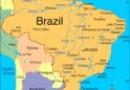
For the past two decades, Russian language studies has drastically fallen among the African population primarily due to lack of general interest, financial constraints in support for study programs and a lack of consistent interactive cultural activities by the Russian authorities, both Russian and African experts say
Prof Cliffe, first chair of the Department of Development Studies at the University of Dar es Salaam and founder-editor of the Review of African Political Economy, was a socialist, sympathetic to Mwalimu Nyerere’s policies, and a supporter of the total liberation of Africa from external domination
African Union Human Rights Memorial Network dialogue in Dakar, Senegal, 11-12 November, examines the role of slavery memorialisation in promoting human rights on the continent
The Pan African Lawyers Union (PALU) is developing a Directory of individuals, organizations and law firms offering or ready to offer pro bono legal representation, or any other form of legal aid, to indigent clients appearing before African continental and (sub) regional Courts and tribunals. This Directory will also include any established funds or facilities offering pro bono legal aid.

Why Angola is buying junk military aircraft from Russia, which will require lots of money to service, is puzzling. Who will fly the aircraft? Where is Angola preparing to fight? These and many more questions beg for answers
Despite pretensions to the contrary, the regime in Algiers is an obvious ally of Western imperialism. Algeria’s position, as can be seen from its response to foreign interventions in Libya, Mali and Syria, shows that the country has lost its heavy-weight and daring diplomacy of the 1960s and 1970s
The Napoleonic syndrome of President Jammeh expressed through his recent withdrawal from the British Commonwealth conceals his gross human rights violations, executions of political dissidents and homophobic pronoucements – rather than any principled opposition against neo-colonialism
An examination of the nationalist struggles in India and those in Africa reveals a historiography that is splashed with personalities. But these did not simply emerge as elite phenomena
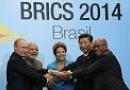
There are still people who believe the BRICS can help fix global-scale problems caused by the persistent capitalist crisis. Yet strategies advocated by BRICS leaders have so far had no discernible effect on financial volatility
Pambazuka News (www.pambazuka.org) is organizing a special issue for November 2013 on the specific theme ‘Racial Relations in Brazil.’ Given the role and status of Brazil in the current global world order, as an emerging power from the South, some crucial issues in the social development of the country must be discussed. That specific issue is the problem of racial relations is an old one in Brazilian society. It is a country popularly known as a ‘racial paradise.’ However, this foundational myth relies on the cordial relations of the races (black, white and indigenous), but fundamentally Brazil has so far made little efforts to solve this problem.
November is the month historically chosen to celebrate black consciousness in the country. It is the month when Zumbi dos Palmares, who founded the maroon (quilombo) society of freed African slaves during the 17th century in northeastern Brazil, died on 20 November 1695.
We therefore invite people to write about the dynamics of racism in Brazil in order to publish this issue in this special month for not only black Brazilians but to remind our readers in Africa and globally that Brazil has historical, political, social and cultural ties to the African continent. We believe that Pambazuka can contribute to the debate on racism in a country that is emerging. Yet Brazil’s development will be halted if it fails to resolve the structural racism and its psychological impact that continues to withold human development in that country.
Authors are invited to write on any of the following topics (however, the list below is not exhaustive):
1.Racism and gender relations;
2.Race and class;
3.Racism and education;
4.Racism and psychology;
5.Racism and childhood;
6.Racism and the youth;
7.Environmental racism;
8.Institutional racism;
9.Case studies of racial problems;
10.Compared perspectives on racism;
Deadline for submission of articles in Portuguese, English and French languages is 26 October 2013
Texts must be sent to
Word length: articles must be between 1000-3000 words and in Times size 12 font.
Biography: please, submit a two line bio at the end of the article.
Bibliographical Endnotes can be submitted at the end of the article.

Until now, China has resisted continuous pressure to put an end to manipulation of the Yuan. This resistance has allowed China to continuously record the strongest growth rates in the world. There is no reason whatsoever for flexible exchange to encourage foreign trade growth. So why does HSBC Bank insist on this?

Around the world – from China to the US, and Turkey to Brazil – countries are stepping up their involvement in Africa. But what about Russia in all this?
In his effort to “put the angry Black genie back in the bottle” following George Zimmerman’s acquittal, President Obama once again claimed to oppose racial profiling. He’s lying. Obama has endorsed the most prolific racial profiler in the country as a potential head of Homeland Security. The president is a bulwark of the system that targets millions of Trayvon Martins
Pambazuka News publishes a special edition for the first time in three languages: English, French and Portuguese, on the relations between Brazil and Africa
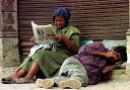
The funds transfer programme has lifted millions of people out of poverty, although critics dismiss it as welfare adventurism which African countries can ill afford
Brazil House in Jamestown, Ghana, can be conceptualized as an urban landscape of memory framing Tabon identity. But the house is also a powerful modern tool of nostalgia and longing for authenticity that sparks the desire of the Tabon to explore their roots and origin