


The United Nations Central Emergency Response Fund (CERF) is giving $646,000 to immunize hundreds of thousands of children in Lesotho, the Southern African country which since January has been grappling with a deadly outbreak of the disease.
A report by the Food and Agriculture Organisation (FAO) said Thursday that international prices of key food staples dropped in the first five months of this year. The report stated that the development was driven largely by plummeting prices of cereals and sugar. It said: "The FAO Food Price Index' the average of commodity prices, including meat and dairy, averaged 164 points in May, down from 174 in January and subst antially less than its peak of 214, reached in the spring of 2008."
African nations are increasingly turning to South Africa to improve their own agricultural production and skills, according to industry group Agri SA. About 20 countries from across Africa have approached Agri SA, South Africa’s largest farmers’ association, seeking to recruit commercial growers or learn skills from their neighbor on the continent’s southern tip.
Developing countries like Malawi are calculating the cost of adhering to new World Health Organization (WHO) guidelines that recommend starting HIV-positive people on antiretroviral drugs (ARVs) sooner. Malawi is one of three African countries that have conducted WHO-supported feasibility studies to assess what adopting the new guidelines would mean, and has announced plans to roll out the new WHO guidelines by mid-2011, said Dr Frank Chimbwandira, head of the HIV and AIDS department in the Ministry of Health.
Making services for the prevention of mother-to-child HIV transmission (PMTCT) available without addressing the factors that keep mothers from accessing these services was an exercise in futility, experts told a press briefing in the Kenyan capital, Nairobi.
Anal sex is viewed as something that only takes place among men who have sex with men (MSM) denying the fact that this form of sexual intercourse was a major driver in the HIV epidemic among heterosexual couples, researchers told the Microbicides 2010 conference this week.
Donors are disengaging from the fight against HIV/AIDS leaving behind millions who are still in dire need of lifesaving treatment in South Africa and other hard-hit Sub-Saharan African countries, warned Médecins Sans Frontières (MSF).
The United Nations World Food Programme (WFP) today warned of growing needs in the Eastern Sahel region of West Africa, one of the most destitute regions in the world, where some 10 million people are facing extreme hunger due to drought and poor harvests. Thomas Yanga, WFP Regional Director for West Africa, said that despite efforts by governments, humanitarian agencies and non-governmental organizations (NGOs), the situation in eastern Mali, northern Cameroon, Chad and Niger is critical.
The Pulitzer Center for Crisis Reporting, a nonprofit that sponsors and produces award-winning international journalism, has launched a new interactive site focused on maternal mortality issues, Dying for Life. This multimedia exhibit includes photo essays, videos and dispatches from Guinea Bissau, India, Mexico, Ethiopia and Nigeria. The centre is also partnering with the writers' site Helium to sponsor a writing contest about maternal health. The aim is to foster in-depth engagement with this important global issue. Join the global conversation by engaging with the journalists, and sharing your own stories about maternal health and its impact on your community.
A landmark court case in Zambia is sure to reignite a debate about the pros and cons of mandatory testing for HIV. Zambia Air Force (ZAF) officers Stanley Kingaipe and Charles Chookole say they were tested and treated for the virus without their knowledge. ZAF has now been ordered to pay them compensation for mental anguish. The controversy about compulsory testing has been smouldering for some time. It was a stray remark by the minister of health at a HIV conference late in 2008 that started it. Kapembwa Simbao was reported as saying that too few Zambians were voluntarily going for an HIV test and that they should be compelled to do so.
Applicants are invited to participate in a two week study tour to study food sovereignty, social movements and social change in Venezuela, 19 July to 2 August, 2010. The tour will examine issues of land reform, urbanization issues, rural development and food sovereignty within a dynamic political context. Venezuela is an outstanding example of a country that strives to ensure its citizens’ right to food while bolstering its domestic agriculture sector, with an emphasis on organic practices and agroecology. We will also explore other areas of social transformation, including education, healthcare, and direct citizen participation in the political process.
Organic foods aren’t only the preference of countries in the so-called developed North. Forty thousand tons of genetically engineered maize was recently rejected in Kenya. Protesters are making sure it remains stuck in the port city of Mombassa. Jos Ngonyo, with Kenya’s Biodiversity Coalition, spoke to Green Acre Radio in a recent visit to Seattle. Ngonyo talked about why small-scale farmers reject the Green Revolution in Africa and “dysfunctional aid.” The Gates Foundation helped launch the Alliance for a Green Revolution in Africa four years ago.
Dublin was unusually sunny and warm last week when the High Level Task Force on the global food security crisis held a consultation at the Malahide resort just north of the city. Dr. David Nabarro, coordinator of the High Level Task Force was looking to elicit comments from civil society organizations on the Comprehensive Framework for Action to end hunger (CFA). The CFA, hastily written a year ago by a team of experts from 23 bureaucracies within the U.N. system, is a multilateral attempt to create a plan of action for dealing with the growing global food crisis.
Everything is ‘up for dialogue’ but ‘few things can actually be negotiated’, says Eric Holt-Giménez, reporting back on last week’s Dublin Dialogue, a consultation with civil society organisations hosted by the UN High Level Task Force on the global food security crisis. Lacking budgetary or decision-making power, the task force cannot stray far from the mandates of purse-holder the World Bank in the design of its Comprehensive Framework for Action to end hunger, which presents the global market as ‘the solution rather than the cause of hunger’, and prioritises ‘the private sector rather than public institutions’. ‘Without organised pressure from civil society, there is little likelihood of advancing food sovereignty at the UN or anywhere else,’ says Holt-Giménez.
As mobile and web technologies become increasingly accessible to those living in remote poverty around the world, the potential to expand access to health care to underserved populations becomes ever more real. It’s exciting to see the many ways that innovative people and organizations are able to take advantage of the spread of technology to make positive social change. Ushahidi, an open-source platform that can be used by anyone to collect and visualize user-generated information, is an excellent example. They’re using mobile and web technology – including social media platforms like Twitter – to capture critical up-to-date reports from individuals in crisis areas through crowd-sourcing and filtering
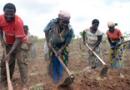
Rural Kenyans affected by the post-election violence in 2008 are among thousands of beneficiaries of a programme that aims to improve food security and incomes and reduce women's vulnerability to gender-based violence by teaching better farming techniques. "Food insecurity and malnutrition are key issues in the spread of HIV and it is also common knowledge that when people are food-insecure, and mostly women and children, they become susceptible to sexual, gender-based violence," according to Godrick Khisa, the national coordinator of the UN Food and Agriculture Organization (FAO) project
Diagnosing HIV early and starting antiretroviral (ARV) treatment could be the most important weapons in the battle against HIV-associated tuberculosis, but this would need a huge injection of resources in southern Africa, where the dual epidemics of TB and HIV claim the most lives. The authors of a paper, part of a series on TB in the British medical journal, The Lancet, note that the disease accounted for more than a quarter of the two million deaths attributed to AIDS-related diseases in 2008, and is the number one cause of illness and death in people living with HIV in Africa, yet efforts to contain TB-HIV co-infection have been "timid, slow and uncoordinated".
The Kenyan government has won praise for a national door-to-door HIV testing drive that aims to test 80 percent of the population for HIV/AIDS by the end of 2010, but once-enthusiastic counsellors are beginning to show signs of burnout.
Health authorities are on alert as Lassa fever has now claimed 17 lives and infected dozens of people in northwestern Nigeria's Kebbi State, according to state health officials. The last outbreak of the deadly disease took place in February 2010, killing seven people, including four doctors at the National Hospital in Abuja. In March 2009 over 300 people were infected in 14 states across the country.
"In 2001 in Abuja, African heads of state promised us 15% of budget spending on health - where is this money? ... Only two countries in the continent have met the Abuja target, which African finance ministers recently dismissed as a colossal mistake. the true colossal mistakes are the wasteful spending habits of many governments who prioritise wars, luxury for politicians and sports over social spending, which cost thousands of lives every day".- James Kamau, Kenyan Treatment Access Movement