


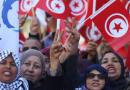
The recent demonstrations and fighting that broke out across Tunisia for about ten days in January 2018 are all the more significant in that Western representatives and apologists for the current state of the world have held up Tunisia’s political situation as the most successful outcome of the 2011 “Arab Spring", that is, from the point of view of maintaining the status quo.

Monday night’s internal African National Congress (ANC) presidential election of Cyril Ramaphosa – with a razor-thin 51% majority of nearly 4800 delegates – displaced but did not resolve a fight between two bitterly-opposed factions. On the one hand are powerful elements friendly to so-called “White Monopoly Capital,” and on the other are outgoing ANC president Jacob Zuma’s allies led by Nkosazana Dlamini-Zuma, his ex-wife and former African Union chairperson. The latter faction includes corrupt state “tenderpreneur” syndicates, especially the notorious Gupta brothers, and is hence typically nicknamed “Zupta.” (Zuma is still scheduled to serve as national president until mid-2019.)
The government’s nuclear policy was approved by a full sitting of the cabinet back in 2015. There are a number of reasons behind this commitment to nuclear power and the haste with which the government appears to be acting at the moment.
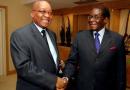
In times of political crises, as was recently experienced in Zimbabwe, citizens expect the regional body to take a bold stance against leaders who disregard human rights and hinder the advancement of democracy. Zimbabweans were quick to remember the numerous previous failures of the regional community. They roundly rejected SADC’s intervention.

Despite the evidence of worsening poverty, the government felt sufficiently confident in this year’s budget speech to move the target date for attaining middle-income status forward by two decades. Originally planned for 2040, the new status will now be attained in three years. Agricultural output is going to be increased, educational outcomes improved and corruption eliminated. Just like that.

His soaring popularity comes from his strong repertoire of protest music that forcefully speaks truth to power. If Bobi Wine’s new body of artistic work has a singular thrust, it is that people can fully enjoy their inalienable rights only for as long as they are willing to fight for them. It is a battle he is prepared for in any way possible, including exchanging punches if need be.

South Sudanese need to seriously think about a future beyond the inept regime of President Kirr. It is unacceptable that millions of citizens still live in decrepit camps internally and in neighbouring countries. South Sudan is one of the poorest countries in the world, despite its enormous natural resources. There are many alternative leaders to choose from.

The US government officials who have attempted to browbeat Liberia into political submission clearly have selective amnesia. They have forgotten that in 1985, allegedly rigged elections sanctioned in the name of expediency led to more than 15 years of death and destruction in Liberia.
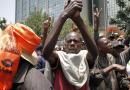
Resistance is the only road to liberation for people exploited and suppressed by those who have state power and control over wealth and resources. However, resistance does not mean disregard for the law. Nor does it mean resorting to violence. The means must be just and peaceful. The desired end might take a long time – a long, long time – but its effects are also long lasting.

The court ruled that she had not denied or minimized the Rwanda Genocide and that her criticism of the government should have been allowed as part of her freedom of expression within Rwandan law.

On 18 November, Rwandan President Paul Kagame inducted seven thieves without borders and one medical doctor into his “National Order of Outstanding Friendship,” presenting them with medals for “exemplary service” to the nation, meaning himself and his ruling party, the Rwandan Patriotic Front (RPF).

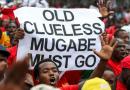
Zimbabweans have struggled for years to replace Mugabe with a democratically elected leader. These efforts were dashed by the military. But now that the citizens have given the palace coup far more legitimacy than it deserves, it is even more vital for progressives committed to social justice to redouble grassroots organising and generate clear demands for a democratic post-Mugabe era.
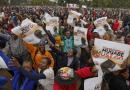
ZANU-PF will use the current massive popular goodwill to rejuvenate its fortunes. The fragmented opposition has been further weakened. As a carefully choreographed scheme, the military intervention could prove a masterstroke by Emmerson Mnangagwa and his supporters. But all this will be at a high cost for future democratic alternatives in Zimbabwe.
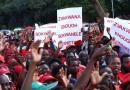
The ordinary people of Zimbabwe, who have experienced decades of repression and hardship, are rejoicing and are optimistic following the dramatic removal of Robert Mugabe from power. But very soon there will be a renewed struggle for the future of Zimbabwe. And the outlook remains very uncertain.
Horace G. Campbell is Professor of Political Science and African American Studies at Syracuse University, New York, and is currently Kwame Nkrumah Chair of African Studies at the University of Ghana. His books include, 'Global NATO and the Catastrophic Failure in Libya,' and 'Reclaiming Zimbabwe: The Exhaustion of the Patriarchal Model of Liberation.' In this interview with The Real News Network, Prof Campbell offers critical insights into the political situation in Zimbabwe.
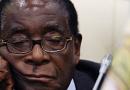
He is an emblematic, historical figure. He is a giant, whose boot steps inaugurated a revolutionary era in the early years - boots that, sadly, became too heavy for him, and too painful for the ordinary people for whose liberation he had fought.
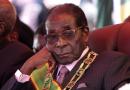
Like Uganda’s Amin – but unlike South Africa’s Mandela – Robert Mugabe fully understood that national liberation meant little if it was not underpinned by popular economic emancipation. That is why Amin and Mugabe became enemies of the west, but Mandela was embraced as an icon. The people celebrating Mugabe’s fall do not understand imperialism. Mugabe’s true legacy will be appreciated in the coming days.
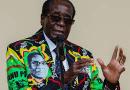
What happens in the period after Mugabe? Deep down the key issue is whether ZANU-PF will go down with him or it will try to re-align itself in the post-Mugabe political dispensation. There are many people who are suspicious of the role of the army and war veterans in Zimbabwean politics. Certainly, Robert Mugabe did not ruin Zimbabwe alone.
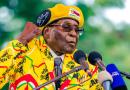
In the wake of the evolving military coup d’état in Zimbabwe this past week, there is already a concerted effort by some in the media in Britain to begin to construct a totally distorted narrative of the relationship between Britain and Robert Mugabe since 1980. The following essay, “Britain, Mugabe, Zimbabwe, Africa”, written in July 2008 and published as chapter 15 in my Readings from Reading: Essays on African Politics, Genocide, Literature (2011: 95-100), is reissued here, unedited, in response to these multiform revisionist efforts on the history of this key region of the African World:
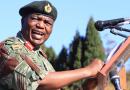
President Mugabe blundered in not arranging an orderly transition to a successor while he was in a stronger political position. That failure left the door open for schemers like Emerson Mnangagwa and General Chiwenga. The coup was organized over many months to establish a transitional government that would include the opposition.