


West African Geosecurity – The AES And Its Wider Implications
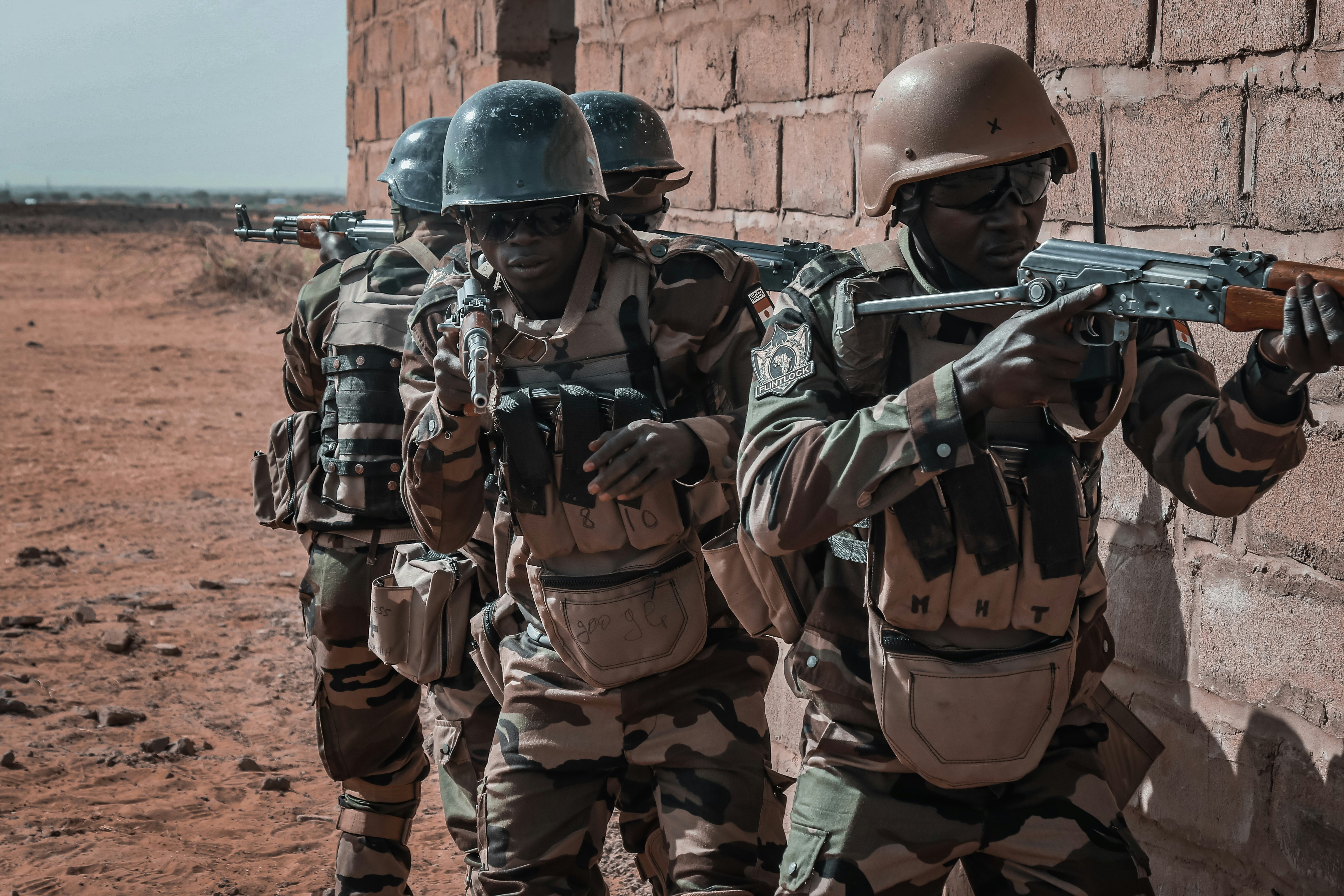
Inieke interrogates the security dynamics in West Africa in the wake of a unique case of the military-led Alliance des États du Sahel (AES) and the geopolitical ramifications.
The security landscape in western Africa is gradually changing in ways not predicted by many analysts, researchers or policymakers. A major factor influencing this unpredictability is the fact that the changes are ‘African-led,’ for lack of a better term. The case in point are the recent actions of the newly formed Alliance of Sahel States (AES). Mali, Burkina Faso, and Niger have taken concrete steps to forge a platform for collective governance, while jointly tackling security challenges that have long plagued the region. The countries making up the AES are military-led with leaders that have popular support among the respective populations. This is a unique situation because, military governments in Africa have generally had poor reputations in the past, but there has not been a case where several of such governments align their foreign policies to the extent of forming regional defence pacts that effectively state that ‘an attack on one is an attack on all’.
In contrast however, there is the Accra Initiative (AI) which is a West African security compact that has Burkina Faso as one of the member states with Mali and Niger as observers. Formed in 2017, the AI’s main objective was to collaborate and confront transnational organized crime along with extremist groupings[1]. The AES on the other hand formed through the Liptako Gourma Charter has a more holistic framework for cooperation in various sectors like mining, agriculture, and energy. Furthermore, members of the AES are showing the difference in security strategies and partnerships therein, especially with the new security pacts with Russia and China in particular. However it is not lost on the people of the region that the main reason for the rise in insecurity is a collection of factors. From neocolonialism and ineffective governance, to stark imperialism and terrorist activities, the members of AES and the populations within are clear on who they see as enemies, and have demonstrated support for their governments in ways that have not been seen around Africa for a while.
The onus to forming the AES was not based on convenience primarily, but of necessity. The countries constituting the AES all faced similar challenges to security such as threats to territorial integrity, displacement, acts of terrorism, and foreign-backed attempts at destabilisation. This is especially unsettling because reports suggest that as of 2023, there were over 500,000 refugees and about 6.5 million internally displaced people throughout the ECOWAS region. Moreover, military officials in the region have acknowledged that extremist insurgents have stepped up their attacks by taking advantage of porous borders, and this reached a high point when the government in Mali severed ties with Ukraine after it was revealed that Ukrainian forces had provided limited training to Tuareg insurgents who went on to lay an ambush that saw dozens of Malian and Russian forces killed. It is also of note that the countries of the AES are all French-speaking countries and a driving force among the collective is the will to sever the tendons of colonial relations established by French imperialism through the foreign policy of Françafrique – that saw many African nations through the 1950s being roped into political, and diplomatic relations that granted France economic dominance and legitimacy in the region. This is important because Françafrique was the platform through which France maintained dominance of the political systems of former colonies. Until it's eviction from the AES countries, France had used its influence to maintain monopolies in many west African countries especially with the CFA Franc, and the foreign policy revolved around placing neocolonies in a position of underdevelopment. A clear example is the fact that while many African countries do not have steady electricity, the majority of the Uranium powering French nuclear reactors come from Niger.
Focusing on the wider region, the recent developments in west Africa can be considered unprecedented. This is mostly because of the apparent motivations that have inspired radical changes of governments. There is growing frustration of African populations against bad governance, poor policy design or implementation, and insecurity - and for clarity, ‘bad governance’ in this context simply refers to the characteristic manner in which neoliberal governments fail to implement effective policies to achieve development goals, but instead allow for corruption, cronyism and exploitation of labor for interests of private capital. These frustrations have manifested as numerous protests, and support for radical alternatives in governance. West African countries like Burkina Faso – a member of the AES – have dealt with security challenges that were further exacerbated by poor governance that was characteristic of the 27-year Compaoré rule.
From extremist-led attacks to sporadic communal clashes, these types of issues are not unique to Burkina Faso, but are readily observed across the Sahel region. According to the UN’s Office for the Coordination of Humanitarian Affairs (OCHA), 2023 saw Burkina Faso witness 258 terrorist attacks that displaced thousands of indigenes[2], and in 2024, Bamako was the site of numerous coordinated attacks from regional affiliates of Islamic State and Al-Qaeda[3]. With this info in mind, it is important to note that the security condition in the Sahel deteriorated sharply after the 2011 NATO-led destruction of Libya. That unfortunate event not only triggered the displacement of millions of Africans, it also led to a massive influx of weapons into the hands of extremists and foreign-backed insurgents that are now central to the destabilization of Africa. Another matter to consider is the curious trend in the rise of insecurity around the Sahel with these attacks strangely focused on the countries that are making material strides towards self determination, and outrightly struggling against imperialism. It is common knowledge that imperial countries build up proxy forces to destabilise nations that refuse their dictates, so it stands to reason that a similar situation is unraveling within the AES. The US government provided extensive military aid to insurgent militants during the Syrian Civil War, and the United States Agency for International Development (USAID) was reported to be providing support financially to Al-Qaeda and Islamic State including affiliate groups like Boko Haram.
The Sahel as it stands is riddled with smuggling networks and disparate armed non-state actors fully invested in illicit economies such as trafficking. Local populations in the region are vulnerable to extremist insurgent groups like Al-Qaeda in the Maghreb (AQIM) and Islamic State West Africa Province (ISWAP) and repeated attacks on rural communities are directly contributing to record high numbers of displacement and forced migration. According to reports by the Office of the United Nations High Commissioner for Refugees (UNHCR), the number of forcibly displaced people in West and Central Africa stands roughly at 14.3 million as of the end of 2024[4]. The driving factors range from protracted conflicts, widespread insecurity, to poverty and economic underdevelopment. Conversely, these are the same issues that the member states of the AES are tackling as priority.
Sticking with the security related developments, several west African states are also taking concrete steps to confront insecurity. To bolster these assertions, it is important to note the following events: in December 2023, while President Umaro Sissoco Embalo of Guinea-Bissau was at the Conference of Parties (COP) 28 UN Climate Summit in Dubai, a firefight broke out in Bissau, the capital, between members of the Presidential Palace Battalion and the National Guard – which is largely controlled by the parliament that is dominated by opposition of the Embalo administration[5]. In response however, the parliament was dissolved upon the president’s return. In August 2023, Niger moved to end bilateral military pacts with France and the European Union[6] in similar fashion to Burkina Faso and Mali, the junta in Niger suspended the media outlets France 24 and Radio France Internationale (RFI) from continued operation, because of allegedly inciting genocide[7].
Unfortunately, outside of insurgency, western Africa collectively faces other threats to security such as climate related challenges. For instance, over 11 million people were affected by the new rainfall patterns and flooding recorded between June and November 2024. Mali for instance saw over 370,000 people impacted in almost all the country’s provinces, while Chad and South Sudan faced floods that rendered farmlands unusable and important supply routes blocked[8]. Senegal also saw farmlands destroyed and the Nigerian Centre for Disease and Control reported almost 11,000 cases of cholera in 2024[9]. It is of note that changes in climate trends play a role in the levels of insecurity because the breakdown in economic activity causes people to engage in illicit activities as a desperate mode of seeking livelihood. Furthermore, climate-related security risks exacerbate the social grievances which in turn drive recruitments into insurgent extremist groups. There is also a vicious cycle in the sense that illicit armed groups engage in extractive industries for profit seeking while the environment faces continued degradation, and hindrance of environmental policies being implemented[10]. This mainly manifests through illicit artisanal mining or oil bunkering - where crude tools are used to drain oil from exposed pipelines. A stark example of this is in Rubaya, DRC, where the M23 insurgents reportedly generate a monthly revenue of roughly $800,000 through a production tax placed on the workers at the numerous unregulated coltan mines in the region.
The Sahel region has faced violent extremism and cross border threats for well over a decade, with a spike occurring after the 2011 NATO-led destruction of Libya. From smuggling and organised crime to communal tensions and weak governance, these fractions have played a role in destabilizing communities and governments of the region. However, even as countries of the AES face challenges to regional security, it is undeniable that much progress has been made in terms of defending their sovereignty. From evicting the military elements of France and the US to reclaiming control of strategic resources like uranium in Niger[11] These transitions signal an effective framework for other African countries to adopt in the journey towards economic and geopolitical liberation. The achievements of the AES also stand as a people-centred call for Africans to unite and develop the collective political will to break the backward influences of neo-colonialism and capitalism. In the immortal words of the Pan-Africanist revolutionary Amilcar Cabral, “…national liberation exists only when the national productive forces have been completely freed from every kind of foreign domination”[12]. This quote from Cabral is brought to life within the AES when we observe that, for example, the government in Burkina Faso moved to nationalise multiple gold mines, while Niger announced the decision to nationalise its water sector ending a 22-year contract with French company Veolia. In October 2024 Mali also nationalized gold mines previously owned by Canadian company Iamgold and South Africa’s AngloGold Ashanti. The point here is that the changes taking place in these countries are not isolated but are part of a larger shift towards anti-imperialism in the Sahel. The move towards self-reliance by the AES is a demonstration that by taking control of one’s resources and economic futures, we not only have a model for pan-African cooperation, but are also reminded the journey to true African sovereignty never ended.
Otobong Inieke is an independent researcher based in Southern Nigeria. His work revolves around geopolitical analysis focused on Africa. He is also affiliated with The Movement for African Emancipation (MAE) and his work has been published on platforms such as Hood Communist, The Black Agenda Report, and Orinoco Tribune. Views and perspectives are further expressed on the 'Find the Signal' podcast.
End Notes
[1] Mapping African regional cooperation. https://ecfr.eu/special/african-cooperation/accra-initiative/
[2] ReliefWeb (2024). Global Terrorism Index 2024. ReliefWeb OCHA. https://reliefweb.int/report/world/global-terrorism-index-2024
[3] AlJazeera (2024). More than 70 killed in attack against Mali. AlJazeera. https://www.aljazeera.com/news/2024/9/20/more-than-70-killed-in-mali-at…
[4] UNHCR (2025). GLOBAL APPEAL 2025 - REGIONAL OVERVIEW - WEST AND CENTRAL AFRICA. UNHCR. https://reporting.unhcr.org/operational/regions/west-and-central-africa
[5] RFI (2023). Guinea-Bissau’s president dissolves parliament after last week’s failed coup. RFI. https://www.rfi.fr/en/africa/20231204-guinea-bissau-s-president-dissolv…
[6] Euractiv (2023). Niger ends security and defense partnerships with the EU. EURACTIV. https://www.euractiv.com/section/global-europe/news/niger-ends-security…
[7]https://en.walaw.press/articles/niger_suspends_bbc_files_lawsuit_agains… ‘inciting_genocide__claims/GMGLMFGMRXLF
[11] CEIA (2025). Breaking News from the AES. Abasimperialism. March 4, 2025. https://abasimperialism.substack.com/p/breaking-news-from-the-aes-3cd
[12] CEIA (2024). For the Defense of the Alliance of Sahel States, for Revolutionary Pan-Africanism. Abasimperialism. September 20, 2024. https://abasimperialism.substack.com/p/for-the-defense-of-the-alliance-of