


Blood on the Cloves: State Capture, Party Fissures, and the Constitutional Betrayal of Tanzania’s Youth
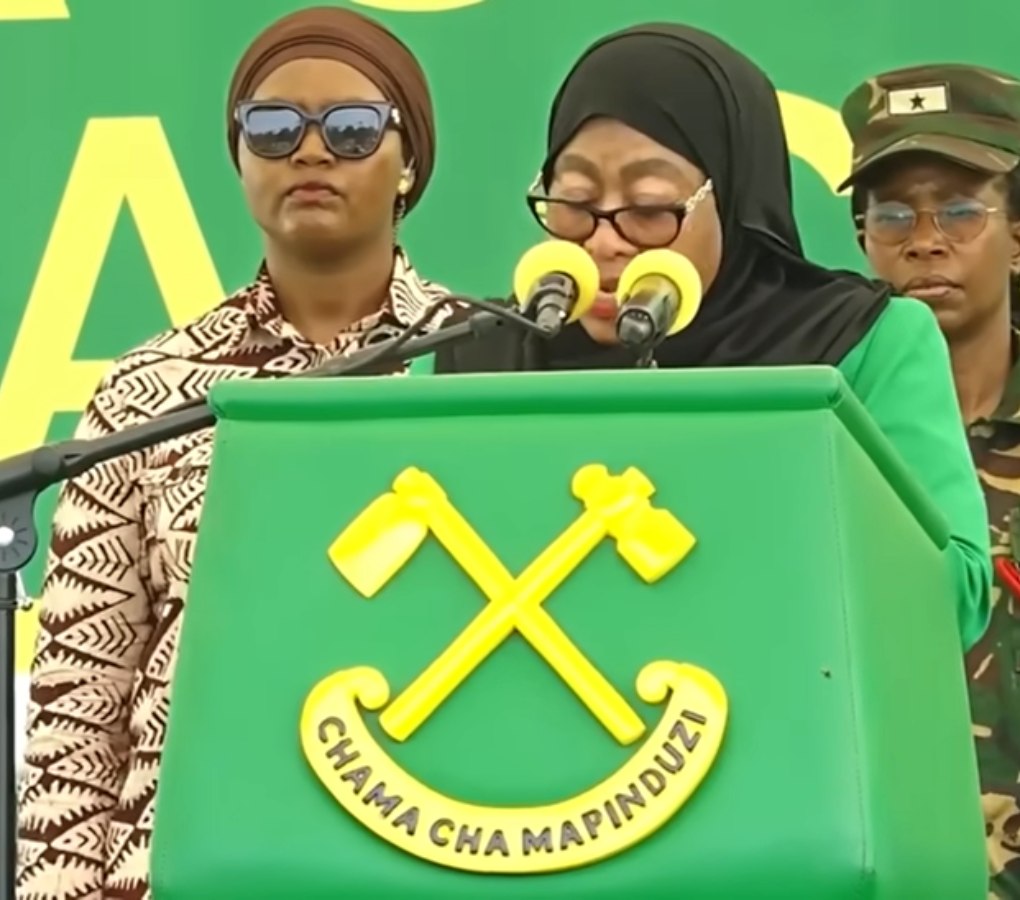
A psychoanalysis of Suluhu’s actions and events surrounding the October 2025 Tanzania elections and the aftermath
In the sweltering heat of Dar es Salaam, where the Indian Ocean laps indifferently against a nation in turmoil, Samia Suluhu Hassan’s ascent to power once evoked hope – a soft-spoken Zanzibari woman, ascending from the shadows of John Pombe Magufuli’s iron rule to embody a promise of renewal. On 19 March 2021, following Magufuli’s death from COVID-19 complications he had publicly denied, Hassan became Tanzania’s first female president, inheriting a fractured legacy of repression and economic stagnation (BBC News, 2021). She pledged a “listening government,” easing bans on political rallies and media outlets, gestures that briefly thawed the authoritarian chill (Human Rights Watch, 2021). Yet, by November 2025, as she was sworn in for a second term amid the acrid smoke of burning barricades and the echoes of gunfire, Hassan had morphed into a figure of unyielding control. The 29 October elections, marred by opposition disqualifications and erupting into what eyewitnesses termed a “massacre” of protesters – with estimates of deaths ranging from hundreds (Amnesty International, 2025a) to over 700 (Al Jazeera, 2025) – exposed a profound rupture. Post-election, a manhunt ensnared nearly 300 youths, with over 240 charged with treason, their cries for constitutional rights drowned in a tide of abductions and enforced disappearances (Reuters, 2025a; BBC News, 2025a).
This transformation – from reformist to iron-fisted guardian of power – invites a psychoanalytic lens, one that probes the unconscious drives beneath political facades. Drawing on Freudian notions of the superego’s tyrannical imposition and Lacan’s mirror stage of fragmented identity, Hassan’s arc reveals a psyche ensnared by historical trauma, party machinations, and the seductive whispers of elite capture. As a Zanzibari in a union historically tilted toward the mainland, her leadership may unconsciously replay cycles of retribution, echoing the 2000 Zanzibar election violence under Benjamin Mkapa, where security forces killed over 30 opposition supporters (Human Rights Watch, 2001). What began as tokenistic overtures to global capital ensnared her in a web of exploitation, whilst Chama cha Mapinduzi (CCM) infighting forged a defensive carapace. Critically, this descent violates Tanzania’s constitutional bedrock, where treason’s blade cuts both ways. In unravelling these threads, we glimpse not just one woman’s fall, but a nation’s simmering peril.
Zanzibar’s Scar and the Superego’s Vengeance
Psychoanalytically, Hassan’s pivot can be read as a superegoic overcompensation, where internalised historical wounds manifest as authoritarian projection. Born in 1960 in the Sultanate of Zanzibar, just four years before its 1964 union with Tanganyika, Hassan embodies the archipelago’s perennial “otherness” – a semi-autonomous entity often subsumed by mainland dominance (Wikipedia, 2025a). The 1977 Constitution, whilst enshrining union, perpetuates this asymmetry, granting Zanzibar limited sovereignty yet exposing it to national overreach (Constitute Project, 2005). For Hassan, Zanzibari roots – forged in the clove-scented isles where Arab, African, and Indian influences interweave – likely instilled a fragmented self-image, per Lacan’s mirror stage which introduces a fundamental split between the internal self and the external image. A leader gazing into the mainland’s distorting glass, forever reconciling periphery with centre.
This fragmentation arguably crystallised in response to the 2000 Zanzibar polls, during Mkapa’s second term. CCM’s disputed victory sparked riots; security forces, under orders, fired on Civic United Front (CUF) protesters, killing dozens and displacing thousands in what became known as the “Zanzibar massacre” (Human Rights Watch, 2001). As a rising Zanzibari politician then, Hassan witnessed mainland impunity etching deep psychic grooves – resentment toward CCM’s hegemonic grip, yet loyalty to its revolutionary mantle. Fast-forward to 2025: whispers in Tanzanian discourse posit Hassan’s crackdown as “payback,” a subconscious reversal where the once-victimised Zanzibari now wields the state’s lash against mainland youth, inverting 2000’s script (Daily Nation, 2025). Freud might term this the “return of the repressed”: the superego, burdened by unavenged trauma, demands overkill to affirm control, transforming personal grievance into national purge.
Yet, nuance tempers this reading. Hassan’s early tenure suggested integration, not retribution; she lifted Magufuli’s rally bans in 2023, fostering fragile pluralism (BBC News, 2023). The 2025 violence – tear gas in Arusha, live rounds in Dar es Salaam – may thus stem less from deliberate vengeance than an unconscious defence against perceived disintegration. As protests swelled, evoking Zanzibar’s ghosts, Hassan’s psyche regressed to a persecutory stance: protesters as “enemies” mirroring 2000’s aggressors, justifying lethal force as self-preservation (Human Rights Watch, 2025). In this light, her iron fist is not mere power-lust, but a haunted bid for wholeness in a union that never fully embraced her isle.
Party Shadows
Critically, Hassan’s transformation cannot divorce from CCM’s internal tectonics, a party whose 60-year hegemony breeds paranoia amid factional strife. As Magufuli’s successor – an “unexpected” 2015 VP pick over mainland heavyweights – Hassan entered as an outsider, her Zanzibari provenance fuelling suspicions of divided loyalties (Wikipedia, 2025a). CCM’s January 2025 nomination of her as candidate, bypassing rivals, was less endorsement than coronation, silencing dissent but igniting embattlement (Chatham House, 2025). Magufuli loyalists, decrying her “soft” reforms, plotted shadows; reports of intra-party sabotage – leaked memos, withheld funds – pushed her toward authoritarian bulwarks to prove mettle (ACLED, 2025).
This dynamic evokes a psychoanalytic transference. Hassan, projecting paternal authority onto CCM’s elder guard, internalises their ruthless ethos to secure belonging. The 2025 congress in Dodoma, where she rallied cadres amid whispers of defection, underscored this siege mentality (The Chanzo, 2025). Party ranks, fractured by generational rifts – youth decrying corruption, veterans guarding spoils – forced her hand: disqualify Chadema, arrest Tundu Lissu on treason charges, and unleash security to “restore order” (Al Jazeera, 2025). Critically, this was no aberration but CCM’s survival calculus; as the “party of the revolution,” it equates internal critique with existential threat, per its 1977 founding charter (Wikipedia, 2025b). Hassan’s response – post-election treason charges against 240 youths – thus hybridises party loyalty with personal armour, her psyche fusing filial duty to tyrannical fiat.
Tokenism’s Trap
Lurking beneath is state capture’s insidious pull: untethered tokenism from foreign and domestic elites, whose resource appetites ensnared Hassan’s innocently reformist impulses. Early on, she courted investors to revive Magufuli’s stalled economy, touting infrastructure and tourism as globalisation’s balm (CSIS, 2022). Yet, this openness invited exploitation; mining concessions to Canadian firms like Barrick Gold ballooned, displacing artisanal miners and igniting protests near North Mara (Human Rights Watch, 2025b). Zanzibar’s ports, promised as trade hubs, became conduits for unchecked extraction, with Chinese and UAE deals prioritising profit over equity (Chatham House, 2024).
Psychoanalytically, this reflects a narcissistic seduction: elites’ flattery – lauding her as “Africa’s iron lady of investment” – stroked an ego starved by CCM’s condescension, blinding her to dependency’s chains (Xtra Africa, n.d.). Tokenistic reforms, like gender quotas masking elite pacts, devolved into emboldened demands: tax breaks for multinationals, quashed labour unrest. By 2025, economic discontent – youth unemployment at 13%, inflation gnawing at staples – fuelled protests, which Hassan, now tethered to these patrons, crushed to safeguard deals (Foreign Policy, 2025). Critically, this capture inverts her initial agency; what began as pragmatic outreach morphed into a Faustian bargain, her superego rationalising violence as “stability for growth.”
Constitutional Reckoning
At the vortex lies the Constitution, a 1977 relic whose provisions mock the carnage. Article 20 guarantees “freedom to freely and peaceably assemble” and express views, subject only to democratic necessities (Constitute Project, 2005). Protests, as constitutional rite, birthed the 29 October uprising – youth decrying exclusions, not inciting war. Yet, Article 39 deems treason “the most grave” offence, punishable by death for “levying war” against the state (WIPO, n.d.). Hassan’s regime, wielding this ambiguously, charged protesters with “obstructing elections,” inverting victimhood: the state, breaching assembly rights via live ammunition and internet blackouts (Article 19, 2025a), now slaps treason on the aggrieved.
Who truly warrants the charge? The Constitution’s framers envisioned treason against existential threats, not dissent (Constitute Project, 1995). Hassan’s forces, firing on unarmed crowds in Dar es Salaam – killing passers-by, per witnesses – violate Article 14’s right to life and Article 20’s assembly freedoms (Human Rights Watch, 2025). The African Charter, ratified by Tanzania, mandates investigations into excessive force (OHCHR, 2025). Thus, the real treason lies in executive overreach: a president subverting the people’s sovereignty to cling to power, her actions more seditious than any youth’s placard.
Whispers of a Fractured Dawn
Hassan’s odyssey – from Zanzibari whisperer to CCM’s armoured sentinel – mirrors Tanzania’s own: a union teetering on unhealed fissures, where reform’s promise curdles into repression’s brew. Psychoanalytically, her thirst for power quenches a deeper void, born of island marginality and party thorns, amplified by elite tokenism’s gilded cage. Yet, the 2025 bloodletting – 300 arrests, morgues overflowing, a nation gagged by curfews – signals not triumph but fragility (Reuters, 2025b). As youth, 77% under 35, rise from economic ashes (Daily Maverick, 2025), the superego’s façade cracks.
A hybrid peace beckons constitutional surgery to neuter treason’s vagueness. CCM introspection to heal internal wounds, and divestment from capture’s grip. For Hassan, therapy lies in reckoning – embracing her Zanzibari mirror without shattering the mainland’s gaze. Absent this, Tanzania simmers. Not yet boiling. But bubbling with the inexorable force of a people who, having tasted forbidden assembly, will not forget its flavour. In the quiet after the gunfire, the true revolution whispers – not in rifles, but in the unslakable demand for a union whole.
Evans Rubara is a Tanzania-based natural resource management specialist, and sociopolitical analyst. He is available at [email protected] or on X as @PunditParadox.
References
ACLED. (2025). The last of the hegemonic liberation parties: Tanzania’s CCM clings to power as elections loom. Armed Conflict Location & Event Data Project. https://acleddata.com/report/last-hegemonic-liberation-parties-tanzanias-ccm-clings-power-elections-loom
Al Jazeera. (2025, October 31). Opposition says ‘hundreds’ killed in Tanzania post-election protests. https://www.aljazeera.com/news/2025/10/31/protests-over-disputed-tanzania-election-enter-3rd-day-military-deployed
Amnesty International. (2025a, October 31). In Tanzania, protests are violently suppressed following a presidential election with no opposition. https://www.amnesty.org/en/latest/news/2025/11/tanzania-unlawful-killings-and-other-human-rights-violations-continue-amid-internet-and-electricity-blackouts/
Article 19. (2025a, October 24). Tanzania: Protect free expression, protest and activism during elections. https://www.article19.org/resources/tanzania-protect-free-expression-protest-and-activism-during-elections/
BBC News. (2021, March 19). Samia Suluhu Hassan - Tanzania's new president. https://www.bbc.com/news/world-africa-56444575
BBC News. (2023, January 3). Tanzanian leader Samia Suluhu Hassan lifts ban on political rallies. [As cited in ACLED, 2025].
BBC News. (2025a, November 7). Tanzania election: At least 240 charged with treason after poll violence. https://www.bbc.com/news/articles/ckgz2vzlyzpo
Chatham House. (2024, May 20). Reviving Tanzania’s regional leadership and global engagement. https://www.chathamhouse.org/2024/04/reviving-tanzanias-regional-leadership-and-global-engagement
Chatham House. (2025, October 23). Tanzania election: Erosion of democracy will also come at the cost of economic potential. https://www.chathamhouse.org/2025/10/tanzania-election-erosion-democracy-will-also-come-cost-economic-potential
Constitute Project. (1995). Tanzania (United Republic of) 1977 (rev. 1995) Constitution. https://www.constituteproject.org/constitution/Tanzania_1995
Constitute Project. (2005). Tanzania (United Republic of) 1977 (rev. 2005) Constitution. https://www.constituteproject.org/constitution/Tanzania_2005
CSIS. (2022, September 26). One year of Tanzanian President Hassan: What’s changed? https://www.csis.org/analysis/one-year-tanzanian-president-hassan-whats-changed
Daily Maverick. (2025, November 5). Denied fair elections, Tanzanian citizens make their mark through protests. https://www.dailymaverick.co.za/article/2025-11-05-youth-led-uprisings-in-tanzania-signal-growing-discontent-with-electoral-injustices-and-governance-issues/
Daily Nation. (2025, November 1). Samia Suluhu derailed reforms and set peaceful Tanzania on fire. https://nation.africa/kenya/blogs-opinion/opinion/samia-suluhu-derailed-reforms-and-set-peaceful-tanzania-on-fire-5251378
Foreign Policy. (2025, November 6). Tanzania protests: What went wrong in the East African country’s election? https://foreignpolicy.com/2025/11/06/tanzania-unrest-election-protest-hassan/
Human Rights Watch. (2001). Zanzibar: Opposition violence in 2000. [As cited in The Conversation, 2025].
Human Rights Watch. (2021, May 20). Tanzania: Human rights priorities for Tanzania’s new president. https://www.hrw.org/news/2021/05/20/tanzania-human-rights-priorities-tanzanias-new-president
Human Rights Watch. (2025). Tanzania: Killings, crackdown follow disputed elections. https://www.hrw.org/news/2025/11/04/tanzania-killings-crackdown-follow-disputed-elections
Human Rights Watch. (2025b, January 16). World report 2025: Tanzania. https://www.hrw.org/world-report/2025/country-chapters/tanzania
OHCHR. (2025, October 31). Tanzania: Deaths and injuries amid election-related protests. https://www.ohchr.org/en/press-briefing-notes/2025/10/tanzania-deaths-and-injuries-amid-election-related-protests
Reuters. (2025a, November 7). Exclusive: Tanzania charges 145 people with treason over election protests, filings show. https://www.reuters.com/world/africa/tanzania-charges-98-people-with-treason-over-election-protests-filings-show-2025-11-07/
Reuters. (2025b, November 8). Tanzania police seek to arrest opposition leaders after protests. https://www.reuters.com/world/africa/tanzania-police-seek-arrest-opposition-leaders-after-protests-2025-11-08/
The Chanzo. (2025, May 30). President Samia leads CCM in strategic congress ahead of 2025 elections. https://thechanzo.com/2025/05/30/president-samia-leads-ccm-in-strategic-congress-ahead-of-2025-elections/
The Conversation. (2025, October 27). Tanzania’s Samia Hassan has ushered in a new era of authoritarianism: Here’s how. https://theconversation.com/tanzanias-samia-hassan-has-ushered-in-a-new-era-of-authoritarianism-heres-how-266598
Wikipedia. (2025a). Samia Suluhu Hassan. https://en.wikipedia.org/wiki/Samia_Suluhu_Hassan
Wikipedia. (2025b). Chama Cha Mapinduzi. https://en.wikipedia.org/wiki/Chama_Cha_Mapinduzi
WIPO. (n.d.). The Constitution of the United Republic of Tanzania of 1977. https://www.wipo.int/edocs/lexdocs/laws/en/tz/tz030en
Xtra Africa. (n.d.). Samia Suluhu Hassan: The quiet force reshaping Tanzania. https://www.xtrafrica.com/news/samia-quiet-force-tanzania