


Tanzania’s 2025 Elections, Chief Hangaya, and the Fragile Quest for National Unity
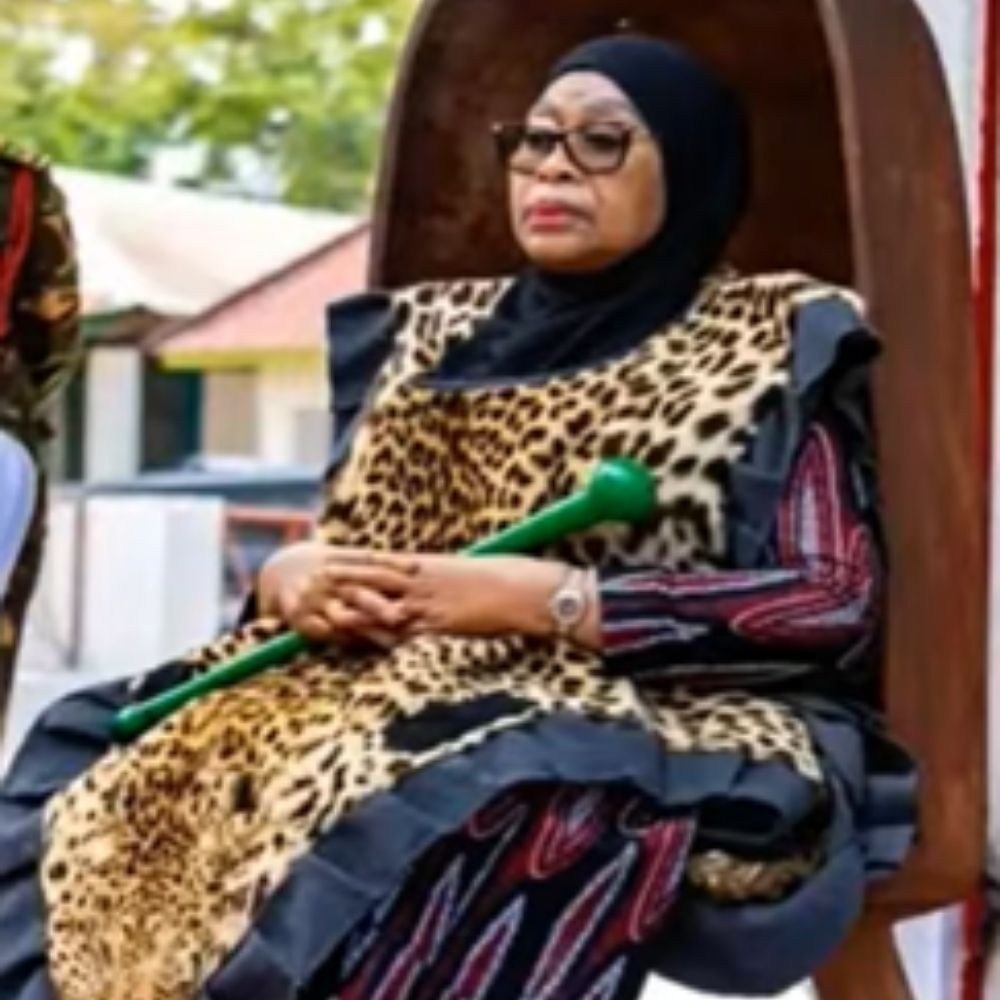
In the wake of killings and deaths associated with Tanzania’s 2025 elections, Rubara reflects on persisting challenges and how unity and transformation may be forged.
The numbers arrived like a thunderclap, shattering any lingering illusions of democratic vitality. On 1 November 2025, Tanzania’s National Electoral Commission declared Ndugu Samia Suluhu Hassan the winner with 97.66% of the vote – a figure so lopsided it evoked the one-party certainties of the 1970s rather than the multiparty era inaugurated in 1992. In parliament, her Chama Cha Mapinduzi (CCM) party claimed 98% of seats, mirroring the near-total sweep of the 2024 local elections. Opposition parties, already battered by disqualifications, boycotts, and arrests, dismissed the results as a “coronation masquerading as an election.” Data on the dead and injured varies and should be treated with caution. CHADEMA, the main opposition, alleged that over 700 people, rights groups have also alleged over 3000 killed and buried in secret graves – mostly youth – who had been killed in post-poll violence. The United Nations cautiously placed the toll at “at least 10 confirmed deaths” while acknowledging widespread reports of abductions and maimings. On November 11, 2025, however, the UN observed that “Hundreds of protesters and others have been killed and an unknown number injured or detained in Tanzania following protests surrounding last month’s elections, according to reports obtained by the UN human rights office (OHCHR).”
Internet blackouts, curfews in Dar es Salaam and Mbeya, and the indefinite postponement of university reopenings painted a tableau of repression that recalled the late John Magufuli’s iron-fisted tenure rather than Hassan’s early promises of reform.
Cynicism now saturates the national psyche. Urban youth, who once dared to hope that Hassan’s 2021 ascension signalled a thaw, scroll through social media, especially the X (formerly twitter) platform timelines flowing with #SamiaMustFall and #TanzaniaIsNotFree hashtags. Rural voters, long accustomed to CCM’s patronage, whisper of ballot-stuffing and intimidation by local party cadres. International observers – barred from monitoring by foreign accreditation denials – issued statements of “grave concern” from afar. The African Union’s response was muted. Western governments, led by the UK, Canada, and Norway, condemned the process outright. Tanzania, once a beacon of stability in East Africa, finds itself diplomatically isolated and economically vulnerable, with investors reassessing a 6% GDP growth trajectory now clouded by political risk.
Yet amid this democratic wreckage stands a paradox. The victorious president is also Ntemi Hangaya, paramount chief of the Sukuma people, a title bestowed upon her in September 2021. This dual identity – head of state and traditional leader of Tanzania’s largest ethnic group – matters profoundly. It was meant to be a bridge, a symbol of continuity after Magufuli’s death, and a gesture toward national cohesion. Four years later, as Hassan is sworn in for a second term on 3 November 2025 amid tight security and opposition boycotts, the chieftaincy has become a lens through which to examine the fragility of Tanzania’s unity, the persistence of authoritarian reflexes, and the unfulfilled promise of inclusive governance.
To understand Chief Hangaya is to grasp the weight of the ntemi institution among the Sukuma, a Bantu-speaking people numbering over 10 million – 16% of Tanzania’s population – and concentrated in the Lake Zone regions of Mwanza, Shinyanga, Simiyu, and Geita. The ntemi is not merely a ceremonial figure but a living embodiment of ancestral authority, ritual potency, and social order. The Hangaya succession follows a matrilineal logic. The chief is chosen from the lineage of the previous ntemi’s sister, ensuring continuity through female descent while reserving the throne itself for men. The chief presides over a council of elders (banamhala), mediates land disputes, oversees rain-making ceremonies, and maintains harmony between the living and the ancestors. In pre-colonial times, Sukuma chiefdoms were autonomous polities; under British indirect rule, they were federated into larger units but retained significant local influence. Post-independence, the 1963 abolition of chiefdoms under Julius Nyerere’s socialist reforms stripped them of formal power, yet their cultural resonance endured. By the 1990s, as multiparty politics returned, chiefs re-emerged as vote mobilisers and arbiters of rural justice.
The ntemi’s role extends beyond Sukumaland. Nationally, the Sukuma represent a microcosm of Tanzania’s diversity and tensions. Their economy blends subsistence farming (cotton, rice, maize) with pastoralism (cattle herding), mirroring the agrarian backbone of the mainland. Their geographic position – far from the Swahili coast yet linked to it through trade – symbolises the interior’s integration into national markets. Their size and electoral weight make them indispensable to any ruling party; CCM has consistently secured over 80% of parliamentary seats in the Lake Zone. Thus, the Sukuma are not just an ethnic group but a political fulcrum. Elevating a non-Sukuma to their chieftaincy was therefore a calculated act of statecraft, not a cultural whim.
Samia Suluhu Hassan’s installation as Chief Hangaya in September 2021 – six months after Magufuli’s sudden death – must be read against this backdrop. Magufuli, a Sukuma from Chato, had cultivated fierce loyalty in the region through infrastructure projects (the stalled $10 billion Bagamoyo port), agricultural subsidies, and a populist rhetoric that resonated with rural pride. His passing left a vacuum. Youth unemployment lingered at 15% amid drought-stressed livelihoods, and hardline CCM factions in Shinyanga and Mwanza feared marginalisation under a Zanzibari president. Hassan, acutely aware of her outsider status, needed to secure the Lake Zone’s 20% contribution to national GDP and its bloc of parliamentary seats.
The chieftaincy offered a solution. By accepting the ntemi title, Hassan signalled continuity in patronage while neutralising ethnic backlash. The gesture promised sustained investment – irrigation schemes, tourism development along Lake Victoria, and cotton value-chain upgrades – while insulating CCM’s rural machinery. Chiefs, after all, resolve 70% of land disputes in Sukumaland and command voter turnout through kinship networks. In a region where 40% live below the poverty line, the chief’s endorsement is a currency of legitimacy.
Nationally, the installation was framed as a triumph over tribalism. Nyerere’s “Ujamaa” philosophy had long insisted that Tanzania’s strength lay in transcending ethnic particularism. Hassan, a coastal Muslim woman leading the inland’s largest Bantu group, embodied this ideal. Her early reforms – lifting Magufuli’s COVID-19 denialism, easing media bans, and releasing political prisoners like Freeman Mbowe – amplified the narrative of renewal. The Sukuma, with their dual identity as farmers and herders, became a metaphor for reconciling tradition with modernity, interior with coast, rural marginality with urban aspiration. Celebrating Chief Hangaya was thus pitched as a national project. A Sukuma throne occupied by a Zanzibari symbolised a Tanzania rising above parochialism. It was a deliberate choice of the Sukuma not as a tribalistic gesture but as a unifying front – pastoralism and farming, tradition and modernity, the interior of the country with the coast all converging in one symbolic act that declared Tanzanian identity transcends the narrow confines of ‘tribalism.’
Yet symbolism, untethered from delivery, curdles into cynicism. Four years on, the Hangaya chieftaincy has not translated into tangible gains for Sukumaland or the nation. Irrigation projects remain underfunded. Youth unemployment persists. Cotton farmers complain of delayed payments. The 2025 elections exposed the hollowness of the gesture. In Mwanza and Shinyanga, voter turnout plummeted. Abstention, as protest, CHADEMA’s disqualification in April 2025 for refusing a biased code of conduct, followed by Tundu Lissu’s treason charges and solitary confinement, signalled that reformist promises had evaporated. The National Electoral Commission, packed with CCM appointees, lacked bipartisan credibility – a structural flaw rooted in the 1977 Constitution’s failure to mandate independent vetting.
The repression was methodical. Over 200 abductions since 2019 targeted activists and journalists; Freedom House rated Tanzania “not free” in 2024. Social media platforms were banned. Foreign media denied entry, and security forces deployed with live ammunition. The 98% parliamentary sweep reflected not popularity but gerrymandering and intimidation. In Sukumaland, where chiefs once mobilised votes, many stayed silent – their authority compromised by association with a discredited regime.
The Hangaya title, once a bridge, became a burden. Rather than uniting pastoralists and farmers, it highlighted the gap between elite symbolism and grassroots reality. Rather than linking coast and interior, it underscored Zanzibar’s fiscal grievances against the mainland. Rather than transcending tribalism, it fuelled whispers of co-optation. A coastal president using a Sukuma throne to legitimise one-party rule.
Tanzania stands at a precipice. CCM’s monopoly, unbroken since 1961, risks implosion without concessions. The focus must shift from symbolic gestures to structural repair. The immediate priority is the unconditional release of Tundu Lissu and all political detainees, followed by an AU-led independent commission to investigate protest deaths and abductions, and the restoration of internet access alongside accreditation of domestic and international media. In the medium term, constitutional amendments are essential to establish an independent NEC via parliamentary supermajority, introduce diaspora voting and judicial recourse for electoral disputes along the lines of Kenya’s 2010 model, and cap presidential powers with term limits and devolution of fiscal authority. Depoliticisation of traditional institutions through community referenda would insulate chiefs from state capture.
Hassan retains one asset. Her ntemi mantle. She could convene cross-ethnic forums, auditing mining royalties with 30% directed to local development funds and piloting electoral reforms. Youth training in green energy and cotton cooperatives could transform symbolism into buy-in. A national conference – echoing Nyerere’s 1961 vision – could draft a new social contract, with Sukuma elders and CHADEMA youth at the table. Pan-African voices like Zimbabwe’s Tendai Biti warn that 2025 marks a “breaking point”. Failure to act invites ethnic mobilisation, economic sabotage, and regional spillover. Success, however, could redefine Chief Hangaya not as a relic of co-optation but as a catalyst for renewal.
Tanzania’s Sukuma proverb endures: “A chief without people is but a shadow.” In the ashes of 2025, the nation must choose substance over silhouette – unity not as slogan, but as lived practice.
Evans Rubara is a Tanzania-based natural resource management specialist, and sociopolitical analyst. He is available at [email protected] or on X as @PunditParadox.
Bibliography
101 Last Tribes. (n.d.). Sukuma people. https://www.101lasttribes.com/tribes/sukuma.html
Al Jazeera. (2025a, April 12). Tanzania’s main opposition Chadema party barred from upcoming elections. https://www.aljazeera.com/news/2025/4/12/tanzanias-main-opposition-chadema-party-barred-from-upcoming-elections
Al Jazeera. (2025b, April 10). Tanzania opposition party leader Tundu Lissu charged with treason. https://www.aljazeera.com/news/2025/4/10/tanzania-opposition-party-leader-tundu-lissu-charged-with-treason
BBC. (2025a, November 1). Tanzania election: Samia Suluhu Hassan wins vote as hundreds feared dead in unrest. https://www.bbc.com/news/articles/cm2ww0e0jewo
Chatham House. (2025, October 23). Tanzania election: Erosion of democracy will also come at the cost of economic potential. https://www.chathamhouse.org/2025/10/tanzania-election-erosion-democracy-will-also-come-cost-economic-potential
CNN. (2025, October 31). What to know about a disputed election in Tanzania, where single-party rule is being challenged. https://www.cnn.com/2025/10/31/africa/tanzania-opposition-dispute-election-intl
Freedom House. (2024). Freedom in the world 2024: Tanzania. https://freedomhouse.org/country/tanzania
Guardian. (2025, October 31). About 700 killed in Tanzania election protests, opposition says. https://www.theguardian.com/world/2025/oct/31/tanzania-election-protests-opposition
Observer Research Foundation. (2024, July 11). Falling apart – A story of the Tanzanian Bagamoyo Port Project. https://www.orfonline.org/expert-speak/falling-apart-a-story-of-the-tanzanian-bagamoyo-port-project
Reuters. (2025, November 3). Tanzania's President Hassan takes office after deadly election violence. https://www.reuters.com/world/africa/tanzanias-president-samia-suluhu-hassan-sworn-into-office-2025-11-03/
Reuters. (2021, April 6). Tanzania's new president to review COVID-19 stance, lifts media ban. https://www.reuters.com/article/us-health-coronavirus-president-idUSKBN2BT12W/
SADC. (2025). Preliminary Statement by the Right Honourable Richard Msowoya Former Speaker of Parliament of The Republic of Malawi and Head of the SADC Electoral Observation Mission (SEOM) to The 2025 General Election of the United Republic of Tanzania: https://www.sadc.int/sites/default/files/2025-11/Tanzania%20SEOM%202025%20-%20Preliminary%20Statement%20-%20Final%203%20November%202025%20%28002%29.pdf
World Bank. (2020). Poverty and equity brief: Tanzania. https://databank.worldbank.org/source/poverty-and-equity
World Bank. (2021). Youth unemployment rate for the United Republic of Tanzania. https://data.worldbank.org/indicator/SL.UEM.1524.ZS?locations=TZ