


When a President Turned Gangster: Sarkozy, Libyan Bribes, and the War That Followed
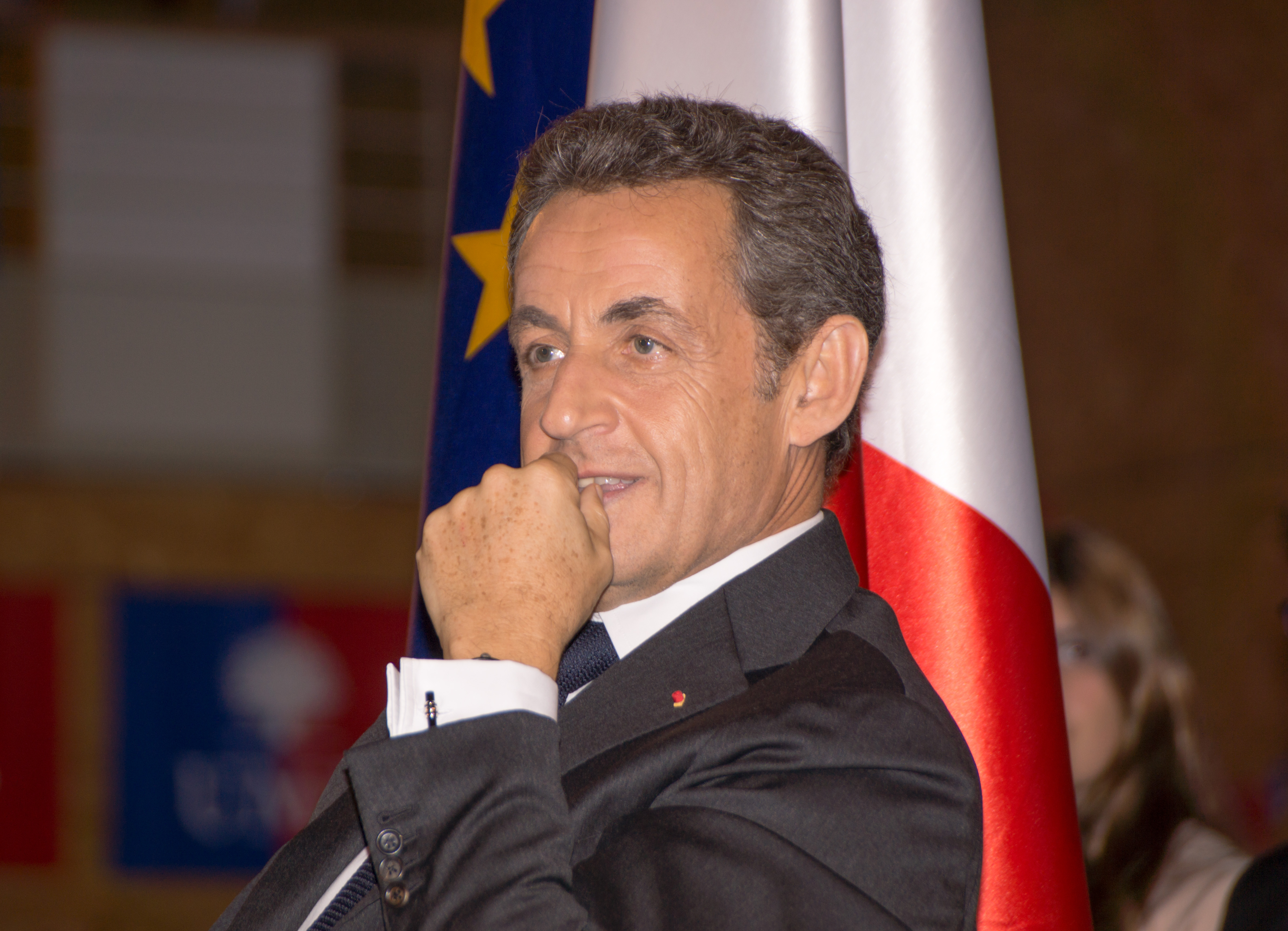

Nicolas Sarkozy held accountable for corruption at home. How about justice for destruction abroad? Fetouri critically reflects on the selective accountability of Sarkozy’s conviction.
Nicolas Sarkozy, former President of France, has been sentenced to five years in prison for criminal conspiracy related to the illegal financing of his 2007 presidential campaign by the Libyan regime of Muammar Gaddafi. This verdict, delivered on September 25, 2025, marks the first time in French history — and particularly since the establishment of the Fifth Republic — that a former president has been sentenced to serve actual prison time.
Despite his intention to appeal the decision, the court ruled that Sarkozy must begin serving his sentence immediately, citing the exceptional gravity of the offense. However, the exact date for the commencement of his imprisonment has not been specified. Sarkozy has denounced the ruling as a "scandal" and a "humiliation for the country."
In addition to the prison sentence, Sarkozy was fined €100,000 and banned from holding public office for five years. His former associates, including Claude Guéant and Brice Hortefeux, also received sentences ranging from two to six years.
Yet the irony could not be sharper. Sarkozy now faces prison for financial misconduct, but not for the far greater crime that defined his presidency: the 2011 NATO-led war on Libya. Although formally authorized by United Nations Security Council Resolution 1973 to protect civilians in Libya, the intervention quickly exceeded its mandate, raising widespread questions about its legality and drawing criticism from the African Union and other international observers. What began as a mission to protect civilians evolved into a campaign of regime change that left Libya in ruins, destabilized the region, and triggered waves of migration and violence across Africa and the Mediterranean. Fourteen years later, neither Sarkozy nor any other Western leader has faced accountability for that devastation. France’s justice system appears willing to punish corruption when it stains domestic politics, but remains silent on wars waged abroad in its name.
A Historic Verdict
Sarkozy's conviction is the latest in a series of legal troubles that have shadowed his presidency and post-presidency years. He was previously convicted in two separate cases: the 2021 “wiretapping” case, in which he was found guilty of corruption and influence peddling while attempting to bribe a judge, and the Bygmalion campaign-financing case, confirmed in 2025, for illegally exceeding spending limits during his 2012 re-election bid. In a notable turn of events, Sarkozy appeared in court wearing an electronic bracelet, a consequence of his prior conviction. The September 25, 2025 conviction for illegal Libyan campaign financing in 2007 marks his third conviction, carrying a prison sentence of five years, including restrictions on holding public office—literally ending his political career.
Earlier during his presidency, Sarkozy had also been embroiled in the Bettencourt affair, in which the L’Oréal heiress Liliane Bettencourt allegedly provided illegal campaign contributions. At the time, the case against him was dropped due to insufficient evidence and his presidential immunity, though several of his associates were later convicted. In a way, the septuagenarian former president’s long brush with the law adds historical weight to his current convictions, giving further substance to the charges he now faces. Together, these cases paint a portrait of a former leader whose financial misconduct and political ambitions abroad intersect, culminating in a verdict that is both historic and symbolic.
The Libyan Connection
The connection between Sarkozy’s financial misconduct and Libya does not end with the conviction. Abdallah al-Senussi’s lawyer, speaking recently on Al-Wasat TV, confirmed that Senussi acted as the Libyan regime’s handler for funds allegedly funnelled to Sarkozy’s 2007 presidential campaign. The lawyer, Ahmed Nashad, described how his client, Senussi, agreed to meet with French investigators—in the presence of the Libyan prosecutors—and told them everything he knew about the case, emphasizing that the total amount was actually around €7 million. Sarkozy’s men did not go to any Libyan bank nor did they get checks but received the money in cash. Nashad added that Sarkozy, in return, had promised to help rehabilitate Libya internationally including the use of France’s veto power, at the United Nations Security Council, in support of Libya whenever possible. In 2012, Moftah Missouri, the late Gaddafi’s personal interpreter and ambassador, revealed in a French television interview that Gaddafi himself had told him Libya financed Sarkozy’s presidential campaign with about $20 million. In such secret deals lack of accuracy and documentation is normal as parties do not want to leave behind any paper trail.
According to Libyan intelligence sources I spoke with in 2022, a female operative — whose name was not disclosed — helped transport part of the cash in a suitcase from Rome to Paris, where it was handed to one of Nicolas Sarkozy’s close confidants, most likely his Middle East fixer, the late Ziad Takieddine. Takieddine died suddenly in Beirut just days before Sarkozy’s conviction. It was Takieddine himself who had first revealed that he personally carried suitcases filled with Libyan cash to Sarkozy in 2006, when the latter was preparing his presidential campaign while still serving as interior minister under President Jacques Chirac.
It was Saif al-Islam Gaddafi who first brought the issue to public attention in an interview with Euronews on March 16, 2011. While he did not mention a specific figure, he called on Sarkozy to “return the money”, saying: “We helped him [Sarkozy] become president so that he would help the Libyan people, but he has disappointed us. And very soon we will publish all the details and the documents and banking pay slips.” Just days after Sarkozy’s trial began, Gaddafi Jr. reiterated his testimony in a written statement to French public radio, this time referring to an initial payment of €2.5 million, in which he said he was personally involved— validating much of what Takieddine has said.
Court Findings and Controversies
All sources agree that cash was indeed delivered to Sarkozy’s 2007 presidential campaign, though they differ on the exact amounts involved. Abdallah al-Senussi himself, speaking publicly in March 2011 at the start of the Libyan conflict, said that “he [Sarkozy] worked with him on the matter.” He explained that the funds were part of a political understanding under which Sarkozy, once in office, would help rehabilitate Libya internationally and drop the case implicating Senussi in the 1989 UTA Flight 772 bombing — a promise that, according to Saif al-Islam Gaddafi, was quickly broken.
Over the years, multiple testimonies from Libyan officials, intermediaries, and Sarkozy’s own associates have corroborated the existence of such transfers, even as they continue to disagree with the total sum, with figures ranging between €2.5 million and €50 million. This revelation casts a long shadow over the 2011 NATO intervention, suggesting that the same regime whose money may have helped propel Sarkozy to power was later the target of a war he championed. Analysts and observers have long argued that France’s military action in Libya, framed as a humanitarian intervention, conveniently aligned with Sarkozy’s political and personal interests. The court’s 2025 ruling, while historic in its domestic scope, leaves unresolved the broader questions of accountability for the international devastation that followed, including the collapse of Libyan institutions, the spread of armed militias across the Sahel region, and turning Libya into an arms black-market. Since then the country itself has become more of a jungle in which armed militias fight over turf and wealth including in the densely populated capital, Tripoli.
Even the French court, while careful not to state it openly, acknowledged that a criminal conspiracy existed to channel funds from Libya to Sarkozy’s 2007 presidential campaign. In its verdict, the court found that an elaborate network of intermediaries and covert financial arrangements had been established with the clear intention of securing illicit funding from the Gaddafi government. Although judges stopped short of confirming that the cash actually reached Sarkozy’s campaign accounts, the ruling nonetheless validated the broader narrative of collusion and intent, recognizing that such actions constituted a grave violation of French electoral law.
While an appeal is expected, the case remains far from fully settled. French law allows appellate judges to re-examine both the facts and the sentence, meaning that Sarkozy could, in theory, face an increased prison term or additional fines if the unresolved questions about campaign overspending remain. The court acknowledges that Sarkozy’s prudential campaign overspent some €20 million more than the legally allowed limit. The source of this extra cash is still unexplained and many think it could well be part of that Libyan money. This leaves open the possibility that the appellate court could view the financial irregularities as more serious than initially ruled, prolonging legal uncertainty and reinforcing the historic significance of the trial.
A Pattern of Corruption Compromising Foreign Policy
Sarkozy’s Libyan scandal is far from an isolated case about domestic policy. France’s post-colonial political history is riddled with instances of African rulers secretly channeling money to French politicians — a web of corruption that has often blurred the line between diplomacy and personal gain. Such practices inevitably influenced France’s foreign policy decisions, many of which were carried out in the name of the French state but served private or partisan interests.
In 2010, a WikiLeaks cable exposed allegations that Gabon’s long-time president, Omar Bongo, had secretly funneled embezzled state funds to French political parties, including those associated with Sarkozy. A year later, Robert Bourgi, a lawyer and adviser with close ties to both Jacques Chirac and Dominique de Villepin, claimed that several African leaders had handed over briefcases filled with cash to French presidents — and that when he later worked with Sarkozy, similar arrangements were discussed. The recurrence of such scandals shows that Sarkozy’s dealings with Libya were not an aberration but part of a deeper pattern — one where African wealth and politics have long been exploited to sustain France’s own domestic power games.
These precedents reveal that French foreign policy decision-making is deeply tainted by corruption, with particularly damaging consequences for distant states, especially in Africa. When “foreign policy” becomes entangled with opaque financial dealings and private arrangements, decisions are no longer guided by national interest or international law but by personal gain — becoming transactional, often with devastating consequences.
This is not merely a case of domestic corruption or judicial accountability; it reflects a systemic problem that undermines the credibility of the French state on the global stage. It exposes how a country that publicly champions democracy, rule of law and human rights can, in practice, be vulnerable to bribery and manipulation. The consequences are not abstract: they materialize in wars, regime changes, and shattered societies across Africa, where millions ultimately bear the cost of decisions made in Paris’ dark corridors of power.
In the case of Libya, many analysts argue that Sarkozy had personal motivations for intervention, beyond France’s broader strategic interest in maintaining influence over North and West Africa: the late Gaddafi was seen by France as an increasing threat to its traditional dominance in parts of Africa. For years, the late Libyan leader was challenging France’s policies through his independent political and economic vision. Across Africa and beyond, the 2011 intervention is increasingly seen as a pretext for regime change, driven both by Paris’s desire to distance itself from prior political entanglements and by Sarkozy’s personal ambitions, while simultaneously asserting French dominance over post–Arab Spring Libya.
African and Global South Reactions
Across Africa and the Global South, Sarkozy’s conviction has reignited long-standing grievances over the 2011 NATO intervention in Libya. For many, the trial underscores the selective nature of accountability: while a former president can be punished for corruption at home, no Western leader has faced consequences for the devastation brought by the war, which dismantled Libya’s institutions, fueled regional instability, and unleashed waves of illegal migration across the Sahel and the Mediterranean. Analysts and policymakers in the region see the legal saga not merely as a French domestic affair, but as a symbol of enduring double standards in global justice, where the human and political costs of Western interventions are borne by African populations.
At the same time, some African leaders who have remained nominally loyal to France may now question its reliability. With French influence in the Sahel diminished and Paris effectively “kicked out” of key arenas, local leaders might fear that France cannot be trusted to protect its allies. Historical patterns of French corruption, opportunism, and occasional abandonment of partners only reinforce these fears, underscoring that personal and national interests in Paris often take precedence over long-term regional stability. In this context, Sarkozy’s personal and political motives are inseparable from the broader story of France’s declining influence in North Africa and the post-Arab Spring order, a reality that continues to fuel skepticism toward Western interventions.
A Cautionary Tale
For France, the trial is not only a domestic reckoning but a cautionary tale for its remaining allies in Africa, highlighting the erosion of trust and the limits of influence in a region increasingly skeptical of Paris’s motives. Ironically, this comes at a moment when France’s decades-long exploitation of African resources and entrenched regional networks has yielded diminishing returns, leaving Paris struggling to maintain relevance even as its past actions continue to haunt it. As history and law converge in Sarkozy’s unprecedented verdict, the message is clear: personal corruption and geopolitical ambition, when intertwined, can have consequences that echo far beyond national borders.
Mustafa Fetouri is a Libyan academic and award-winning journalist.