


Maurice Tempelsman and the Criminal Diamond Cartel
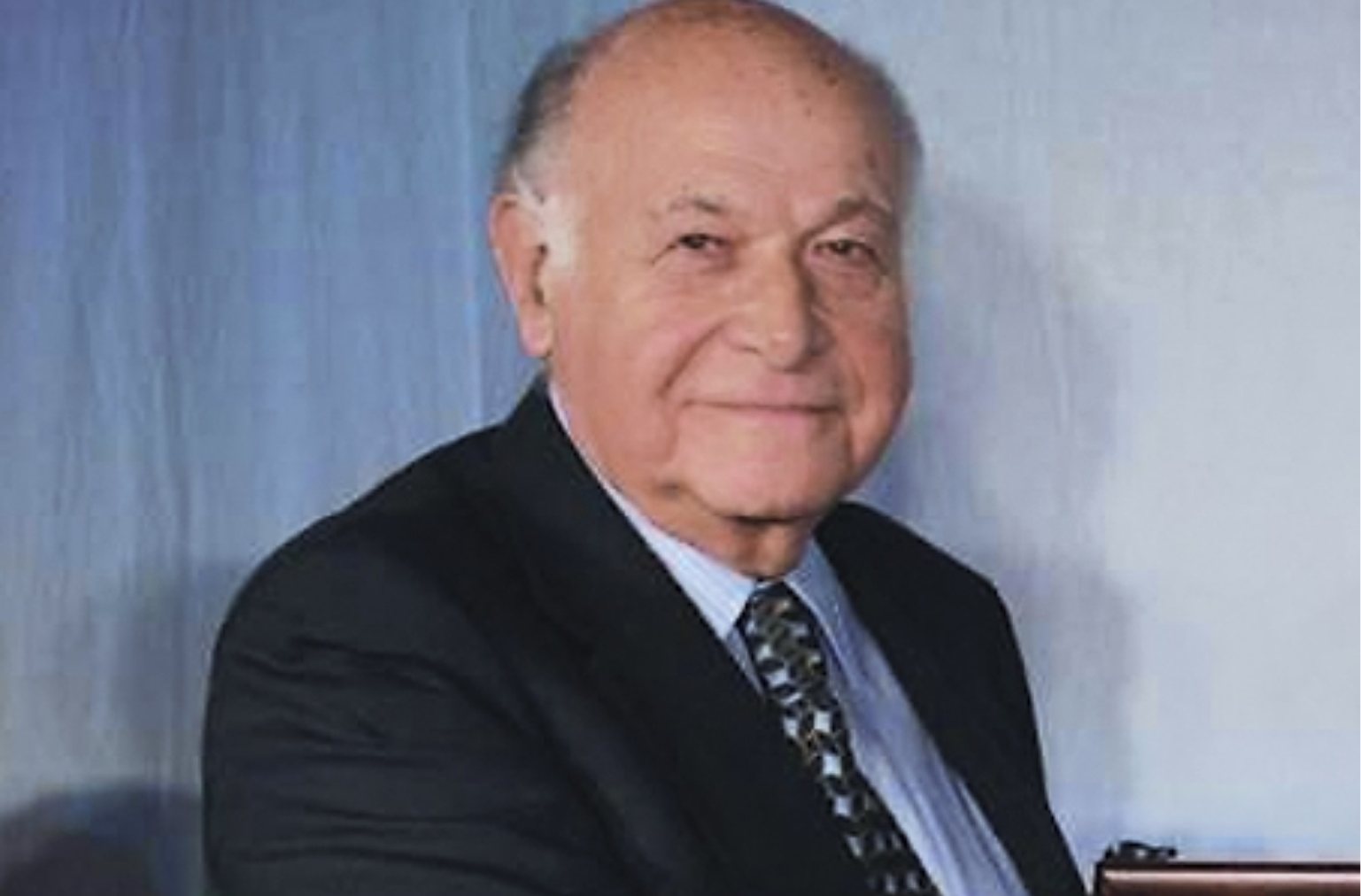
A critical reflection on the legacies of Maurice Tempelsman, the renowned diamond dealer, and the skilled criminality that sustained the diamond cartel amidst Tempelsman’s humanitarian interventions.
Introduction
Maurice Tempelsman, the renowned diamond magnate, passed away in August 2025. The major news media carried long obituaries noting that,
Tempelsman (August 26, 1929 – August 23, 2025) a renowned diamond dealer passed away at the age of 95. Tempelsman mimicked the traditions and the political practices of the Oppenheimer’s of South Africa and their Anglo-American DeBeers conglomerate that operated under the protection of the apartheid state. He was the longtime companion of Jacqueline Kennedy Onassis, the 35th First Lady of the United States.
The New York Times and the Washington Post embellished these praise stories with reference to the fact that, “For a half-century, he had also been a prominent fund-raiser for the Democratic Party and forged particularly close relationships with Presidents John F. Kennedy and Bill Clinton.”[1]
None of the major western news outlets interrogated the sleaze of the diamond industry and the role played by Maurice Tempelsman in the destabilization and destruction of Africa over the past 80 years. Instead, the long tradition of representing diamonds in the worlds of glamour and royalty ensured that readers of the obituary knew more about the relationship with Hollywood and celebrities than that with Mobutu Sese Seko, now deceased former President of the Congo. Tempelsman now joins the ranks of Cecil Rhodes, the Rothschilds, the Oppenheimer’s (Ernest and Harry) and J.P. Morgan, who made great fortunes out of the super exploitation of Africans. One hundred years after the pillage of Cecil Rhodes a global movement emerged among young activists and intellectuals called, Rhodes Must Fall. The name of Rhodes triggered a rallying cry for decolonisation; Tempelsman’s legacy demands a similarly unflinching acknowledgement of the economic oppression, structures of extraction and impunity that flourished under his influence. The struggles against apartheid had alerted Tempelsman that it was important to support ‘advocacy groups’ and ‘humanitarian’ Non-governmental organizations (NGOs), while promoting initiatives such as the Kimberly Process to sanitize the continued role of the diamond industry in the criminal cartel. In this commentary, we will reflect on the legacies of Maurice Tempelsman.
Diamonds, cartels, criminality and Africa
It is now well established by legal scholars that DeBeers, the South African mining company, operated like a criminal cartel in the marketing of diamonds. Edward Jay Epstein in the book, the Rise and Fall of Diamonds, explored how the diamond cartel shaped markets, manipulated supply, and even influenced political dynamics in African countries.[2] Twenty years later Janine Roberts wrote Glitter & Greed: The Secret World of the Diamond Empire. Even hagiographic texts such as Michael Cardo’s Harry Oppenheimer: Diamonds, Gold and Dynasty could not conceal the inhuman conditions under which mine workers toiled to ensure the enrichment of those who lived within the Brenthurst estates. Since these books there have been numerous articles in specialized trade journals such as Gems and Geology, Gemological Institute of America, the European Gemological Laboratory, the American Gemological Society, or the International Gemological Institute that offer critical insights into the conditions of this industry. The books and critical articles are buried by the glitzy trade journals that do the marketing for this vile and deadly industry. Some of these trade journals are the Rapaport Magazine, which offers pricing and market trends, JCK Magazine for news and trends, National Jeweler, and INSTORE for retail insights and trends. Templeman and his organization Lazare Kaplan International (LKI) was a key player in the world of diamonds with the tentacles intersecting with government, intelligence agencies, guerilla groups and governments as far afield as the USA, South Africa, Israel, Belgium, the Netherlands, DRC, Botswana, Namibia, Sierra Leone and anywhere in the world where there were large deposits of diamonds. Lazare Kaplan International (LKI) remained after WWII the foremost diamond manufacturing and distribution company with a long history, known for its prestigious "Lazare Diamond" brand. Maurice Tempelsman, born in Antwerp, Belgium had become the chairman of LKI and significantly expanded its clandestine intelligence activities in the diamond syndicates that operated for the DeBeers diamond cartel in the world.
Diamond cartel
It is important to distinguish between the syndicate and the cartel. A syndicate is a group of individuals or organizations that work together to achieve a common goal. This can include anything from a group of anti-people capitalists pooling their resources to restrict the amount of diamonds in circulation, “restricting what got cut, restricting what actually found its way into the retail market and, at the same time, through movies, through advertising, through Hollywood, through the manipulation of perceptions, creating the idea that there was this enormous demand for these shiny little objects that they seemed to have in abundant supply.”[3] The LKI company operated as a syndicate for the De Beers cartel distributing its products through over 1,500 retail ‘partners and customers’ in 29 countries.
The Cartel violence of De Beers in this instance refers to the violent activities undertaken by diamond dealers who used viciousness and coercion to control the workers in the diamond mines along with the legal and illegal measures to attain total monopoly over the global diamond market. The crude violation and oppression of workers in the diamond mines included searching their orifices to ensure that they were not smuggling diamonds out of the mines. There are many good books and articles on the diamond cartel, but while these books predicted the demise of the cartel, this organization has demonstrated its staying power with tentacles in all parts of the capitalist empire.[4] In 1880, De Beers Mining Company was created by Cecil Rhodes and by 1887 the company was the sole owner of South African diamond mines. Cartel violence in this case depended on the military power of firstly the British imperial state and after 1910 the violence of the apartheid war machine. The Anglo-American Corporation was founded in South Africa in 1917 by Sir Ernest Oppenheimer to exploit the East Rand's gold resources, with financial backing from British and American sources, hence the company's name. The Anglo-American Corporation quickly grew to dominate the processes of capital accumulation and crude violence that became associated with apartheid. With the alliance with this oppressive state structure the Anglo-American Corporation became the most powerful network of mining, industrial, and financial companies, and famously became the majority shareholder in De Beers in 1926.
Maurice Tempelsman and LKI were subcontractors for the De Beers diamond cartel. Edward Jay Epstein wrote more than forty years ago that,
The diamond cartel has lasted for 70 years and shows no sign of weakening. What makes this cartel different is it's controlled by a single company, a single commercial organization, and that's De Beers. And De Beers itself is controlled by another South African company, Anglo American. Interestingly, Anglo American is controlled by De Beers and that interlocking ownership is what allows one small family company, E. Oppenheimer's; Sons, who own just a small shareholding in Anglo American, to control the whole edifice.[5]
De Beers and the Central Selling Organization (CSO) was labeled as a cartel more than 80 years ago by the Justice Department of the United States. This was because of the monopolistic activities of De Beers in the diamond industry. As Epstein wrote,
In the 1940s De Beers was indicted by the US Justice Department for price fixing under the Sherman Act. The US also believed De Beers had rationed the supply of tool diamonds to the US during the Second World War severely damaging the war effort. It was determined never to let this happen again, and legislation was thus passed to set up a national diamond stockpile. De Beers needed a way to ensure it was the source of this stockpile despite being indicted. It sought a middleman to do the deals with the US. Early in the 1950s Tempelsman met with the Oppenheimer’s who rule De Beers and became this middleman. He was uniquely supplied with millions of diamonds to sell the US as its strategic reserve.
De Beers fought the US Justice Department on the legal front, but unleashed a media blitz to maintain its corporate goals. De Beers had orchestrated a major advertising coup in the USA in the marketing of diamonds. In Europe diamonds had been associated with royalty and the remnants of the upper classes. During the difficult period of the war, capitalist depression and war, De Beers launched the most impressive marketing campaign in the world, associating engagement to be married with diamond rings. Before this campaign, most American engagement rings didn’t feature diamonds. Within a generation, that changed completely. By the 1980s, diamond engagement rings became an expected part of a marriage proposal.
The media campaign that had started before WWI took on new urgency after the war when the Justice department started going after the monopoly position of De Beers.[6] The company came up with the slogan, "A Diamond is forever.” In the process, this cartel ensnared the advertising industry into the most successful marketing campaigns in history by linking diamonds to love and marriage. When the Justice Department of the United States threatened De Beers after World War II, one of the sub-contractors, Lazare Kaplan International (LKI) that had its roots in the exploitation of diamonds from the Congo, established one of the most lucrative centers for diamond distribution in the United States. Tempelsman became the chief executive of LKI in 1984, transforming it into a major player in the global diamond industry. In 1985, it launched the Lazare Diamond, the first branded diamond in the world.
The slogan ‘A Diamond is Forever” became part of western popular culture. The Madison Avenue campaign successfully associated diamonds with eternal love and became a cornerstone of modern engagement culture. Madison Ave became part of the psychological arsenal of US capitalism. After World War II the US advertising industry leveraged psychological and psychoanalytic techniques to manipulate consumer desires and promote a culture of perpetual consumption. Centered on Madison Avenue in New York City, this revolution in advertising in the mid-20th century transformed marketing into a powerful tool for shaping American values and habits. This same marketing campaign was deployed for the anticommunist hysteria of the 1950s. The links between Madison Avenue, Hollywood and Washington were important for these campaigns. Maurice Tempelsman was at the heart of these networks.
Marlyn Monroe made a movie entitled the Diamond is a Girl’s Best Friend, but it was the association between Tempelsman and Jacqueline Kennedy Onassis that cemented the linkages between Madison Avenue, militarism, politicians, Hollywood and intelligence. After the Greek magnate Aristotle Onassis died, Maurice Tempelsman became the companion of Jacqueline Kennedy Onassis who was by then an icon of American culture, fashion and democratic political intrigue. Tempelsman’s subcontracting role for De Beers was augmented by his questionable[7] business dealings in art and culture.
The multipronged Madison Avenue campaign transformed diamonds from a declining luxury good into a highly desirable and necessary symbol of romantic commitment in Western popular culture.
“That shift wasn’t organic. It was strategic, and De Beers orchestrated every piece of it.”[8]
In 2022, De Beers launched another strategic rebranding exercise deploying the Kenyan actress Lupita Nyong’o, as its Global Brand Ambassador, to front a campaign under the title ‘De Beers: Where it begins’, with the stated goal of empowering girls in Namibia, South Africa and Botswana, where the company first started mining diamonds.[9] This continues the tradition where De Beers, according to the authors cited above, of using celebrities and royalties, such as Queen Elizaeth II, as its advertising agents.
Robert N. Proctor in developing a materialist analysis of the ‘Great Diamond Hoax’ has provided credible scientific information on differences between rocks and minerals. Gold had been a mineral which was used as a symbol and storage of wealth in pre capitalist eras, but it is the era of monopoly capitalism that elevated diamonds, emeralds and rubies to be symbols of opulence and class selection. The materialist analysis of Proctor broke down the distinctions between stones, precious stones and semi-precious stones.[10]
Enter Maurice Tempelsman as a sightholder
Advertising alone, along with coopting Hollywood was not enough to stop the US Justice Department from going after De Beers. By 1950, DeBeers could not legally operate in the United States. Even though De Beers was based in South Africa and operated primarily overseas, U.S. antitrust laws apply to any anticompetitive behavior that impacts American commerce. As Epstein outlined, for decades, De Beers avoided formal prosecution because its executives stayed out of the United States, effectively preventing them from being served with legal papers. This led the company to rely on select customers (known as a "sightholder"). LKI and Tempelsman were one of the 90 sightholders for the cartel in the world. (A De Beers Sight Holder is a select group of diamond dealers who have earned the privilege of purchasing rough diamonds directly from De Beers). This exclusive arrangement grants them access to a regular allocation, or "sight," of rough diamonds at predetermined events. With this designation as a sightholder LKI proceeded to establish a diamond cutting factory in Puerto Rico benefitting from the colonial status of Puerto Rico to advance its business interests. The company Lazare Kaplan International (LKI) had started out in Belgium but the calamities of war, occupation and fascism had forced the principals to relocate to the United States.
Tempelsman undertook a new strategy of suborning not only Hollywood but also politicians, by persuading the U.S. government to stockpile African diamonds for industrial and military purposes, with himself as the principal intermediary. Maurice Templesman had joined the diamond cutting firm Lazare Kaplan International in Belgium but emerged after he managed to get De Beer’s out of the crosshairs of the US Justice Department that had wanted to prosecute De Beers under the Sherman act for price fixing.
Maurice Tempelsman took LKI to new heights when the company and its leaders diversified their diamond cutting and distribution activities into an investment company specializing in real estate and venture capital. This kind of shift is what would be called development of sophisticated transnational organizations (TCOs). In the art world there is documentation of the anatomy of plunder to expose the operations of Tempelsman in the art world. For the peoples of Africa, Lazare Kaplan and LKI were forever associated with subversion, destabilization and plunder.
Lazare Kaplan and the overthrow of Kwame Nkrumah in Ghana
In 1957, when Tempelsman was 27, he went to Africa's Gold Coast (now Ghana) with his lawyer, Adlai Stevenson II, to establish diamond trading connections. Ghana had been a prominent center for trading in gold over centuries with goldsmiths playing a vital role in preserving important jewelry skills through traditional jewelry designs, which are influenced by cultural values, rituals, and aesthetics. The young Tempelsman wanted to be sure that the skill levels of these Ghanaians were no threat to De Beers and the diamond cutters in the LKI networks. An important discovery of diamonds in Ghana occurred in 1919 along the Birim River. This discovery initiated a large-scale diamond mining industry in the area, which was then a British colony known as the Gold Coast. The Oppenheimer’s were comfortable dealing with the British in Ghana but with the approach of independence in 1957, the diamond cartel was nervous, hence the Tempelsman trip to Ghana with Adlai Stavenson.
Adlai Stevenson had been the presidential candidate for the Democratic Party in 1952 and 1956. Tempelsman was reaching into the highest levels of the Democratic Party to get political support. Tempelsman aimed to forge new ties in newly independent African nations, while Stevenson's stature as a prominent Democrat lent credibility and influence. Leveraging his strong ties to the Democratic Party, Tempelsman's business secured a contract to supply industrial diamonds to the U.S. government for its military stockpile.
Ernest Grosse acted as Tempelsman's on-the-ground representative in Ghana, helping to establish and maintain diamond purchasing operations. Grosse’s presence in Ghana allowed Tempelsman to be among the first foreign businessmen to receive diamond buying licenses. This positioned Tempelsman’s companies to benefit from Ghana’s rich mineral resources before the market became more regulated. Tempelsman was however very unhappy with the objectives of Kwame Nkrumah to stabilize the economy of Africa and build the unification of Africa. John Stockwell, a CIA officer in Africa, had recounted the plot to undermine Nkrumah’s government and to sow anti-Nkrumah sentiments among Ghanaians. Grosse was intimately involved in the 1961 plot to overthrow Nkrumah. The agents of LKI continued to work with western intelligence agencies against Nkrumah, especially after Ghana committed to supporting the independence project in Congo.
Tempelsman’s network, including Grosse, supported covert efforts to destabilize Nkrumah’s regime. In 1966, a CIA-backed coup overthrew Nkrumah. Academic research and declassified documents exposed the involvement of Tempelsman through agents like Grosse and former CIA operatives. If the destabilization of Ghana was the prologue to Templeman’s role in subversion, the role of Tempelsman in the destruction of the Congo stands as one his lasting contributions to US imperialism in Africa.
Tempelsman, Mobutu and the Congo.
De Beers Consolidated Mines Ltd had been associated with the genocidal economic activities of the Belgians in the Congo in its relationship with Societe Internationale Forestiere et Miniere du Congo, commonly known as Forminiere. Forminiere, established in 1906, controlled four subsidiary holding companies, Beceka and the triumvirate known as EKL or Enrte Kasai Luebo-Kasai, Lueta and Luebo, which in return for a half interest granted to the Belgian government, obtained the exclusive concessions to mine diamonds in the Belgian Congo. Union Minière was the other major Belgian mining conglomerate in the Congo that operated mining concessions that were bigger than some European countries. Together, these mining interests supported the conservative Belgian settlers who opposed independence and orchestrated the secession of Katanga shortly after Prime Minister Lumumba was sworn in as Prime Minister of the Congo. Once Lumumba became Prime Minister in June 1960, the Belgians and their mining conglomerates along with the apartheid system went into panic mode. The Church Committee of the US Senate in 1975 has documented for posterity the role of the CIA in the plot to assassinate Patrice Lumumba. The head of the CIA station, Larry Devlin. worked closely with Mobutu Sese Seko and Adoula, who was placed as acting Prime Minister, while the plot to assassinate Patrice Lumumba matured. Ludi Witte, in the book The Assassination of Lumumba, has spelt out the maturation of this plot and the role of Belgian, US and South African intelligence agencies in this assassination. The Lumumba Plot: The Secret History of The CIA and A Cold War Assassination is another important book, but this book has the limitation of centering the Cold War as the justification for the assassination of Lumumba. Tempelsman was directly involved in all aspects of the work of western intelligence with former staffers of LKI reporting to Congress how LKI assisted Mobutu in running the Congo.[11] It is now well documented how the CIA assisted Mobutu in his military coup in 1965 and kept him in power for over 32 years.
Western academics, journalists, economists and aid workers were all ensnared in the Templeman intrigue and double-dealings with Mobutu in the Congo. Sean Kelly in the book "America's Tyrant: The CIA and Mobutu of Zaire" (The American University Press) provided the long history of the US subversion without spelling out how the IMF and the World bank were brought into this Tempelsman mix. When Larry Devlin the CIA Chief of station retired from US intelligence, Devlin settled with his wife in the Congo and became the business agent of Maurice Tempelsman, the diamond, cobalt and uranium broker, who advised the Mobutu Government on its dealings. The twists and turns of Tempelsman, Devlin, the State Department and the US media are too complicated to be reproduced in this short commentary. What remains important is how the Templeton strengthened the Israeli connection to Africa diamonds.
Tempelsman, Diamonds and Israel
The diamond industry has played a vital role in Israel's economy since the Nakba, developing from a fledgling industry started by European immigrants into a global powerhouse. The Tempelsman family's diamond business has had a direct commercial relationship with Israel's diamond industry after Tempelsman took the helm at LKI with Tempelsman’s role in the World Diamond Council interconnecting with the activities of the Israeli Diamond Council. In 2010, Maurice Tempelsman, as chairman of Lazare Kaplan International (LKI), announced that the company would open a new office in Israel
Historically, in the context of medieval European restrictions that prevented Jews from owning land or joining artisan guilds, many moved into financial ventures and the mobile trades, such as the diamond business. By the beginning of the twentieth century, Jewish diamond dealers dominated the trade in Antwerp, London, Johannesburg, and New York. When the state of Israel was established, Israel emerged as one of the world's most important centers for diamond cutting and polishing, with the Israel Diamond Exchange (IDE) being a major global hub. By 1970, Israel was the largest diamond cutting center in the world. According to the New York Times, diamonds became Israel's No.1 industrial export.[12] When in the 1980s the Israeli diamond dealers threatened De Beers by storing diamonds with the plan to flood the markets to challenge De Beers, these Israeli diamond merchants found out the financial power of De Beers and the diamond cartel.
“Israel was going through a period of high inflation; diamonds were one of the few stable currencies and means for storage of value; diamonds as collateral were the best way of securing preferential loan rates. This induced merchants to hoard a significant amount of diamonds with a view at reselling them later. As a result, the supply of diamonds was artificially reduced, driving up prices.
But most dangerous of all for the survival of the cartel is the market ''overhang,'' the aboveground holdings that, if dumped, would cause prices to plummet even further. The most immediate threat is the hoard of diamonds worth $1.5 billion currently in the hands of three Israeli banks. The banks got stuck with the diamonds when they had to foreclose on loans to hundreds of Israeli dealers who had ''invested'' in them as a hedge against inflation. But the ultimate threat is the public's holding of ''more than five hundred million carats of gem diamonds ... which is more than fifty times the number of gem diamonds produced by the diamond cartel in any given year.''[13]
Israeli diamond dealers collaborated with Tempelsman for nearly fifty years until new actors such as Danny Gertler emerged as global players.
Obituaries from August 2025 note that Tempelsman "led the American Jewish Congress" at one point and served on numerous boards reflecting his central role in the powerful Israeli lobby in the United States. John Mearsheimer and Stephen Walt, in the book The Israel Lobby and U.S. Foreign Policy, documented the reality: "No lobby has managed to divert U.S. foreign policy as far from what the American national interest would otherwise suggest, while simultaneously convincing Americans that U.S. and Israeli interests are essentially identical.”
Tempelsman emerged as a strong supporter of Israel and their global operations via the Israel Diamond Exchange. Tempelsman and the luminaries of the diamond industry played a role in supporting the US Israeli lobby and the overt and covert linkages between LKI and American Israel Public Affairs Committee (AIPAC). The Israeli diamond industry is located in Ramat Gan, in the Tel Aviv District of Israel. This is an economic zone that has evolved from a moshava (cooperative agricultural community) to a bustling urban center for high-tech industries and its global links to US, Russian and Indian technology and diamond cutting centers.
Dan Gertler has sought to become the intellectual heir of Maurice Tempelsman but the scandals around his dealings in the DRC and Rwanda has brought about a number of legal suits and sanctions from western governments.[14] Dan Gertler emerged in the late 1990s and 2000s, building his empire through ties with Laurent and Joseph Kabila, and later with presidential adviser Augustin Katumba. As of September 2025, Dan Gertler remains under U.S. sanctions for corruption in the Democratic Republic of Congo (DRC). The government of the DRC has been lobbying the Trump administration to ease the sanctions of Gertler that had been imposed by the U.S. Department of the Treasury's Office of Foreign Assets Control (OFAC). OFAC had designated Gertler and dozens of his companies for leveraging his friendship with former DRC President Joseph Kabila to secure lucrative mining deals. U.S. officials alleged these "opaque and corrupt" deals cost the DRC over $1.36 billion in revenues between 2010 and 2012 alone.[15]
Diamonds, Russia and child labor in India
One of the many ironies of the diamond racket was that while Lazare Kaplan was supporting the US intelligence in its fight against communism in Africa, the same De Beers had worked with Russian diamond dealers to control the amount of diamonds that reached the western markets. After the fall of the Berlin wall in 1990, De Beers could be more open about its relationship to Russian diamonds. In 2001, De Beers and ALROSA entered into a Trade Agreement under which De Beers committed to purchasing $800 million annually in rough diamonds from ALROSA over five years. Ken Silverstein reporting in The Nation, documented how,
“Lazare Kaplan has a long-term agreement to buy $100 million worth of gems per year from ALROSA, the Russian diamond monopoly that is rife with corruption and a fierce opponent of efforts to restrict the trade in conflict diamonds. In the mid-1990s the US Export-Import Bank issued a $62 million loan guarantee to underwrite ALROSA’s acquisition of mining equipment from Caterpillar. In March, the Ex-Im confirmed that it has approved a new, $200 million loan guarantee that will benefit Lazare Kaplan’s diamond-cutting factories in Russia. In January Lazare Kaplan announced that last year’s second-quarter sales of polished diamonds increased by 108 percent.”[16]
This Russian link to Lazare Kaplan also drew in India, which had grown as a central diamond cutting industry center. Before the discovery of diamonds in South Africa in the 19th century, India had been one of the principal centers of diamond mining and diamond cutting. After diamonds became so important in the global accumulation of capital, India and Hong Kong also became important diamond cutting centers.
India developed into the world's greatest cutting center with over three quarters of a million children working as diamond cutters. The practices of exploiting child labor in the diamond industry were so crude that the International Labor Organization had to critique this widespread use of child labor.[17]
De Beers also has a significant number of its global diamond sight holders (bulk buyers) based in India, highlighting the country's importance to the overall diamond industry. The links between Russia, Israel, India and De Beers were deepened when the conservative forces of Modi moved India into closer cooperation with Israel in its anti-Islam stance. This Israel, India, De Beers alliance had been growing in the context of cooperating to sell the diamonds that came out of Angola via Jonas Savimba.
Templeman, Jonas Savimbi, Diamonds of Death and destruction in Angola
The close relationships between Maurice Tempelsman, the CIA and Mobutu benefitted Jonas Savimbi who had been struggling to gain the attention of western imperial sources to support his alliance with the South African apartheid state. John Stockwell, who had worked in the orbit of Devlin and Tempelsman in the Congo, wrote the important book, In Search of Enemies on the CIA backing for Jonas Malheiro Savimbi of UNITA (National Union for the Total Independence of Angola) and Holden Roberto of the FNLA (National Front for the Liberation of Angola). Roberto had been the favored client for US intelligence from 1961, but he had failed to deliver a credible organization. When the first South African backed invasion of Angola lost in 1975-76 Savimbi retreated to regroup after Ronald Reagan acceded power in 1981.
William Casey, the head of the CIA under Reagan 1981-1987, increased support for Jonas Savimbi as the USA developed the policy of linkage, i.e., linking the independence of Namibia to the withdrawal of Cuban troops from Angola. This spurious political and diplomatic policy had been a cover for the US military support for the apartheid regime. This South African military along with Jonas Savimbi were decisively trounced at Cuito Cuanavale in Angola in 1988. Once the apartheid military was defeated, this meant that De Beers had to find new ways to capture the diamonds out of Angola. De Beers had been involved with Diamonds in Angola from the time of the Diamang operations of the colonial state. Mobutu, with US backing, attempted to keep Savimbi in play by assisting Mobutu to host the Bicesse Accords of 1991. These accords brought a UN-supported peace agreement to Angola which called for the end of the war, disarmament and the holding of elections. Such elections were duly held in September 1992 and Jonas Savimbi lost the elections. With the loss of the elections, Savimbi resorted to war. This time, Savimbi retreated to the diamond held areas of Angola to fight the people of Angola. This author traveled to Angola in September 1992 and witnessed the return to war as Savimbi kidnapped African diplomats to fight his way out of Luanda.
As Newsweek reported at the time, “In 1992 he (meaning Savimbi) moved into the diamond-rich Cuango Valley and put at least 150,000 people to work panning for gems. The take: some $750 million a year.”[18] Between 1992 and 1998, UNITA earned nearly $4 billion from diamond sales, which funded its military operations. Despite international sanctions, Savimbi’s diamond empire sustained the war, contributing to the deaths of over half a million people. Savimbi developed a close relationship with the murderers of Thomas Sankara in Burkina Faso to expand the reach of his diamond networks with De Beers and Tempelsman. Future research will clarify the full extent of the linkages between Blaise Campore, Jonas Savimbi, Fodoh Sankoh, Charles Taylor, and the bloody war that developed in West Africa. The diamond trade in Sierra Leone did not just benefit Sankoh and those loyal to him. The leaders of Burkina Faso and Liberia, together with Sankoh, effectively formed a diamond-smuggling cartel, linked to the De Beers cartel. According to regional experts, Liberia's Charles Taylor first helped Burkina Faso's Blaise Compaore to take power in a coup in 1987. From eastern Liberia, Taylor began a revolt against the government in Monrovia in 1989, and then helped Sankoh form the RUF two years later.
Taylor has successfully leveraged his country's historical role as a regional entrepot for smuggled diamonds. Liberia has become "a major center for massive diamond-related criminal activity, with connections to guns, drugs and money laundering throughout Africa".[19]
It was in the midst of this orgy of death that Maurice Tempelsman lobbied U.S. officials in the Clinton administration to support a plan allowing UNITA to retain its diamond mines and sell diamonds via De Beers. This lobbying was so intense that even the Washington Post wrote a scathing blow by blow account of the lobbying of Tempelsman for Savimbi.[20]
Facing international scrutiny and accusations of involvement, De Beers publicly stated in 1999 that it had "never bought diamonds from UNITA". The company announced that it was shutting down its buying offices in Angola to distance itself from the illicit trade. The international outcry of the senseless deaths in West Africa, Angola and the DRC over Blood diamonds forced De Beers and Tempelsman to support the so-called Kimberly process.
The death of Jonas Savimbi and the Kimberly Process as diamond laundering
Jonas Savimbi was killed in battle in February 2002. This death robbed Tempelsman and De Beers of their primary warrior in Africa. It was after the death of Savimbi that De Beers and Tempelsman jumped on to the campaign against Blood diamonds. The Kimberley Process was a global initiative launched in 2003 to prevent "conflict diamonds" from entering the legitimate rough diamond market by requiring participating countries to certify that their diamond shipments are conflict-free. "Conflict diamonds," or "blood diamonds," are rough diamonds sold by rebel movements to finance conflicts against legitimate governments. Angola was a key focus of these efforts, being one of the primary sources of war financed and supported by De Beers and Tempelsman. According to the Policy document on the Kimberly Process put out by the US Department of State in 2003,
“The Kimberley Process (KP) is an international, multi-stakeholder trade regime created in 2003 to increase transparency and oversight in the diamond supply chain in order to eliminate trade in conflict diamonds, defined as rough diamonds sold by rebel groups or their allies to fund conflict against legitimate governments. The KP facilitates legitimate trade in rough diamonds among participating countries by mandating domestic implementation of a certification scheme that makes the trade more transparent and secure, and prohibits trade with non-participants. Fifty-nine participants representing 85 countries, including the United States and the EU (which represents EU member states) participate in the KP. Industry and civil society participate as observers. The KP certification scheme requires rough diamonds to be shipped in tamper-proof containers and exported with a Kimberley Process Certificate that certifies that the rough diamonds have not benefited rebel movements.”
Tempelsman and De Beers worked hard to ensure that they came out of the Kimmberly process as winners. Keith Harmon Snow, in the book Blood Diamonds, remarked on how the Kimberley Process—an international certification scheme designed to prevent the sale of conflict diamonds—became a legitimizing tool for powerful, entrenched interests like Tempelsman's companies. In this view, the process allows major players to be certified as "clean" while demonizing smaller, less connected competitors.
The good news in all of this for De Beers, of course, is that it has suddenly found itself being defined as the source of most of the world’s “good diamonds.” The fact that no one can tell the good from the bad, combined with the ease with which diamonds are smuggled, means that it is going to be difficult to implement the United Nations ban with any force. De Beers’ concerns in this realm should not be viewed uncritically, however, since the entire “conflict diamond” issue can be seen as simply the latest in a string of moves to prop up its diamond business. The hypocrisy of this sudden outpouring of moral conscience is rather striking: the company has never apologized for its century-long support for apartheid, and even now, it remains mute on many of the abusive labor practices tolerated by its Indian affiliates.[21]
African scholars and researchers had been aware of how the international NGO networks had been brought into the humanitarian networks of Tempelsman. Less than ten years after the Kimberly process, one of the key architects of this Kimberly process withdrew. The withdrawal of Global Witness exposed the hypocrisy of the entire international campaign over ‘conflict diamonds.’ Global Witness labeled the Kimberly process as “branding the scheme as an accomplice to diamond laundering".[22] This line of diamond laundering was repeated by the grandees of the Enough Project who flew within the political orbit of the Clintons and the Democratic Party. John Prendergast, Director for NSC African Affairs and Maurice Tempelsman had flown together on Airforce One on Clinton’s trip to Africa in 1998. It was in this era when humanitarian work on Africa with the USAID promoted, ‘good governance, democracy, humanitarianism and the rule of law.’ The NGO world of consultants exploded in this so-called post-Cold war era. Much of this kind of intellectual laundering was supported by the Brenthurst Foundation (a front for the Oppenheimer family.) In the USA, the Ford Foundation and the ‘liberal’ donors all jumped on this bandwagon of good governance.[23] With over a billion dollars being spent on NGOs, humanitarian entrepreneurs emerged as salespersons for western liberal democratic values. One of these organizations was the Enough Project. In their self-description, this organization said of itself,
The Enough Project is a Washington, D.C.-based organization that works to end mass atrocities and genocide in Africa's deadliest conflict zones by building leverage for peace and justice through policy recommendations, public mobilization, and investigative work via its investigative partner, The Sentry. Founded in 2007, the project focuses on regions like the Democratic Republic of Congo, Sudan, South Sudan, and the Central African Republic, working to counter armed groups and corrupt regimes by bringing consequences to perpetrators and supporting civil society.
Maurice Tempelsman as a humanitarian activist.
The same advertising skills that had sold the diamonds to the US and global population were mobilized to burnish the image of Maurice Tempelsman as a humanitarian activist. Just as the Oppenheimers supported the Royal African Society in London and the publication of the journal African Affairs, Tempelsman carefully coaxed intellectuals and diplomats. Tempelsman was closely associated with the World Peace Foundation and Robert Rotberg. Robert I. Rotberg is the Founding Director of the Harvard Kennedy School’s Program on Intrastate Conflict and President Emeritus of the World Peace Foundation (1993-2010). As Chairman of the International Advisory Council of the Harvard AIDS Institute, Tempelsman mobilized politicians and scientists to advance research on the AIDS epidemic in Africa. He also supported the Elton John AIDS Foundation.
Once apartheid was defeated, Tempelsman represented himself as an opponent of apartheid and threw himself into the organizing circles to take credit for facilitating Nelson Mandela's first visit to the United States in 1990.
The activism on humanitarianism in Africa was most pronounced in his capacity as Chairperson of the Corporate Council for Africa. He chaired the Corporate Council on Africa and the Africa-America Institute, providing a smokescreen for all of the damage that was done by his business activities in Africa.
Further research needed
We started this remembrance of Maurice Tempelsman by focusing on the start of the cartel in South Africa tracing the rise of the ‘diamond ‘industry and the role of Tempelsman in marketing diamonds and benefitting from an industry that super exploited mine workers. Maurice Tempelsman supported the overthrow of Kwame Nkrumah in Ghana, working with the assassins of Patrice Lumumba, sanitizing the image of Jonas Savimbi, controlling the flow of diamonds from Sierra Leone, and intellectual laundering. Intellectual laundering is one component of Cultural or Historical Laundering. It is now time to intensify the campaign to fight for the safety and security of mineworkers in Africa and other parts of the exploited global South. Progressive scholars and activists must take the lead to break from the web of imperial manipulations that Tempelsman trafficked in.
Mwalimu Horace Campbell is a peace and social Justice activist. He is also Professor of African American Studies and Political Science at Syracuse University and Chairperson of the Global Pan African Movement, North American Chapter. He is the author of Global NATO and the Catastrophic Failure in Libya, Monthly Review Press, 2013.
Endnotes
[1] Maurice Tempelsman, Diamond Magnate and Jackie Onassis’s Companion, Dies at 95 - The New York Times, https://www.nytimes.com/2025/08/25/business/maurice-tempelsman-dead.html
[2] Edward Jay Epstein, The Rise and Fall of Diamonds: The Shattering of a Brilliant Illusion, published by Simon & Schuster in 1982.The same book was published with the title The Diamond Invention by Hutchinson. Later a paperback version was also published in the UK under the title The Death of the Diamond.
[3] Epstein, The Rise and Fall of Diamonds, op cit.
[4] For three good accounts that predicted the decline of the cartel, see: Edward Jay Epstein, The Rise and Fall of Diamonds (New York: Simon and Schuster, 1982), and Stefan Kanfer, The Last Empire: De Beers, Diamonds, and the World (New York: See also the 60 Minutes exposé, “Diamonds: De Beers’ Monopoly on the Diamond Business,” aired on CBS Television on February 18, 2001.
[5] Epstein, The Rise and Fall of Diamonds, op cit.
[6] Pouillard, V, “ An antitrust case in the diamond industry: The United States v. the De Beers cartel (1948)” Business History, Volume 67, 2025 - Issue 5, and The Diamond Cartel: The Yale Law Journal , Sep., 1947, Vol. 56, No. 8 (Sep., 1947), pp. 1404-1419 Published by: The Yale Law Journal Company, Inc
[7] David D'Arcy “Anatomy of plunder: Maurice Tempelsman finds himself at the centre of a scandal over illegally excavated antiquities.” The Art Newspaper, 30 April 1998.
[9] See https://www.lofficielusa.com/pop-culture/lupita-nyongo-de-beers-first-g… and and https://www.adweek.com/brand-marketing/lupita-nyongo-shines-in-de-beers…
[10] Robert N. Proctor, “Anti-Agate: The Great Diamond Hoax and the Semiprecious Stone Scam,” Configurations, Volume 9, Number 3, Fall 2001, pp. 381-412. See also George F. Kunz, in Gems and Precious Stones of North America (1892; New York: Dover, 1968), states: “Strictly speaking, the only precious stones are the diamond, ruby, sapphire, and emerald, though the term is often extended to the opal” (p. 310).
[11] See Congressional Testimony, “How US Foreign Policy over decades was influenced by the Diamond Cartel: Maurice Tempelsman: The Convergence of Policy and Profit in Private,” MAC: Mines and Communities.
[12] DIAMOND RECESSION HITS ISRAEL, New York Times, 4 February 1981.
[13] Diamond recession op. cit.
[14] Danny Gertler and partner Beny Steinmetz control DGI, Gertler Brothers, Beny Steinmetz Global Resources, Nikanor and Global Enterprises Corporate (GEC), companies with massive diamond, and copper/cobalt concessions in Katanga, some in partnership with John Bredenkamp and Billy Rautenbach. The Gertler Brothers are Israeli property tycoons. See Patrick Radden Keefe. BURIED SECRETS, New Yorker, New York Vol. 89, Iss. 20, (Jul 8-Jul 15, 2013. See also Eric Lipton, “In Pursuit of Congo’s Metals, New York Times, May 17, 2024. And “The role of the diamond industry in supporting Israeli occupation,” Press TV; Tehran : Disco Digital Media, Inc. (Apr 2, 2024)
[15] See Will Fitzgibbon, “US sanctions mining magnate accused of corruption in the Congo, reversing Trump-era move,” ICIJ, March 10, 2021, US sanctions mining magnate accused of corruption in the Congo, reversing Trump-era move - ICIJ
[16]Ken Silverstein, “Diamonds of Death,” Nation, April 23, 2001, https://www.thenation.com/article/archive/diamonds-death/
[17] Korgaokar, Chandra; Geir Myrstad (1997). "Child Labour in the Diamond Industry, International Labor Organization. See also “Protecting children in the world of work,” Labour Education 1997/3 No. 108
[18] Tom Masland, “The Gems of War; Concerned that the trade in 'conflict diamonds' is fueling rebellion in Africa, the world has finally decided to do something about it.” Newsweek , International ed.; New York (Jul 10, 2000):
[19] Tom masland, op cit
[20] Susan Schmidt, “ DNC Donor With an Eye On Diamonds: Tempelsman Plan Got The Ear of U.S. Aides.’ Washington Post, Washington, D.C.. 02 Aug 1997
[21] Robert N. Proctor, “Anti-Agate: The Great Diamond Hoax and the Semiprecious Stone Scam,” Configurations, Volume 9, Number 3, Fall 2001, pp. 381-412
[22] Liz Ford, “Global Witness quits Kimberley Process in protest at 'diamond laundering,' Guardian, 5 Dec 2011, https://www.theguardian.com/global-development/2011/dec/05/kimberley-pr…
[23] Julie Hearn, “Aiding democracy? Donors and civil society in South Africa,” Third World Quarterly, Vol 21, No 5, pp 815–830, 2000