


Liberated Sexuality and Spirituality in African Liberation (Part II): A Personal Footnote and Constitutional Developments
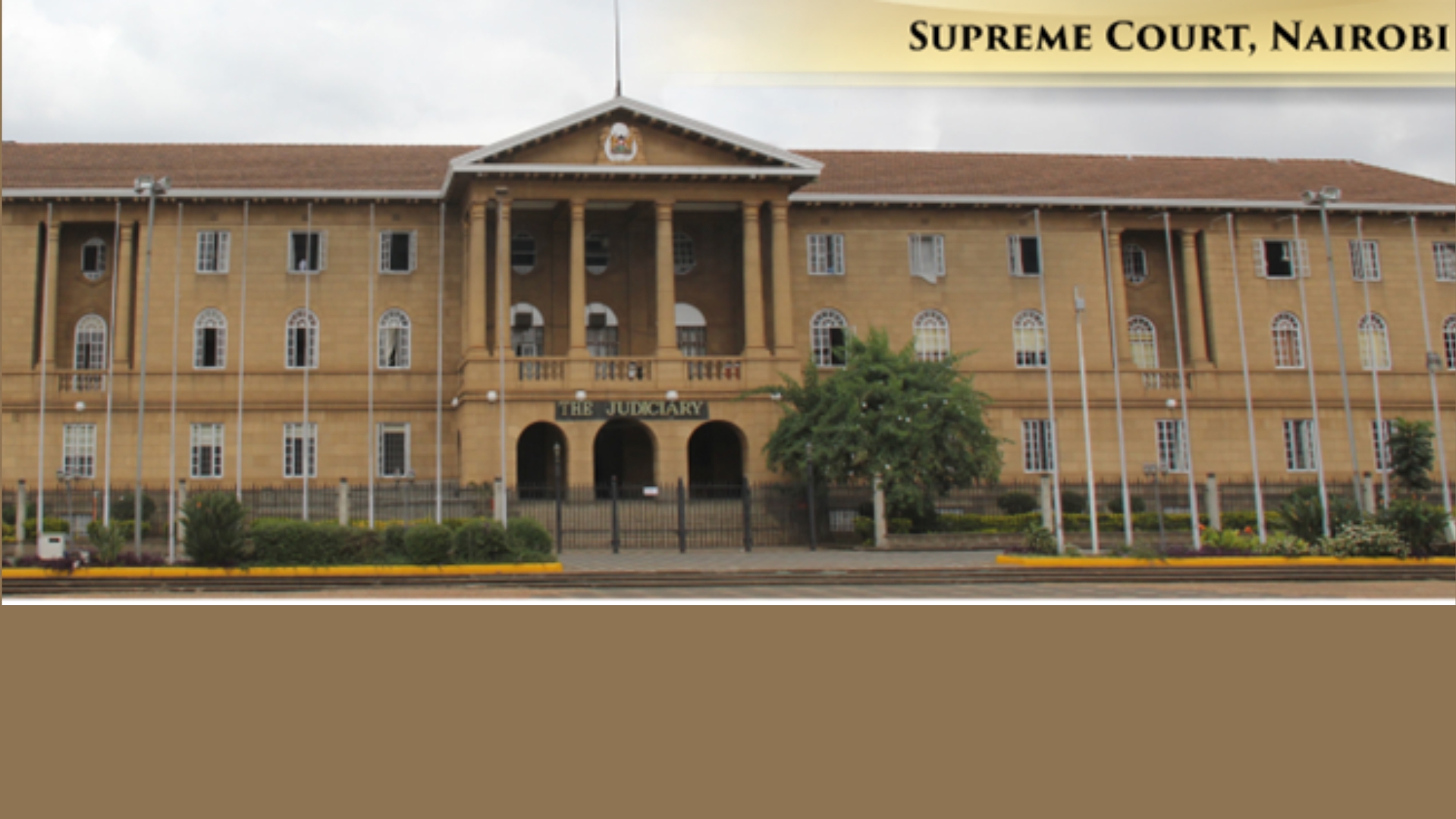
A jurisprudential analysis of liberated sexuality and spirituality in the Kenyan context.
African Liberation is about ending exploitation, oppression, and occupation by foreign interests. Africans have endured these conditions from slavery, colonialism, imperialism, and neoliberalism. These structures have dominated, oppressed, and exploited Africans in all spheres of our humanity. Our liberation must therefore encompass resource sovereignty, and economic, cultural, social, ideological, and political freedom.
Cultural liberation is a fundamental component of liberation struggles, and the liberation of sexuality and spirituality claims a significant portion of this space. As cultural wars on sexuality and spirituality in imperialist countries are outsourced to Africa, African values and the constitutions of African states are providing moral and legal battlegrounds for the struggle in this new front.
My personal experience in the journey to becoming the Chief Justice and President of the Supreme Court of Kenya, and developments in Kenyan law, provide a valuable context for examining jurisprudential questions concerning sexuality and spirituality.
A Personal Footnote
I applied for the position of Chief Justice & President of the Supreme Court in the first quarter of 2011. I was shortlisted for an interview by the Judicial Service Commission. Although there were questions on my qualifications, which I definitely had for the post, almost the entire interview was about my ear stud on the lobe of my left ear. The questions were about whether it was proper decorum for the Head of the Judiciary, who is also the Chief Justice and President of the Supreme Court, to wear a stud. I explained that I was complying with a decree from my ancestors who demanded I wear a stud for them. I had complied with that decree for over eight years before I applied for the position. I told the Commission how this message was communicated to me by my uncle who had resisted conversion to Christianity and practiced the traditional Kamba tradition.
Indeed, my spiritual journey was in twists and turns and back to my traditional religion.[1] I had joined the African Inland Church when they built a Church in my village. I quit and joined the Roman Catholic Church when I joined Kitui Secondary School. I also quit. I ultimately converted to Islam because my first wife, Rukia, was Muslim and I wanted our kids to join that religion. I did not quit Islam but I quickly realized I was a syncretist anchored on my traditional religion. I accepted the God of our Ancestors, and the ancestors too, and I sought protection, healing, and wisdom from them. A major ancestor, Muli, whose spirit was central to my spiritual journey was concrete in my life. Ultimately, I settled on One Creator and felt I could attend any Temple of prayer when I wanted to.
Beyond my wildest dreams the Commission nominated me for the post and I was vetted by a Committee of the Kenyan Parliament. The issue of the stud was resurrected, this time with venom from the honourable women and men of the so-called august House. I waived Desmond Tutu’s book, God is not a Christian: And Other Provocations.[2] Indeed, I told them that the devout Archbishop had the courage to say that his God was not homophobic. I told the Members of the Committee when I was asked by one of them if I was gay that I was not, and that I was not homophobic. If confirmed as Chief Justice & President Supreme Court I said, I would serve all Kenyans without regard to their sexual orientation. I made it clear I was, and would continue to be a jurist and judge for all Kenyans, regardless of their sexual orientation.
During the vetting process in Parliament, three renowned Kenyan Professors, namely, Professors John S. Mbiti, Professor Ali Mazrui, and Professor Alamin Mazrui wrote pieces in my support. The late Professor Mbiti[3] wrote about the decree of my ancestors. His view was that I had to obey the demands of my ancestors. He confirmed that our Kamba ancestors wore studs, as indeed did many men in the African communities. In joint response to the Muslims who claimed that Muslims do not wear studs, both Professors Ali Mazrui and Alamin Mazrui[4] argued that the Holy Quran did not forbid the wearing of studs. They gave examples of this practice in different sects of Islam.
Parliament confirmed my nomination and I was sworn in on June 20, 2011 as Head of the Judiciary. I felt that I was persecuted and discriminated against by being asked these questions. I realized, however, that I had entered in a struggle in which I would be a staunch ally of the LGBTIQA+ community. I have continued to be in this struggle even after my retirement in 2016.
A case that had been filed by the gay community when their association was denied registration reached the Supreme Court long after my retirement. The Supreme Court confirmed the judgement of the High Court while dismissing the decision of the Court of Appeal. The Supreme Court held that the gay community had the freedom of association under our Constitution. The gay community has also filed a petition for decriminalization of the Sodomy laws that the colonial administration imposed on Kenya via India. This matter is now in the Supreme Court and its ultimate verdict will settle the issue once and for all.
Constitutional Arguments in Support Liberated Sexuality and Spirituality
Constitutional arguments
In the matter of Constitutional arguments in support of liberated sexuality and spirituality let me analyze Kenya as a case study.
The vision of the 2010 Constitution of Kenya on alternative spiritual movement(s) is clear from its provisions. The Preamble states that:
We, the people of Kenya[5] acknowledge the supremacy of the Almighty God of all creation. The Preamble also states that we are proud of our ethnic, cultural, and religious diversity, and are determined to live in peace and unity in one indivisible sovereign nation. Also stated by the Preamble is our commitment to nurturing and protecting the well-being of the individual, the family, communities, and the nation. Article 8 of the Constitution decrees that there shall be no state religion and thus in a few words delinking the state from organized religion and its historical path of restricting the freedom of religion. Article 11 states the Constitution recognizes culture as the foundation of the nation and as the cumulative civilization of the Kenyan people and nation. Article 27 (4) prohibits the state from discriminating directly or indirectly against any person on any ground, including race, sex, pregnancy, marital status, health, status, ethnic or social origin, colour, age, disability, religion, conscience, belief, culture, dress, language or birth. Nor are we as Kenyans allowed to discriminate against each other on the same grounds. This is what Article 27 (5) decrees. For avoidance of doubt the word religion in the Constitution includes African Traditional Religions (ATRs). Article 28 decrees that every person has inherent dignity and the right to have that dignity respected and protected. Human dignity is one of the national values and principles of governance. Article 32 (1) states that every person has the right to freedom of conscience, religion,[6] thought, belief and opinion.[7] Article 44 (1) and (3) respectively give every person the right to use the language, and to participate in the cultural life of her/his choice; and that person cannot be compelled by another to perform, observe or undergo any cultural practice or rite. Kadhis’ Courts are subordinate courts in our judicial system as provided under Article 169 (1) (b) of the Constitution.
The vision of the Constitution on matters of faith, belief, conscience, religion, and opinion is one of developing a democratic secular state and society in Kenya. The Constitution decrees interfaith dialogue, tolerance, peaceful co-existence, respect for each other’s faith, making it clear that all religions and faiths acknowledge the supremacy of their respective Almighty Gods of all creation. The notion that certain faiths or beliefs are satanic is clearly unconstitutional. Those who worship Satan are protected under the Constitution.[8] Atheism is a belief and opinion that is protected by the Constitution. The constitutional values of equity and equality are shared by all faiths and religions including atheism. So in the case of Kenya atheists, agnostics, syncretists, humanists, Christians, Muslims, Hindus, Buddhists, all African traditional religions and beliefs, and any other belief, conscience, opinion that a person has, finds respect and protection under the Constitution.
No other Constitution in the world that I have read has a vision similar to the 2010 Constitution of Kenya. We have a great opportunity to show the rest of the world that various faiths can peacefully co-exist and tolerate each other. Such exercise in reverse learning is important in this century of global solidarity among global citizens.
One can argue that our Constitution is still hugely abstract, but there is no doubt that Kenyans are fighting to breathe life into it. And we cannot fetishize the Constitution but there is overwhelming consensus that it should be implemented using each and every of its decrees as a site of struggle for the full realization of its implementation and resultant social transformation.
Emerging Kenyan Jurisprudence on LGBTIQA+ and Sexual and Reproductive Health Rights
Tutu’s theological position that no religion is closer to God than any other[9] has been endorsed, in my view, by statements of the Judges of Kenya Court of Appeal in Non-Governmental Organizations Co-ordination Board V AG & 5 Others [2019]eKLR. The question before the Court in this appeal was whether the decision of the Non-Governmental Organizations Co-ordination Board not to register a Non-Governmental Organization (NGO) that would represent the interests of a Kenyan community of Lesbian, Gay, Bisexual, Transgender, Intersex, Queer, Asexual[10]+ (LGBTIQA+)[11] was lawful. Parties supporting the Board’s decision relied on religious texts in the Bible and the Quran to argue that the actions sought by the NGO were a sin[12] under those religious texts. They reinforced their argument by quoting the Preamble and National Anthem (a prayer) that made reference to the Almighty God of all creation. Three judges of the Court of Appeal firmly answered these arguments.
Waki, Judge of Appeal invoked the story of the woman who was caught alone in an act of adultery and was facing death by stoning. He quoted John 8:7. “When they kept on questioning him [Jesus], he straightened up and said to them, ‘let anyone of you who is without sin be the first to throw a stone at her.’” Further he added, “But Jesus had a straight answer to the teachers of law [scribes] and Pharisees who came tempting him [on the interpretation of Mosaic Law]. None of them did. They all walked away in shame. That was about 2000 ago. Is there a parallel to the story in this appeal?”
Yes, there is a parallel to this story in the 21st Century. That is what Tutu has argued against. Individuals thinking they own God; and individuals thinking they can play God. Individuals prioritizing sins. Individuals thinking they can go to the Courts of Justice and fashion themselves in the image of their God. In this particular case the judges of the Court of Appeal followed the justice and fairness of Jesus and of the 2010 Constitution of Kenya. The losers of the appeal “walked away in shame” only to end up in the Supreme Court of Kenya. And in the Supreme Court they finally lost the appeal. The Supreme Court went on to state that the word sex in Article 27 (4) of the Constitution included sexual orientation.
It is crucially important that Judge Waki quoted the New Testament. Those who are opposed to the protection of gay rights tend to rely on the Old Testament, particularly the book of Leviticus. Yes, it is clear that the theological interpretation that overlooks the New Testament is faulty. How does one, for example, read Leviticus and ignore the book of Hebrews in the New Testament that talks of the old covenant with Moses and the new covenant with Jesus. The latter replaced the former. The book of Hebrews gives many reasons for this precedent. It is a book that is relevant in the understanding of the Christian constitution. It is a book that has no claimed author.[13] In the case of the quotation from the book of John those who deny gay people their rights are frozen in the old covenant.[14] In Hebrews 8:13 it is written, “By calling this covenant “new” he [God] has made the first one obsolete and the ageing will soon disappear.” I have argued that just like the Constitution the Holy Scriptures must be interpreted holistically.
A landmark decision by a High Court Bench of 5 comprehensively deals with the issue of unsafe and safe abortions, the highest standard of health, which includes the right to health care services, including reproductive health care. In Federation of Women Lawyers (Fide-Kenya & 3 Others v Attorney General &2 Others; East Africa Center for Law & Justice & 6 Others (Interested Party) & Women’s Link Worldwide & 2 Others (Amicii Curiae)[15] the five learned judges[16] brilliantly revisited and further clarified the theory of interpreting the Constitution.[17] In my opinion, they correctly interpreted Article 26 of the Constitution, particularly Article 26 (4) to breathe life into the prevention and management of unsafe abortion in Kenya.[18] The learned judges decreed “A declaration be and is hereby issued that pregnancy resulting from rape and defilement, if in the opinion of a trained health professional, poses a danger to the life or the health (physical, mental and social well-being) of the mother may be terminated under the exceptions provided under Article 26 (4) of the Constitution.” It seems clear to me that pregnancies arising out of sexual violence and incest will always satisfy the exceptions under the Sub-Article because of the correct and broad definition of the word health. One can argue that the struggle for women’s bodies and their respective integrity will continue. Going forward those who are genuine about rescuing the weaknesses in the Constitution on sexual and reproductive health rights, subversion and overthrow of patriarchy, religious fundamentalism, and other ideologies of suppressing the rights of women, will agitate for ultimate and full rights of women, where abortion, for example, is unconditionally allowed.
In interpreting the Constitution, the judges enriched one ingredient of interpretation which hitherto has never been analyzed and clarified. Article 259 (1) (a) decrees that the Constitution be interpreted in a manner that “promotes its purposes”. Although there has been analysis on purposes from the non-legal phenomena[19] derived from Section 3 of the Supreme Court Act, 2011 the Court also gleans such purpose in the reports of the Constitution-making Commissions.[20]
In the decision in Tatu Kamau v AG & 2 Others; Equality Now & 9 Others (Interested parties); Katiba Institute & Another (Amicus Curiae) [2021]eKLR[21] the petitioner challenged the constitutionality of the Prohibition of Female Genital Mutilation Act (No. 32 of 2011) and the Anti-Female Genital Mutilation Board formed under that Act. This petition was dismissed. The judges made useful analysis of the Act and recommended that the Attorney-General should forward proposals to the National Assembly to consider amendments to section 19 of the Act “with a view to prohibiting all harmful practices of FGM/C” which they set out in the judgment. The fundamental finding is stated clearly on paragraph 215 of their judgement:
215. In sum there is no doubt that FGM/C was central to the culture of some communities in Kenya including the Kikuyu to which the petitioner belongs. However, from the medical evidence, …, we are left in no doubt about the negative short term and long term effects of FGM/C on women’s health. We have also discussed the absence of consent by victims who undergo the rite which violates article 44 (3)[22] of the Constitution. We are not persuaded that one can choose a harmful practice. From the medical and anecdotal evidence presented by the respondents, we find that limiting this right is reasonable in an open and democratic society based on the dignity of women.
This petition is a great example of the challenges that Public Interest Litigation faces. This litigation is a double-edged sword, a site where the struggle to subvert the vision, purposes, and objectives of the Constitution and resistance to that strategy will continue. This petition also underlies the supremacy of the Judiciary in the protection of the Constitution. The Constitution has many sites of struggle, as this one on cultural struggles, shows. The Judiciary is a critical actor in these struggles in matters of Public Interest Litigation. In its arbitration of these struggles the Judiciary will find itself at a crossroads. It will either promote and develop the transformation the Constitution envisions or subvert it thereby signaling the unacceptable support of the status quo that the Constitution intends to subvert and bury forever. In a nutshell, that is why the Judiciary is an institutional political actor whose transformative politics is implicated in its development of transformative and progressive jurisprudence.
The ruling in this petition confirms that customary rites and values must be aligned with the Constitution, and particularly the Bill of Rights. The values of ATRs that we have discussed above do not approve of humiliation and dehumanization of women and womanhood or motherhood. There are provisions of the Constitution that I have quoted above whose purpose is cultural and social transformation that addresses science, religion, and society to align it to the humanity of women as a people.
Zillah Eisenstein’s book[23] has made profound statements on the positions that ought to be taken in sexual and reproductive rights. At page 65 Eisenstein argues as follows:
The right to choose to end an unwanted pregnancy is central to women’s control over their own bodies and reproductive lives. No one should have this control-not the church, state, husband, parents, or boyfriend. The reason is simple: Women must bear the emotional and physical trauma-and ultimately the financial burden-of carrying an unwanted pregnancy to term.
Eisenstein also makes a compelling and persuasive argument that the struggle for reproductive rights must include those who wish to have children and are denied that right. The example given here is when lesbian and gay couples demand they raise children as same-sex parents, “with full legal and financial benefits of marriage.”[24]
Eisenstein argues that there is no general agreement among different religious faiths as to when human life begins. The author argues that there is no evidence that the Bible prohibits abortion. Indeed, Eisenstein further argues that views about abortion vary from one religion to the next, and have changed over time.[25]
The author raises very compelling arguments about the agenda of the right in the US and the falsehood that it believes in the sanctity of human life. Its agenda points to the opposite: death penalty, bombs and missiles that kill and hurt mother earth; support for nuclear weapons and militarism in general.[26]
How can a country that has such great wealth explain its stark inequality, and where poverty is rampant, it puts profits before people and has no universal health care. The pontification about the sanctity of life is simply an expression of hypocrisy, perfidy, double-standards, and racism.
Conclusion
Liberated sexuality and spirituality as a fundamental cultural anchor to African liberation have their bases in natural and constitutional law as well as human rights. It is a central part of the Global African struggles to liberate Africans from militarism, domination, racism, oppression, sexism, homophobia, and the ecological destruction unleashed by imperialism.
In showing the legal forces in the trenches of this battleground, this article has challenged Africans to transcend the US cultural war on homosexuality. African values on sexuality and spirituality are fundamentally more humane and legally more tenable than values imported from imperialist countries. Grounding relevant jurisprudence in African values on sexuality and spirituality offers a more humane approach than subservience to Western cultural wars.
The Kenyan Constitution, like many others, has been strengthened through successful legal challenges and symbolic victories, including the recognition of a Supreme Court Chief Justice’s right to wear a stud in observance of his ancestral obligations. These victories reaffirm the secular foundations of the Constitution and its guarantee of equal rights without discrimination.
Willy Mutunga was Chief Justice & President of the Supreme Court of Kenya, 2011-2016. He is an Adjunct Professor in Public Law, Kabarak Law School & Member, The Gaza Tribunal of Conscience.
Endnotes
[1] Chapter 4 of my forthcoming memoir, STUDDED JUSTICE (Dar-es-Salaam: Mkuki na Nyota, September 2026) tells my spiritual journey in detail.
[2] New York: Harper One, 2011.
[3] “The Eyes And Ears Of Dr. Willy Mutunga: Wearing Indispensable Articles”, In Awaaz Voices Volume 8, Issue 2, 2011, Pages 32-34.
[4] “The Mutunga Cultural Stud: Sacred, Sexual And Ancestral Concerns” In Awaaz Voices, Volume 7, Issue 2, 2011, Pages 42-44.
[5] The question who is WE, THE PEOPLE OF KENYA has always ignited a debate around the Kiswahili often spoken statement, KENYA INA WENYEWE/Kenya has its owners. The debate is clearly about the class content of the people of Kenya. In class terms Kenya is owned by a class of political, economic, social, intellectual, and theological elite that rules Kenya. It is an elite linked and enslaved by an imperialist bourgeoisie, and this is reflected in yet another Kiswahili statement, Mwiingereza Hakuondoka Kenya/The British never left Kenya. There lies the rich class analysis on imperialism, neocolonialism, neoliberalism, social imperialism, and the state of the planet today in terms of new paths that seek to liberate it from its unsustainable and unacceptable status quo. In class terms WE, THE PEOPLE OF KENYA means all of us except the elite, the compradors. In constitutional terms this class has rights like the rest of us under the Constitution. Article 40 of the Constitution protects private property. It is clear under Articles 1,2,3,259 of the Constitution the elite do not have the sovereign power that the rest of us have. We have delegated that sovereign power to the ruling elite, with the constitutional power to withdraw it and exercise it directly. This would be the vision of the Constitution on this issue. I know this issue is yet to be litigated in the courts, but I know there are petitions in the High Court that will in due course deal with the issue. In political terms the revolution of the Gen Z from June 18, 25 and in July and August have clarified how the citizens as the ultimate sovereign can effect regime change. See Willy Mutunga, “Will the Kenyan elite ever grow up?” in The Platform: For Law, Justice & Society (Number 31, 2017), 33-35.
[6] See Willy Mutunga, “Freedom of, and from religion, and spirituality under the Constitution of Kenya, 2010” in Pambazuka News, 03.04.2025. https://www.pambazuka.org/Constitution-of-Kenya
[7] Rights and fundamental freedoms can be limited by law; which law will be subject to conditions as decreed under Article 24. These conditions are stringent. The law can be challenged in court also. There are four fundamental rights and freedoms under Article 25 that cannot ever be limited. These are freedom from torture and cruel, inhuman or degrading treatment or punishment; freedom from slavery and servitude; the right to a fair trial; and the right to an order of habeas corpus.
[8] Article 24 (1) (d) is critical in ensuring that the limiting law ensures “the enjoyment of rights and fundamental freedom by any individual does not prejudice the rights and fundamental freedom of others.
[9] Desmond Tutu, God is not a Christian: And Other Provocations. New York: Harper One, 2011.
[10] Asexual is a sexual orientation like being gay or straight. It is a term used to describe a person who lacks sexual attraction or desire for other people. It is different from celibacy, in which people make a choice to abstain from sexual activity. + signals that the categories of gender identities are not closed.
[11] + Stands for plus: The “+” sign is a symbol that represents members of the community who identify with a sexual orientation or gender identity that is not included with the LGBTQIA acronym. It is an inclusive way of representing gender and sexual identities that letters and words cannot yet fully describe. It fundamentally means that the categories of gender must not be closed. See Rudolf Pell Gaudio, Allah Made Us: Sexual Outlaws in an Islamic African City (Chichester: Wiley-Blackwell, 2009), 10:…’yan daudu refers to “men who act like women” openly and are publicly recognized as such. Is this another category covered in + categorization? They are Muslims, some devout, see page 3. The writer does not see them as bisexual at page 10 and gives arguments to that effect. The yan daudu also marry.
[12] See Luke 7: 45-50 and John 8:3-11 where two stories about Jesus that clearly bear witness that Jesus never prioritized.
[13] I thank Shermit Lamba for drawing my attention to the book of Hebrews at a time, on March 23, 2023 when I was still developing my theological arguments to counter the ones of homophobes and bigots who question the theological argument of Creation and proceed on a path Desmond Tutu has criticized. I spoke to our own great theologian, the Reverend Timothy Njoya about the authority of the Epistle to the Hebrews. He told me that Martin Luther and some modern scholars have proposed Apollos as the author instead of either Paul or Barnabas. Both Apollos and Barnabas were Jewish Christians with sufficient intellectual authority. The Pulpit Commentary treats Apollos’ authorship of Hebrews as “generally believed.” Apollos came from Alexandria. He is mentioned in 1 Corinthians 3:5.
[14] See Hebrews 3:1-6; 12:2-3; 8: 13.
[15] [2019] eKLR. For cases on Surrogacy see JLN & 2 Others v Director of Children Services & 4 Others [2014] eKLR; In the Matter of Baby T. D. L [2014] eKLR. In the first case on surrogacy in paragraph 40 Judge Majanja observes: “Surrogacy is not a hypothetical issue any more. It is real and many Kenyans are resulting to surrogacy as an alternative to being parents, especially those who cannot for medical reasons have their own children. In such circumstances, it is the duty of the State to protect the children born out of such arrangements by providing a legal framework to govern the arrangements.” In the second case Judge W Musyoka states that even without such a legal framework the legality of such agreements will be based on contract law and compliance with other laws and conventions, treaties that decree the best interest of the child, and of course anchored under the Constitution.
[16] A O Muchelelule (as he then was), M. Ngugi (as she then was), G V Odunga (as he then was), L A Achode (as she then was), and J M Mativo (as he then was). All 5 judges have deservedly been promoted to the Court of Appeal.
[17] See Paragraphs 299-395. See also PAK & Another v Attorney General & 3 Others [2022] eKLR, Paragraphs 124-136. Nyakundi J demonstrates how statutes (in this case the Penal Code) cannot disengage from the Constitution. To do so would be to subvert and overthrow it.
[18] The judges held that the words “Abortion is not permitted” is the general rule in Article 26 and Sub-Article 4 provides an exception “when it exempts situations in which a trained health professional forms the opinion that there is need for emergency treatment, or the life or health of the mother is in danger, or if permitted by any other law.” These ingredients in the Sub-Article 4 are explained and clarified by a great integration of the statutes in question and the Constitution. The judges show how case law, statutes, common law doctrines cannot disengage the provisions of the Constitution in a simple and admirable manner.
[19] History, economics, theology, science, technology, spirituality, secularism, culture, sociology, and politics.
[20] See Para 298
[21] High Court Bench of 5: L A Achode, K. Kimondo & M. W. Muigai.
[22] (3) A person shall not compel another person to perform, observe or undergo any cultural practice or rite.
[23] See Abolitionist Socialist Feminism; Radicalizing the Next Revolution (New York: Monthly Review Press, 2019) 51.
Socialist feminism and sexually liberated societies are issues that have been discussed in the part above on ideological and political arguments in support of liberated sexuality and spirituality. Since socialism is still in our agenda of liberation those debates are relevant in the areas of gay rights and sexual and reproductive health rights.
[24] Ibid; 67
[25] Ibid;
[26] Ibid; 72