


Kenya's Subjective Shield: How the Law Itself Licenses the Police to Kill
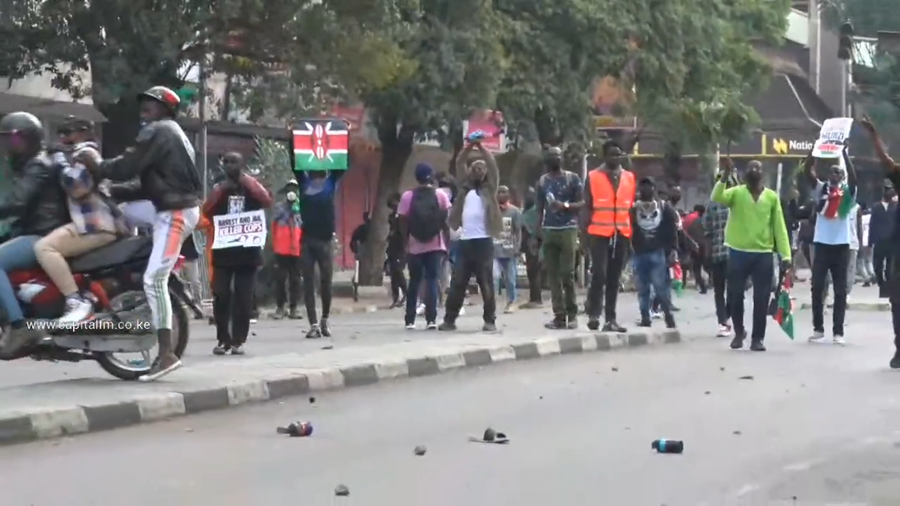
Article 25 and Article 26 of the Constitution of Kenya provide full right to life and protection from inhumane treatment, but other legislations such as the 2011 National Police Service Act, serve as the legal basis that shields officers who violate those very rights and protections.
An altercation at a Karatina petrol station in January 2026 led to the death of a businessman and a police officer under arrest for shooting him.[1] This tragedy followed a similar fatal escalation just months prior, when an off-duty Directorate of Criminal Investigation (DCI) officer shot dead a motorcycle rider and passenger following a minor traffic accident in Thika.[2] These are not isolated failures of individual judgment. They are the predictable outcomes of a gap quietly hidden within two pieces of Kenyan legislation that have routinely turned minor civilian encounters into death sentences.
Article 26 of the 2010 Constitution of Kenya ensures the right to life, and Article 25 provides an absolute prohibition of torture and inhuman treatment.[3] Despite the existence of such strict guarantees, almost two decades later, the National Police Service is still plagued by a paradox: strong legislative protection and a continuous practice of extrajudicial killings.
The Gap in the Law
The Sixth Schedule of the National Police Service Act of 2011 establishes situations when an officer can use firearms; to protect life, to protect property and to prevent an escape. What it does not do is define how much force is enough.[4] It never states an objective threshold ceiling. Compare this with the international standard set by the United Nations' Basic Principles on the Use of Force and Firearms, which provides and demands "strict necessity", as the condition required for using lethal force, for it to be the last resort, verifiable against the facts of the moment.[5] Kenya's own standard, "reasonable necessity", is looser and far more forgiving of an officer's own account of events.
That ambiguity or looseness matters because of what happens next. Once the Sixth Schedule stays silent on an objective limit, Section 17 of the Penal Code fills the vacuum by importing a colonial-era common law defence: an officer can escape liability if he "honestly believed" force was necessary, whether or not that belief was reasonable.[6] This is called the "subjective honest belief" test, borrowed from the English case Beckford v R,[7] and now entrenched in Kenyan jurisprudence through Ahmed Mohammed Omar and 5 Others v Republic.[8] Under this test, the internal state of mind of an officer determines the legality of the killing. The actual behavior of the victim becomes almost irrelevant.
Call it the subjective shield: it is not a loophole created by a rogue officer bending the rules, instead, it is the rule.
The Subjective Shield: When the Gap Kills
The pattern is visible in many cases: a 22-year-old mask vendor killed in Nairobi despite video footage capturing him holding nothing but his merchandise and posing no threat,[9] or the fatal clashes over face mask enforcement drives during public health crackdowns, such as the 2020 incident in Lessos.[10] None of these began as violent confrontations. All of them became such because the officer's subjective opinion on the presence of a threat is enough for closing the case.
Kenyan courts have occasionally pushed back. In Ogero and Another v Attorney General and 6 Others, the High Court considered the use of lethal force as unreasonable in relation to minor infractions.[11] But such rulings remain the exception, the subjective shield survives because two other structures protect it: an internal culture of institutional secrecy within the police service, and a forensic vacuum created by the state itself.
That vacuum has a name and a date. Kenya passed the National Coroners Service Act in 2017, a law designed to create an independent service to investigate violent or suspicious deaths, including deaths in police custody.[12] Nine years later, the Act remains stalled due to structural and institutional roadblocks. The Executive has effectively crippled the law from within because the Ministry failed to issue the necessary implementation regulations.[13] This administrative failure is compounded by a paralyzing turf war over gaps in the legal text, which has left state actors deadlocked over conflicting supervisory powers and stalled the appointment of a Coroner-General.[14] Ultimately, by keeping the independent office starved of funding and staff, state agencies successfully block autonomous forensic oversight to preserve the police's historical monopoly over investigating their own extrajudicial killings. Without an independent coroner, the state investigating a killing by a police officer is in effect investigating itself – a structural design that inevitably breeds cover-ups rather than accountability.
Why the Silence is Not Accidental
It seems easy to conclude that all of this is just neglecting some bureaucratic details: an unfinished Act and an un-amended Schedule. But the pattern is too consistent for that. Cameroonian philosopher Achille Mbembe's theory of necropolitics describes sovereign power as the power to decide who may live and who must die.[15] Statutory silence on force can function exactly this way: by refusing to define an objective limit, the law creates what Giorgio Agamben calls a "state of exception", a space where ordinary legal protection quietly stops applying, and the officer on the scene becomes the only authority that matters.[16] Thus, the subjective shield is not a flaw the system failed to fix. It is close to the system's purpose.
The scale supports the point. The Independent Policing Oversight Authority has documented over 1,200 complaints against officers; and Transparency International Kenya has repeatedly ranked the police as the country's most corrupt public institution.[17] This is not a story about a few bad actors. It is a story about an accountability gap built into a statute.
A Counterweight: The Digital Witness
One development complicates the state's monopoly on the official version of events: video recordings, CCTV footage and mobile phone videos recorded by bystanders have, in several recent cases, contradicted an officer's account of what "necessity" looked like on the ground, offering the closest thing Kenya currently has to an objective record of what actually happened. In the Rex Masai case, it was exactly this kind of evidence, not the officer's own testimony, that placed him at the scene after he had denied it outright.[18] Courts and prosecutors are only beginning to grapple with how to weigh this footage against an officer's sworn belief. It will not fix the statutory gap on its own, but it is one of the few tools currently capable of testing the subjective shield against something other than the officer's own word.
What Can Change the Subjective Shield?
Some will argue that closing a statutory loophole is too modest a response. In June 2024 alone, more than sixty people were killed by police during the Finance Bill protests, a death toll no single amendment to a firearms threshold can fully explain.[19] That scale of violence is a legitimate reason to ask whether Kenyan policing, an institution built in 1906 to enforce colonial rule through military-style command rather than civilian consent, needs a deeper reckoning with what it is for, not only how it is regulated.[20] That reckoning is overdue, and this piece does not pretend that statutory fixes alone will deliver it.
But dismantling the subjective shield is precisely where that structural reckoning can start. Shifting the legal standard from reasonable necessity to strict necessity strips away an officer's reliance on vague, personal perceptions of danger, while operationalising the National Coroners Service Act removes the police's ability to cover up custody deaths and shield themselves from accountability. Far from being mere technical adjustments, these legal interventions are how we begin to aggressively challenge the conceptual basis of policing itself. They directly assault a colonial philosophy that treats civilians as threats to regime security and weaponizes an officer's internal fear to justify lethal force. Closing this shield will not, on its own, instantly transform a colonial-rooted institution into a fully accountable one. It will, however, permanently destroy the single legal cover that currently makes human rights optional and ensure that an officer’s biased, internal fear can never override the constitutional right to life.
Robin Kipng'eno is a final year law student at Kabarak University School of Law, a researcher and a mooter with several moot court appearances. He has a keen interest in Kenyan policing, human rights law, and the corruption and enforced disappearances within the National Police Service, and is drawn to research opportunities that can inform legal reform
Endnotes
[1] Mercy Mwende, "Police Officer Arrested after Fatal Shooting of Karatina Businessman," Daily Nation, January 20, 2026. https://nation.africa/kenya/counties/nyeri/police-officer-arrested-after-fatal-shooting-of-karatina-businessman-5332090
[2] Cyrus Ombati, 'DCI officer in fatal shooting of two riders in Thika produced in court' The Star Kenya accessed 18 August
[3] Constitution of Kenya (2010), arts. 25 and 26.
[4] National Police Service Act (2011), Sixth Schedule.
[5] Basic Principles on the Use of Force and Firearms by Law Enforcement Officials, Eighth United Nations Congress on the Prevention of Crime and the Treatment of Offenders, Havana, Cuba, 1990.
[6] Penal Code (Cap 63), sec 17.
[7] Beckford v R [1988] AC 130 (PC).
[8] Ahmed Mohammed Omar and 5 Others v Republic [2014] KECA 515 (KLR).
[9] Kenyan vendor shot by police during protests dies. BBC News (30 June 2025) https://www.bbc.com/news/articles/cp9005z1pljo Accessed 18 August 2026; Richard Munguti, 'Police officer Klinzy Barasa faces murder charges' NTV Kenya (10 July 2025) ntvkenya.co.ke Accessed 18 August 2026.
[10] Three people shot dead in Lessos, one was allegedly shot for not wearing a mask' NTV Kenya via YouTube (25 June 2020) https://www.youtube.com/watch?v=Tqr0fRuTeaI accessed 18 August 2026.
[11] Ogero and Another v Attorney General and 6 Others, Constitutional Petition E002 of 2021 [2023] KEHC 22662 (KLR) (28 September 2023) (Judgment).
[12] National Coroners Service Act (Cap 89).
[13] Demas Kiprono, "Time to Operationalise the National Coroners Service Act," ICJ Kenya, August 1, 2024. https://icj-kenya.org/news/time-to-operationalise-the-national-coroners-service-act/
[14] How MPs made laws that can't be implemented’ The Star Kenya (9 September 2019).
the-star.co.ke
[15] Achille Mbembe, Necropolitics (Durham: Duke University Press, 2019), 66.
[16] Giorgio Agamben, State of Exception (Chicago: University of Chicago Press, 2005), 182.
[17] Jerameel Kevins Owuor Odhiambo, "The Crisis of Legitimacy: Why Kenya's Police Service Demands Immediate and Comprehensive Reform," Mt Kenya Times, January 27, 2026.
[18] Daily Nation, "Rex Masai Inquest: Officer's Denial Undermined by Distinctive Birthmark Nation Africa
[19] 61 people were killed in anti-government protests, report shows The Star Kenya
[20] Caroline Gatonye, "A Critique of Police Response to the Right to Peaceful Assembly, Demonstration and Picketing in Light of the 2024 Finance Bill Protests," Kabarak Law Review (2024), 260; C. I. Sempill, "The Making of an East African Policeman," The Police Journal: Theory, Practice and Principles