


Jesse Jackson’s Living Legacy: Civil Rights, Faith, and Africa’s Democratic Voice
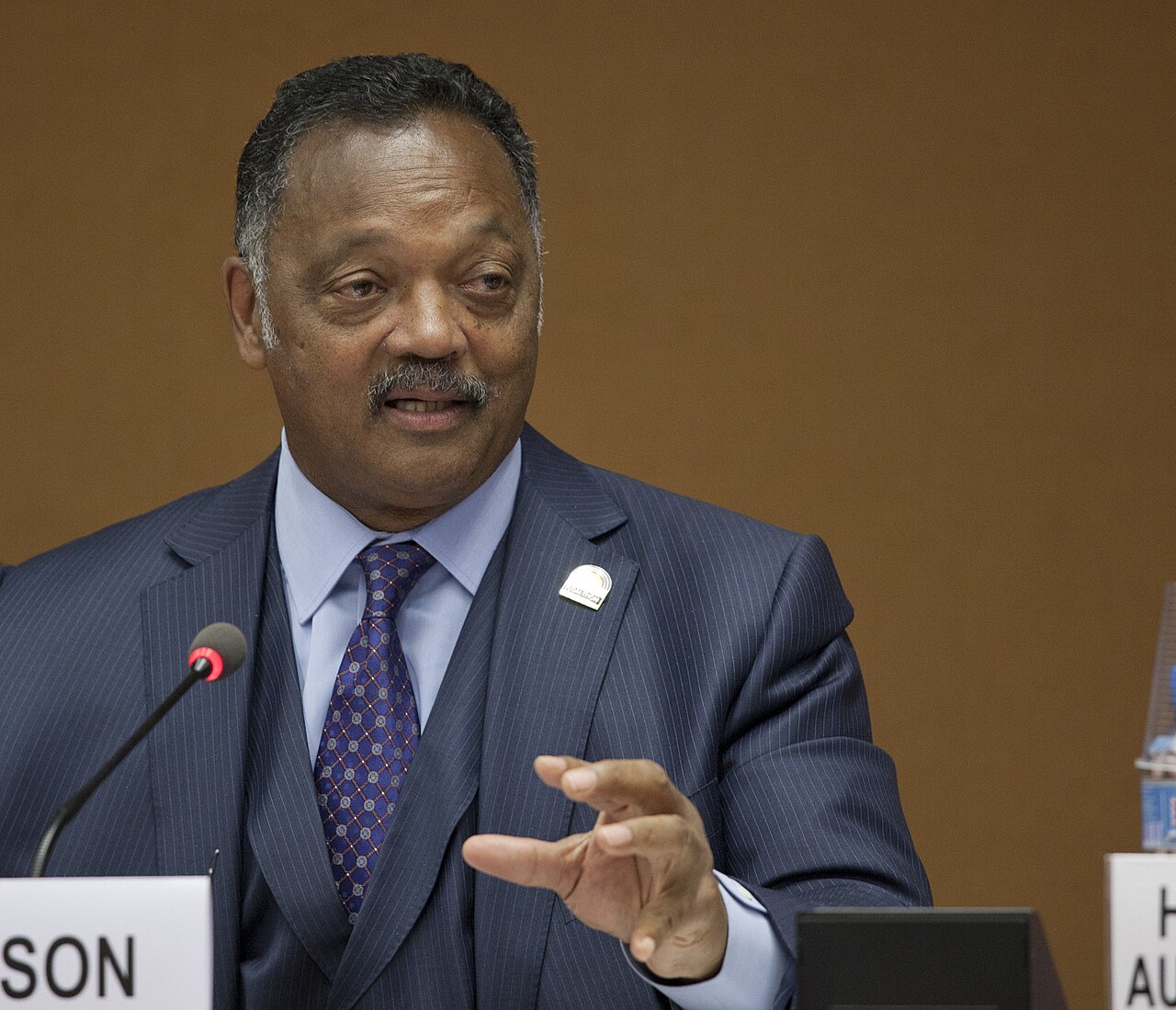

Orovunje remembers Jackson’s contribution to the liberation of Global Africans
The life of Jesse Jackson reads like a long march across history’s front lines. From the barricades of the American civil rights struggle to pulpits, ballot boxes, and international peace missions, he has spent decades insisting that justice is not a theory but a responsibility. His legacy rests on three enduring callings: advancing civil rights, grounding activism in faith, and standing in solidarity with Africa’s liberation and democratic movements. Each of these arenas reveals a man who believed that words must lead to action and who backed his words with a lifetime of work.
Jackson came of age politically under the influence of Martin Luther King Jr., whose assassination in 1968 left a generation of activists wondering who would carry the torch. Jackson did not claim to replace his mentor; instead, he expanded the movement’s reach. He understood that marches alone could not dismantle inequality unless they were tied to economic access and political participation.
In Chicago, he founded Operation PUSH, pressing corporations and institutions to hire minorities, award contracts fairly, and invest in underserved communities. His philosophy was simple: civil rights must show up in paychecks, classrooms, and boardrooms. He later broadened that work through the Rainbow PUSH Coalition, which united workers, students, minorities, and faith leaders into one political force.
Jackson’s approach reshaped activism. He did not see social groups as competitors for attention but as allies facing related barriers. He often reminded audiences, “Never look down on anybody unless you are helping them up.” That line captured both his moral stance and his organizing strategy: uplift must be collective or it will not last.
His presidential campaigns within the Democratic Party in the 1980s extended that message to the national stage. Though he did not win the nomination, he registered millions of new voters and proved that marginalized communities could shape national politics rather than merely react to it. On the campaign trail he declared, “If my mind can conceive it and my heart can believe it, then I can achieve it.” For many supporters, that was not just a motivational phrase but it was a political awakening.
Long before he was known as a national figure, Jackson was a preacher. Ordained in the Baptist tradition, he never separated his spiritual life from his public one. His sermons drew on biblical stories of liberation and perseverance, linking ancient struggles to modern injustice. He saw faith as a compass, not a refuge.
Jackson often said that laws can restrain wrongdoing but only moral conviction can inspire people to do right. That belief shaped his tone and tactics. Even when confronting opponents, he spoke with the cadence of a pastor, urging reconciliation rather than humiliation. He believed persuasion could reach places pressure could not.
His most famous refrain, “Keep hope alive,” emerged from this spiritual worldview. It was not a slogan designed for applause; it was a discipline he urged people to practice daily. Hope, in his language, was work. It meant organizing when progress seemed slow, voting when change felt distant, and believing in justice when evidence suggested otherwise.
He also taught that inclusion was not charity but necessity. As he put it, “Inclusion is not a matter of political correctness; it is the key to growth.” In churches, campuses, and public squares, he repeated that line to remind audiences that diversity strengthens communities rather than divides them. His faith did not call him away from the world’s conflicts; it sent him straight into them.
Jackson’s activism was never confined to American borders. He saw the fight for justice as global, and Africa held a special place in that vision. During the final decades of the twentieth century, as liberation movements challenged colonial legacies and minority rule, he used his platform to amplify their cause.
In South Africa, he became an outspoken opponent of apartheid, urging international sanctions and public pressure against the regime. At a time when some leaders hesitated to act, Jackson insisted that neutrality in the face of injustice was itself a form of complicity. He championed the freedom of imprisoned activists, including Nelson Mandela, whose eventual release he celebrated as proof that moral pressure can bend history.
Jackson also traveled across Africa meeting political leaders, students, clergy, and grassroots organizers. He spoke not as a foreign lecturer but as a partner in struggle, emphasizing shared histories of colonialism, racial hierarchy, and economic exclusion. He urged African nations to guard their independence with democratic institutions and accountable governance, warning that political freedom without justice would ring hollow.
During these visits he often told young audiences, “Our dreams must be stronger than our memories.” It was a call to honor history without becoming trapped by it, a message that resonated in societies balancing painful pasts with fragile hopes for the future.
Jackson’s public life has never been without controversy or criticism. Yet even detractors acknowledge his persistence. He has spent more than half a century speaking for people who felt unheard and standing where tensions ran highest. That endurance may be his greatest achievement. Many activists ignite briefly; few sustain their fire across generations.
What makes his influence lasting is not just what he said but how he worked. He built coalitions where others saw divisions. He negotiated where others preferred stalemate. He preached hope where others predicted defeat. And he kept showing up at protests, at negotiations, at polling stations, and at international summits long after headlines moved on.
Today, the causes Jackson championed remain unfinished. Inequality persists, democracies strain, and societies still wrestle with prejudice and exclusion. Yet his imprint can be seen in the tools modern movements use: multiracial coalitions, voter-registration drives, faith-based organizing, and international solidarity campaigns. These strategies did not arise by accident; they were refined through decades of his work.
His life’s message can be summed up in one of his simplest lines: “You may not be responsible for being down, but you must be responsible for getting up.” It is advice aimed at individuals, communities, and nations alike. Jackson has always believed that progress begins when people accept responsibility for changing their circumstances rather than surrendering to them.
In the end, Jesse Jackson’s legacy is not carved in marble or confined to archives. It lives wherever citizens demand fairness, wherever faith inspires courage, and wherever oppressed people believe their voices can matter. He showed that justice is strongest when it is shared, hope is strongest when it is spoken aloud, and truth is strongest when it is lived. That is why his story is not only about the past. It is about the future still being written.
Samuel Akpobome Orovwuje is a Public Affairs Analyst and Global Affairs Enthusiast. He can be reached at [email protected]