


“Geographies of Fascism and Authoritarianism in Global Africa”: Reflexions on Organising, Black Joy, and the Making of Rival Geographies
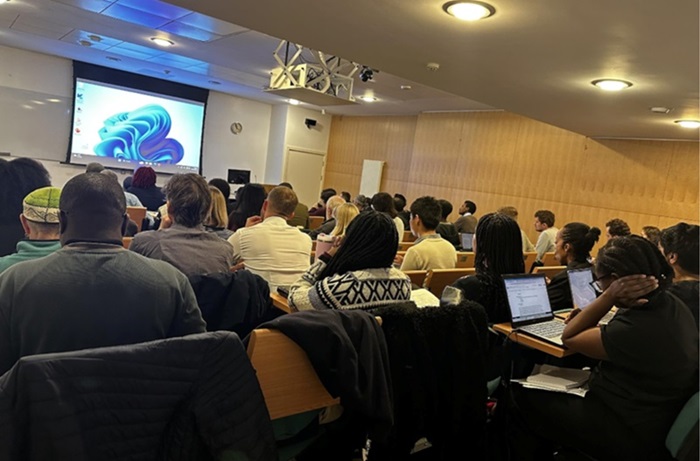
An April 2026 conference at the University of Oxford interrogated the varied geographies of fascism and authoritarianism in Global Africa and explored alternative methods, practices, and geographies for their defeat.
In November 2025, I joined the organising work behind the “Geographies of Fascism and Authoritarianism in Global Africa” conference. The conference was held on 15th April 2026, under the auspices of the School of Geography and Environment, University of Oxford, United Kingdom. The process offered more than a glimpse into the institutional mechanics of academic life: it made visible the labour, care and responsibility required to create spaces for rigorous intellectual exchange.
From contacting potential speakers and reviewing abstracts to supporting international participants as they navigated UK visa processes, I learned first-hand how academic participation is shaped by unequal regimes of mobility. Scholars travelling from the global South often face obstacles that their Global North peers do not encounter with the same frequency or intensity, including political upheaval, restrictive visa requirements and the uneven geographies of passport privilege.[1]
As Professor Patricia Daley and Dr Amber Murrey remind us in “Defiant scholarship: Dismantling coloniality in contemporary African geographies”, the political and ethical stakes of scholarship lie not only in ideas, but also in the often invisible practices through which academic worlds are organised.[2] Defiant scholarship, in their account, must centre practices and actions that challenge institutions and humanise scholarly work. The conference materialised that ethic. In her opening remarks, Dr Murrey insisted on counter-hegemonic action beyond critique, and on solidarity with communities of struggle. Through the organising process, I came to understand more clearly what it takes to convene serious intellectual gatherings across geographies, and to recognise the logistical labour that makes such gatherings possible.

Photo of Professor Patricial Daley at the Geographies of Fascism and Authoritarianism in Global Africa conference, Oxford, 15 April 2026
Why the Conference Mattered
The conference was interdisciplinary and intercontinental and was held at the University of Oxford School of Geography and the Environment. It was not merely an academic gathering; it was a critical intervention into the present geopolitical moment. It asked how the intellectual and material infrastructures of global fascism are sustained, and how scholars might expose and resist them.
This urgency is visible across multiple African political geographies. In Congo-Brazzaville, for instance, the March 2026 presidential election unfolded under what many observers described as a deliberately manufactured climate of terror: communications shutdowns, internet blackouts, the imprisonment of political opponents, the kidnapping and disappearance of activists, and systematic intimidation of civilians.[3]
Yet, at the inauguration ceremony, Christian Ehrhardt, representing the United States, was reported as saying: “I am very proud of the partnership between the US and the Republic of Congo, [...] and I am also very happy to attend the inauguration ceremony of President Denis Sassou Nguesso.”[4]
A similar process can be observed in Gabon, where a form of “regime laundering” has allowed a constitutional referendum, managed elections and diplomatic support from sections of the international community, particularly France, to transform a junta leader into a civilian president. The aesthetics of democracy are preserved while its substance is hollowed out.[5] These are not isolated developments. They are expressions of something deeper and older: the entanglement of racial capitalism, colonial legacies and contemporary fascist formations that have structured global politics for centuries, as speakers throughout the conference argued.
Fascism’s Colonial Geographies
Dr Ian Klinke's paper on geopolitics and fascism established an important genealogical argument. He traced aspects of contemporary fascist thought back to the intellectual traditions of European colonialism, German colonial society, settler colonialism in Africa and the intellectual preconditions for the genocide in Namibia. In this genealogy, Friedrich Ratzel appears not simply as a historical figure, but as part of a worldview that continues to shape the global far right. Dr Klinke positioned geopolitics not as a neutral synonym for world politics, but as a geographical worldview that uses maps and essentialist understandings of space to legitimise conflict and the segregation of the world.
Surveillance, Race and Necropolitics.
Mathilde Lyons, a doctoral researcher at St Andrews, urged us to read contemporary digital surveillance as an evolution and adaptation of racial surveillance technologies developed during Italy's fascist period. Her paper offered a potent reminder that the logics of racial capitalism are woven into the fabric of our present moment.
Drawing on work in the working-class suburbs of Bristol, England, Dr Anthony Ince examined how race and class articulate through one another in ways that expose liberal cosmopolitanism's complicity with colonial and class oppression.
Dr Asebe Regassa's use of Achille Mbembe's concept of necropolitics to characterise the “politically calculated abandonment” of the Ethiopian population by successive governments, often in collaboration with international organisations, generated important debate. His intervention described how certain communities are rendered expendable in the name of national development. It also opened a wider discussion about structural exclusions and the imperial omissions that shape the recognition of African scholars. We were urged to move beyond the empire's epistemic core, or what decolonial theorists describe as the centre of epistemic coloniality.[6] The discussion also echoed Zevounou, Sylla and Niang's (2021)[7] warning about scholars who build reputations through a sanitised discourse that dismisses African intellectual traditions grounded in Pan-Africanism and anti-imperialism.
Refusal, Decline and Authoritarian Populism.
Dr Olivia Rutazibwa offered reflections on postcolonial authoritarianism that situated contemporary African political struggles within a Black internationalist genealogy. This genealogy is as transatlantic as it is continental, and it refuses the exceptionalism that too often narrows analyses of Global Africa. She explored the politics of refusal as an analytical and methodological tool, asking scholars to move beyond documenting the grammar of fascism and toward dismantling its legitimacy by refusing its institutions, timelines and definitions of justice. Refusal, she argued, is not a plea for inclusion in systems built on white supremacy or fascist values. It is a rejection of the present order so as to make space for emancipatory forms of belonging.

Geographies of Fascism and Authoritarianism in Global Africa conference Speakers and moderators. Oxford, 15 April 2026
Dr Marshall and Dr Narayan extended the discussion through their provocation on the “fascism of Anglo-American decline”, arguing that the rollback of racial justice pledges should be understood as a reaction to a shifting global order. Their intervention prompted me to think more carefully about my own work on French neo-imperialism. We should be wary of assuming that French influence in Africa is simply waning. As the conference suggested, it may be changing form and adapting to new political conditions. Dr Melber also offered an important critique of historical liberation movements in Namibia, characterising new ruling elites as wearing “the emperor's new clothes”. The metaphor provided a powerful framework for critiquing authoritarian populism.

Photo of Professor Horace Campbell, at the Geographies of Fascism and Authoritarianism in Global Africa conference, Oxford, 15 April 2026
Black Joy as a Method of Resistance
The most generative culmination of the conference came with Professor Campbell's theorisation of Black joy as a method of resistance. He began by reminding us that, just as Marx theorised communism as a spectre before it became a movement - pervasive yet intangible, everywhere and nowhere at once - fascism presents a similar challenge of identification and response. The task before us, he argued, is not simply to enumerate the symptoms of fascism, but to develop methods and practices capable of defeating it.
Here, Professor Campbell proposed Black joy as a political method of resistance. His argument shifts joy from a feeling that arrives after victory to a foundational condition that helps make victory possible. As he so beautifully put it: “Black joy is not what comes after victory. It is the condition of endurance within the struggle: the infrastructure that makes the struggle possible and sustainable.”
He argued that while capitalism and colonialism captured the bodies of enslaved Africans, they failed to conquer their spirit. That spirit, expressed through music, worship, movement and community, helped enslaved people build what he called “rival geographies” and “emancipatory circuits”: mobile networks of communication, solidarity and survival that constituted an alternative political economy of life within racial capitalism. Black joy, in this sense, is not a reward. It is a method of organisation, mobilisation and resistance to all forms of imperialism and fascism.
Making Rival Geographies
One of Professor Campbell's most important points, and one of the underlying themes of the conference, was that European anti-fascism failed in part because it confined its understanding of fascism to twentieth-century Europe. That conceptual geography erased the colonial laboratories in which techniques of terror, mass killing, forced labour and racial classification were first perfected. One only needs to revisit Fanon and Césaire works to see this point with stark clarity.
For those of us studying African politics from a European university, this is not an abstract observation. It is a structural condition of our inquiry. Conferences such as this one, which insist on centring African political geographies, are themselves acts of rival geography-making. As I continue my academic journey, I accept the responsibility not only to document the geographies of authoritarianism, but also to participate in the reimagining and re-spatialisation of more just and Pan-African futures.
Charden Pouo Moutsouka is a doctoral researcher in Political Geography. He holds an MLitt in International Political Theory from the University of St Andrews, an MSc in African Studies from the University of Oxford.. His research engages questions of political geography, authoritarianism, resistance, and African political thought. More information can be found on his profile here.
Acknowledgements
This event was funded, in part, by the ISRF Small Group Award for ‘Provocations Between Black and African Geographies’ and the John Fell Fund Award (0016760) for ‘Politics, Resistance, and Worldmaking in African Political Geography.’
I am deeply grateful to Dr Amber Murrey, my DPhil supervisor, whose invitation in November 2025 to help organise this conference I accepted without hesitation. The invitation was a deliberate pedagogical effort on her part, an extension of a collaborative intellectual relationship that has so far shaped much of my DPhil experience. From co-authoring book chapters and co-presenting at conferences to supporting me through immigration challenges and co-organising this interdisciplinary and intercontinental conference, she has consistently exemplified what academia can be when grounded in care, integrity, and solidarity. Her mentorship continually pushes me to expand the boundaries of what scholarship can do and whom it can speak to. I remain sincerely grateful for her guidance and support.
Endnotes
[1] Bilgen, A. and Uluğ, Ö.M. “Some scholars are more equal than others: Visa Barriers, passport privilege, and global academic mobility.” Social Psychological Review 24, no. 2 (2022): 15-18. Available: https://www.researchgate.net/publication/365494717._Some_scholars_are_m…; (Accessed: 24 April 2026).
[2] Daley, Patricia O., and Amber Murrey. "Defiant scholarship: Dismantling coloniality in contemporary African geographies." Singapore Journal of Tropical Geography 43, no. 2 (2022): 159-176.
[3] RFI. Congo-Brazzaville : Le Scrutin Présidentiel Marqué par la coupure du Réseau Téléphonique et d’internet, RFI, 2026. Availlable at : https://www.rfi.fr/fr/afrique/20260315-congo-brazzaville-le-scrutin-pr%C3%A9sidentiel-marqu%C3%A9-par-la-coupure-du-r%C3%A9seau-t%C3%A9l%C3%A9phonique-et-d-internet (Accessed: 31 March 2026). TV5. Rép. Du Congo: échanges de Tirs Entre des militaires et des ex-miliciens, TV5MONDE, 2026. Available at: https://information.tv5monde.com/afrique/video/rep-du-congo-echanges-de-tirs-entre-des-militaires-et-des-ex-miliciens-2805185 (Accessed: 22 April 2026). Webmaster. Congo-Brazzaville: Quand l’État de droit fait place à la terreur, Zenga, 2025. Available at: https://zenga-mambu.com/2025/10/19/congo-brazzaville-quand-letat-de-droit-fait-place-a-la-terreur/ (Accessed: 22 April 2026). Zanzala, S.A. Congo-Brazzaville : L’énigme des 815 disparus de la DGSP et les zones d’ombre de l’opération zéro kuluna, placeholder-661-1.png, 2026. Available at : https://www.pagesafrik.com/congo-brazzaville-lenigme-des-815-disparus-de-la-dgsp-et-les-zones-dombre-de-loperation-zero-kuluna/ (Accessed: 02 April 2026).
[4] Kombo, F. Congo/états-unis : Un émissaire de donald trump à l’investiture de denis sassou n’guesso, Agence D’information D’Afrique Centrale, 2026. Available at: https://www.adiac-congo.com/content/congoetats-unis-un-emissaire-de-don… (Accessed: 04 May 2026).
[5] Powell, J. and Hammou, B. (2025) Gabon’s coup leaders have changed the Constitution to entrench their power – it’s a growing trend in West Africa, The Conversation. Available at: https://theconversation.com/gabons-coup-leaders-have-changed-the-constitution-to-entrench-their-power-its-a-growing-trend-in-west-africa-244182 (Accessed: 22 April 2026). Oyabi, R.O. Réseaux suspendus, VPN en feu: La Riposte silencieuse des internautes gabonais, Gabon Mail Infos, 2026. Available at: https://gabonmailinfos.com/reseaux-suspendus-vpn-en-feu-la-riposte-silencieuse-des-internautes-gabonais/. Goma, Y.-L. Gabon’s former prime minister, a critic of the Junta, has been arrested, The Telegraph, 2026. Available at: https://www.thetelegraph.com/news/world/article/gabon-s-former-prime-minister-a-critic-of-the-22209601.php (Accessed: 22 April 2026).
[6] Murrey, A. and Nyiniwou, I. K. Notes from the Cameroon Geographic Society’s 2024 annual conference: ‘death: interdisciplinary writeups within a geography of life’. African geographical review. [Online], 45 no. 2 (2026), 95–98.
[7] Zevounou, B, Sylla, N.S. and Niang, A. Emmanuel Macron’s Africa policies are still rooted in French colonialism, Jacobin, 2026. Available at: https://jacobin.com/2021/10/macron-france-africa-colonialism-imperialism-montpellier-achille-mbembe (Accessed: 24 April 2026).