


Breaking the siege on GAZA means breaking the siege on ALL OF US
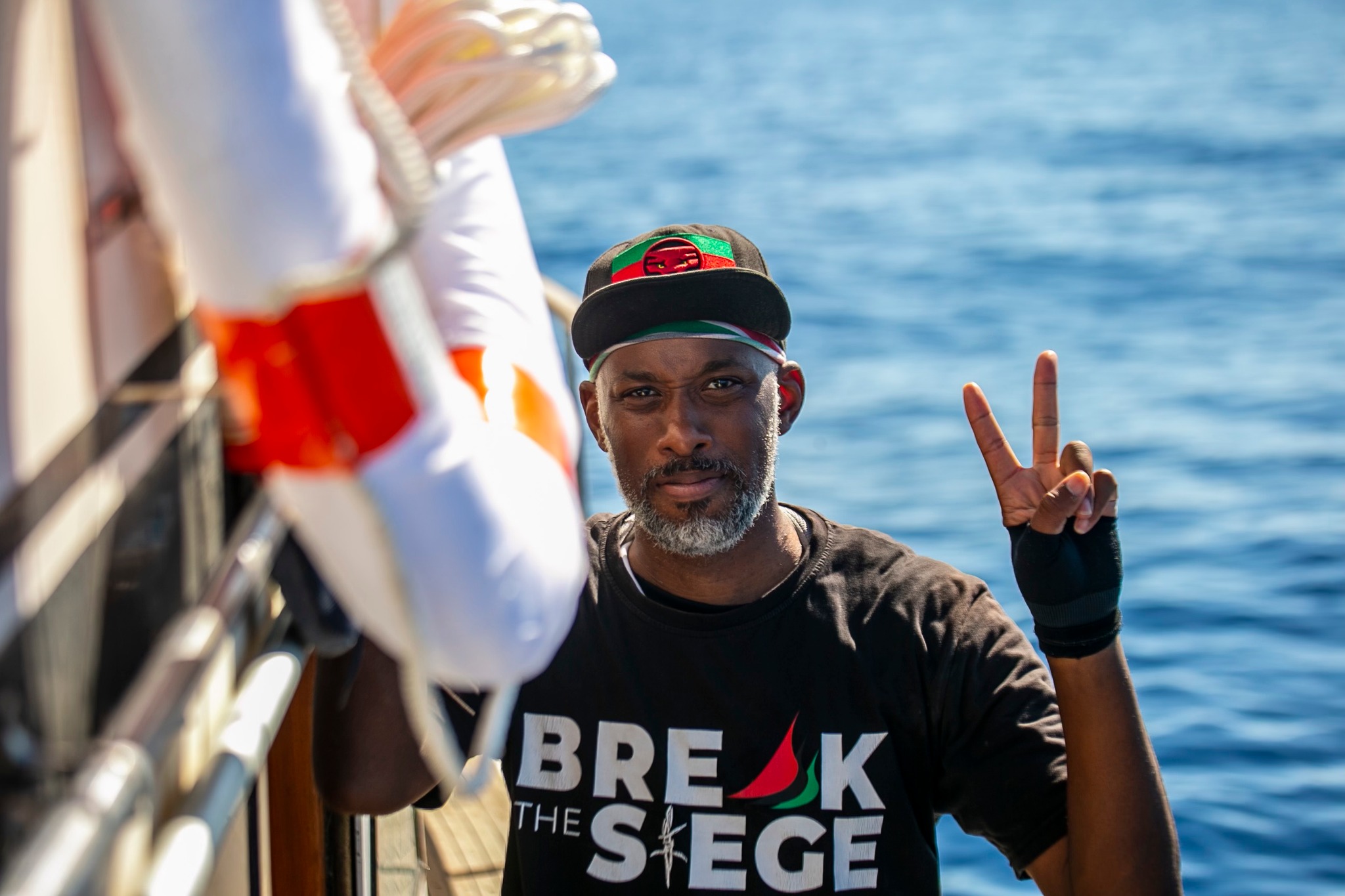
A bold call for global solidarity against the siege on Gaza and its extensions across the world.
Faced with the escalating violence of the genocide[1] perpetrated by Israel on Gaza with the support and complicity of the United States, the prolonged and permissive silence of the international community, as well as the inability of the United Nations to stop Israel's impunity, peoples from the North and South have mobilized for two years to protest against their governments' complicity in facilitating and perpetuating this genocide. Civilians around the world have mobilized to take action, forms of resistance and organizations have multiplied, camps have been set up in universities, protests have taken place in the streets, and ships carrying weapons to Israel have been blocked[2], and more recently, civilian attempts have been made to break the siege: From the Al-Sumud Caravan by land to the Global March to Gaza by air, to the most recent Global Sumud Flotilla by sea. These efforts have been threatened by Israeli drone attacks, kidnappings, deportations from the security apparatus, and other strategies of disinformation and intimidation used by the Zionist entity and its collaborating regimes to thwart them.
This revealed both the degree of determination of ordinary citizens in the face of their governments’ complicity and State failures, but also the brutality that states are willing to employ to suppress any form of resistance and disobedience to imperialist interests.
Protests, Marches for Gaza, Al-Sumud Caravan and Flotillas: The high cost of solidarity with Palestine
After almost two years of continuous protests in the streets, in front of embassies, and in universities, the Al-Sumud Caravan[3] set off from Tunisia with the aim of delivering a clear message: Gaza has not been forgotten, and the peoples of the region will act where governments have failed. Joined by participants from Algeria, Sudan, Mauritania, Morocco, and Libya, the caravan illustrated the collective commitment of the Maghreb population to justice and liberation despite the enduring cost of counterrevolutionary pushback they have paid, transcending the artificial borders and the historical and political divisions between the regimes of their countries, enabled and maintained by imperial power structures.
Over the first 600 kilometres, the participants were treated to remarkable hospitality on both the Tunisian and Libyan sides, receiving an overwhelmingly warm welcome from the local people, vital assistance, food supplies, and spontaneous logistical support for the mission. However, as soon as this first step, full of fraternal enthusiasm, was completed, the expedition was brutally confronted with bitter realities. The journey immediately revealed the gaping wounds left by imperialist intervention in Libya, manifested in the schism tearing the nation apart. Near Sirte, where General Haftar's control begins over the western part, the caravan was intercepted and forced to camp in the middle of the desert, forty kilometres from the city, more than one thousand kilometres from the Egyptian border. The participants were deprived of water, food, and basic humanitarian aid. Local people were forbidden from helping them. Communications were cut off. Spokespersons were kidnapped, beaten, and robbed of their belongings. Thirteen participants disappeared for several days,[4] pushing the delegation to enter into negotiations with the Libyan western government for their release; indeed, their release was conditional on stopping the mission.
At the same time in Egypt, a similar scenario unfolded. The Global March to Gaza, an event organized by thousands of citizens from around the world, attempted to open the border crossing at Rafah and lift the aid blockade on Gaza. In Cairo, delegations were subjected to raids, surveillance in hotels, expulsions, and arbitrary arrests[5]. Phones were seized and communications blocked, passports were confiscated, allowing authorities to compile targeted lists of participants. Activists, particularly those from North Africa, were specifically targeted by the crackdown. But this was not limited to Arab participants; the foreign delegations also suffered multiple arrests, lengthy interrogations, and the temporary disappearance of two members of the international coordination committee, French national Hicham El Ghaoui and Spanish national Manuel Tapial, who were ultimately expelled[6]. Those who made it to Ismailia were assaulted by security forces and civilians, forcing them to return to Cairo.
Repression as a global strategy:
The repression of these initiatives is not just a matter of border control as would be justified by Egyptian and Libyan authorities[7]. It is part of a coordinated pattern: the authoritarian regimes of North Africa are acting as executors of broader geopolitical objectives. These measures effectively extend Israel's siege beyond its borders, creating a virtual wall from Gaza to Egypt and Libya. As the participants in these movements have often repeated: “Where the marches or flotillas stop is where the real geographical borders of the Zionist entity lie.”
Even the protection traditionally enjoyed by white people from Western nations, the result of a historically asymmetrical colonial balance of power, is now fading, not as a result of a weakened Western influence, but of strategic convergence. This normalization of indiscriminate repression is in fact part of a concerted and tacitly accepted transnational strategy, and perpetrated by the Western powers themselves, within their own borders.
It is an incontestable fact: the recent wave of mobilizations has led to a sharp increase in repression. For years, the exorbitant cost, both moral and physical, of the struggle for Palestine Liberation and global justice has weighed disproportionately on specific communities: The populations of the Global South, as well as racialized minorities in the North. They have long paid a heavy price for their activism, but with the actual massive and visible support for Palestine, the cost has now been transferred to non-racialized voices in the North as well, as evidenced by the repression of the “Not in My Name” movements and pro-Palestinian mobilizations that have been widely repressed in France, Germany, the United States, and UK but also throughout Europe[8].
This synchronized repression reveals less a clash of values between “Eastern authoritarianism” and “Western democracy” than a structural solidarity between ruling elites, united by a common imperative: to neutralize any form of dissent that might threaten their shared imperial interests.
Digital surveillance and technological complicity: The invisible infrastructure of repression
These mobilizations have also revealed the existence of a technological infrastructure of surveillance, repression, and coercion that operates on a transnational scale. Technologies are developed and tested on Palestinians in Gaza. Facial recognition systems, communications surveillance, combat drones, and spyware are not confined to the Palestinian colonial context; these technologies are exported and deployed against solidarity movements themselves.[9] These technologies, often developed by Israeli companies such as NSO Group (Pegasus)[10] or marketed by Western multinationals, create a repressive continuum where the same tools that facilitate genocide in Gaza are also used to track down and neutralize those who oppose it.
Even more insidious is the algorithmic censorship exercised by social media platforms. Meta (Facebook/Instagram), X (Twitter), and TikTok have systematically deleted, shadow banned, or demonetized pro-Palestinian content[11], rendering popular solidarity invisible while amplifying narratives of occupation. Algorithms thus become instruments of information warfare, shaping what can be seen, said, and shared about the genocide.[12]. As a matter of fact, the complicity of tech giants in this repressive architecture is not limited to censorship. Google, Amazon, Palantir, Microsoft, and Meta provide cloud services, artificial intelligence technologies, and facial recognition systems that fuel both the Israeli war machine [13] and the surveillance apparatuses of regional authoritarian regimes. These companies profit twice: first by equipping the occupation, and second by selling technologies “field-tested” in Gaza to security forces around the world[14].
This technological dimension is profoundly transforming the nature of contemporary repression. It makes it more effective, more preventive, and more totalizing. Lists of activists compiled from digital data, predictive surveillance of mobilizations, and algorithmic profiling of “threats” enable states to strike before collective action even materializes. Gaza is thus becoming a laboratory not only for military weapons, but for all social control technologies that are then redeployed globally against migrants, climate activists, anti-racist movements, and all forms of dissent[15].
Lessons learned: Towards a truly internationalized struggle
An analysis of solidarity initiatives with Gaza (and the global movements' recent convergence from the Al-Sumud convoy to the Freedom Flotilla and the World March and recent port boycott and blockade movements) reveals three key dynamics that are redefining the scope of international solidarity.
1) While the commitment of movements for justice emanating from the peripheries of the global order still constitutes the beating heart of resistance to imperialism, transnational solidarity around the Palestinian question has become the compass for global movements. These mobilizations reveal a major historical process: The convergence of activist experiences and knowledge of resistance accumulated in the countries of the Global South and among the populations of the metropolises of the North is an essential element to the global liberation struggle.
2) These experiences highlight the imperative for strategic change: the transition from declarative and liberal human rights-based approaches to activism and selective ad hoc solidarity, to engaged anti-imperialist forms of organization that directly threaten imperialist interests; these are struggles that are embodied in actions, not algorithms.
3) Inseparable from solidarity with Gaza and the boycott and divest campaign, is the resistance to this technological infrastructure of repression by boycotting complicit companies (as called for by the #NoTechForApartheid[16]campaign), developing encrypted and decentralized communication tools, as well as documenting and exposing surveillance supply chains: these are all fronts that join the caravans and flotillas in the struggle to break the siege.
Conclusion
The mobilization to lift the siege of Gaza, although purely humanitarian in nature, goes far beyond its objectives. Al-Sumud convoy, the World March, the Global Sumud Flotilla, and One Thousand Madleen, are not endless initiatives, and even if all forces work to prevent these initiatives from physically reaching Gaza and delivering aid to the suffering populations, their performative dimension will have succeeded in denouncing, destabilizing, and politically, morally, and symbolically exposing their governments so that they might be held accountable for their criminal acts. As the struggle continues, every act of solidarity, however risky, cracks the walls of isolation.
The story of Al-Sumud remains unfinished. As a central concept in Palestinian resistance, Sumud in Arabic refers to a form of resistance through existence itself, an active resistance through perseverance: continuing to cultivate one's land, rebuilding one's demolished home, maintaining one's traditions, raising one's children, existing and putting down roots despite everything. It is refusing to be displaced, erased, or broken.
The existence and repetition of these actions (which embody this same tenacity, this determination to break the siege of Gaza despite all obstacles, to maintain solidarity despite repression, to expand the movement despite failures and pressures) constitute, in themselves, a path to liberation, not only of Palestine but of ALL OF US.
Maha Ben Gadha is a researcher and activist from Tunisia.
Endnotes
[1] International Court of Justice, "Application of the Convention on the Prevention and Punishment of the Crime of Genocide in the Gaza Strip (South Africa v. Israel)," Order on provisional measures, January 26, 2024;
Amnesty International, "'You Feel Like You Are Subhuman': Israel's Genocide Against Palestinians in Gaza," December 2024;
Francesca Albanese (UN Special Rapporteur), "Anatomy of a Genocide," Report of the Special Rapporteur on the situation of human rights in the Palestinian territories occupied since 1967, April 2024.
[2] On university encampments: Intercepted: Inside the Student Movement for Gaza May 2024; Palestine Legal, "The Palestine Exception to Free Speech: A Movement Under Attack on US College Campuses", 2024. On actions to block arms shipments in Belgium, Italy, Spain, and the United States. See: BDS Movement, "Arms Embargo Campaign Updates", 2024-2025.
[3] These are not the first initiatives; former attempts like the Madeleen, The Handhala, The Mavi Marmara flotillas, see: Freedom Flotilla Coalition, attempted to break the siege, but this was the first by land tentative from North African countries
[4] Statements from the Al-Sumud Caravan; participants’ accounts are widely available on various social media platforms and through alternative media outlets.
[5] Egypt, Libya stop activists gathering for March to Gaza, organisers say | Israel-Palestine conflict News | Al Jazeera
[6] Global March to Gaza tells delegations to leave Egypt, demands release of arrested participants | MadaMasr
[8] While this repression did not originate in October 2023— for example the ELSC and other groups have been documenting incidents for much longer, but it has intensified considerably since then, given the scale of popular mobilization against the genocide in Gaza. On France, Germany, and the United States see: https://www.index-of-repression.org/platform and CIVIC-SPACE-REPORT-2024-RESTRICTIONS-ON-PALESTINE-SOLIDARITY.pdf; On the United Kingdom: Brendan Ciarán Browne, Elian Weizman & Jennifer Matchain, "Unpacking the crackdown on Palestine solidarity activism in the UK in a post-7 October reality" Third World Quarterly (2025),."
[9] The Palestine Laboratory, Antony Loewenstein (Verso Books, 2023)
[10]Forbidden Stories - Pegasus Project: https://forbiddenstories.org/case/the-pegasus-project/
[12] https://www.hrw.org/news/2023/12/21/meta-broken-promises-systemic-censorship-palestine-content-instagram-and-facebook
[13] Report of the Special Rapporteur on the situation of human rights in the Palestinian territories occupied since 1967 “From economy of occupation to economy of genocide” Francesca Albanese July 2025.
[15]USA/Global: Tech made by Palantir and Babel Street pose surveillance threats to pro-Palestine student protestors & migrants
amnesty-report_the-digital-border-migration-technology-and-inequality.pdf
[16] Campaign #NoTechForApartheid: https://www.notechforapartheid.com/
References
Access now How Meta censors Palestinian voices. Access Now. https://www.accessnow.org/publication/how-meta-censors-palestinian-voices/
Ahraminfo. (2020, June 20). Syrte-Al-Jufra: La ligne rouge de l’Egypte. Al-Ahram Hebdo. https://french.ahram.org.eg/News/33024.aspx
Al Jazeera. (2025, June 13). Egypt, Libya stop activists gathering for March to Gaza, organisers say. News/Israel-Palestine conflict. https://www.aljazeera.com/news/2025/6/13/egypt-libya-stop-activists-gathering-for-march-to-gaza-organisers-say
Albanese, F. (2024, April 5). Anatomy of a genocide (Report of the Special Rapporteur on the situation of human rights in the Palestinian territories occupied since 1967, A/HRC/55/73). United Nations Human Rights Council. https://reliefweb.int/report/occupied-palestinian-territory/anatomy-genocide-report-special-rapporteur-situation-human-rights-palestinian-territories-occupied-1967-francesca-albanese-ahrc5573-advance-unedited-version
Albanese, F. (2025, July). From economy of occupation to economy of genocide (Report of the Special Rapporteur on the situation of human rights in the Palestinian territories occupied since 1967, A/HRC/59/23). United Nations Human Rights Council. https://docs.un.org/en/A/HRC/59/23
Amnesty International. (2024, November 28). The digital border: Migration, technology, and inequality (MDE 15/9890/2024).
Amnesty International. (2024, December 5). “You feel like you are subhuman”: Israel's genocide against Palestinians in Gaza (MDE 15/8668/2024).
https://www.amnesty.org/en/documents/mde15/8668/2024/en/
Amnesty International. (2025, August 21). USA/Global: Tech made by Palantir and Babel Street pose surveillance threats to pro-Palestine student protestors & migrants.
BDS Movement. (2024–2025). Arms embargo campaign updates.
Browne, B. C., Weizman, E., & Matchain, J. (2025). Unpacking the crackdown on Palestine solidarity activism in the UK in a post-7 October reality. Third World Quarterly. https://researchportal.lsbu.ac.uk/en/publications/unpacking-the-crackdown-on-palestine-solidarity-activism-in-the-u
European Civic Forum. (2024, May). Escalating restrictions on organisations and individuals expressing solidarity with the Palestinian people. CIVIC-SPACE Report 2024. https://civic-forum.eu/wp-content/uploads/2024/05/CIVIC-SPACE-REPORT-2024-RESTRICTIONS-ON-PALESTINE-SOLIDARITY.pdf
Forbidden Stories. The Pegasus Project. https://forbiddenstories.org/case/the-pegasus-project/
Freedom Flotilla Coalition. Coalition statements. https://freedomflotilla.org/category/news/press-releases/coalition-statements/
Human Rights Watch. (2023, December 21). Meta’s broken promises: Systemic censorship of Palestine content on Instagram and Facebook. https://www.hrw.org/news/2023/12/20/meta-systemic-censorship-palestine-content
Index of Repression Platform. The Index of Repression. Forensic Architecture. Retrieved from https://forensic-architecture.org/investigation/the-index-of-repression
International Court of Justice. (2024, January 26). Application of the Convention on the Prevention and Punishment of the Crime of Genocide in the Gaza Strip (South Africa v. Israel) (Order on provisional measures). https://www.icj-cij.org/case/192
Loewenstein, A. (2023). The Palestine laboratory: How Israel exports the technology of occupation around the world. Verso Books.
MadaMasr. (2025, June 16) Global March to Gaza tells delegations to leave Egypt, demands release of arrested participants. MadaMasr. https://www.madamasr.com/en/2025/06/16/news/politics/global-march-to-gaza-tells-delegations-to-leave-egypt-demands-release-of-arrested-participants/
No Tech for Apartheid Campaign. https://www.notechforapartheid.com/
Palestine Legal, & Center for Constitutional Rights (CCR). (2015, September 30). The Palestine exception to free speech: A movement under attack in the US.
https://ccrjustice.org/sites/default/files/attach/2015/09/Palestine%20Exception%20Report%20Final.pdf
Silic, A. (2022, January 18). Pegasus spyware used against dozens of activist women in the Middle East. The Intercept. https://theintercept.com/2022/01/18/pegasus-spyware-nso-group-women-activists-journalists/
The Intercept. (2024, May). Mapping US campus protests for Gaza. https://community.sap.com/t5/enterprise-resource-planning-q-a/source-not-included-in-list-despite-source-list-requirement/qaq-p/4341137.