


Egyptology of Marx’s Evolution as a Revolutionary Intellectual and the Question of African Origin of Modern Civilization
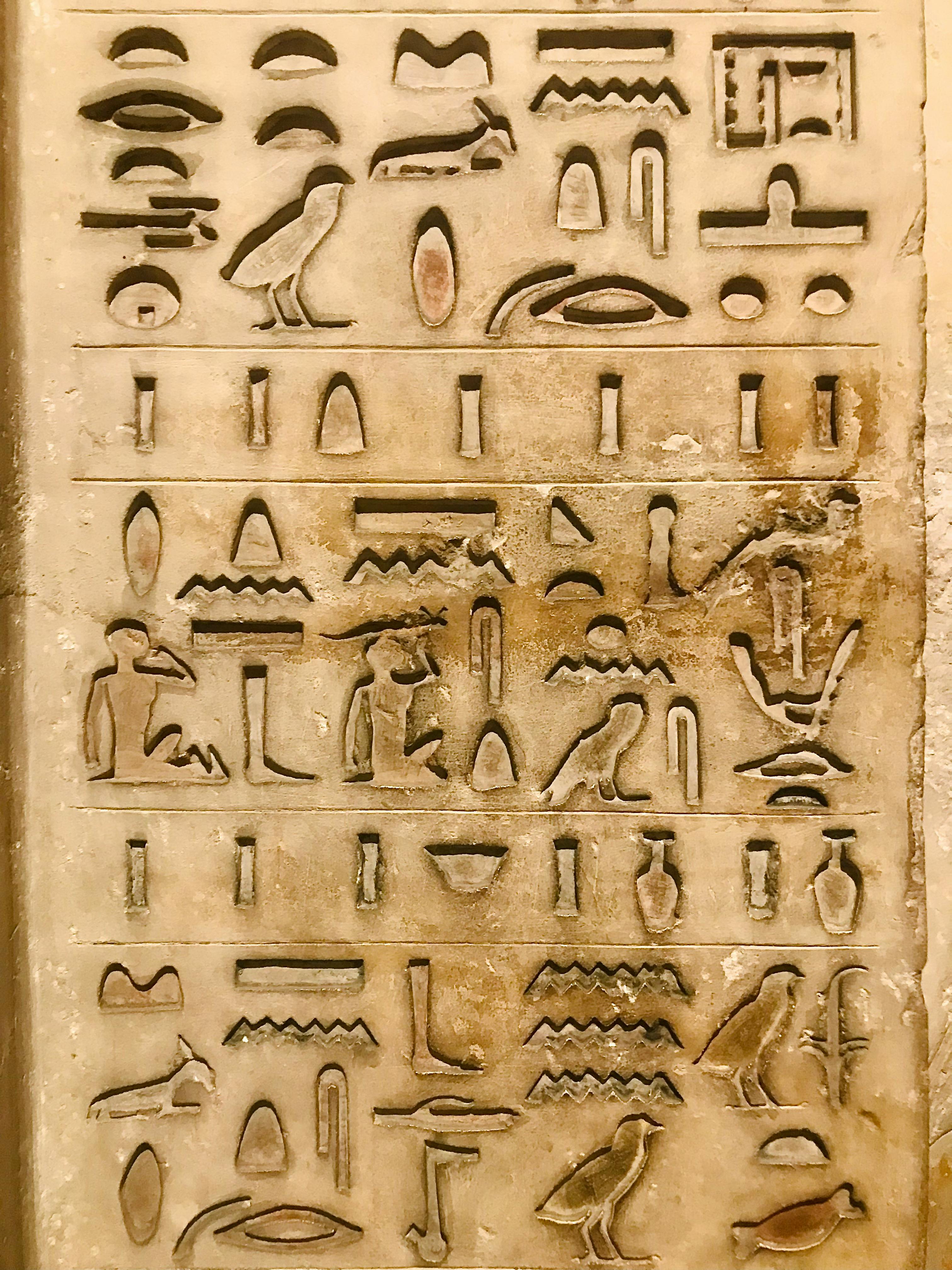
A rejoinder to the African question in Karl Marx’s doctoral dissertation, and a reflection on universal Egyptology and Africa’s intellectual future.
This is a collegially rejoinder to the article by my brother, Dr. Onwubiko Agozino, which appeared in edition number 906 of the Pambazuka News under the title: Karl Marx’s Afrocentric Doctoral Dissertation: Reflections with some colleagues. It was a nice article in which the writer pointed out that Karl Marx had his Doctoral thesis based on the early Egyptian philosophies about nature and environment in the Works of Epicurus and Democritus. In the article, the writer also established Egyptian learning institutions as the major source of early Greek civilization and learning. Reading the article would reveal much intellectual effort and ideas that should not go without a timely rejoinder. The article was presented in very clear and simple language, clearly discussing Africa as a cradle of Modern civilization and why Greek Intellectual productivity stopped all of a sudden by echoing the Afrocentric question in Karl Marx’s doctoral Dissertation: ‘What became of Greek philosophy once the African source was destroyed?’
The article is a clear overtone of appalling intelligence of Karl Marx, especially as evinced in his prowess of being able to notice that all Greek classical scholars were students and beneficiaries of Egyptian education, and hence to ask what happened to the Egyptian system of knowledge production that taught Aristotle and all other European as well Jewish scholars that went on to become universal intellectual legendaries. This is a question that will guide the tempo of discourse in this essay.
Logically, this essay and discourses to be held herein indefatigably appreciates Dr. Onwubiko Agozino for reading Karl Marx beyond some conventional reading that has always stopped at the Das Kapitel and the Communist Manifesto down to the years of intellectual formation of Karl Marx, the time at which Marx was writing his doctoral thesis at the University of Jena under the scholarly keen eyes of Hegel.
The question of universal Egyptology (Egyptian origin) of human civilization is an important question. It is a question of Indigenous Epistemology, a question of Knowledge cycle in diversity of the indigenous epistemologies, the question which Cheikh Anta Diop appreciated in the book African Origin of Human Civilization and as well the question which Ali A. Mazrui gave attention in a seminal work under the title Tracing Egyptian Origin of Early Greek Civilization, the work that was also presented as inaugural and public talk at Makerere University during the mid of the last century. Anta Diop in African Origin of Human Civilization argues that Egypt was the source and centre of learning and science several centuries before the birth of Jesus Christ. This was also the same point of view that was taken by Ali A. Mazrui in Tracing Egyptian Origin of Early Greek Civilization.
In his appreciation of Egyptology of great learning and philosophy, Karl Marx dismissed Hegel, his teacher at the Doctoral level, as a non-logical thinker and also faulted Aristotle as a stealer of Egyptian scholarly works. However, Karl Marx also appreciated Aristotle as a scholar who was ahead of his time. But in full swing, Karl Marx admired Egyptian and Egyptian-based Greek scholarship to an extent that he based his work on the science and intellectual works of early Egyptian civilization that crystallized as social epitome into two notable scholars, Epicures and Democritus. Hence, the title of Marx’s Doctoral thesis: The Difference Between the Democritean and Epicurean Philosophy of Nature. A title that clearly testifies and attests to the Egyptological foundation of Marx’s revolutionary evolution both in theoretical sense as well as orientation towards revolutionary praxis.
Marx had very clear interest in both Epicurus and Democritus, both of them happened to be the fruit harvest from the universal Egyptology of science and learning given that they both went to school at the University of Alexandria in Egypt. They were taught by very many different African teachers like Eratosthenes from Libya, and many other Egyptian teachers at the University of Alexandria. However, one of their most towering teachers was Ptolemy. Ptolemy was a self-educated Egyptian polymath. He was not born in a royal family but he participated in founding and establishing the academy at Alexandria, some centuries before the birth of Early Greek Civilization as well as some centuries before the birth of Jesus Christ. This is the academy that matured to become the University of Alexandria. As early as five centuries before the birth of Jesus Christ, Ptolemy was already competently knowledgeable about map Algebra, Geodesy, Cartography, Geography, Astronomy, Astrology, Coordinate Geometry, Topographic survey, biology, physics, poetry, religion and philosophy. It was nothing else, but technical competence of Egyptian scholars that attracted the Jews, Indians, Greeks, Roman, Spaniards, Portuguese and other students from all over the world in the like of Epicurus and Democritus to travel from Greece down to Egypt to learn from Ptolemy the above skills, the skills that were trendy by then and more trendy by now given that modern Geospatial Information Science (GIS) is all about using what Ptolemy had taught to explain the earth and space.
Yes, the European Christian and Islam marauders attacked the University of Alexandria, besieged, destroyed and reduced to ashes the learning resources. Among them were the scholarly works by Ptolemy, Euclid and Archimedes (both Egyptian citizens). However, if you try to study advanced geodesy and Cartography today you will still find out that all the principles, models and theories dominantly in use are those ones propounded by Ptolemy.
Ptolemy was not the only Egyptian scholar and philosopher with intellectual gravitas of universal stature, but he is the one we have used in this essay as a historical diorama testifying Egypt as an origin of science and advanced learning. A concept we refer to as Egyptology of science, and hence by logic of extension Egyptology of Christian thought; Egyptology of Greek thought; Egyptology of Islamic thought; Egyptology of Terra Incoginitta; Egyptology of Marxist thought; Egyptology of African civilization and just as Professor Cheikh Anta Diop had put it; ‘Egyptology of Human Civilization’ which he simplified as ‘African Origin of Human Civilization’. A point at which Marx’s question obliges all of us who have some sense about the history of knowledge to Marx’s question: ‘What became of Greek philosophy once the African source was destroyed?’
The answer to the question can be gleaned from the preceding paragraphs as well as from the pages of honest history; Greek excellence in knowledge translation from Egyptian language to European languages stopped immediately when Egyptian centres of learning were destroyed by European and Arabic invaders. The European invaders came in with misinformed Christianity and Arabs came in with ethnocentric Islam that violently pushed Egyptian excellence in logic, science and intellectual civilization down to the abyss of silence. The prevailing silence allowed European imperialist historiography to fabricate and popularize a self-serving narrative that celebrated the so-called “wise early Greeks,” when in fact, historical evidence points to Greek students learning from the wisdom and scholarship of ancient Egypt.
Unfortunately, any culture in the business of falsifying history oppresses both the beneficiary and the victim of falsified histories. For example, it is the culture of falsifying history that is an underlying condition that gave the platform and the way to the Roman empire to copy and plagiarize from Greeks, British (for example Shakespeare) to copy and plagiarize from the Roman Latins, Americans from the British, the Chinese from the Americans and I don’t know what next. But what is clear is that falsified history by the imperial powers birthed to the current generations some series of heritages of knowledge stealing through plagiarism, shrewd translation and violent looting where the thief works hard to destroy the victim.
However, above all else, Africa can bounce back to its lost stage as the global centre of moral civilization, religious inclusivity, gender dignity, Mathematical excellence, classless political systems, peaceful neighbourhoods, family value systems, humanization of technology, moralization of science, cosmopolitanization of literature, production of logical philosophy and any other form of learning. It is a fact that when African languages were made to look useless and inferior through enslavement and colonial relationships with Europe and the Arab world, Africa was made to forfeit its internal momentum for learning and internally generated knowledge systems as well as capacity utilization. Yes, if we can manage to put back African languages at the centre of all learning and all forms of education then it won’t take long for Africa to bounce back.
Alexander Opicho is a Corporate Trainer at the Regional Centre for Mapping of Resources for Development (RCMRD), Nairobi, Kenya.